Squash shoes: why non-marking matters
 By the Find My Squash Court team·
Updated ·
5 min read
Squash is the one sport where the wrong shoes can get you sent off court before you have hit a ball. Venues are strict about soles, and your ankles will thank you for the right pair as well.
The short answer
Squash shoes are indoor court shoes with non-marking gum or light-coloured rubber soles, a low, flat profile and firm support at the sides of the foot. Non-marking soles matter because black rubber leaves scuffs on the light wooden floor, and most clubs and leisure centres will not let you on court without them. Running shoes are the wrong choice: their raised, soft heels and thin sides do not suit the sharp lunges and sideways movement of squash. Badminton, volleyball or other indoor court shoes work well.
Why non-marking matters
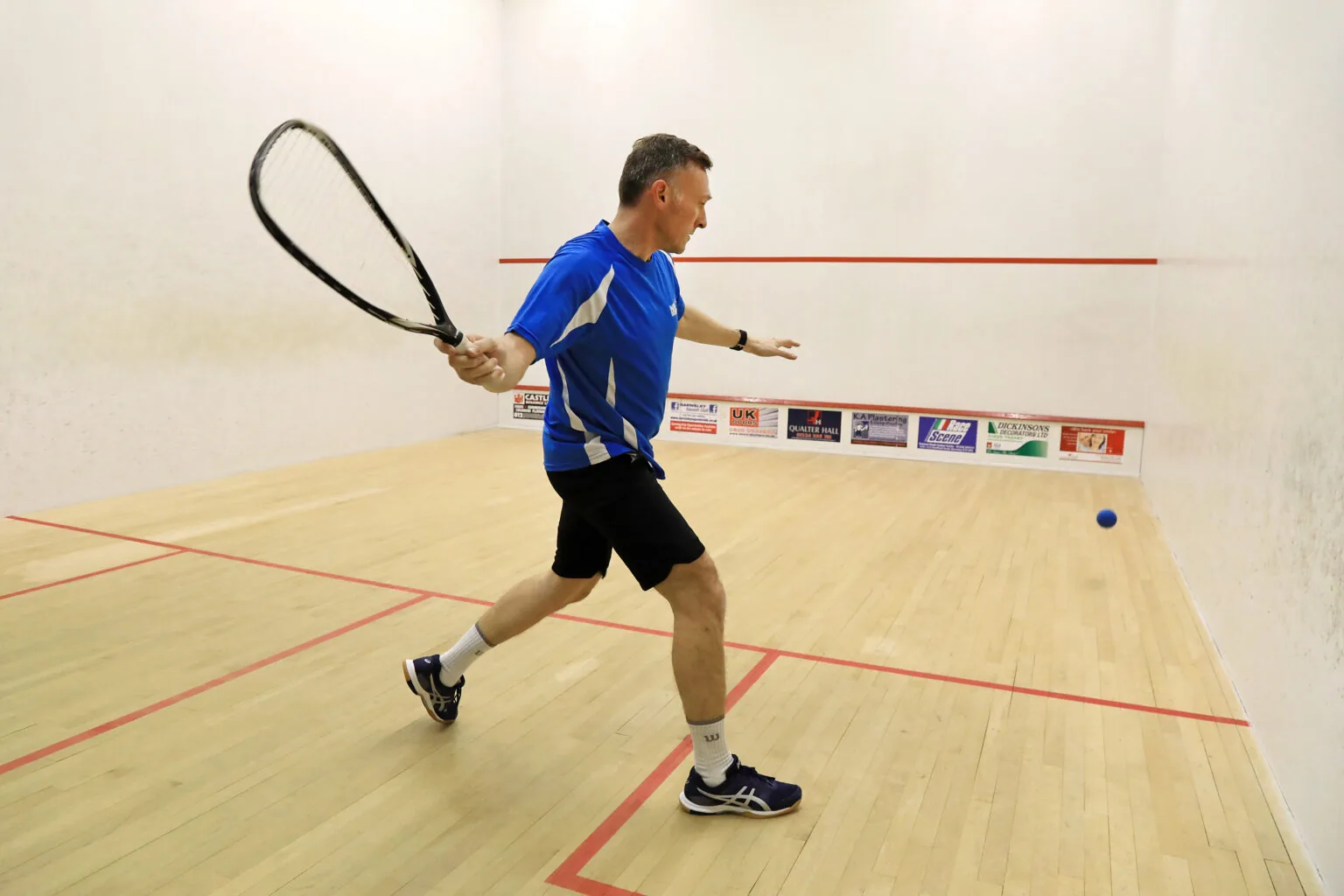
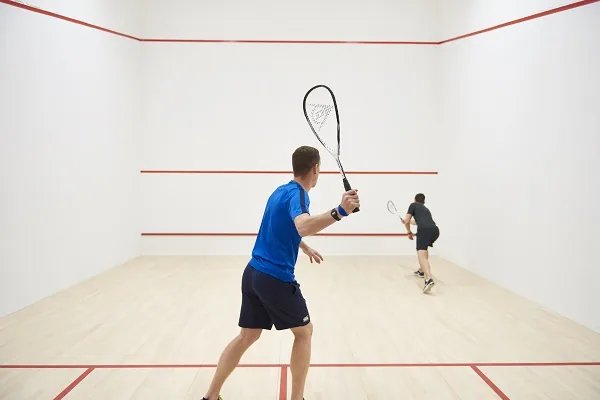
A squash court floor is usually light-coloured sprung maple or a similar hardwood. Black rubber soles leave dark streaks when you twist and brake on it. The marks are hard to clean, make the floor look dirty and, in time, make the surface slippery, because rubber residue and dust sit together.
That is why the rule is so common. In our directory:
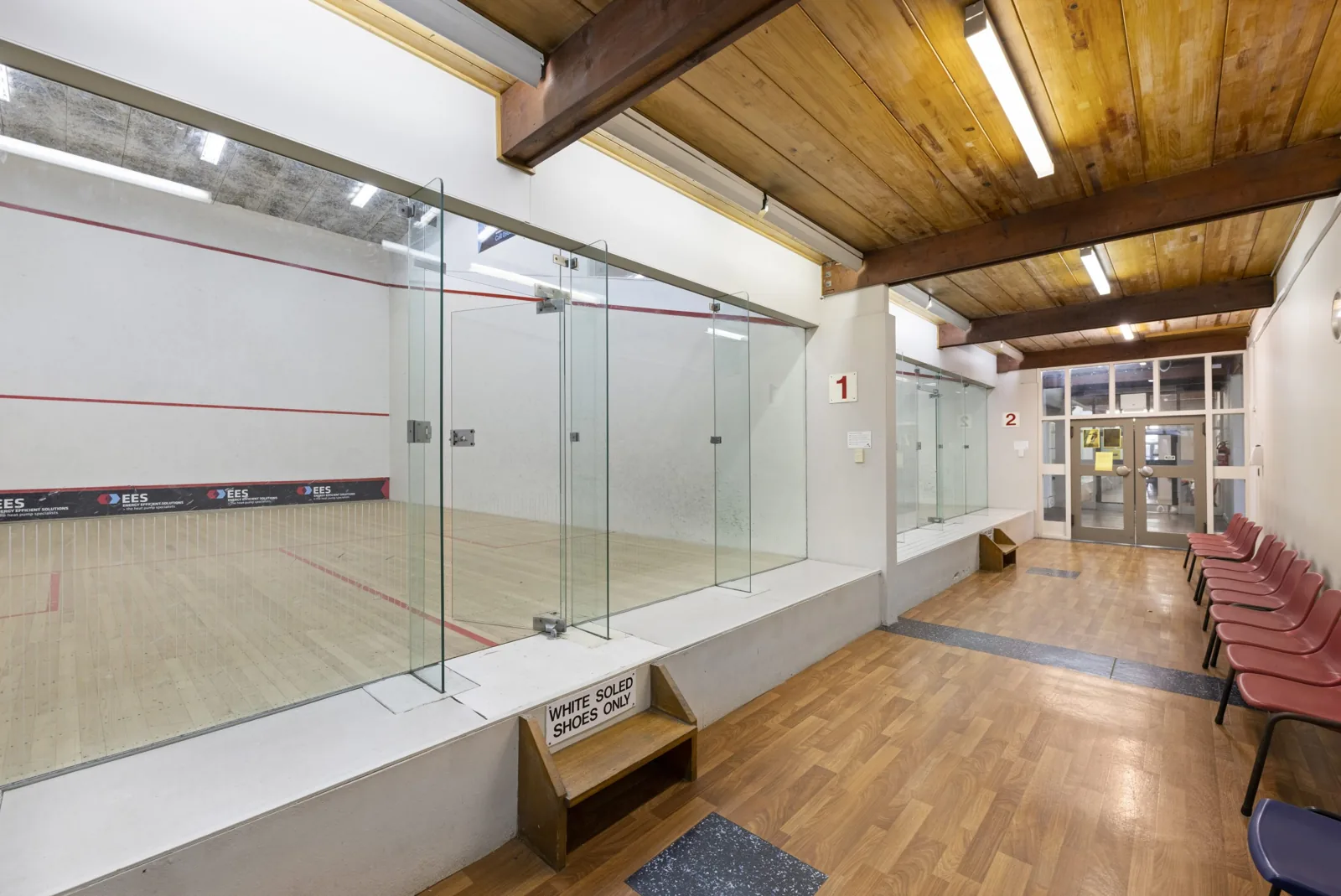
- Remuera Rackets Club in Auckland has a sign on the bench by its courts reading "white soled shoes only".
- Strathclyde Sport in Glasgow says no black-soled shoes on court, and Sportclub Match in Amsterdam does not allow shoes with black or marking soles.
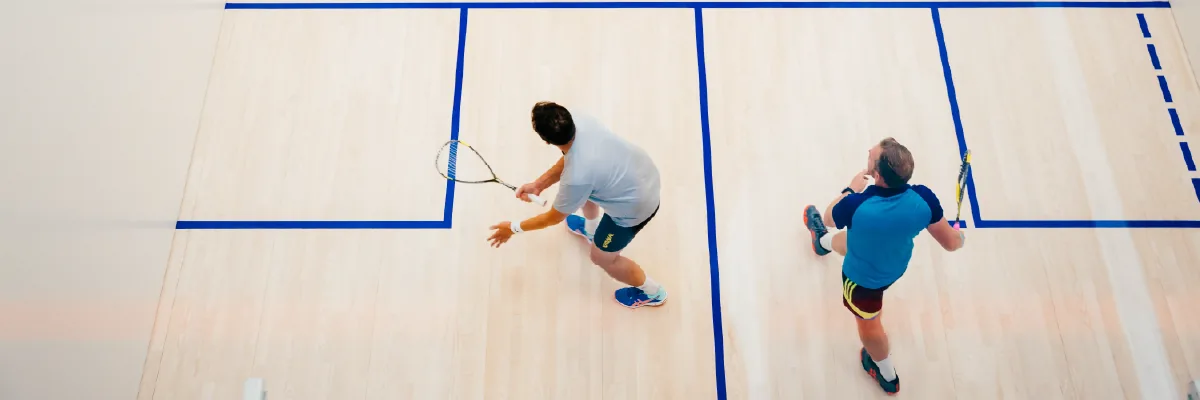
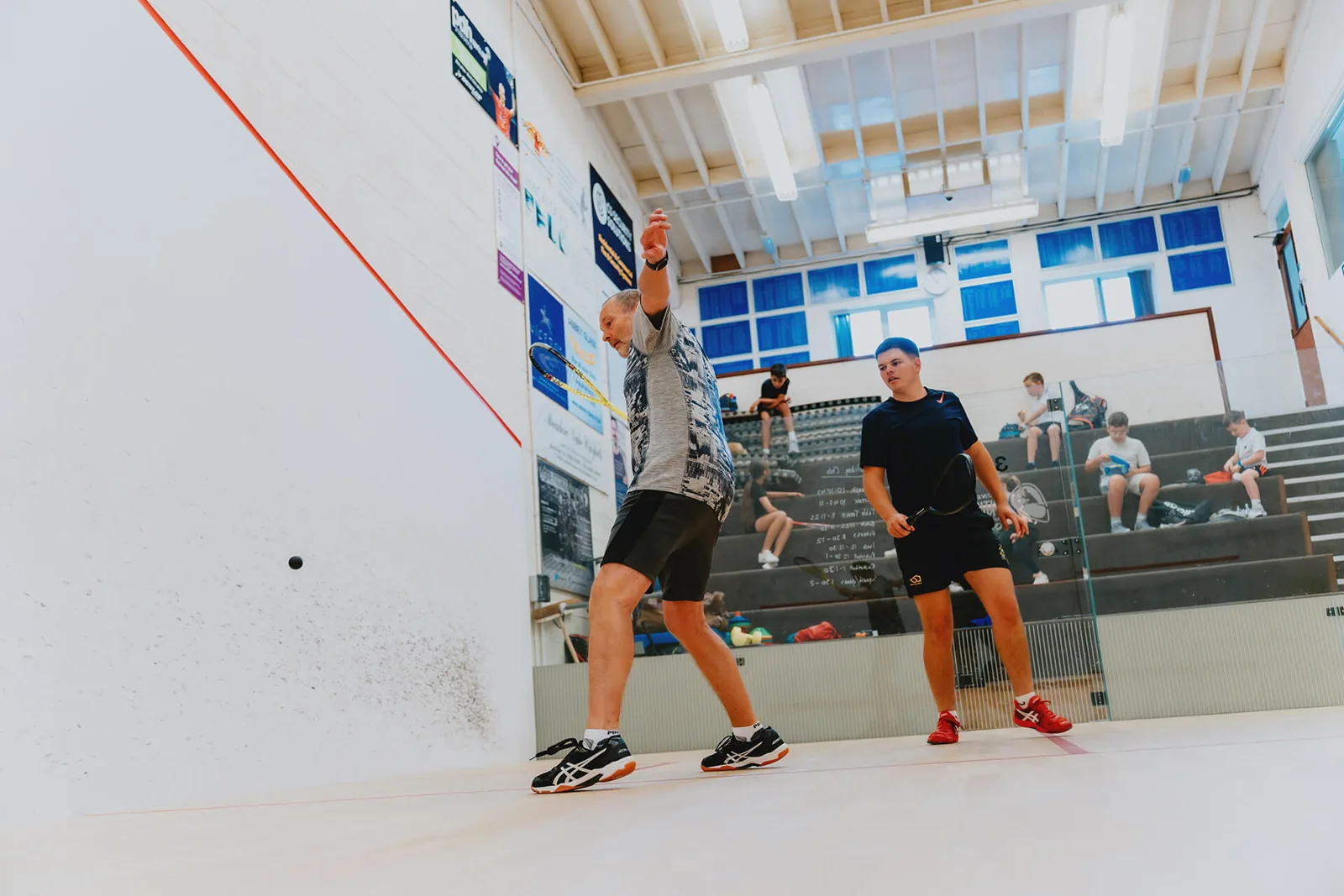
- Ravelin Sports Centre in Portsmouth and Duffield in Derbyshire ask for clean, non-marking trainers.
Not every black sole marks, and not every white sole is safe. Some dark shoes use non-marking compounds, and some cheap white soles still leave streaks. Look for "non-marking" on the label or the sole itself. If a shoe is not labelled, rub the sole hard on a piece of white paper: if it leaves a line, it will mark the court.
What makes a good squash shoe
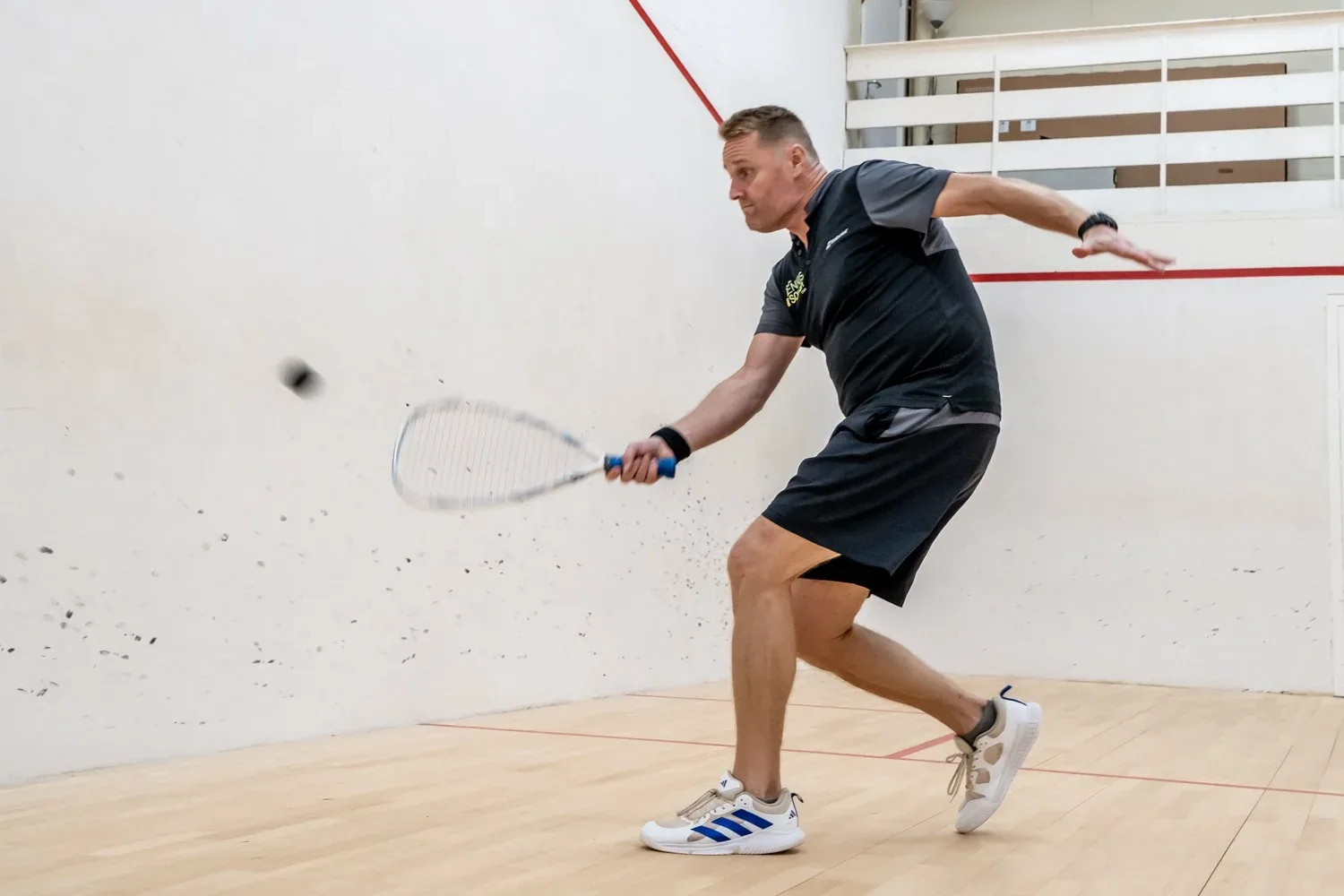
- Gum or non-marking rubber sole. Gum rubber grips well on wooden floors and does not mark. Many squash shoes have a honeycomb or herringbone tread for grip in every direction.
- Low and flat. Your foot sits close to the floor, so you are less likely to roll over the edge of the shoe when you change direction.
- Lateral support. Firm sides and a snug heel stop your foot sliding inside the shoe on lunges.
- Reinforced toe. Squash players drag the back foot and lunge hard on the front foot. A rubber wrap at the toe stops the upper wearing through.
- Enough cushioning. Squash is hard on the knees and heels. You want some cushioning under the forefoot and heel without the tall, soft stack of a running shoe.
Why not running shoes
Running shoes are built to move you forward in a straight line. They have a raised heel, a lot of soft foam and a narrow, curved sole that rolls from heel to toe. Squash asks for the opposite: quick stops, sharp sideways pushes and deep lunges.
On court, a running shoe lets your foot slide over the edge of the sole, and the high heel puts you further from the floor. Many running shoes also have black or dark carbon rubber outsoles that mark. Use them to get to the club, and change before you go on court.
Other indoor shoes that work
You do not need a shoe labelled "squash". Other indoor court shoes are built for the same movement:
- Badminton shoes. Very close to squash shoes: low, light and gum-soled.
- Volleyball and handball shoes. Good grip and support, sometimes a little heavier.
- Indoor or "court" trainers from general sports brands, as long as the sole is non-marking.
Avoid tennis shoes made for clay or hard courts unless they are marked non-marking. Many have dark, hard-wearing soles designed for outdoor surfaces.
Words differ by country: trainers in the UK, runners in Ireland and parts of Australia, sneakers in North America and elsewhere. Venue rules use all of them. What matters is the sole.
Keep them for indoors. Wearing court shoes outside picks up grit that scratches the floor and wears the soft gum sole. Carry them in your bag and put them on at the venue. Our list of what to bring to a squash game covers the rest of your kit.
Fit, grip and care
- Try them with sports socks, the same thickness you play in. There should be a thumb's width of space at the toe and no movement at the heel.
- Test them sideways. In the shop, step side to side and lunge. Your foot should stay over the sole.
- Wipe the soles if the court feels slippery. Dust builds up on gum rubber; a damp hand or cloth between games restores grip.
- Replace them when the tread is smooth under the ball of the foot or the cushioning feels flat. Worn soles slip.
Shoes are one part of what to wear on court. Our guide to what to wear for squash covers clothing, socks and eye protection.
Ravelin Sports Centre (University of Portsmouth)
Portsmouth · Non-marking trainers required
Duffield Rackets and Fitness
Derby · Non-marking shoes required
Strathclyde Sport
Glasgow · No black soles
FAQ
Can I wear running shoes for squash?
It is not a good idea. Running shoes have high, soft heels and little side support, so your foot can roll on sideways moves. Many also have dark soles that mark the court.
What does non-marking mean?
The sole is made from rubber that does not leave black streaks on a wooden floor. Look for the word on the label or sole. A rub test on white paper is a quick check.
Are badminton shoes OK for squash?
Yes. Badminton shoes are low, light and gum-soled, which is exactly what squash needs. Volleyball and other indoor court shoes also work.
Will a venue really turn me away for the wrong shoes?
Many will. Clubs and leisure centres protect their floors, and some put signs on the court doors. If in doubt, bring a pair of non-marking indoor shoes.