Do you need squash goggles?
 By the Find My Squash Court team·
Updated ·
6 min read
Most adult club players do not wear eye protection, and most get away with it. The ones who do not can lose part of their sight. Squash goggles are cheap, light and, once you are used to them, barely noticeable. Here is what the rules say, what the evidence shows and what to buy.
The short answer
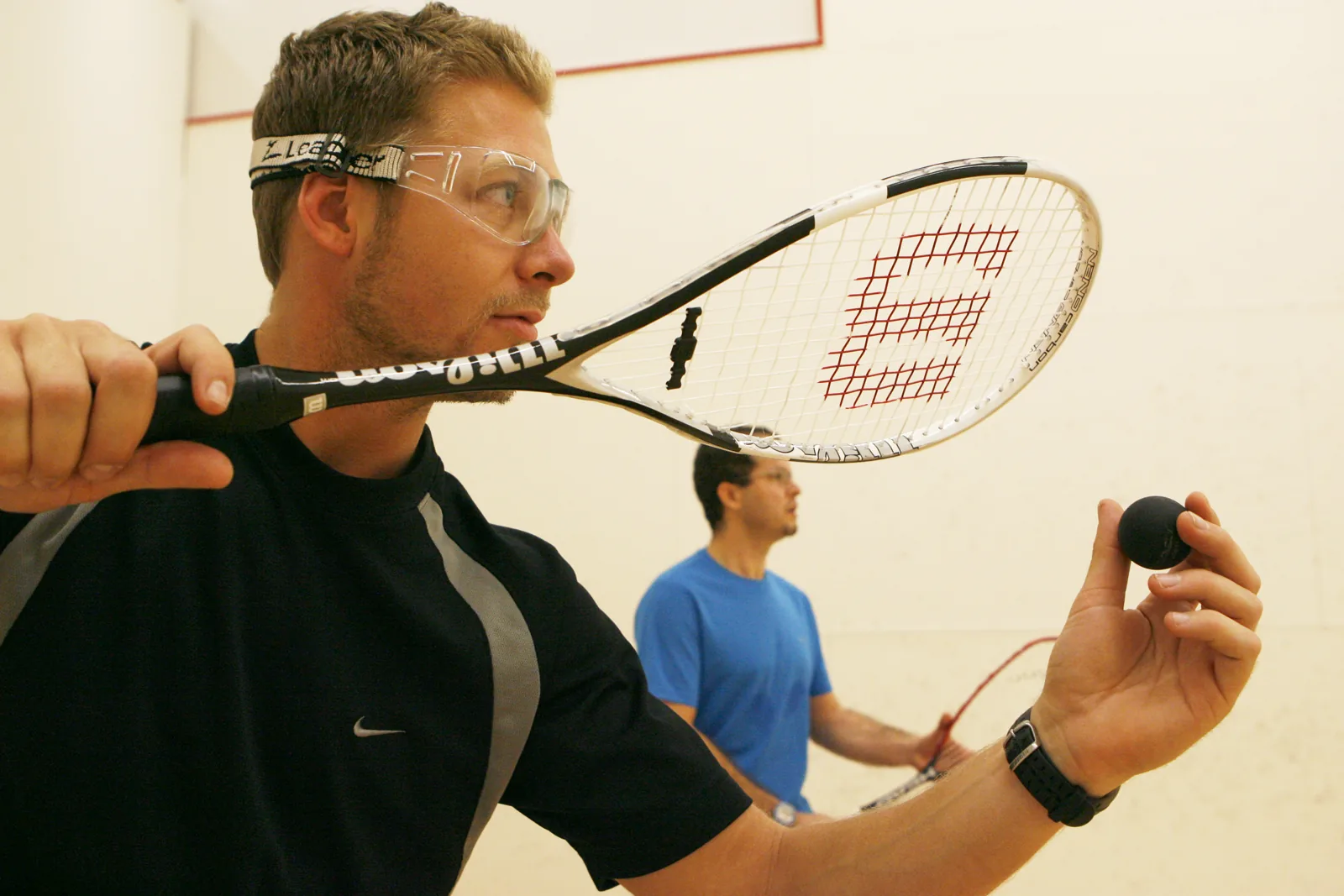
You should wear squash goggles, although adults are not required to in most singles play. A squash ball fits into the eye socket and can cause serious injury, and research on racket sports finds that the large majority of eye injuries happen to players with no eyewear. Juniors under 19 must wear them in England Squash and World Squash junior competitions, and all players must wear them in doubles events. Buy eyewear certified to a squash standard such as EN ISO 18527-2 or ASTM F3164. Open frames with no lenses and ordinary glasses do not protect you.
Why squash is risky for eyes
Three things make squash worse for eyes than most sports:
- The ball is the wrong size. A squash ball is about 40 mm across, small enough to fit into the eye socket rather than being stopped by the bones around it. It is also soft, so on impact it squashes further in.
- The ball moves fast in a small space. You stand close to your opponent and the ball rebounds off the walls at angles you do not always expect.
- Rackets swing near your face. Many eye injuries come from an opponent's racket on the follow-through, not the ball.
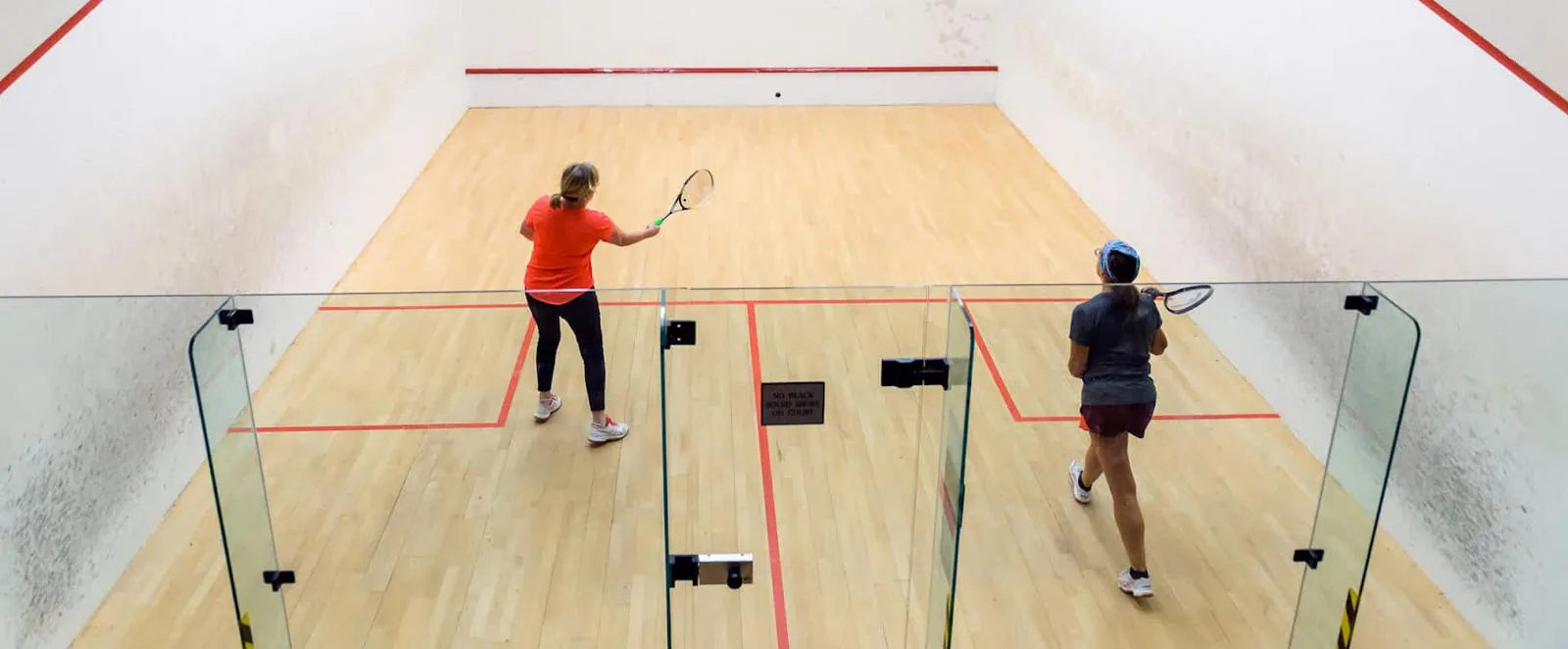
A risky moment is turning to watch your opponent hit from behind you, especially out of the back corner. You are looking straight at the ball as it leaves the racket.
What the evidence shows
Studies of squash eye injuries go back decades and keep finding the same thing.
- Most injured players were not wearing eyewear. A 2024 systematic review of eye injuries in squash, racketball, tennis and badminton found that, across the studies it analysed, the median share of eye injuries that happened with no eyewear was 93%. Some injuries were serious and needed complex treatment.
- Lensless guards do not work in squash. The same review found that open eye guards without lenses were ineffective in squash and racketball, because the ball deformed and still reached the eye. Only eyewear meeting updated ASTM or similar standards was associated with no eye injuries.
- Glasses and contacts can make it worse. Prescription lenses, contact lenses and industrial safety glasses made some injuries more severe.
- Squash stands out. A German study of sports eye injuries treated in Berlin around 1991 found that 78 of the 234 cases, a third, came from squash, more than from football or tennis.
- Few adults protect themselves. In a survey of adult players in Melbourne, 92.2% did not wear standards-approved protective eyewear.
Not every injury is permanent, and many heal fully. But serious squash eye injuries include bleeding inside the front of the eye and damage to the structures that drain fluid from it.
When goggles are compulsory
| Situation | Rule |
|---|---|
| Juniors in England Squash competitions | Under 19s must wear eye protection in any competition, including adult events |
| World Squash junior and team championships | Players under 19 must wear protective eyewear |
| Doubles | All players, at any age, in doubles competitions |
| Adult singles | Recommended, not compulsory, under World Squash rules |
| Squash 57 (racketball) | Encouraged by World Squash, not compulsory |
| Clubs and leisure centres | Set their own rules, so check before you play |
England Squash also strongly recommends eye protection for all players, adults included, during training and practice. Check your national body's policy if you play in Ireland, Australia, New Zealand or Canada, as junior rules and approved standards differ. The World Squash eyewear page lists the current standards.
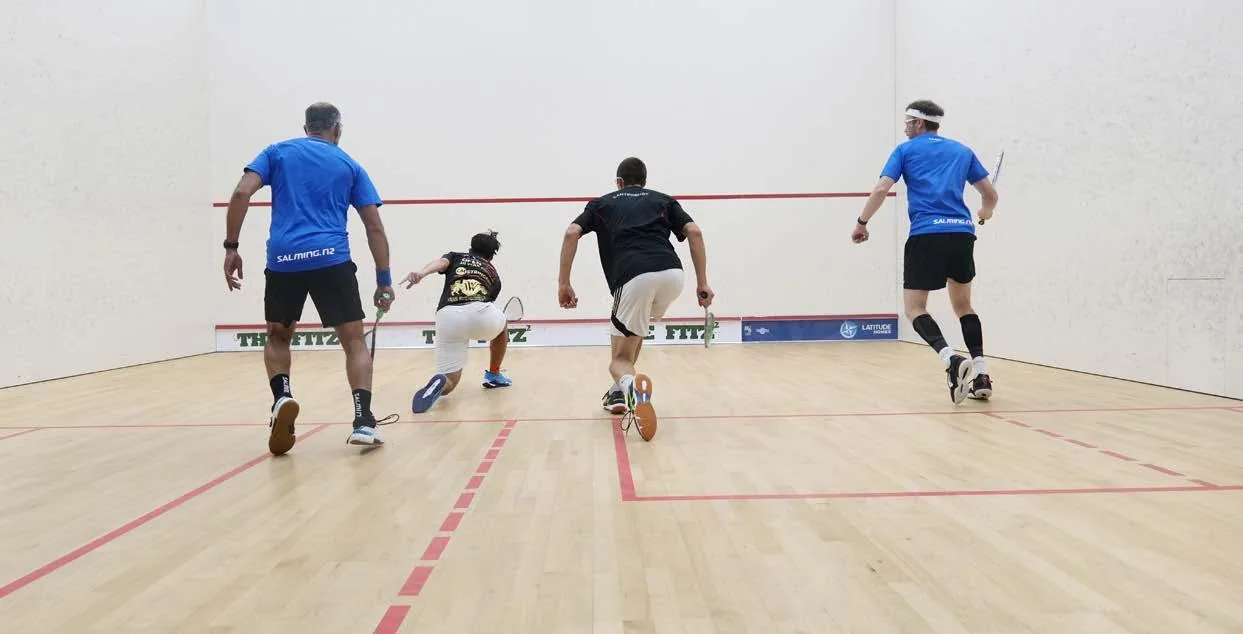
Christchurch Squash Club
Christchurch · Doubles squash court
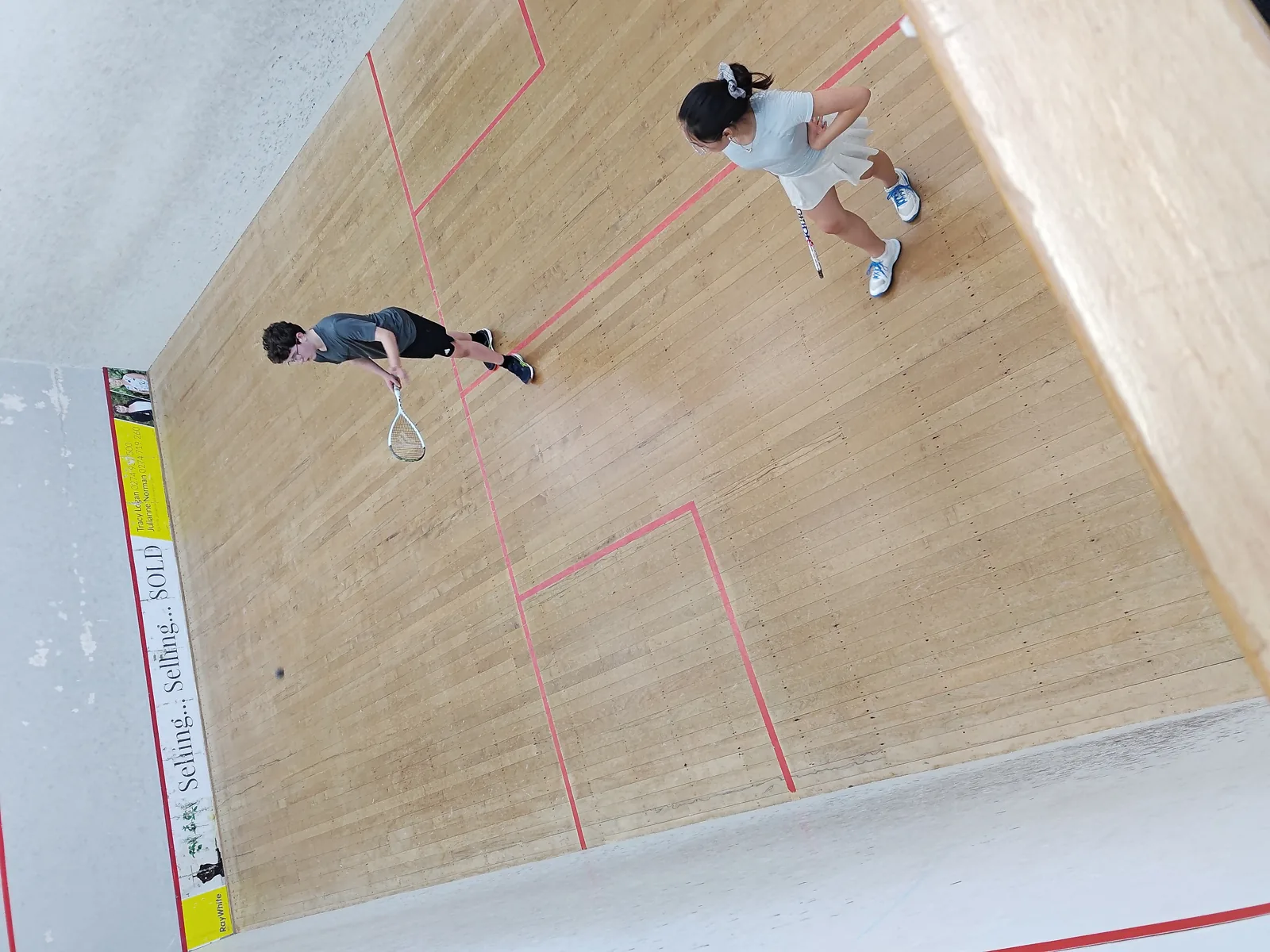
Khandallah Tennis & Squash Club
Wellington · Club coaching
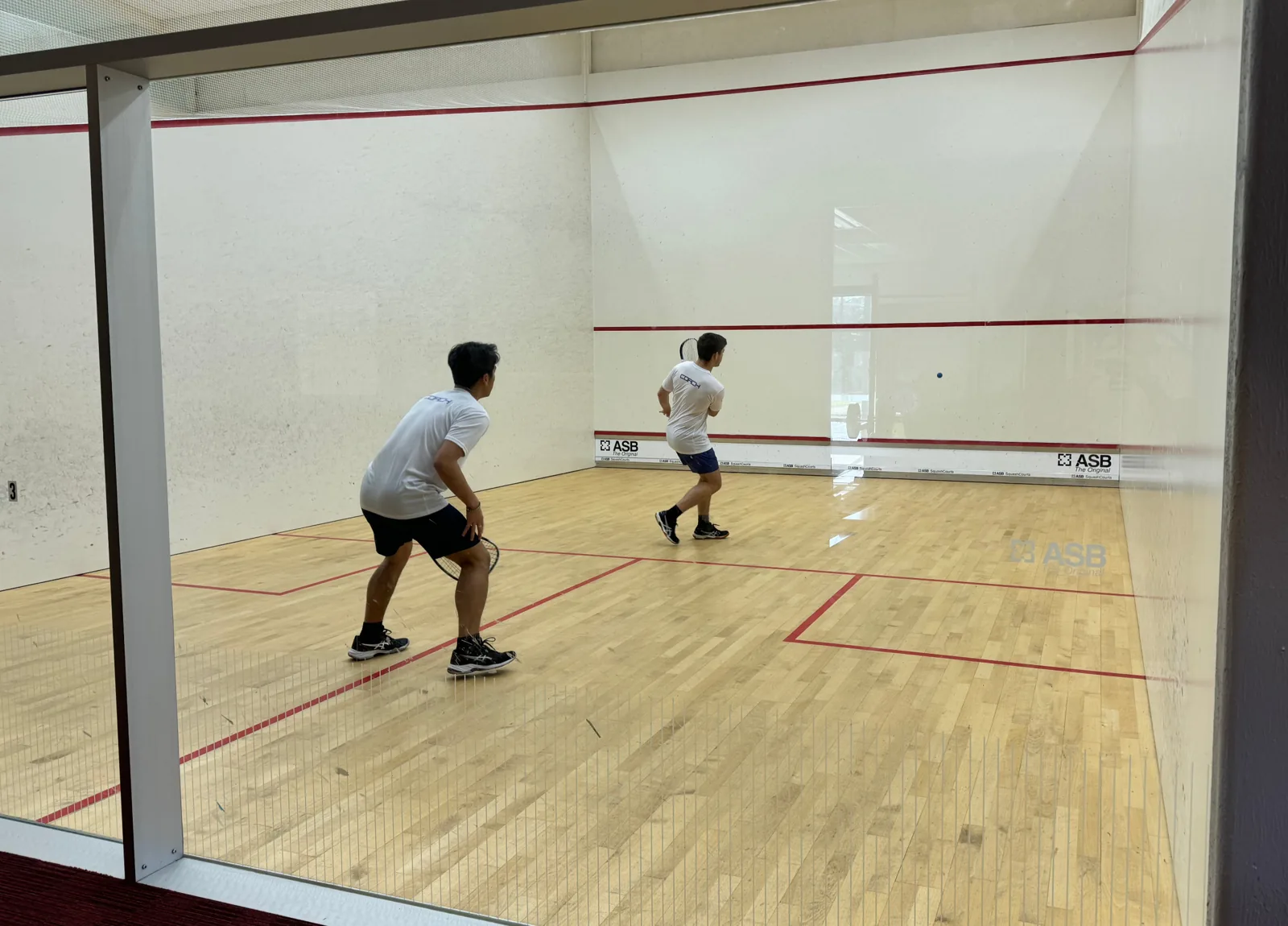
Grace Park Hawthorn Club
Melbourne · All-glass court
What to buy
The single most important thing is a certification for squash. World Squash accepts eyewear tested to:
- ISO 18527-2:2021, the international standard,
- BS EN 18527-2:2021, the UK version, which England Squash tells buyers to look for,
- ASTM F3164-19, the US standard. US Squash still accepts the older ASTM F803.
The standard is usually printed on the frame or packaging. If it is not, do not rely on it.
Other things to look for:
- Polycarbonate lenses that do not pop out of the frame on impact.
- A wraparound shape that covers the sides of your eyes too.
- An adjustable strap rather than arms only, so the goggles stay put when you lunge.
- Anti-fog coating. Fogging is the most common reason players give up on goggles.
- Size. Junior frames for children and small adult faces; larger frames if you need to wear them over glasses.
If you wear glasses, read squash with glasses or contact lenses for prescription options. Goggles fit easily in a racket bag; see what to carry in a squash bag.
Avoid lensless guards. Open frames with no lenses are still sold in some shops. The research is clear that a squash ball can squeeze through the opening. Buy goggles with lenses.
Fit, fogging and comfort
Most players who try goggles find they forget about them within a few games. To get there:
- Try them on before buying. The frame should sit snugly without pressing on your nose or cheeks, and you should see clearly to the sides.
- Tighten the strap so the goggles do not move when you shake your head.
- Put them on before your warm-up, so they reach court temperature and fog less.
- Clean the lenses with water and a soft cloth. Paper towels scratch the coating.
- Wear a headband to stop sweat running into the frame.
FAQ
Are squash goggles compulsory?
For adults in singles, usually not, although they are strongly recommended. Juniors under 19 must wear them in England Squash and World Squash junior events, and everyone must wear them in doubles competitions. Some clubs have their own rules.
Can I use swimming goggles or sunglasses for squash?
No. They are not tested for squash ball impacts and can shatter or be pushed into the eye. Use eyewear certified to a squash standard such as EN ISO 18527-2 or ASTM F3164.
Do professional squash players wear goggles?
Many adult professionals play without them, because they are not compulsory in adult singles. Players who came through junior squash with goggles often keep wearing them.
How do I stop squash goggles fogging up?
Choose goggles with an anti-fog coating, put them on during your warm-up, wear a headband and keep the lenses clean. A light anti-fog spray can help in humid courts.