Common squash injuries
 By the Find My Squash Court team·
Updated ·
6 min read
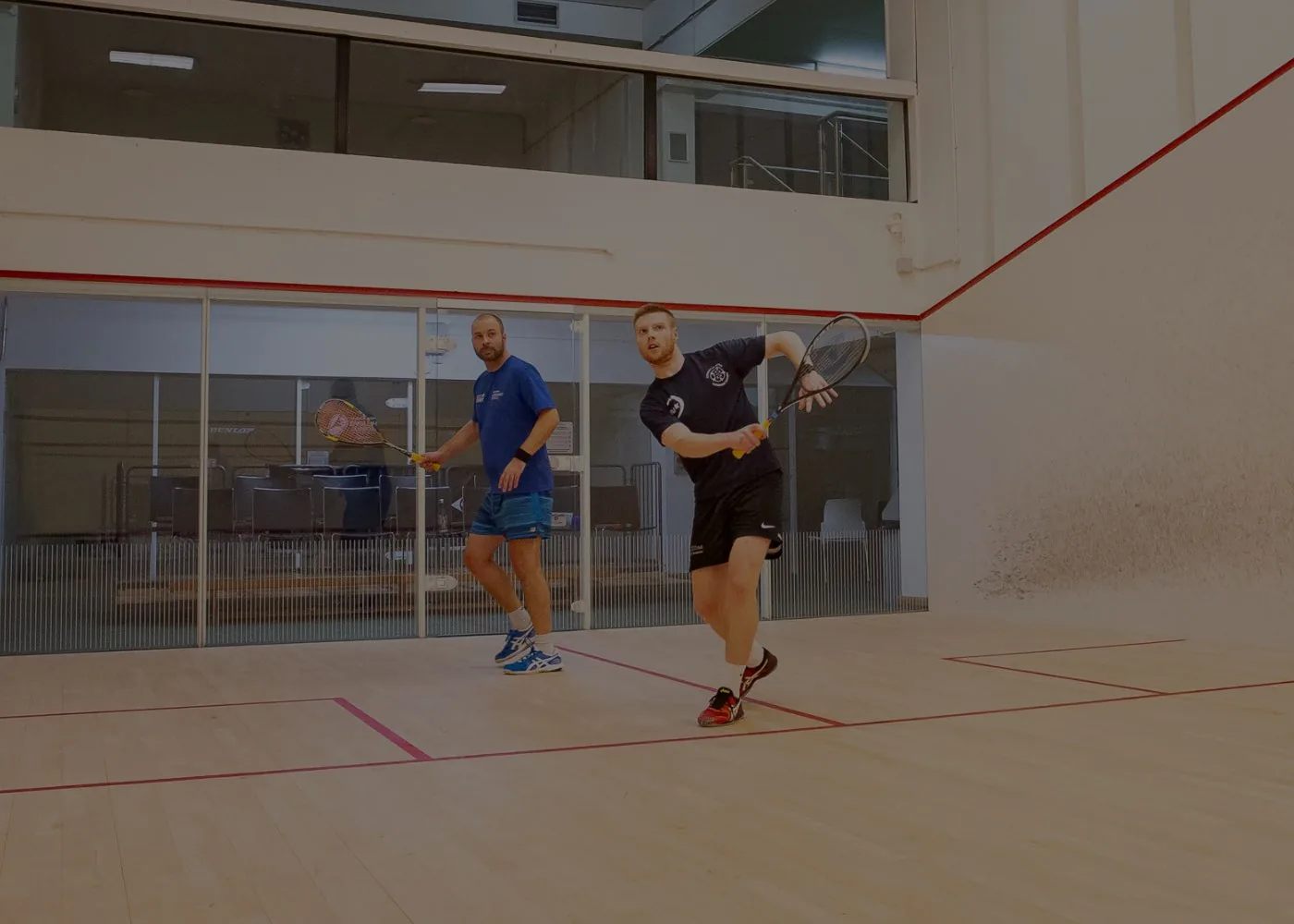
Squash is fast, in a small box, with a hard ball and two rackets swinging. Most injuries are not dramatic: a rolled ankle, a strained calf, a sore elbow that will not settle. A few are serious, and the eye is the one to take seriously. This guide covers what tends to go wrong and how to lower the odds.
The short answer
Most squash injuries are to the legs: ankle sprains, calf and hamstring strains, knee pain and Achilles tendon problems, caused by lunging, twisting and pushing off. Elbow and shoulder overuse injuries come next. Eye injuries from the ball or racket are less common but can be severe, and almost all happen to players without protective eyewear. Warming up, decent shoes, building up gradually and wearing certified eyewear prevent much of it.
Where squash injuries happen
Research on squash injuries is patchy, and studies count injuries in different ways, so exact rates are hard to compare. The pattern, though, is consistent.
- A 2026 systematic review and meta-analysis of squash injury studies found lower-limb soft tissue injuries were the most common type, and noted poor use of protective equipment among players.
- A review of injury records for England Squash's funded elite players from 2004 to 2015 found that just over three quarters of injuries were to the lower limb. The ankle and heel were the most affected area, followed by the thigh, knee and hip or groin.
Club players are not professionals, but the movements are the same. Recreational players also tend to warm up less, play tired, and wear the wrong shoes.
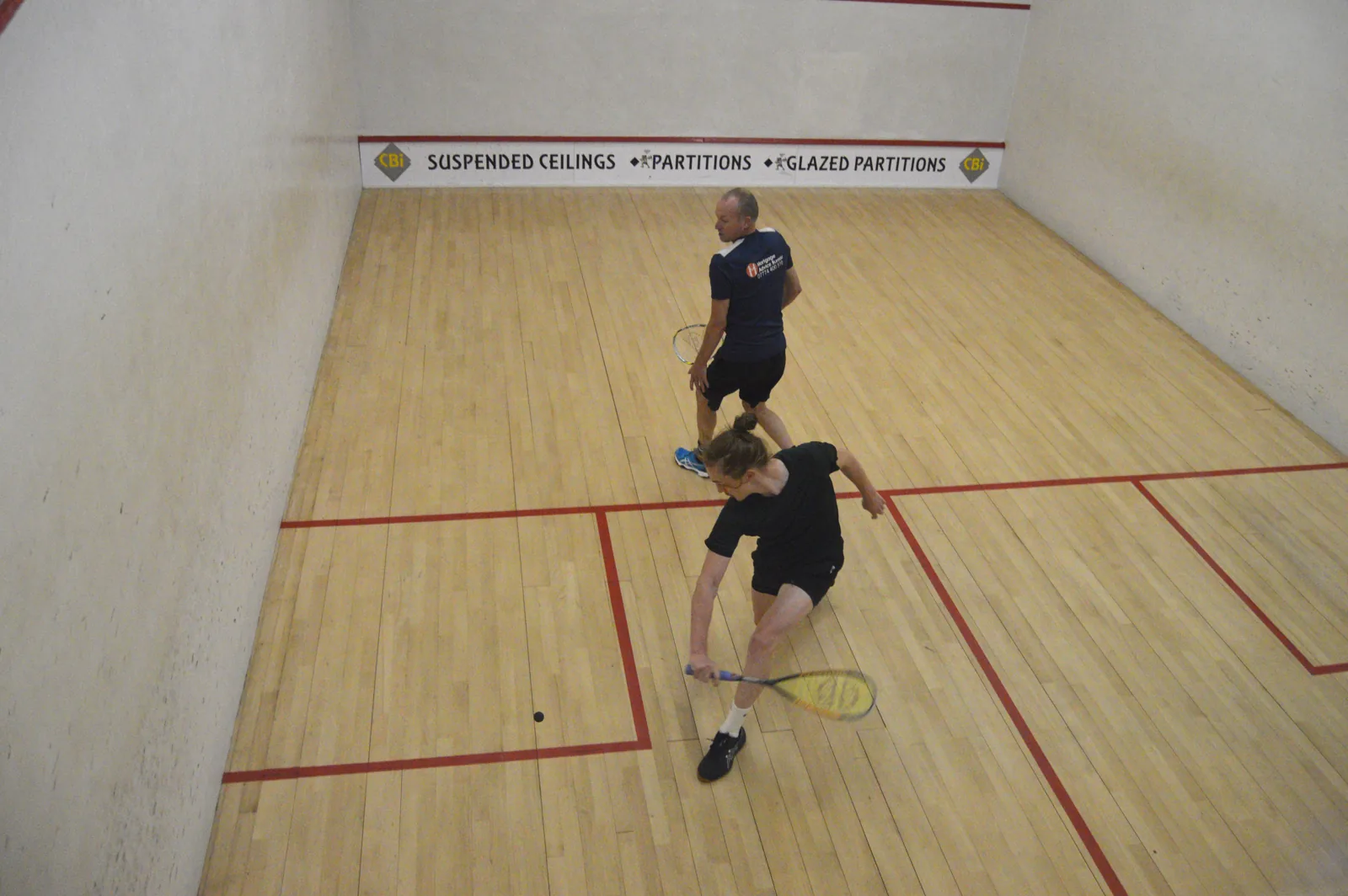
Leg injuries
Ankle sprains
The classic squash injury. You land on the side of your foot while turning, or step on your opponent's foot, and the ankle rolls. Sticky courts, worn shoes and tired legs late in a match all make it more likely.
Calf strains and Achilles problems
Pushing off hard from the back of the court loads the calf and Achilles tendon. A calf strain feels like a sharp pull in the back of the lower leg. Achilles tendinopathy builds slowly as stiffness and pain above the heel, often worst in the morning. An Achilles rupture is sudden: NHS hospital guidance describes it as feeling like you have been hit or kicked in the calf.
Knee pain
Repeated lunging loads the front of the knee, and twisting on a planted foot can strain ligaments or the meniscus. See squash and knee pain for the common causes and what helps.
Hamstring, groin and back
Long reaches to the front corners stretch the hamstrings and groin, and the low, bent posture of squash can leave your lower back sore, especially if you are new to the sport.
Ravelin Sports Centre (University of Portsmouth)
Portsmouth · Two side-by-side courts
Khandallah Tennis & Squash Club
Wellington · Squash club nights
Talihalli (Talin sulkapallo- ja squashkeskus)
Helsinki · Full-glass show court
Elbow, wrist and shoulder
Overuse injuries in the arm come from repeating the same swing hundreds of times. The best known is tennis elbow, pain on the outside of the elbow linked to repeated gripping and twisting of the forearm. Squash players get it too, especially with a tight grip, a heavy or head-heavy racket, or a sudden rise in how much they play. Our guide to tennis elbow from squash covers it in detail.
Wrist pain and shoulder strain are less common. They tend to follow a jump in playing time, poor technique on the backhand, or a lot of overhead volleying.
Eye and face injuries
A squash ball is small enough to fit into the eye socket, and it squashes on impact. A 2024 systematic review of eye injuries in racket sports found that, in the studies it analysed, the median share of eye injuries that happened to players wearing no eyewear was 93%. It also found that open, lensless eye guards did not protect squash players, because the ball deforms and can still reach the eye. Ordinary prescription glasses and contact lenses made some injuries worse.
Few adults protect their eyes. A survey of adult players in Melbourne found that 92.2% did not wear standards-approved protective eyewear. Juniors must wear it in England Squash competitions and in World Squash junior championships, and players of all ages must wear it in doubles competitions. Read do you need squash goggles for which eyewear to buy.
Racket strikes to the face, cuts from the frame, and collisions with the walls or your opponent make up most of the other acute injuries. Learning to clear the ball and asking for a let rather than swinging into your opponent prevents a lot of them.
How to lower your risk
- Warm up for five to ten minutes before you hit: easy movement, lunges, side steps and a few short sprints. Warming the ball is not a warm-up for your body. See a squash warm-up.
- Wear proper indoor court shoes with non-marking gum soles and side support. Running shoes have high heels and little side support, which suits ankle rolls.
- Wear certified eyewear, every game.
- Build up gradually. Jumping from one game a month to four a week is a common route to Achilles and calf trouble.
- Strengthen your legs. Calf raises, squats and lunges once or twice a week make your legs more resilient.
- Stop when you are exhausted. Many injuries happen late in long, tired matches.
- Keep the court safe. Wipe up sweat on the floor, and do not play on a dusty or slippery court.
Safety on court. If you are not sure you can play the ball without hitting your opponent, stop and ask for a let. The rules give you one for exactly that reason, and the risk of a racket in the face is not worth the point.
When to stop and get help
Stop playing straight away if you feel a pop or sudden sharp pain in your calf or heel, cannot put weight on a leg, or are hit in the eye. Any blow to the eye that leaves blurred vision, pain or bleeding needs urgent assessment, the same day. For pain that builds over weeks, rest from squash and see a doctor or physiotherapist if it is getting worse or not improving with self-care. In the UK, the NHS knee pain page is a good example of when to get urgent advice and when self-care is fine.
FAQ
What is the most common squash injury?
Ankle sprains and other lower-leg injuries, such as calf strains, are the most common. Studies consistently find most squash injuries are to the legs.
Is squash a dangerous sport?
For most people it is a safe way to get fit, but it has more injuries than gentler sports because of the speed, sudden turns, hard ball and rackets. Eye protection and a proper warm-up remove a lot of the risk.
How long does a squash ankle sprain take to heal?
The NHS says most sprains feel better after about two weeks, but advises avoiding strenuous activity for up to 8 weeks to reduce the risk of further damage. Severe sprains can take months. Return to court only when you can hop and change direction on the ankle without pain.
Can I play squash with a sore Achilles?
It is better not to. Playing through Achilles pain can make it worse, and a painful tendon is more likely to tear. Rest from squash and get it checked if it persists.