Is squash dangerous?
 By the Find My Squash Court team·
Updated ·
6 min read
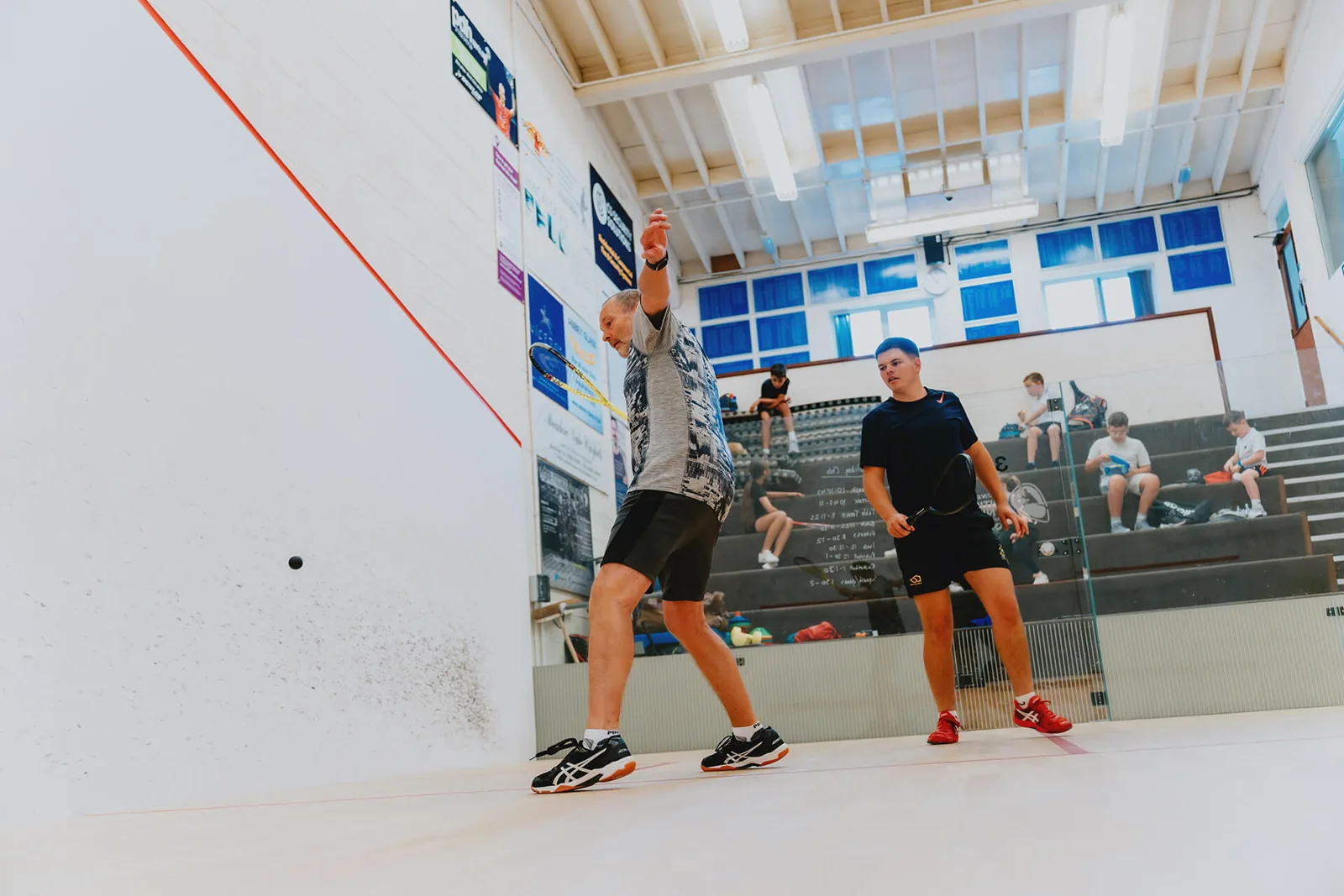
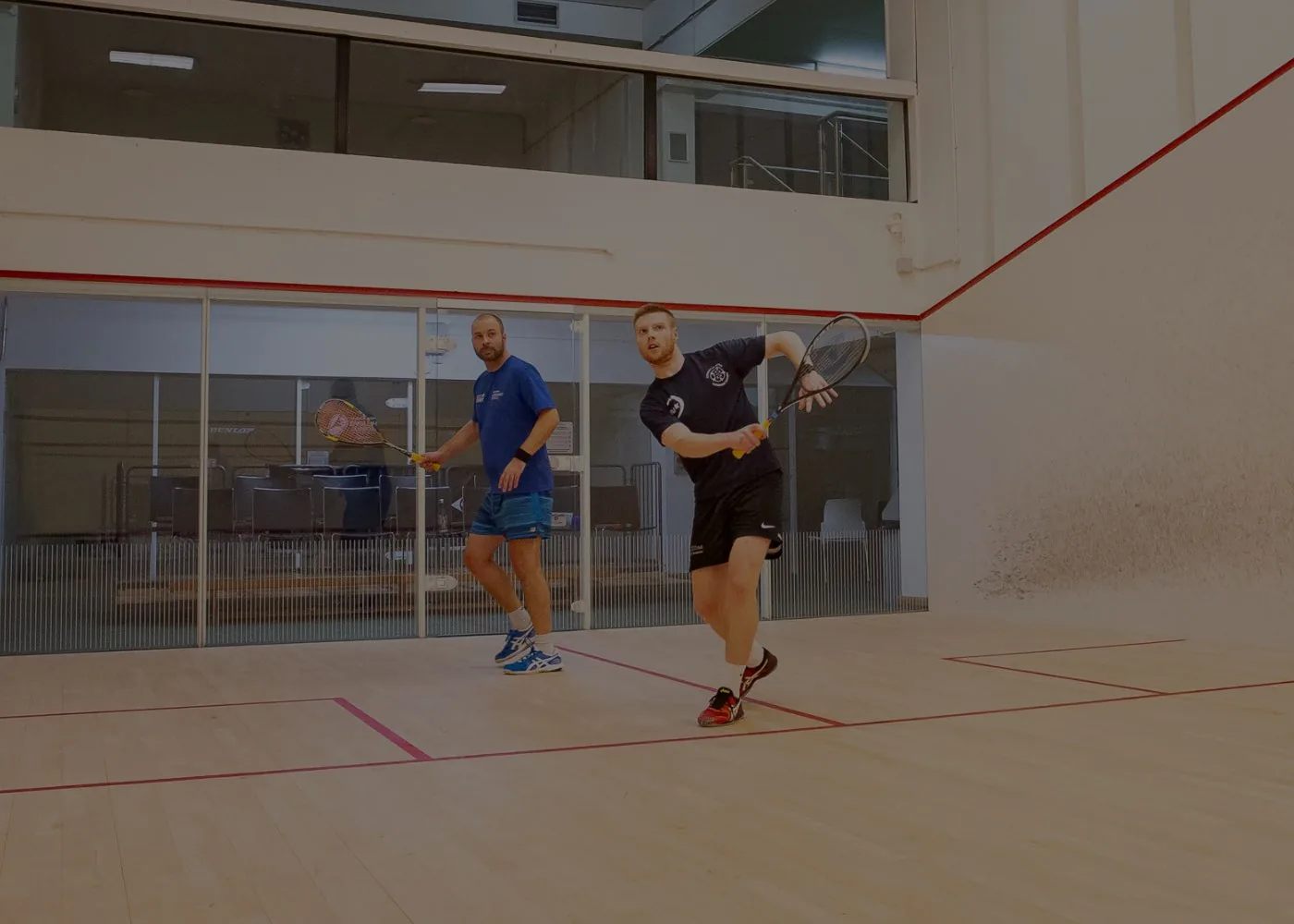
Two people swinging rackets at a fast rubber ball in a closed box does sound risky. Most squash injuries are the same strains and sprains you get in any running sport, but two risks deserve real attention: eye injuries and, for some older players, the heart.
The short answer
Squash is not especially dangerous for most players, but it has two serious risks. The ball is small enough to fit into the eye socket, so an eye strike can cause lasting damage, and properly certified squash goggles prevent most of that. And squash is intense, so people with undiagnosed heart disease can be at risk: a classic study of sudden deaths during squash found most had significant coronary heart disease, and many had warning symptoms beforehand. Everyday injuries are mainly ankle sprains, muscle strains and bumps from rackets and walls.
Eye injuries
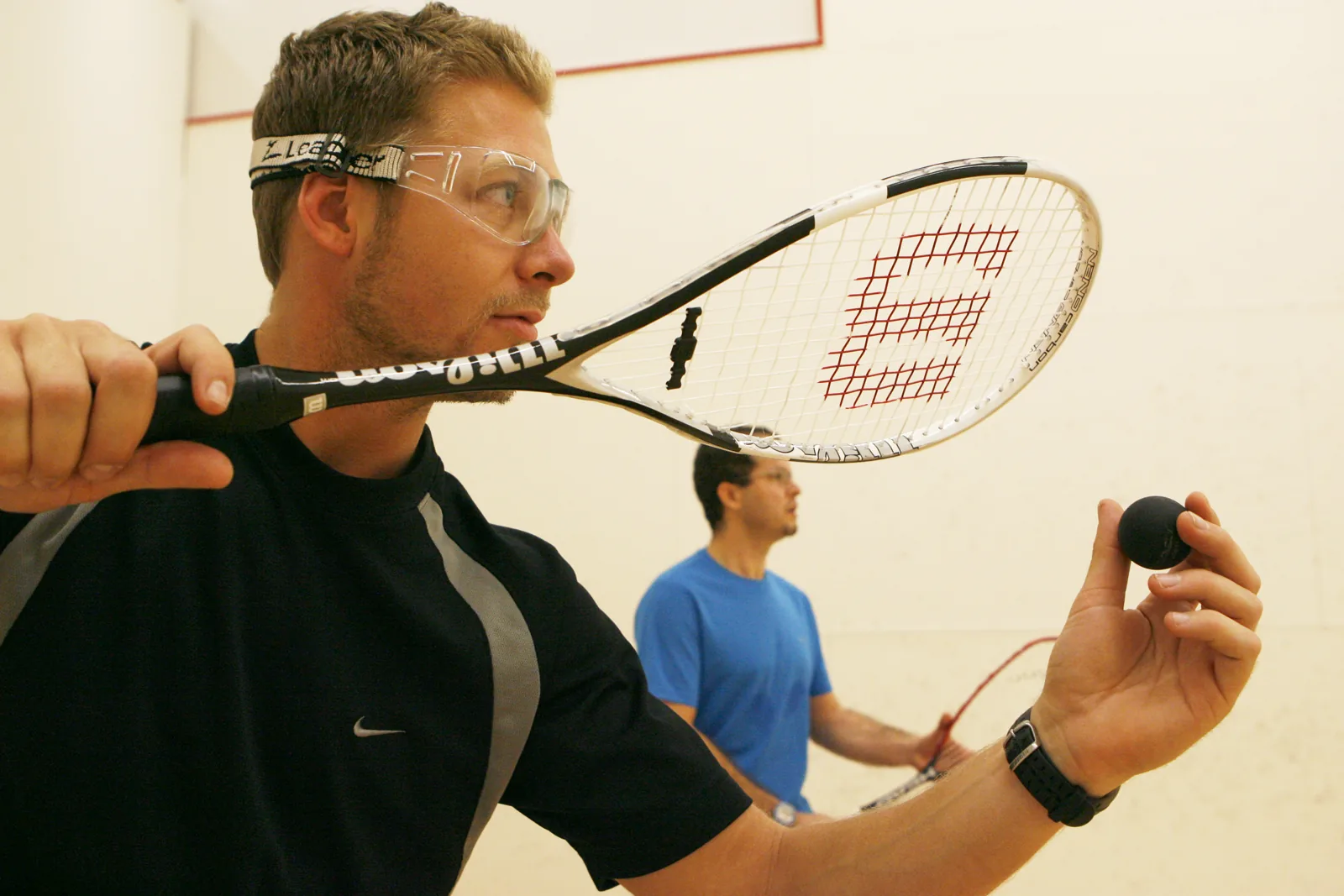
This is the injury squash is known for, and the reason is the size of the ball. A squash ball is 40 mm across. Eye doctors have long pointed out that this is close to the size of the opening of the eye socket. A larger ball, like a football, mostly hits the bony rim around the eye. A squash ball can go inside the rim and strike the eye directly.
A 2026 narrative review of sports eye injuries in the journal Quality in Sport notes that squash has repeatedly been identified as a leading cause of sports eye injuries in British case series. Reported injuries include bleeding inside the eye, retinal damage and, in a minority of cases, permanent loss of vision. The review also notes that being experienced does not protect you.
The ball is not the only hazard. A swinging racket at close range can catch an eye too, which is one reason World Squash makes eyewear compulsory in doubles, with four players in the court.
What protects your eyes
- Certified squash goggles. Look for eyewear with impact-resistant polycarbonate lenses, tested to a racket sports standard such as ASTM F803. The World Squash Federation keeps a list of eyewear it has certified.
- Not open eyeguards. Frames without lenses were tried in racquetball, and injuries continued because a soft ball can squeeze through the gap. They do not protect you.
- Not ordinary glasses. Prescription glasses can shatter when hit and turn a blunt injury into a cut to the eye. If you need glasses, get prescription sports goggles or wear contact lenses under certified goggles.
The WSF recommends that all players wear protective eyewear at all times, including during the warm-up, and makes it compulsory at junior and doubles events played under its rules. Most adult club squash leaves it to you. Squash goggles and playing squash with glasses cover what to buy.
Heart risk
Squash is one of the most intense racket sports. Rallies push your heart rate high, and recovery between points is short. For a healthy heart, that is the reason squash is such good exercise. For a heart with undiagnosed disease, it can be a trigger.
The best-known study is a 1984 paper in The Lancet by Northcote, Evans and Ballantyne, which looked at 30 sudden deaths linked to squash. Almost all were men, with an average age of about 47. Of the 27 who had a post-mortem, 23 had significant coronary heart disease. Twenty-two had reported warning symptoms in the period before they died, and 12 had already been known to their GP to have a heart-related condition.
The lesson is not that squash causes heart attacks. It is that people with warning signs kept playing. If you get chest pain, pressure or tightness, faintness, palpitations or unusual breathlessness while playing, stop at once. If you have had any of these, have a heart condition, or are returning to hard exercise after years away, see a doctor before you play. Squash and heart risk covers this in more detail.
Don't play to win when you are unwell. Many players push through a match when they feel off, because they don't want to let a partner or league down. Squash is the wrong sport for that. Call the match off and rearrange it.
Common injuries
Most squash injuries are the ones you would expect from a sport full of sprints, sudden stops, lunges and twists:
- Ankle sprains, from turning sharply or landing on the side of the foot.
- Calf and Achilles strains, from pushing off hard, especially in older players and without a warm-up.
- Knee pain, from repeated lunging and twisting. See squash and knee pain.
- Lower back pain, from bending low to reach the ball.
- Elbow and shoulder pain, often from poor technique or a racket that does not suit you. Tennis elbow from squash explains the causes.
These are usually minor, and a proper warm-up, decent court shoes and building up gradually prevent many of them. Our guide to squash injuries covers each in more depth.
Oxford Brookes Sport, Headington
Oxford · 1 court
Dgen Squash
Sydney · Squash leagues
Sport Insel Taufkirchen
Munich · 8 courts
Rackets, walls and the other player
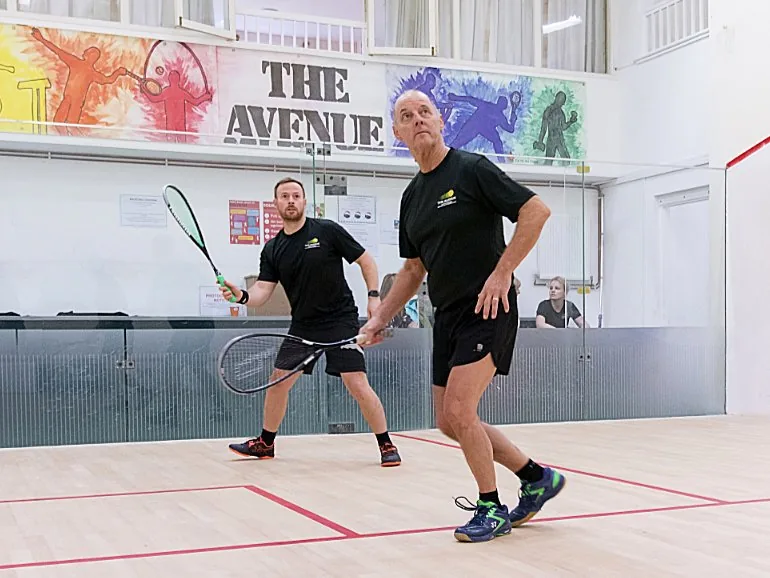
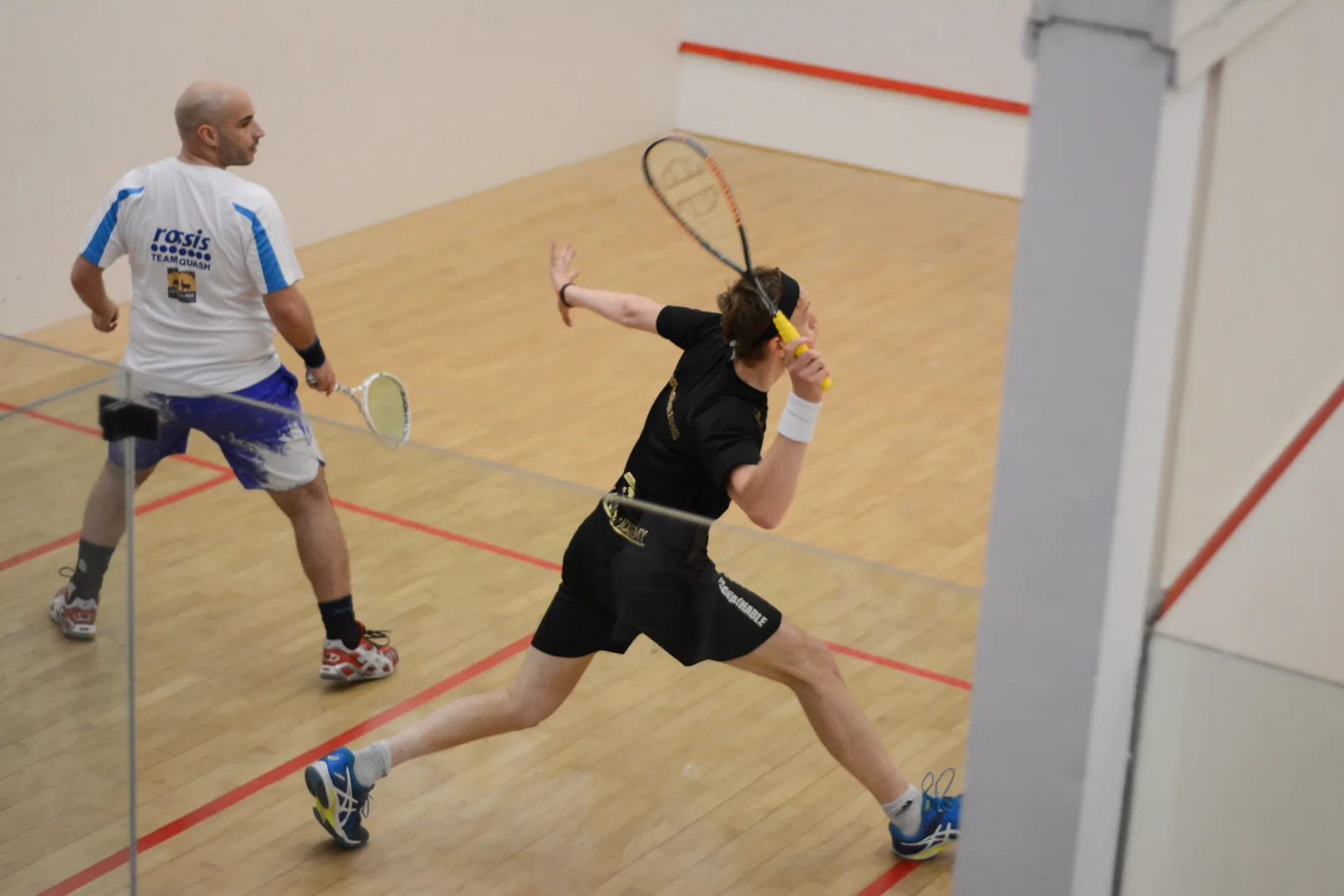
Squash is the only racket sport where both players share the same space. That brings its own knocks:
- Racket strikes to the face, arms or legs, usually from a follow-through when the other player is too close.
- Ball strikes to the body, which sting and bruise but rarely do lasting harm away from the eyes.
- Collisions with the other player or the walls when chasing a ball.
The rules are written around this. Players must give each other room to swing, and should stop and ask for a let rather than hit when someone is in the way. Turning to follow the ball round a back corner is allowed but dangerous if your opponent is nearby, and a referee can penalise it. Squash etiquette covers the unwritten side.
How to play more safely
- Wear certified squash goggles, every time.
- Warm up for five to ten minutes before you play, with light jogging, side steps and lunges. How to warm up for squash has a routine.
- Play opponents of a similar standard while you learn, so you are not chasing every shot at full stretch.
- Hold your swing whenever the other player is close. You lose nothing by stopping.
- Wear indoor court shoes with good grip and support, not running shoes.
- Drink water between games and stop if you feel dizzy or unwell.
- Build up gradually if you are new to the sport or returning after a long break, especially over 40. Squash over 50 has advice for older players.
FAQ
Can a squash ball blind you?
It can. The ball is small enough to strike the eye inside the socket, and serious squash eye injuries can cause permanent loss of vision. Certified squash goggles protect against this.
Do you have to wear goggles for squash?
Not in most adult club play, but World Squash recommends them for everyone and makes them compulsory at junior and doubles events. Some clubs also require them for juniors.
Is squash bad for your heart?
For most people it is good exercise. The risk is for people with undiagnosed heart disease, particularly middle-aged and older players who ignore warning symptoms. Anyone with symptoms or a heart condition should get medical advice first.
What is the most common squash injury?
Strains and sprains of the lower body, especially ankles, calves and knees, are the everyday injuries. Eye injuries are less common but the most serious.