Squash vs padel
 By the Find My Squash Court team·
Updated ·
5 min read
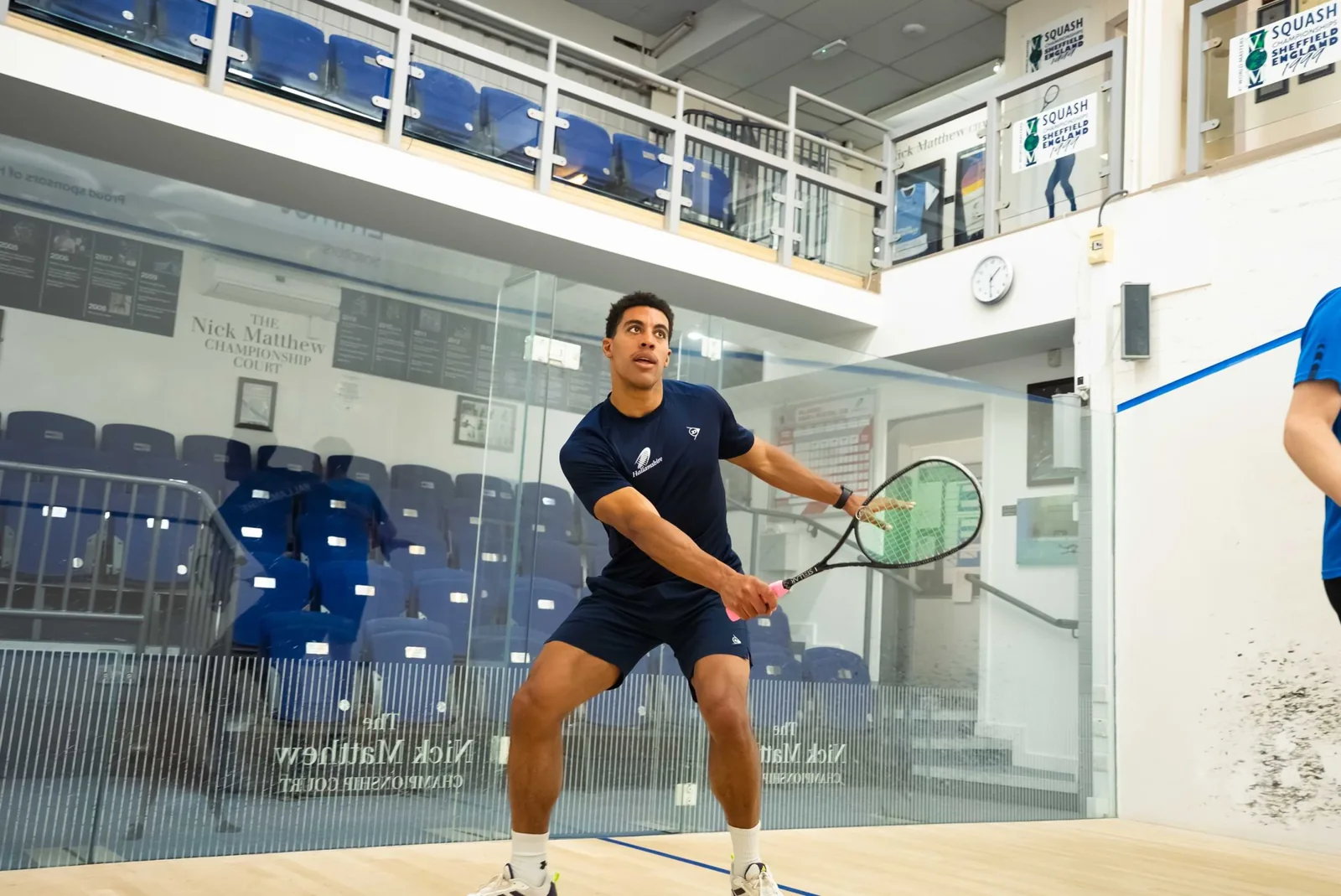
Padel courts have spread fast across the UK, Ireland and Australia, often at the same clubs that have squash courts. Both games use walls, but they feel very different on court.
The short answer
Squash is played indoors by two players in a closed box, hitting a small rubber ball against the front wall with a strung racket. Padel is played mostly as doubles on a larger court with a net and glass walls, using a solid, stringless bat and a low-pressure tennis-type ball. Padel is easier to pick up and more social. Squash is faster, more tiring and harder to learn, but you only need one other person. If you want the harder workout, choose squash. If you want quick fun with friends, choose padel.
Squash and padel side by side
| Squash | Padel | |
|---|---|---|
| Players | Usually singles (2) | Almost always doubles (4) |
| Court | 9.75 m × 6.4 m, enclosed by four walls | 20 m × 10 m, net across the middle, glass and mesh walls |
| Indoors or out | Indoors | Indoors or outdoors |
| Racket | Strung, long and light | Solid, perforated, no strings |
| Ball | Small hollow rubber ball, 40 mm | Like a tennis ball, slightly lower pressure |
| Serve | Overarm or sidearm, onto the front wall | Underarm, bounced first, below waist height |
| Scoring | Point a rally, games to 11 | Tennis scoring: 15, 30, 40, game |
| Learning curve | Steep | Gentle |
The court and the walls
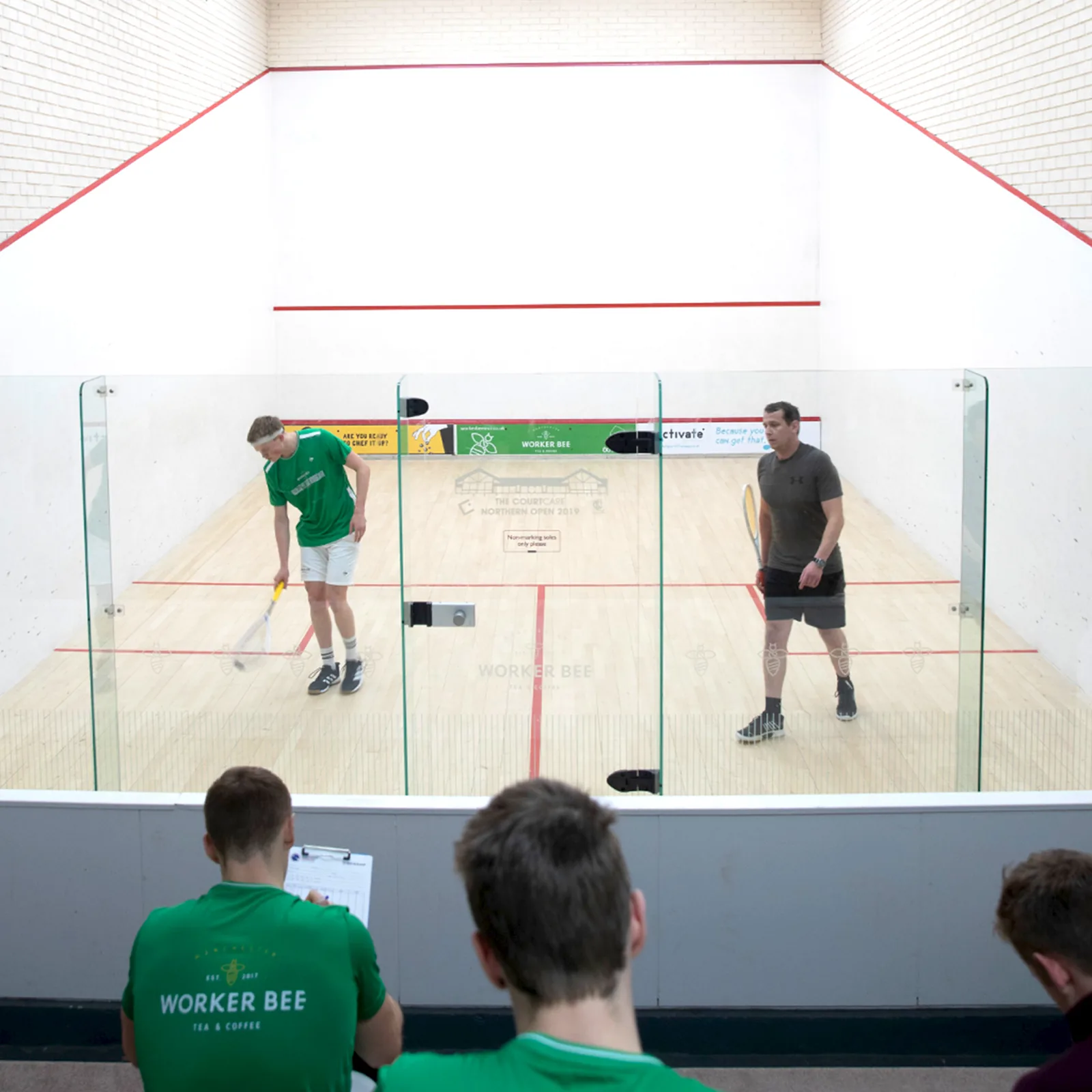
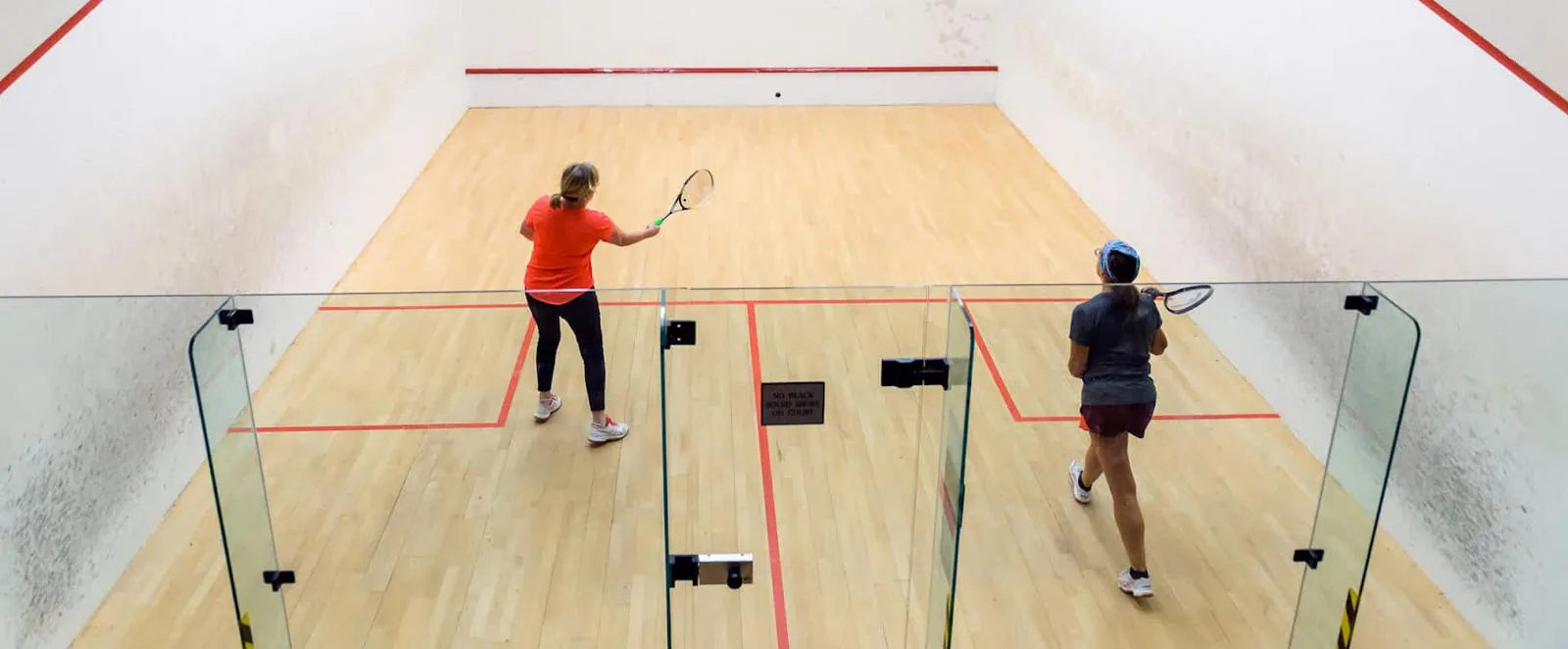
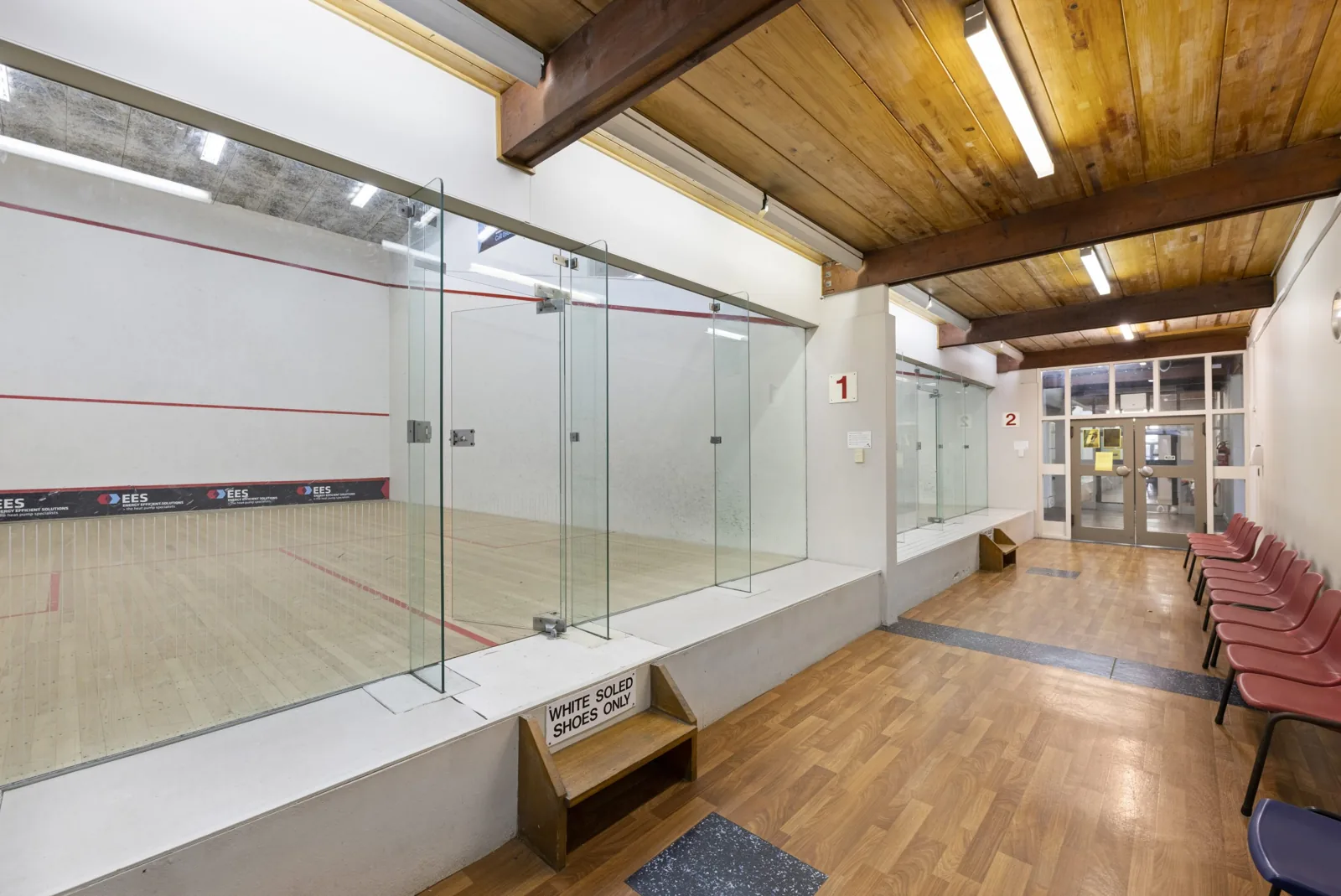
A squash court is a closed box with no net. Both players share the same space and take turns hitting the front wall. The ball can hit the side and back walls, but every shot must reach the front wall above the tin and below the out line. For exact sizes, see squash court dimensions.
A padel court is twice as long and half again as wide. A net splits it into two halves, like tennis, and each pair stays on its own side. The back walls and part of the side walls are glass, and the rest is wire mesh. The ball must bounce on the floor in your opponents' half before it touches their walls. After that bounce it can come off the glass, and players use the rebound to set up their next shot.
That is the key difference. In squash the walls are the target. In padel they keep the ball in play.
Rackets and balls
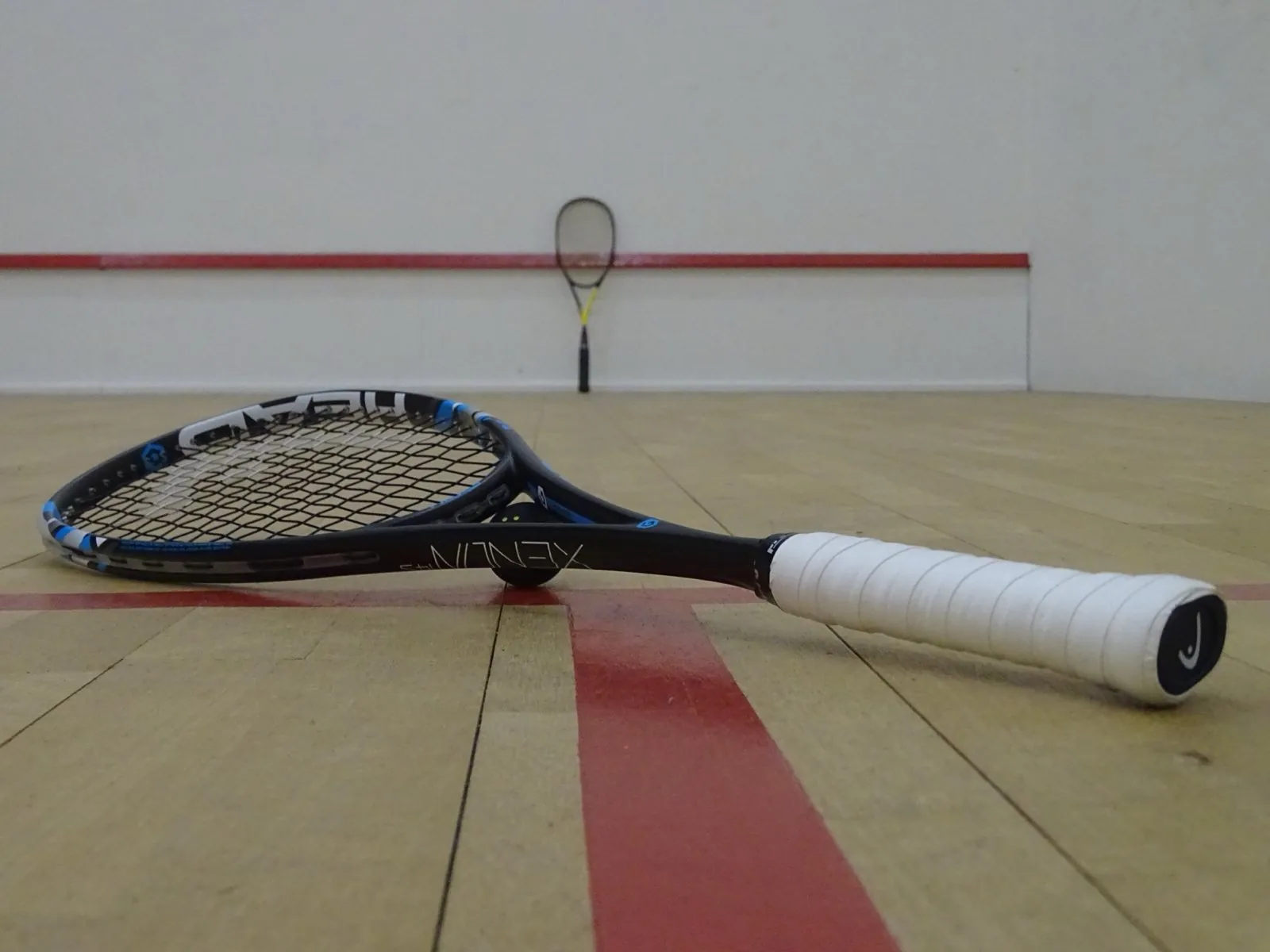
A squash racket is long, light and strung, with a small head. The ball is small and hollow, and it needs to be warmed up before it bounces properly. Club players use a double yellow dot ball, which is very dead. Beginners use bouncier blue or red dot balls.
A padel racket is short and solid, made of foam and composite with holes drilled through the face. There are no strings. The ball looks like a tennis ball but carries a little less pressure, so it bounces lower. The short, solid racket is easy to control, which is a big part of why padel feels easy in the first hour.
How the games play
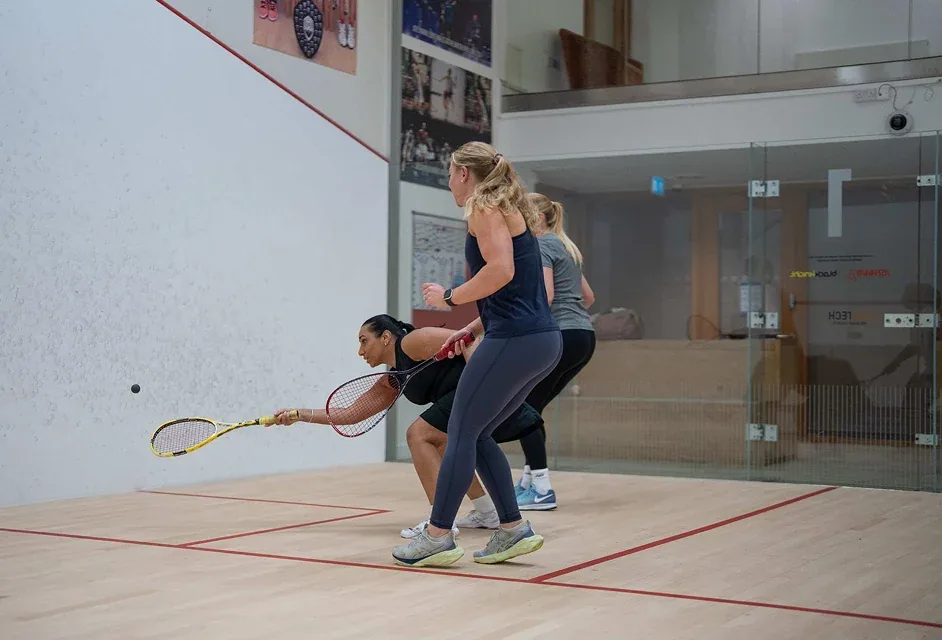
Squash rallies are fast and close. You hit, move out of the way, then get back to the middle of the court while your opponent hits. The ball dies in the back corners and in short shots near the front, so you cover a lot of ground at speed. The serve is overarm or sidearm, onto the front wall, landing in the back quarter opposite.
Padel is slower and more tactical. The serve is underarm, after a bounce, and below waist height, which takes the power out of it. Most points are won at the net by the pair who gets there first, and lobs over the opponents are a common way to push them back. Rallies can be long, but each player covers only half of their side, so the running is shorter.
Padel uses tennis scoring with a few local variations, such as a golden point at deuce in some formats. Squash uses point-a-rally scoring to 11. Our guide on squash scoring covers that in full.
Tennis players and squash players. Tennis players tend to take to padel quickly, thanks to the net and the scoring. Squash players have the edge with the walls, as reading a ball off the glass feels familiar.
Fitness and effort
Squash is one of the most demanding racket sports. In a 40 minute singles game you are moving almost the whole time, with short recoveries between rallies. Padel doubles is lighter work for most players because you share the court and the ball moves more slowly. A competitive padel match still gets your heart rate up, but a social game is much gentler than social squash.
That makes padel easier for mixed groups, older players and people coming back from a long break. For the workout itself, our guides on calories burned playing squash and whether squash is good exercise have the numbers.
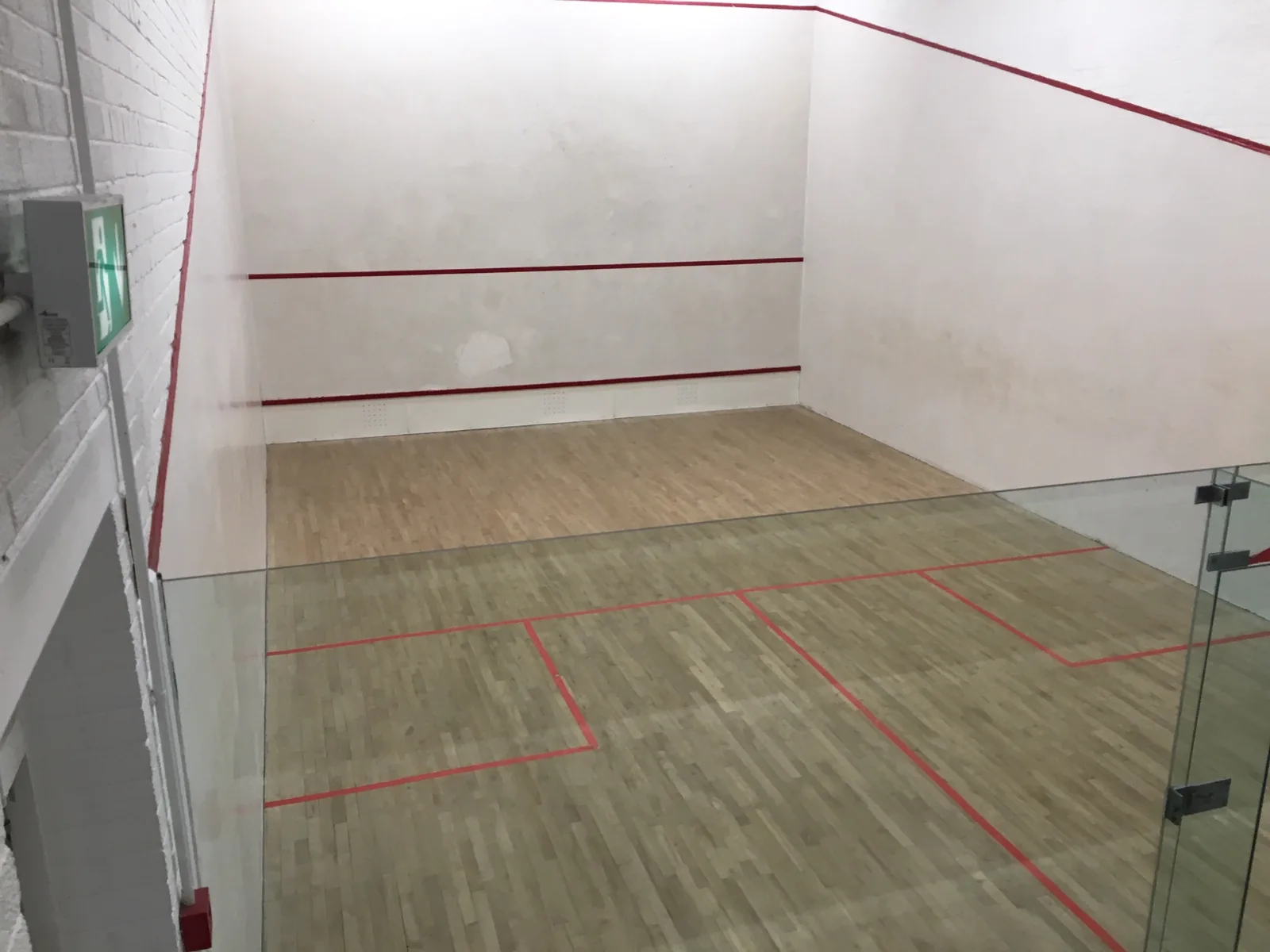
Windsor Tennis Club
Belfast · Squash and padel
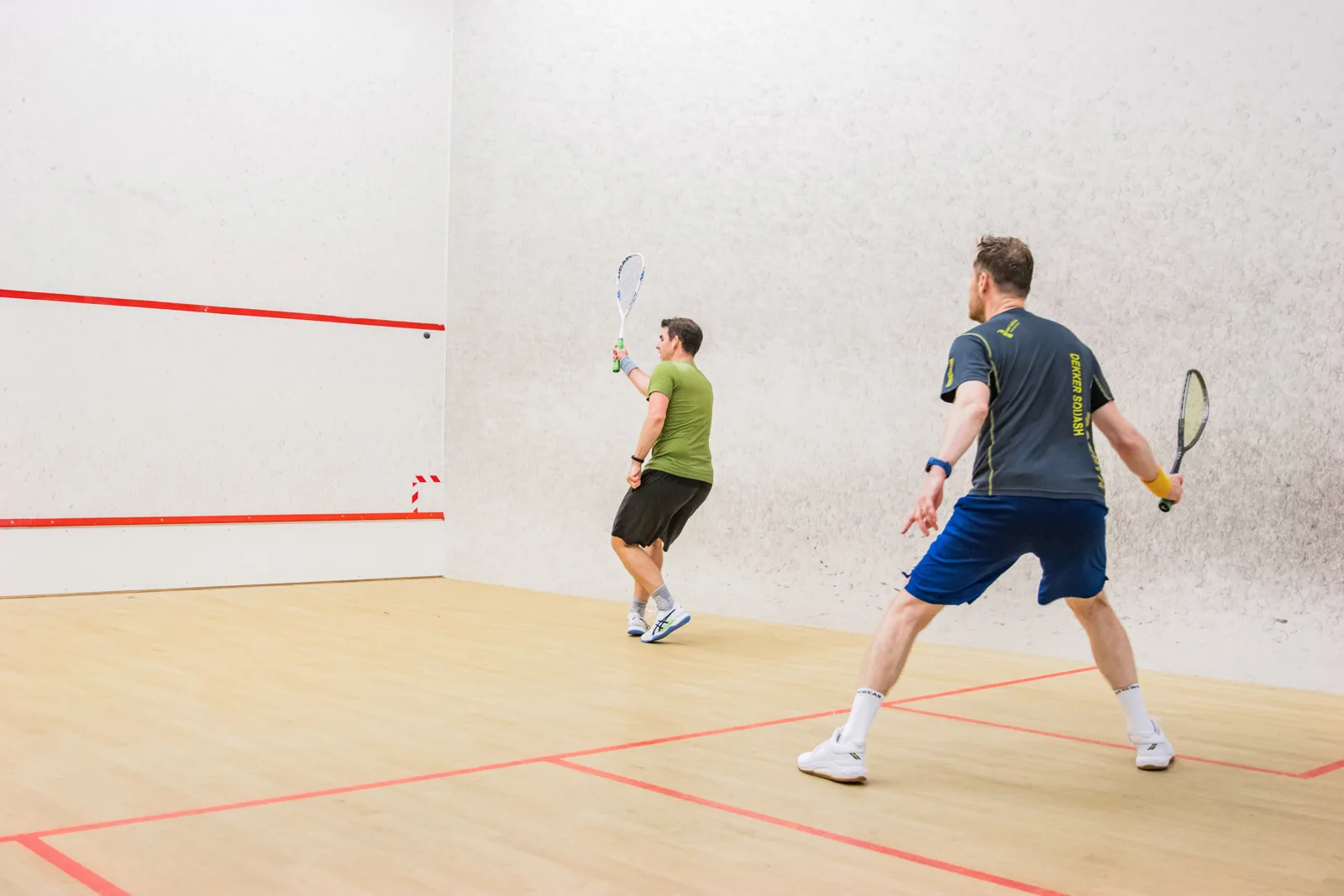
Dekker Warmond
Leiden · Squash and padel
Ruston’s Sports & Social Club
Lincoln · Squash and padel
Which one to pick
Pick squash if:
- You want a hard workout in a short time
- You usually have one partner, not three
- You like a game with a lot to learn, from shot choice to movement
- You want to play all year with no weather worries
Pick padel if:
- You want to enjoy rallies from your first session
- You play with a group of friends or family of mixed ability
- You want a sociable game that is lighter on the legs
Plenty of people play both. Many clubs in our directory now have squash and padel under the same roof, so you can try each without joining two clubs. If you are starting squash, our squash for beginners guide covers your first month.
FAQ
Is padel easier than squash?
Yes, for most people. The solid racket, the slower ball and the underarm serve make rallies possible in the first session. Squash takes a few weeks before rallies flow.
Is padel played on a squash court?
No. A padel court is 20 m by 10 m with a net, far bigger than a squash court. Some clubs have converted spare space or tennis courts into padel courts.
Is squash or padel better exercise?
Squash singles is usually harder work, because you cover the whole court and rest less. Competitive padel is still a good workout.
Can you play padel one against one?
Yes, on a singles court or a normal court, but it is uncommon. Padel is designed around doubles.