Squash for beginners: your first month
 By the Find My Squash Court team·
Updated ·
6 min read
Your first month of squash decides whether you stick with it. Book the right court, use the right ball and keep the first few sessions short, and you will be rallying properly within a few weeks.
The short answer
For your first month, book a 40 or 45 minute court at a leisure centre or a club with pay and play, ideally with a friend who is also new. Borrow or hire a racket, wear non-marking indoor shoes and use a blue or red dot ball, which bounces more than the yellow dot balls club players use. Spend the first sessions hitting to yourself and to each other, then play simple games to 11. A beginners' session or a few lessons will speed things up more than anything else.
Week one: book a court and hit
Most squash venues in the UK, Ireland, Australia and New Zealand let non-members book a court online. Leisure centres are the easiest start: you book like you would a badminton court, turn up, and play. Many clubs also offer pay and play, and some run open club nights where newcomers are paired up.
Book 40 or 45 minutes. That is the standard slot, and it is plenty. Squash is hard work from the first minute, and new players are usually tired well before the end.
On your first visit, do not try to play a match. Do this instead:
- Warm the ball up. A squash ball is dead when cold. Hit it firmly against the front wall for a couple of minutes until it starts to bounce. Our guide on why you warm up a squash ball explains why.
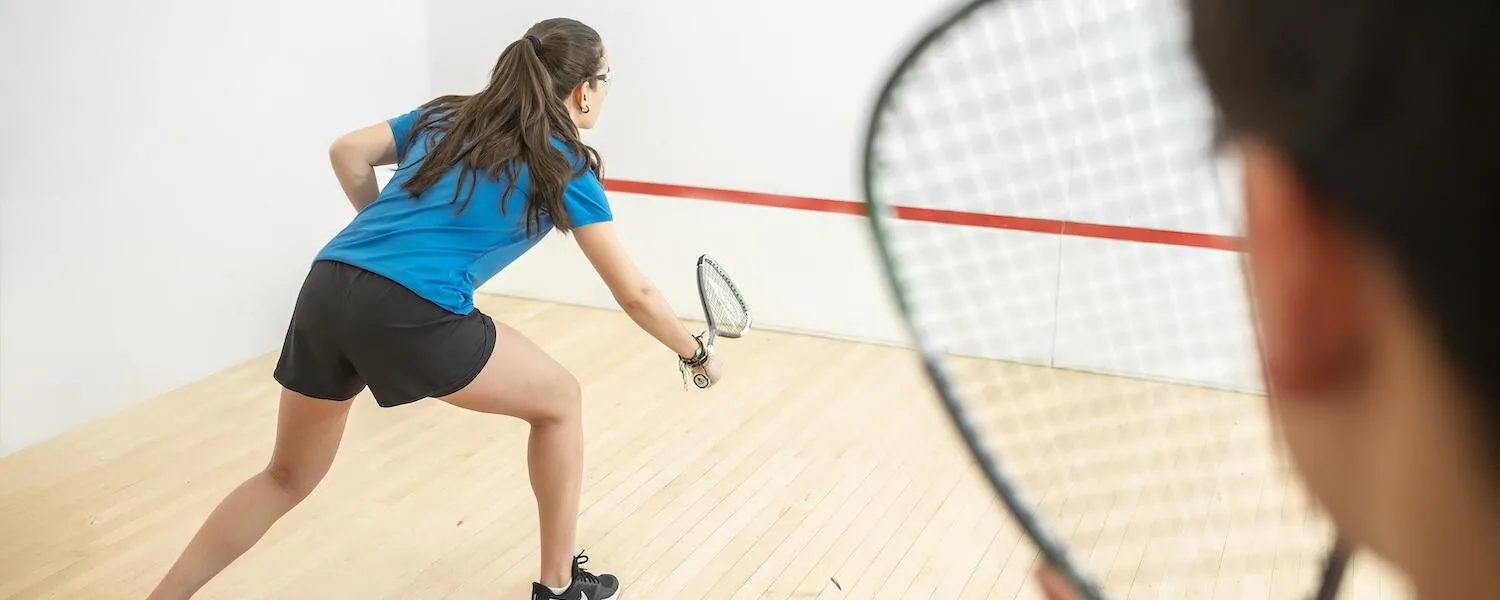
- Hit to yourself. Stand near the middle of the court and hit forehands straight up the side wall, letting the ball bounce once each time. Then switch to backhands.
- Rally together. Take turns hitting the front wall, aiming above the lower red line (the tin) and below the top line. Count how many shots you can keep going.
A short swing works better than a big tennis swing. Hold the racket with the face slightly open and keep it up, ready, between shots.
What you need
- A racket. Most leisure centres and many clubs hire or lend rackets, so you do not need to buy one yet. When you do, a light, head-light beginner's racket is fine. See how to choose a squash racket.
- Non-marking indoor shoes. Black-soled running shoes leave marks on the wooden floor, and most venues will not let you on court in them. Badminton or indoor court shoes grip best.
- Eye protection. Strongly advised for everyone and required for juniors at many clubs. Squash balls fit into the eye socket, so goggles are worth the small cost. Read squash goggles for the details.
- Light sports clothes and a water bottle. You will sweat more than you expect.
Pick the right ball
The ball matters more than the racket for a beginner. Club and professional players use a double yellow dot ball, which barely bounces unless it is hot and hit hard. With one, new players spend most of the session picking the ball up off the floor.
Ask for, or buy, a blue dot or red dot ball. They are a little larger and bouncier, so you get time to reach the ball and the rallies last longer. Move to a single yellow dot once you can keep a rally going, and to a double yellow later. Our guide to squash ball dots sets out the full ladder.
Same ball, same partner. If you play with a friend who is also new, you both improve at the same speed, and neither of you spends the session waiting. Agree on a bouncier ball before you start.
Weeks two and three: learn the rules by playing
By your second or third session, start playing simple games. You need only a few rules to begin:
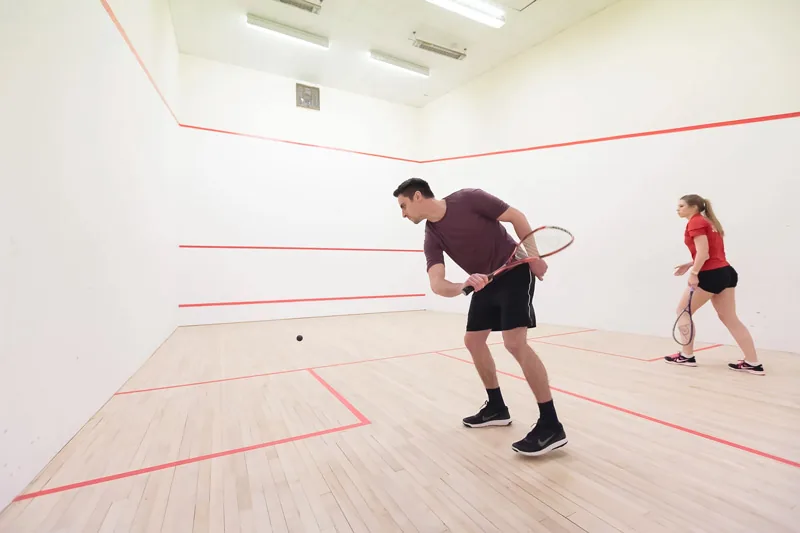
- Serving. Stand with one foot inside a service box. Hit the ball onto the front wall above the service line, so it lands in the back quarter on the other side of the court.
- The rally. After the serve, each shot must reach the front wall before it bounces twice on the floor. It can hit the side or back walls on the way.
- Out. The ball is out if it hits the tin at the bottom of the front wall or anything on or above the top line around the court.
- Scoring. Every rally wins a point, whoever served. Games go to 11, and you must win by two.
Two things will come up straight away. First, you share the court, so after you hit, move out of the way so your opponent can reach the ball. Second, if someone is in your way, stop and ask for a let, and replay the point. For the full detail, read squash rules and how squash scoring works.
Keep returning to the middle of the court after each shot. Players call that spot the T, where the short line meets the half-court line. From there you can reach most shots in two or three steps.

Week four: find people to play
By the end of the first month most new players want more games and a wider choice of opponents. There are a few ways to get them:
- Beginners' sessions and social nights. Many clubs and centres run them. You turn up, get paired with players at your level and pay per person.
- Lessons. A few lessons early on fix your grip and swing before bad habits set in. See squash lessons for adults.
- Box leagues. Small groups of five or six players at a similar level who each play each other once a month. They are the easiest way into club squash. Our guide to squash box leagues explains how they work.
Squash is quicker to pick up than people fear, but it does take a few weeks before the ball goes where you mean it to. Our guide on whether squash is hard to learn has more on what to expect.
What it costs
In the UK in 2026, a pay and play court at a leisure centre or club usually costs £9 to £13 for 40 to 45 minutes outside London, and £12 to £21 in central London. Split between two players, that is cheaper than most gym classes. In Australia, casual court hire runs from about A$16 for 45 minutes to A$26 an hour. In New Zealand it is usually NZ$20 to NZ$30 for 45 minutes, and in Dublin around €15 for 40 minutes.
Council leisure centres tend to be the cheapest for occasional play. Clubs cost more up front through membership, but court fees for members are often very low, so a club pays off once you play every week.
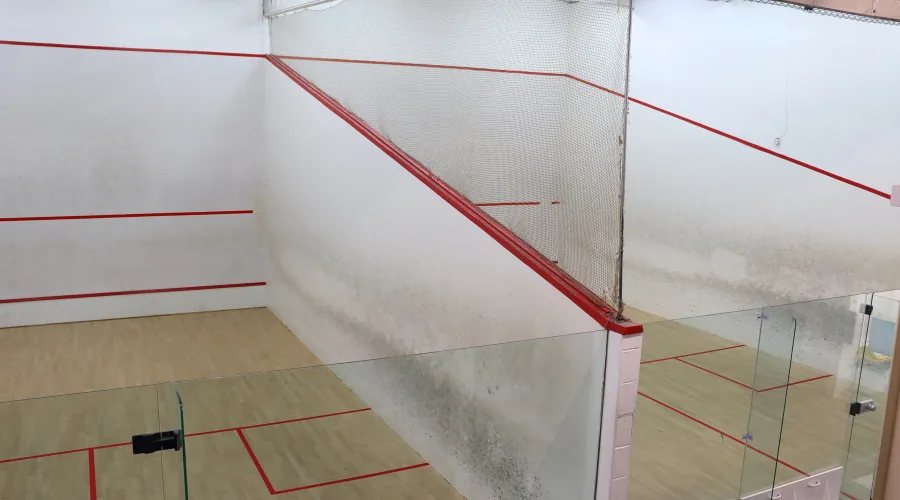
Garforth Leisure Centre
Leeds · £11 per court
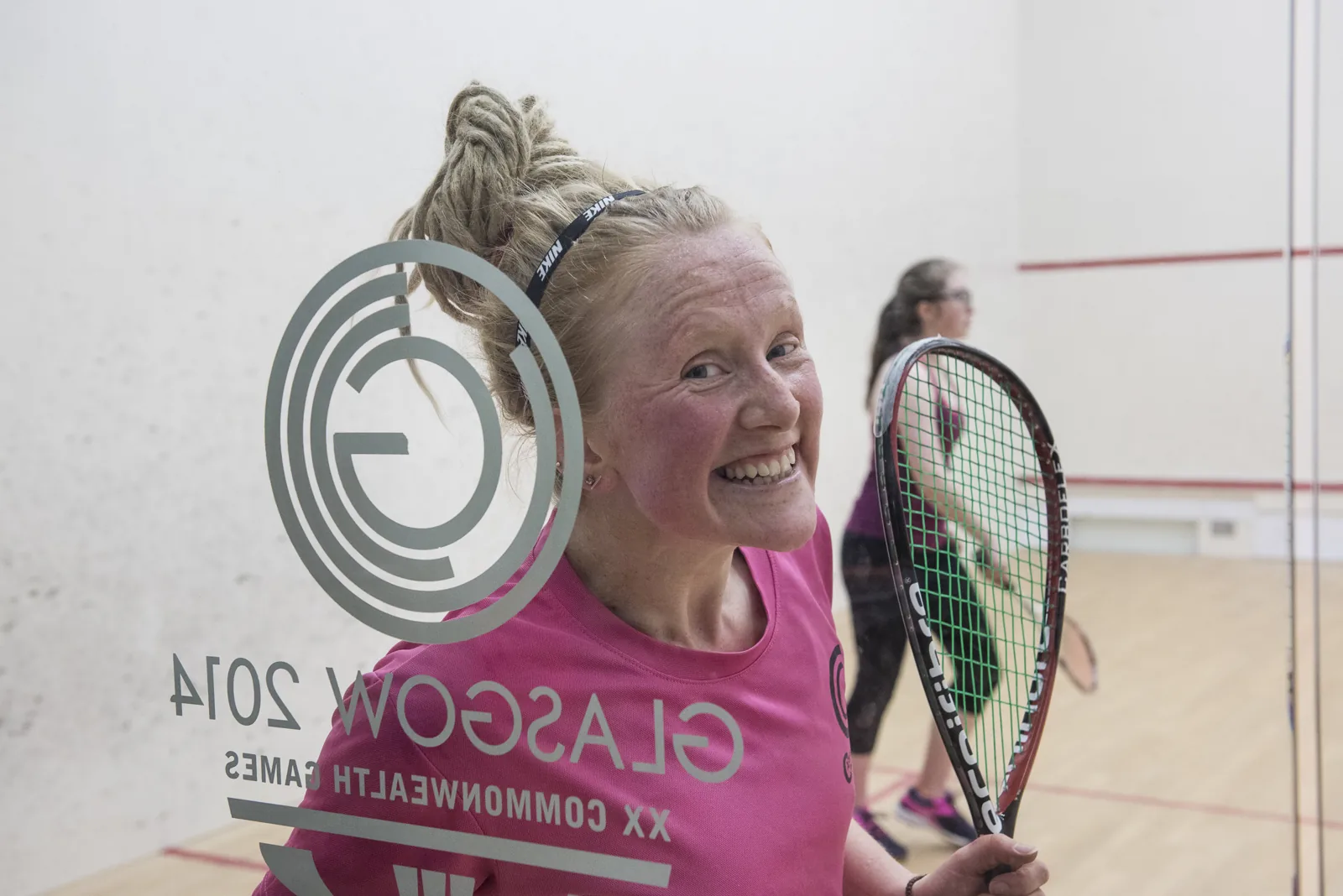
Glasgow Club Scotstoun
Glasgow · £11 per hour
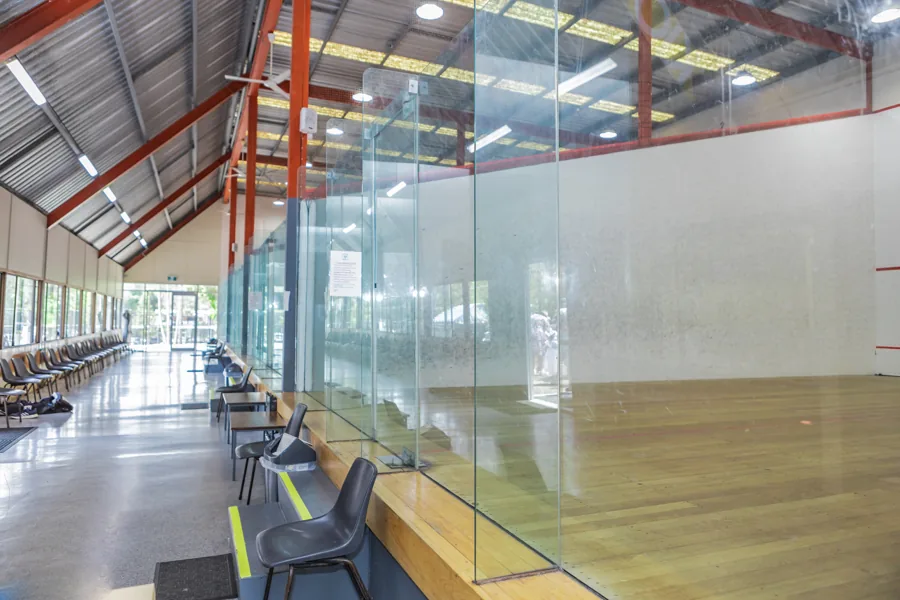
Taylor Range Club
Brisbane · Social squash sessions
Cities with the most leisure centre squash courts in our directory:
FAQ
How long should a beginner play squash for?
A 40 or 45 minute court is enough. Most beginners tire well before the end, so take breaks between games and stop if you feel dizzy or unwell.
Can I learn squash without lessons?
Yes. Many players learn by playing friends and joining social nights. A few lessons early on make it faster, mainly by fixing your grip and swing.
Which squash ball should a beginner use?
A blue dot or red dot ball. They are bigger and bouncier than the double yellow dot ball used in club matches, so rallies last longer.
Do I need to join a club to play squash?
No. Most leisure centres and many clubs let non-members book courts on a pay and play basis. Joining a club makes sense once you play every week.