How to play squash
 By the Find My Squash Court team·
Updated ·
6 min read
You need a court, a racket, a ball, non-marking shoes and someone to play with. Most leisure centres hire all of that except the partner. This guide takes you from booking a court to playing your first proper rallies.
The short answer
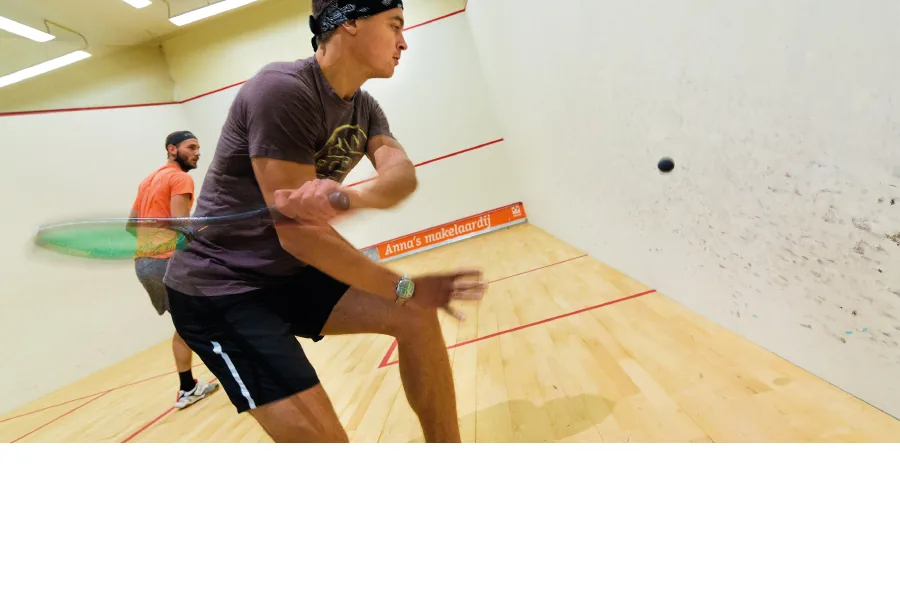
Book a court for 40 or 45 minutes, wear indoor shoes with non-marking soles and borrow a racket and a slow, beginner ball. Warm the ball up by hitting it against the front wall for a few minutes. Then serve from a service box to the front wall, above the service line, so the ball lands in the opposite back quarter. Take turns hitting the ball to the front wall, above the tin, before it bounces twice. After each shot, move back towards the middle of the court, the T.
What you need
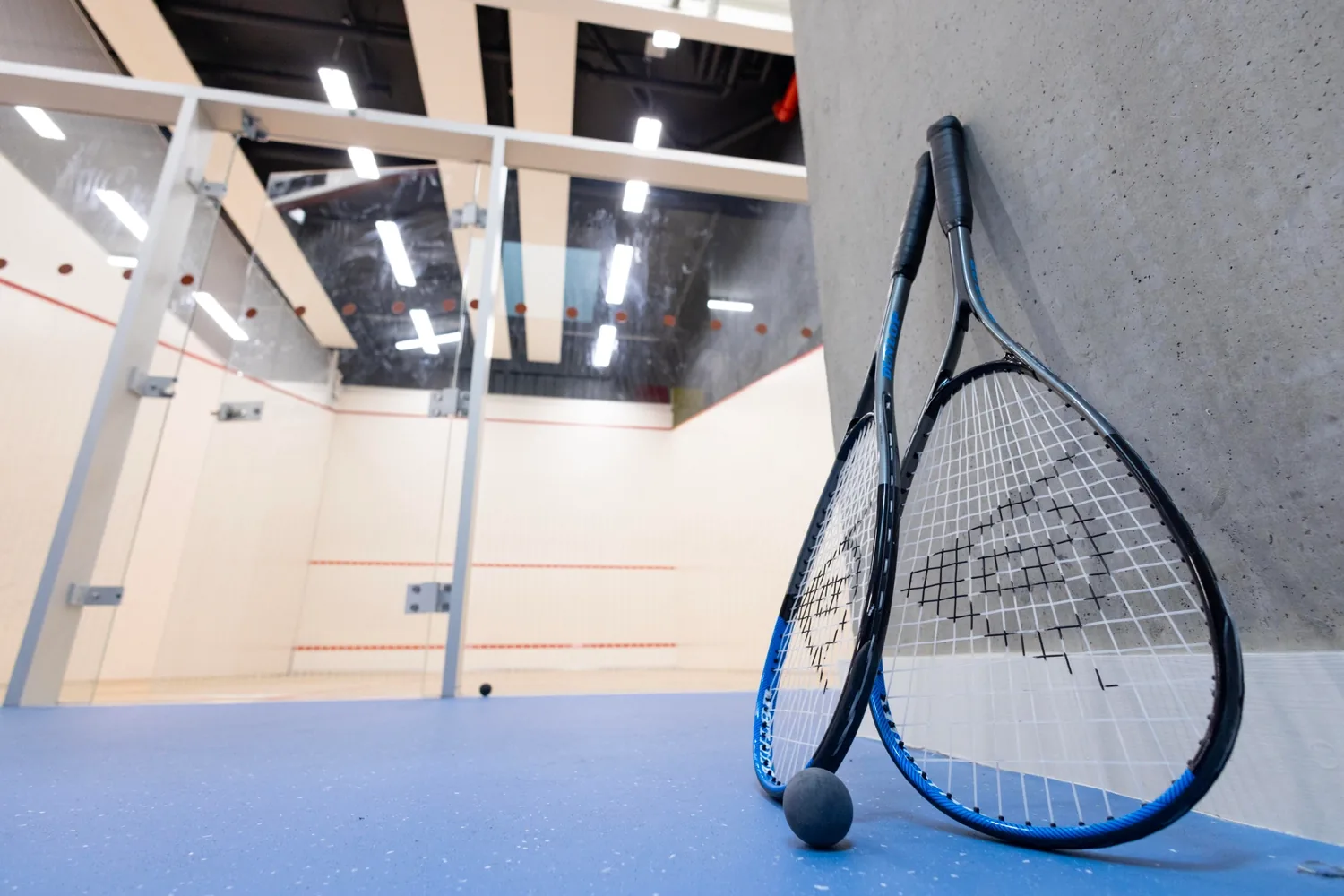
- A racket. Most leisure centres and many clubs hire them for a few pounds or lend them free. Squash rackets are longer and lighter than tennis rackets, with a smaller head.
- A ball. Ask for a beginner ball. A blue or red dot ball is bigger and bouncier than the double yellow dot ball club players use, so you get more time to reach it. Squash ball dots explained covers the full range.
- Shoes. Indoor court shoes (gym shoes or trainers in some places) with non-marking gum soles. Running shoes with black soles mark the floor and grip badly sideways, and many centres will turn you away in them.
- Eye protection. Squash goggles are cheap and worth having from day one. Some clubs make them compulsory for juniors.
- Water and a towel. Courts are warm and squash is hard work, even at a gentle pace.
Booking a court
Leisure centres are the usual starting point because you can pay and play without joining anything. Court slots are normally 40 or 45 minutes. In the UK in 2026, a pay-and-play court at a leisure centre usually costs around £8 to £11 per session, split between the two players. In New Zealand, casual club courts we have checked charge NZ$20 to NZ$30 for 45 minutes. In Australia, A$16 for 45 minutes is a typical casual rate.
Most centres take bookings online or through an app, often up to a week ahead. Evenings from about 5pm to 8pm fill fastest. Club courts are often cheaper per session but may need membership or a member to sign you in as a guest. How to book a squash court goes through the options.
Your first ten minutes
- Warm yourself up. A few minutes of light jogging, side steps and lunges outside the court. Squash is full of sudden stops and turns.
- Warm the ball up. Stand near the middle, hit the ball firmly against the front wall again and again, and let your partner do the same. A cold ball hardly bounces. After a few minutes it will feel noticeably livelier.
- Find your grip. Hold the racket as if you were shaking hands with it, with the face slightly open (tilted back). Use the same grip for forehand and backhand. How to hold a squash racket has photos of this.
- Hit to yourself. Stand behind the short line and hit the ball straight to the front wall so it comes back along the side wall. Try to keep a rally going with yourself before you play anyone.
Playing a rally
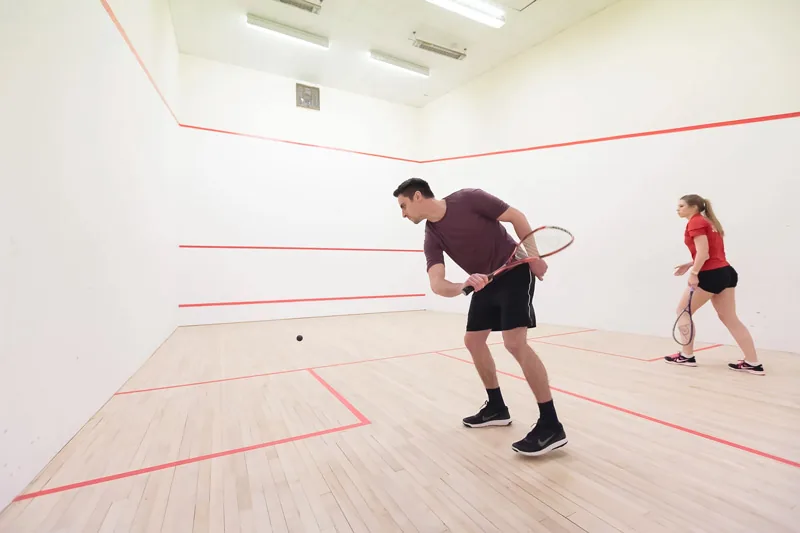
Each rally starts with a serve. Stand with one foot in a service box, drop the ball and hit it to the front wall, between the service line and the top line. It has to land in the back quarter on the other side of the court. Your partner can hit it before or after it bounces.
From then on you take turns. Each shot must:
- be hit before the ball bounces twice;
- reach the front wall before it touches the floor, either directly or off the side walls;
- hit the front wall above the tin (the strip at the bottom) and below the top line.
Whoever wins the rally gets the point and serves next. Play games to 11. The full rule book, including what to do when you get in each other's way, is in our squash rules guide.
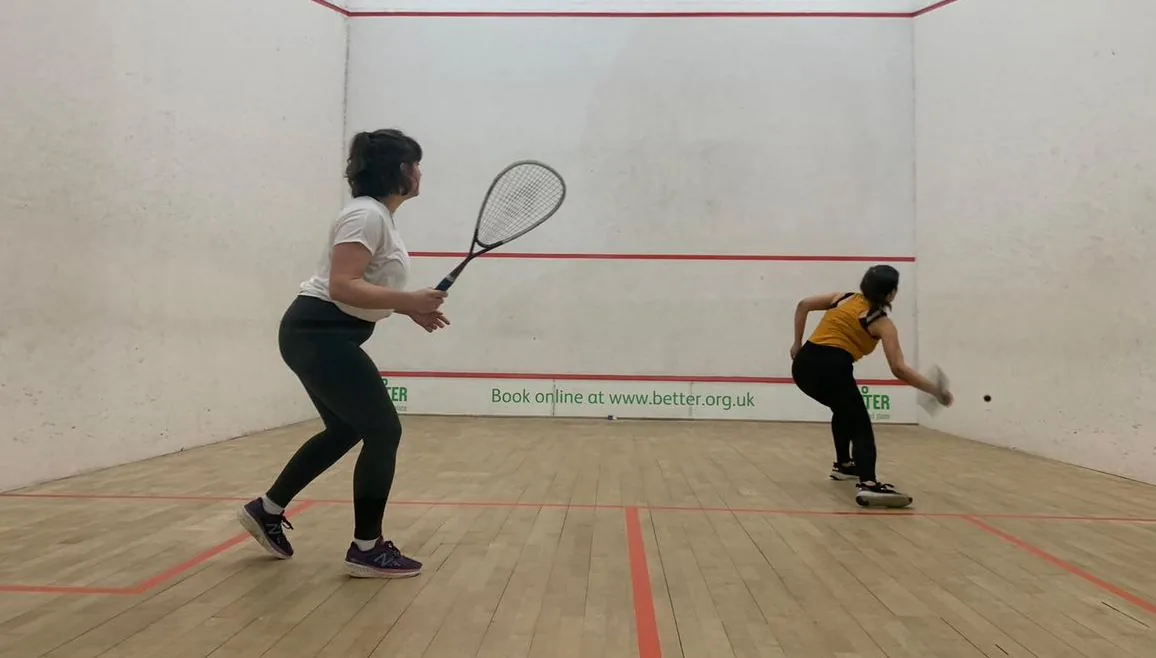
Getting out of the way. After you hit, move so your partner has a clear path and a clear swing at the ball. If someone is in your way, stop and say "let". The rally is replayed. Never swing when there is a chance of hitting the other player.
The four shots to learn first
- The straight drive. Hit the ball firmly to the front wall so it comes back down the side wall and bounces deep in the back corner. This is the shot you will play most, at every level.
- The cross-court drive. The same idea, but aimed at the front wall so it travels to the opposite back corner. Aim to hit the side wall behind your opponent, not in front of them.
- The lob serve. A high, soft serve that hits the side wall and drops into the back corner. It is the easiest safe serve to learn.
- The boast. Hit the ball into the side wall first so it angles to the front wall. It gets you out of trouble when the ball is stuck in a back corner.
Leave drop shots and volleys until you can keep a drive rally going. They come quickly once you can hit the ball where you mean to.
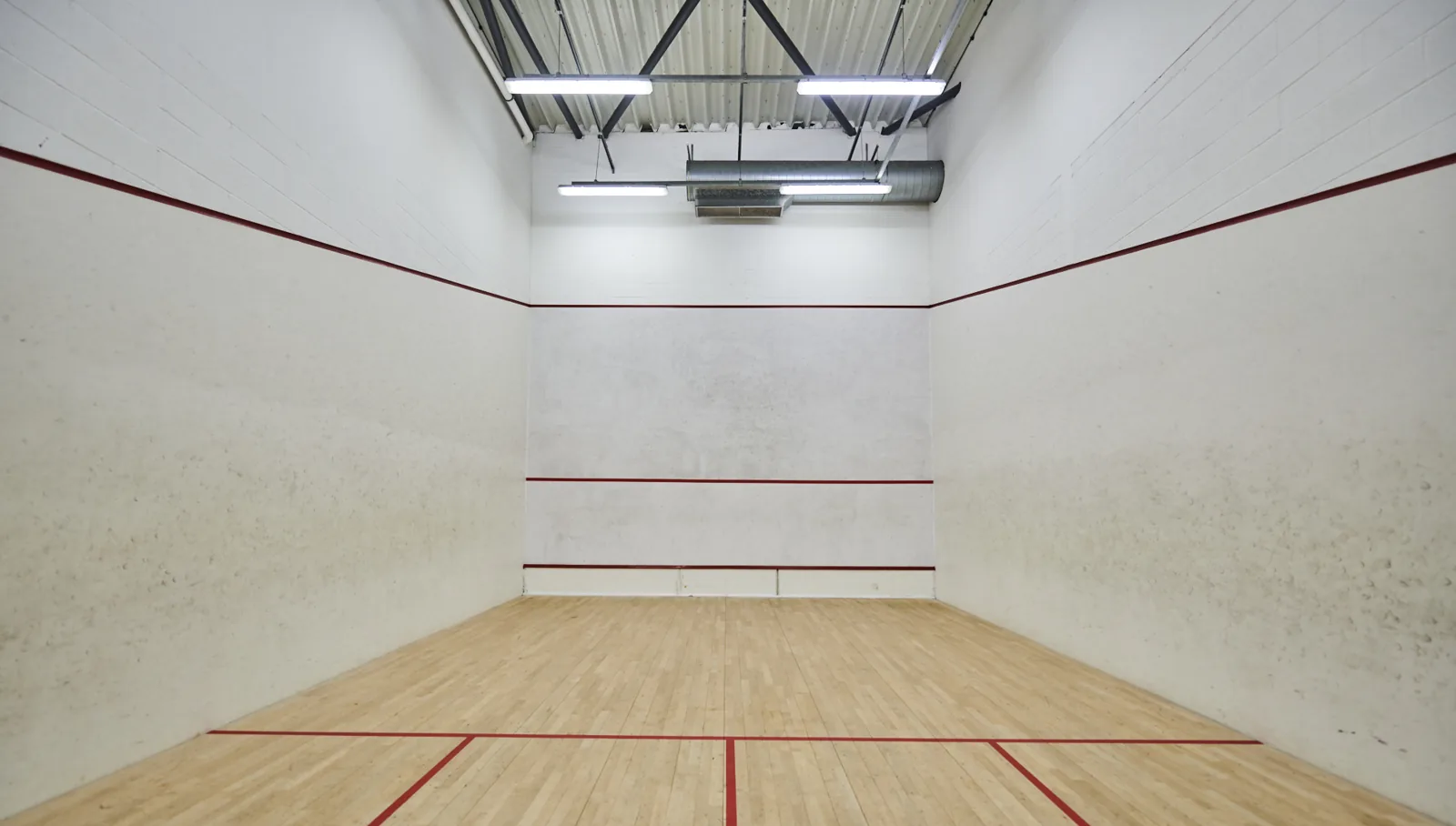
Spiceball Leisure Centre
Banbury · Leisure centre
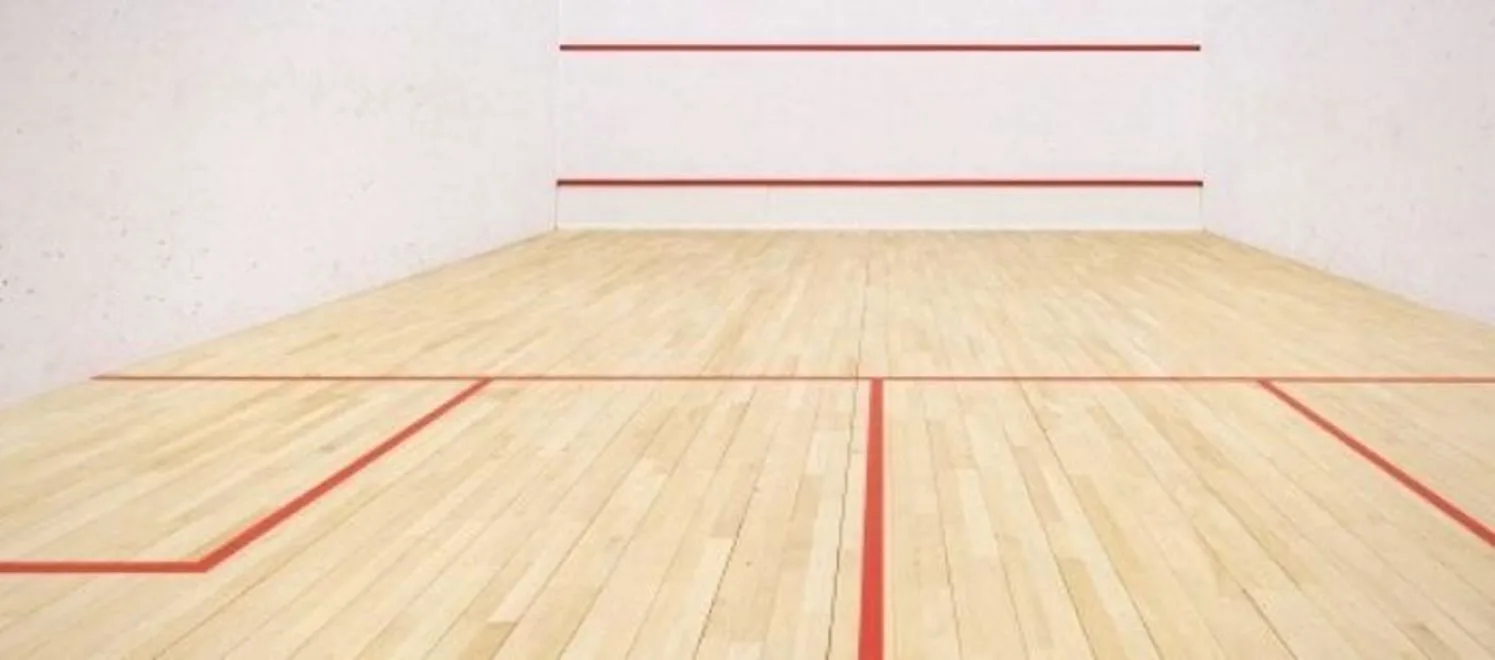
Donyngs Leisure Centre
Crawley · 4 courts
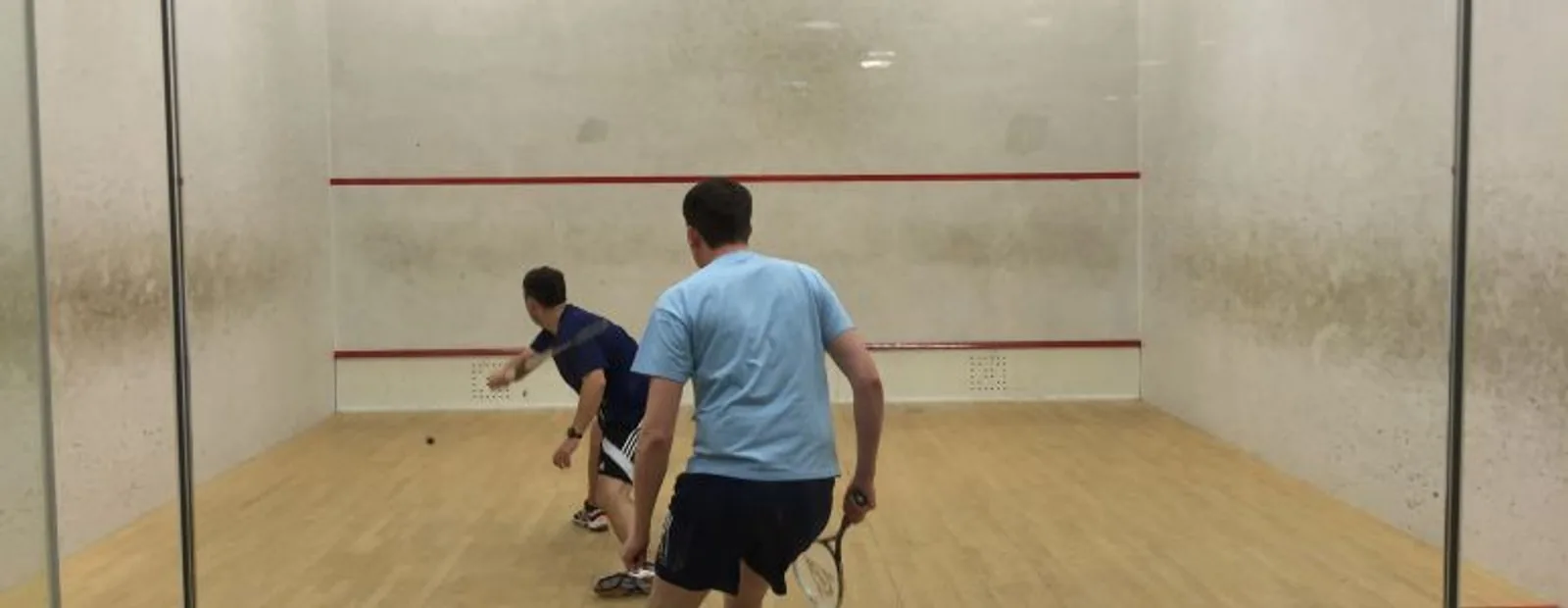
Springwood Leisure Centre
Derby · Leisure centre
The T and moving
The T is where the short line meets the line down the middle of the court. Good players hit, then move back towards it, because from there you can reach any corner in a few steps. Beginners tend to stand and watch their own shot. Get into the habit early: hit, move to the T, watch the ball and your opponent, then go.
Keep your knees bent and your racket up while you wait. Push off with small steps and finish each shot with a lunge, front foot pointing towards the side wall. Squash footwork covers the movement patterns in detail.
What to do next
A few sessions with a friend will get you rallying. To improve faster:
- Book a beginners' course or an adult lesson. A coach will fix your grip and swing before bad habits set in.
- Join a club night. Most clubs run social sessions where you play several people of a similar level.
- Enter a box league once you can keep a rally going. It gives you a match a week against people of your standard.
Our squash for beginners guide sets out a plan for your first month. Cities with the most leisure centre squash courts in our directory:
FAQ
Can you play squash on your own?
Yes. Hitting the ball to yourself is how most players practise their drives. Book a court for one, and work on straight drives along each side wall.
How long does it take to learn squash?
Most people can keep a gentle rally going after two or three sessions. Playing a proper game, with serves, scoring and movement to the T, usually takes a couple of months of regular play.
Do you need your own racket to start?
No. Most leisure centres hire or lend rackets and sell balls at reception. Buy your own once you are playing every week.
What should I wear for squash?
Light sports clothes you can lunge in, sports socks and indoor court shoes with non-marking soles. Bring a spare shirt, because you will sweat more than you expect.