Squash rules: the complete beginner's guide
 By the Find My Squash Court team·
Updated ·
7 min read

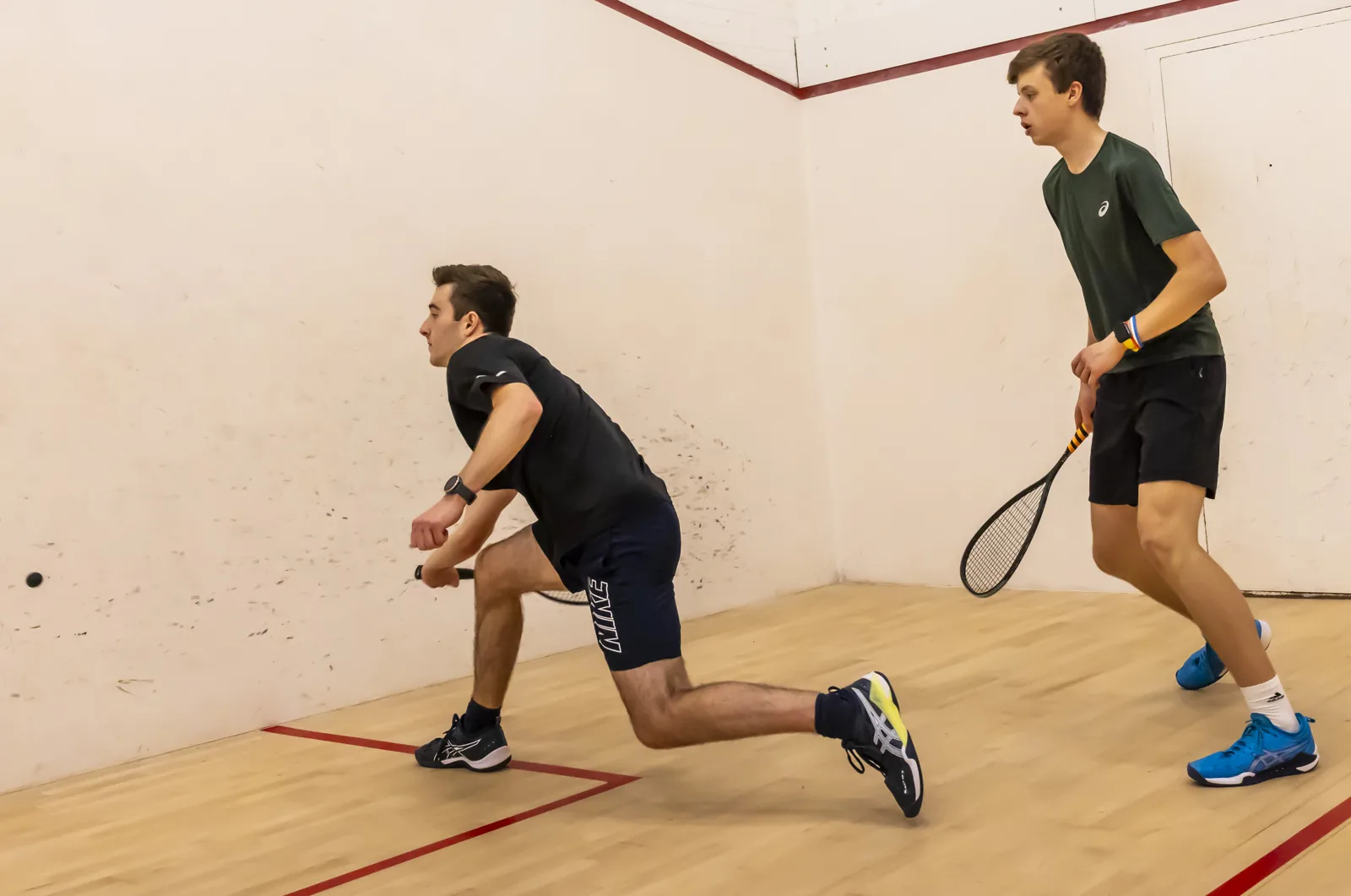
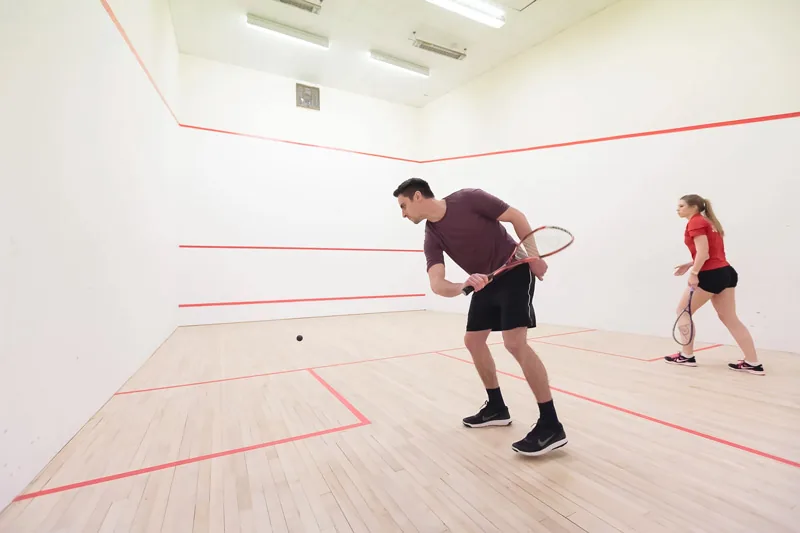
Squash looks chaotic from the gallery, but the rules fit on a postcard. Two players share one box, hit the ball to the front wall in turn, and try to make the other person miss. Here is everything you need to play your first match properly, and to understand the calls in a league game.
The short answer
Two players take turns to hit the ball to the front wall, above the tin and below the out line. The ball may hit the side and back walls on the way, and it may bounce once on the floor before you hit it. A rally ends when someone misses, hits the tin, hits the ball out or lets it bounce twice. The winner of each rally scores a point and serves next. Games go to 11, with a two-point lead needed at 10-all, and a match is usually best of five games.
The basic idea
Squash is played in a four-walled court by two players, each with a racket, using one small rubber ball. The official rules are written by the World Squash Federation (WSF) and used by England Squash, Squash Ireland, Squash Australia, Squash New Zealand and Squash Canada. The version most clubs follow was updated in 2025.
The front wall is the target. Every shot must reach it before the ball touches the floor. Between those two points the ball can travel off one or both side walls, or off the back wall, as many times as you like. That is what makes squash different from tennis: the walls are part of the game, and angles off them are some of the best shots you can play.
You share the court with your opponent, so after you hit you have to get out of the way. Much of the rule book deals with what happens when you don't.
The serve
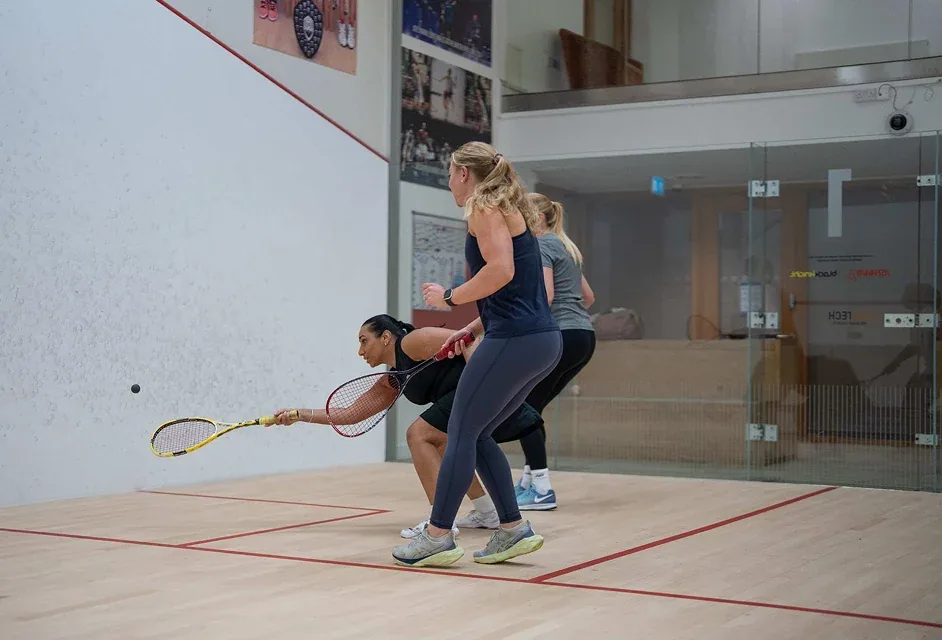
A spin of a racket decides who serves first. After that, whoever wins a rally serves the next one.
For a serve to be good:
- You stand with at least one foot inside one of the two service boxes, touching the floor and not touching any of the box lines.
- You drop or throw the ball and hit it straight to the front wall, between the service line and the out line at the top.
- The ball must land in the back quarter of the court on the opposite side, without touching a line, unless your opponent volleys it first.
A serve that fails any of these is a fault and you lose the rally. There is no second serve. A serve that hits the service line or lands on a floor line is a fault too.
At the start of each game, and every time the serve changes hands, the server chooses which box to serve from. While you keep winning rallies, you switch boxes every serve. The marker's call for a change of server is "hand out".
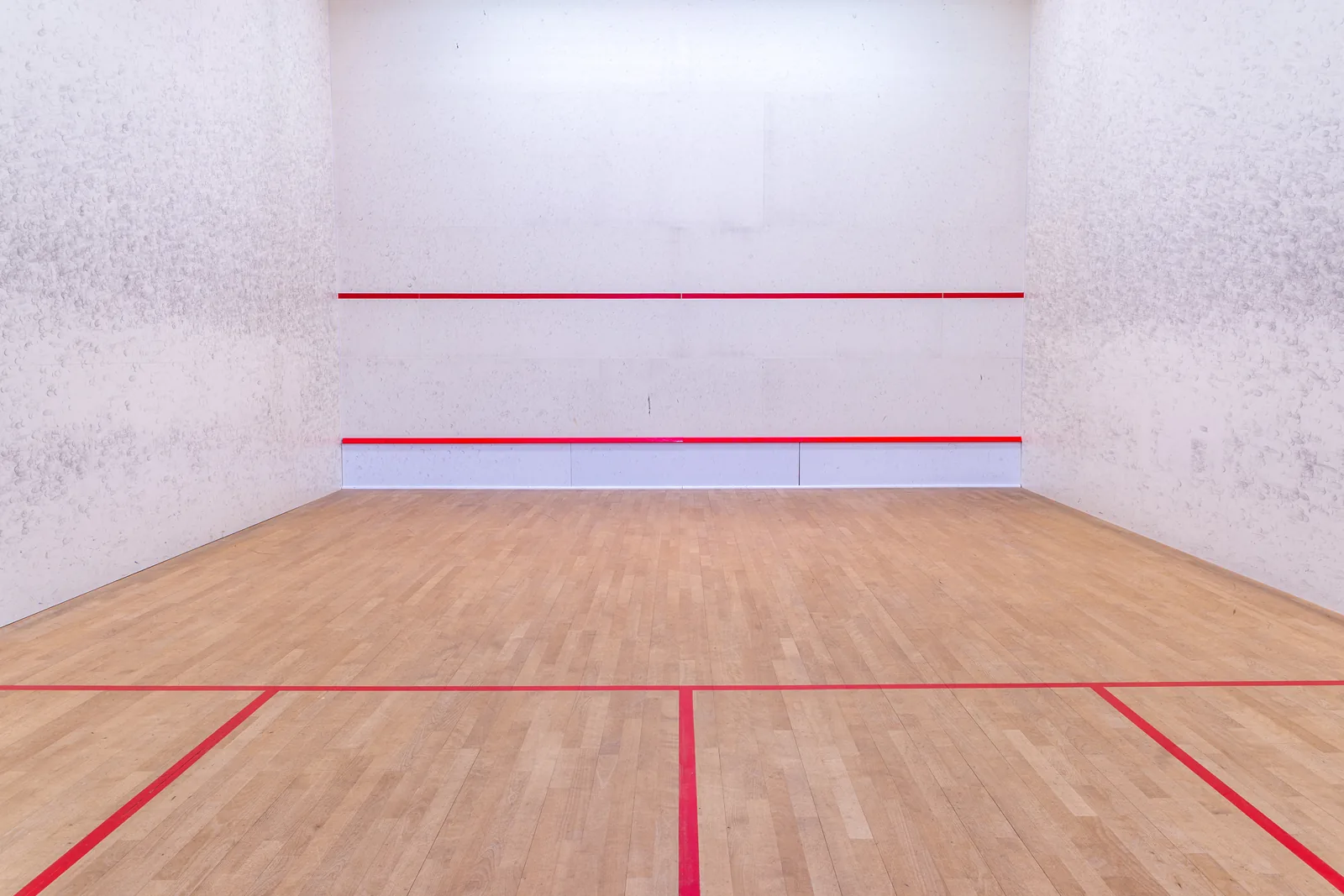
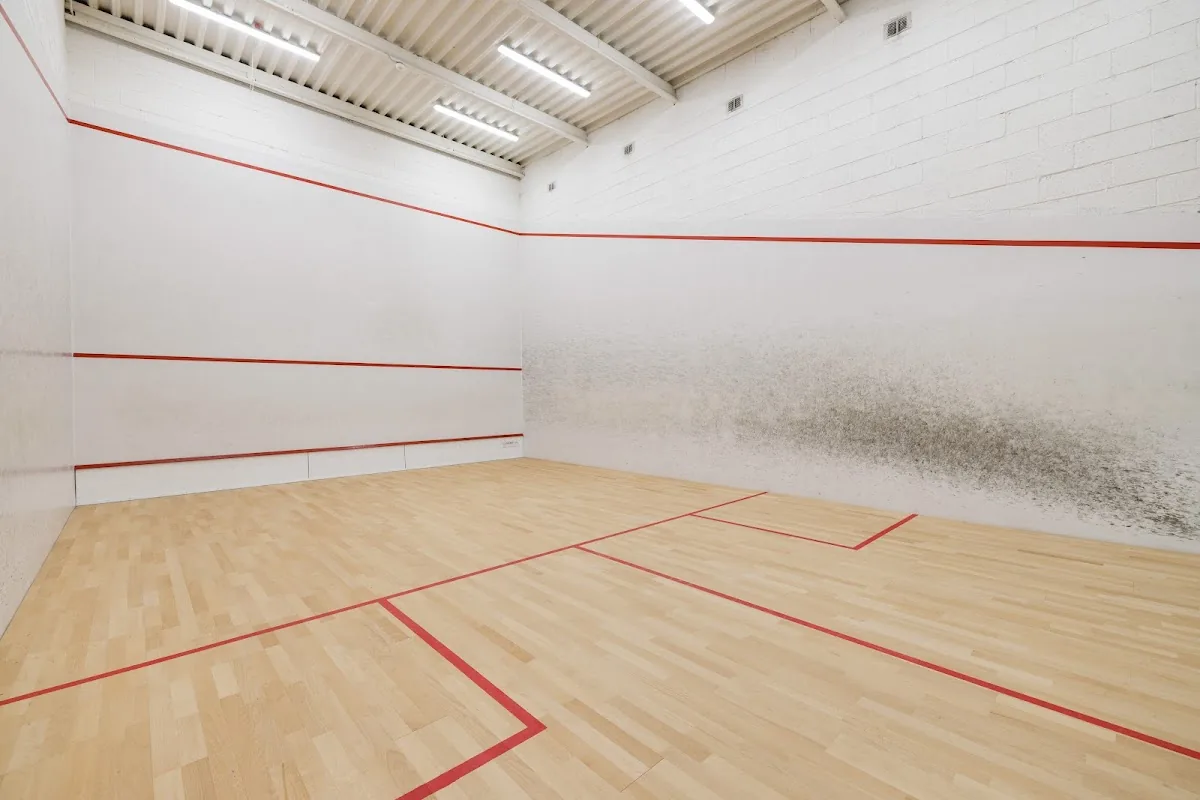
Our guide to squash court lines and the tin explains what each line on the walls and floor is for.
A good return
Once the serve is in, the players hit the ball alternately. Your return is good if:
- you hit it before it bounces twice on the floor;
- you hit it once, cleanly, with your racket held in your hand;
- it reaches the front wall above the tin and below the out line without bouncing first, either directly or off other walls;
- it does not hit you, your opponent or either racket on the way.
You can volley the ball before it bounces, which is often the strongest thing to do. You can also play the ball off the back wall after it has bounced, which beginners often forget is allowed.
Down, out and not up
These are the three calls that end most rallies.
| Call | What happened |
|---|---|
| Down | The ball hit the tin, or hit the floor before reaching the front wall. |
| Out | The ball hit a wall on or above the out line, hit the top edge of a wall, or left the court. |
| Not up | The ball bounced twice, was not hit cleanly (a double hit or a carry), or touched the striker. |
| Fault | A serve that was not good. |
The line itself counts as out. If the ball clips the out line on any wall, it is out. The same goes for the top of the tin: touching it is down.
The ball hitting a player. If your shot hits your opponent on its way to the front wall, play stops. If it was going straight to the front wall and would have been good, you usually win the point. If it would have hit a side wall first, the rally is normally replayed. If the ball hits you after your opponent's shot, before you have tried to hit it, you lose the rally.
Scoring
Squash uses point-a-rally scoring, often written PAR 11:
- The winner of every rally scores a point, whoever served.
- A game goes to 11 points.
- At 10-all, play continues until one player is two points clear, so 12-10, 13-11 and so on.
- A match is normally best of five games (first to three). Some leagues and social events play best of three.
You will still meet the older hand-in, hand-out scoring to 9 in a few club games, where only the server can score. The full detail, including how to call the score yourself, is in how squash scoring works.
Lets, strokes and getting out of the way
This is the part of squash that causes arguments. After you hit, you must make every effort to clear so that your opponent has:
- a fair view of the ball as it comes off the front wall;
- a direct path to the ball;
- room for a reasonable swing;
- the freedom to hit the ball to any part of the front wall.
If you are in the way, your opponent can stop and ask for a let, usually by saying "let, please". The referee, or the two of you in a friendly game, then decides one of three things:
- No let. There was no real interference, or the striker could not have reached the ball anyway. The point goes to the opponent.
- Let. There was interference, the other player was trying to get out of the way, and the striker could have played a good return. The rally is replayed from the same service box.
- Stroke. The striker would have hit a winning shot, or the other player did not try to clear, or blocked the swing. The striker wins the point.
In social games players call their own lets, and the usual habit is to replay when in doubt. Let vs stroke works through the common situations.

Sport Insel Taufkirchen
Munich · 8 courts
Mount Pleasant Lawn Tennis Club
Dublin · Club leagues

Edinburgh Sports Club
Edinburgh · Doubles court
Warm-up and breaks
Under the current world rules, both players warm the ball up on court together for up to four minutes, swapping sides after two. You then have up to one minute before the first serve. Between games you get up to two minutes. Coaching is allowed only in those breaks.
The warm-up matters because a cold ball barely bounces (see why you have to warm up a squash ball). If the ball breaks during a rally, the rally is replayed with a new one.
Safety rules
The rules open with two principles: safety first, then fair play. In practice that means:
- Hold your swing if your opponent is in the way. You lose nothing by asking for a let.
- Don't turn on the ball (following it round the back corner and hitting it towards the side you can't see) if there is any chance of hitting your opponent. A referee can award the rally against you for a dangerous turn.
- The WSF recommends protective eyewear for everyone and makes it compulsory in junior and doubles events.
For the injury side of the game, read is squash dangerous?
Clubs are the easiest place to learn the rules properly, because box leagues and club nights pair you with people who know them. Cities with the most squash clubs in our directory:
FAQ
Can the ball hit the back wall first?
Yes, as long as it then reaches the front wall without touching the floor. Players use this to rescue a ball stuck in a back corner, hitting it up into the back wall so it carries all the way to the front.
Is the ball out if it hits the line?
Yes. The out line and the top of the tin both count against you. On the serve, landing on a floor line is also a fault.
Can you hit the ball before it bounces?
Yes. Volleying is allowed on every shot except your own serve, and the receiver may volley the serve.
Do you have to wear goggles to play squash?
Adults are strongly recommended to wear them but it is not compulsory in most adult club play. Eyewear is compulsory for juniors and in doubles at events run under World Squash rules, and some clubs require it for juniors at all times.