Why you have to warm up a squash ball
 By the Find My Squash Court team·
Updated ·
5 min read
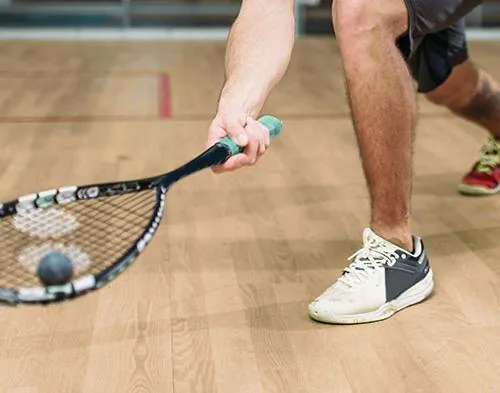
Take a new squash ball out of the tube and drop it, and it barely bounces. Hit it hard for a few minutes and it flies. That change is the whole reason squash matches start with a warm-up, and why the type of ball you choose matters so much.
The short answer
A squash ball is a hollow rubber ball that bounces very little when cold. Each time it is hit, the rubber squashes and heats up, and so does the air inside. Warm air pushes harder against the inside of the ball and warm rubber is springier, so the ball comes back faster and higher. The official rules make a double yellow dot ball bounce more than twice as high at 45°C as at 23°C. That is why players hit the ball for a few minutes before every match.
What happens inside the ball
A squash ball is made from two rubber half-shells glued together into a hollow sphere about 40 mm across. There is no pressurised gas inside, unlike a tennis ball. It is just air at normal pressure.
When you hit the ball, it squashes flat against the strings and again against the wall. Rubber does not spring back perfectly. Some of the energy of each impact is lost inside the rubber as heat. Over dozens of hits, that heat builds up.
Two things then change:
- The air inside expands. Warm air pushes outwards harder, so the ball is firmer and springs back more quickly when it is squashed.
- The rubber softens and becomes more elastic. Cold rubber is stiff and sluggish. Warm rubber recovers its shape faster and wastes less energy.
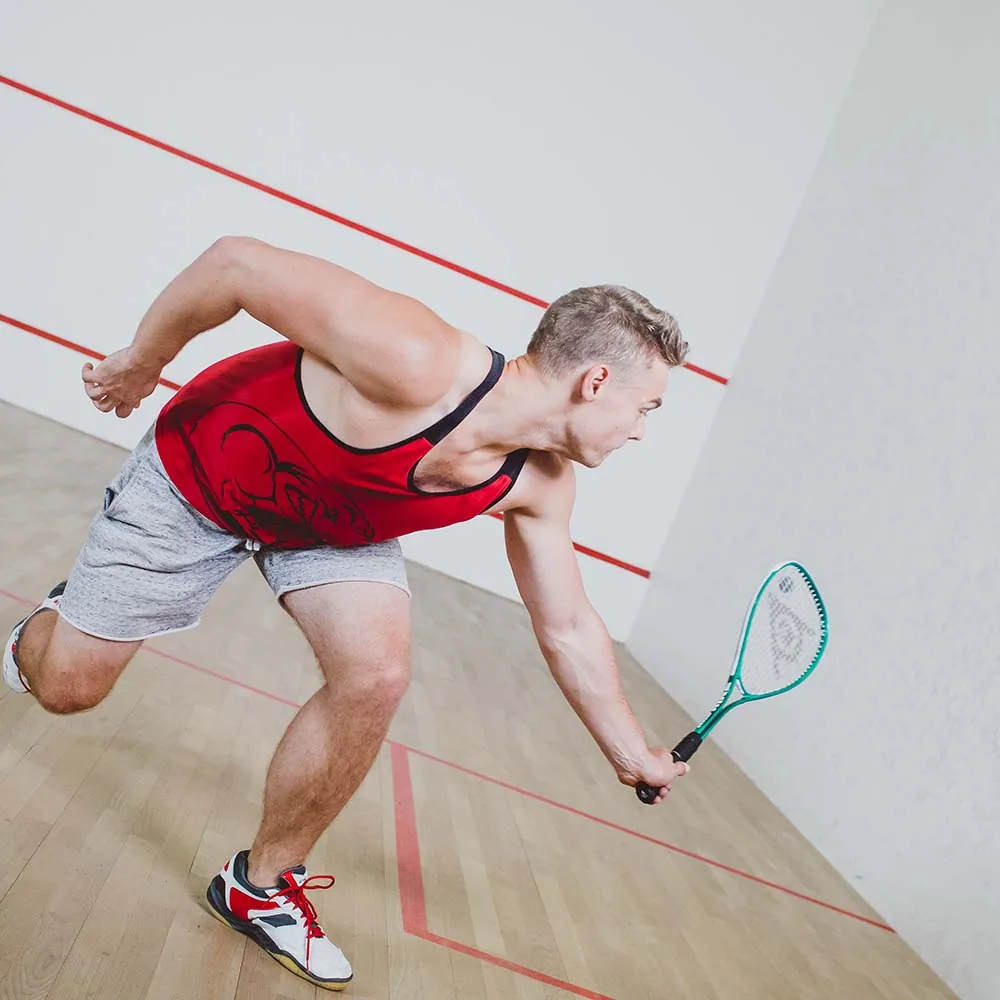
Together, these make a warm ball rebound far more than a cold one. The design is deliberate. A slow, dead ball rewards placement and movement over raw power, which is what gives squash its long rallies.
How much difference heat makes
The World Squash Federation tests balls by dropping them from 254 cm (100 inches) and measuring the rebound, at room temperature and again at 45°C.
| Ball | Rebound at 23°C | Rebound at 45°C |
|---|---|---|
| Double yellow dot | At least 12% (about 30 cm) | 25% to 30% (about 64 to 76 cm) |
| Single yellow dot | At least 15% (about 38 cm) | 30% to 35% (about 76 to 89 cm) |
So a double yellow ball comes back more than twice as high once it is properly warm. Beginner balls are designed to bounce more at both temperatures, so they reach a playable bounce even when you cannot hit hard enough to heat them much. Squash ball dots explained sets out the whole range.
The warm-up in the rules
Under the current World Squash singles rules, both players go on court together and warm up the ball for up to four minutes. After two minutes they must swap sides. Each player must get a fair share of the ball, and keeping it to yourself for too long counts as an unfair warm-up.
The warm-up also exists for you. It gets your eye in, loosens your shoulders and lets you test the court. But in squash, unlike most sports, the equipment needs warming as much as the players.
If a ball breaks and is replaced mid-match, or play resumes after a long delay, the rules let the players warm up the new ball before continuing.
The break between games. You get up to two minutes between games. A ball left on the floor cools down during that time, so the first rally or two of a new game can feel slower. Many players knock the ball against the front wall in the break to keep it warm, which the rules allow.
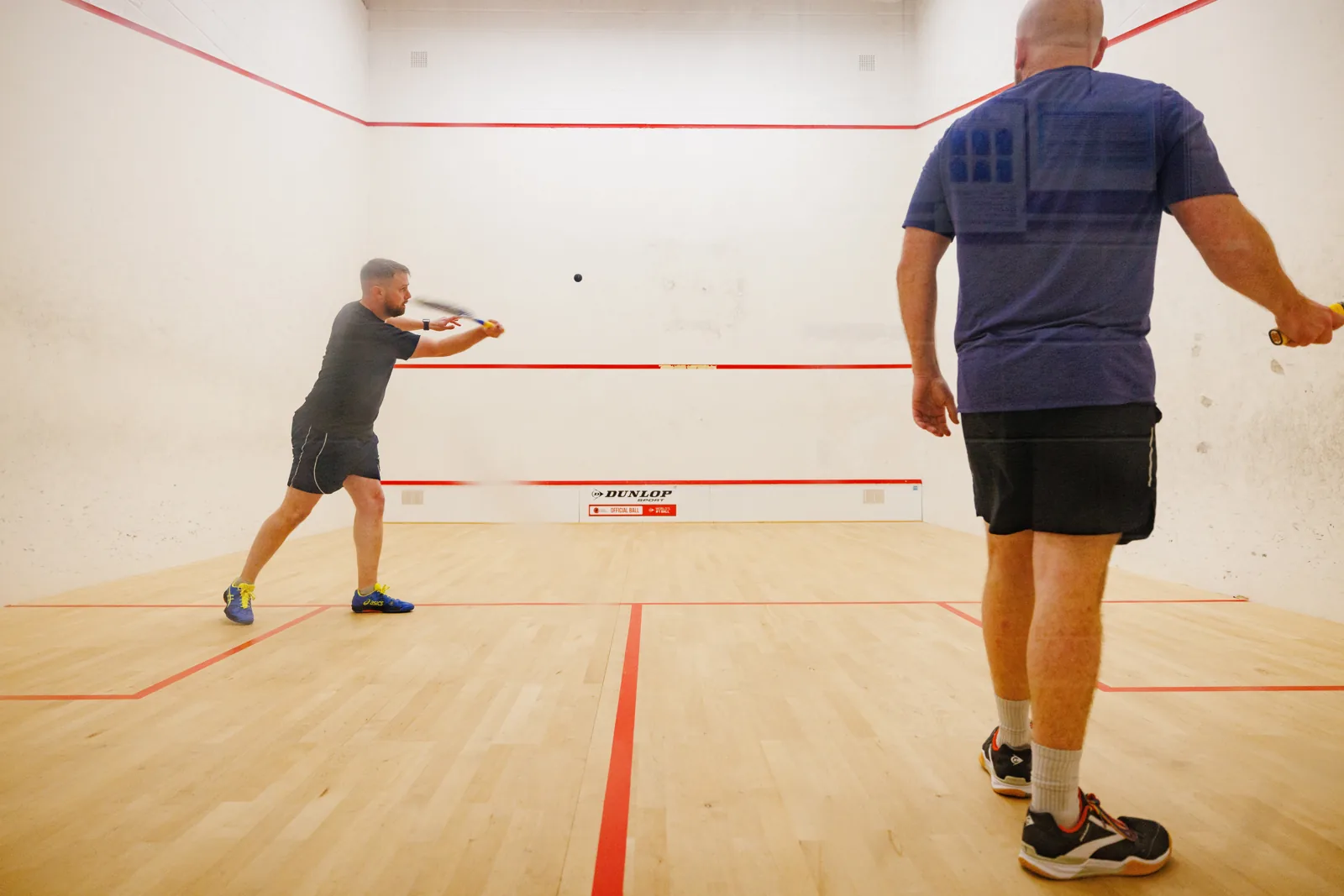
Hook Community Squash Club
Basingstoke · 2 courts
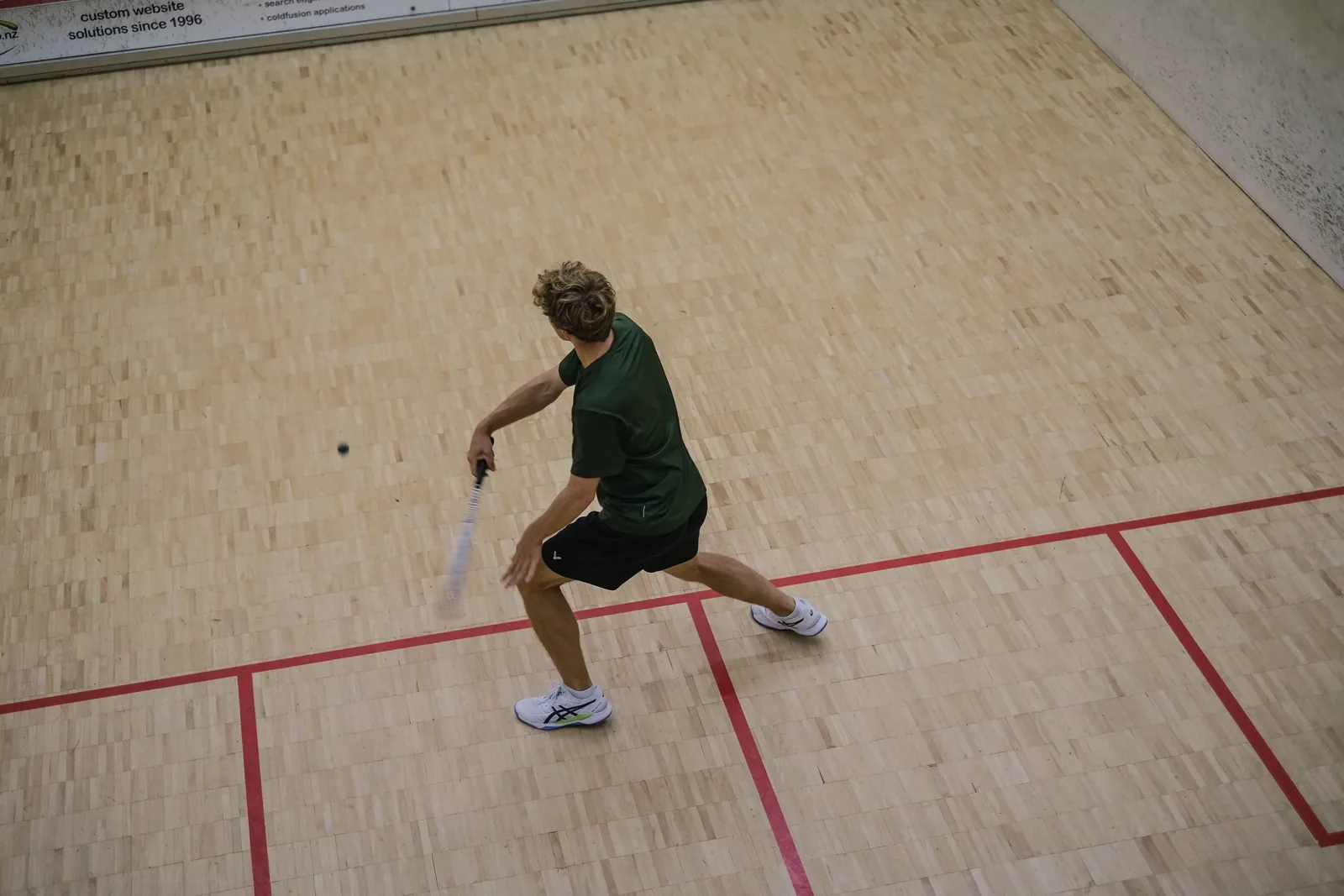
Herne Bay Rackets Club
Auckland · Squash coaching
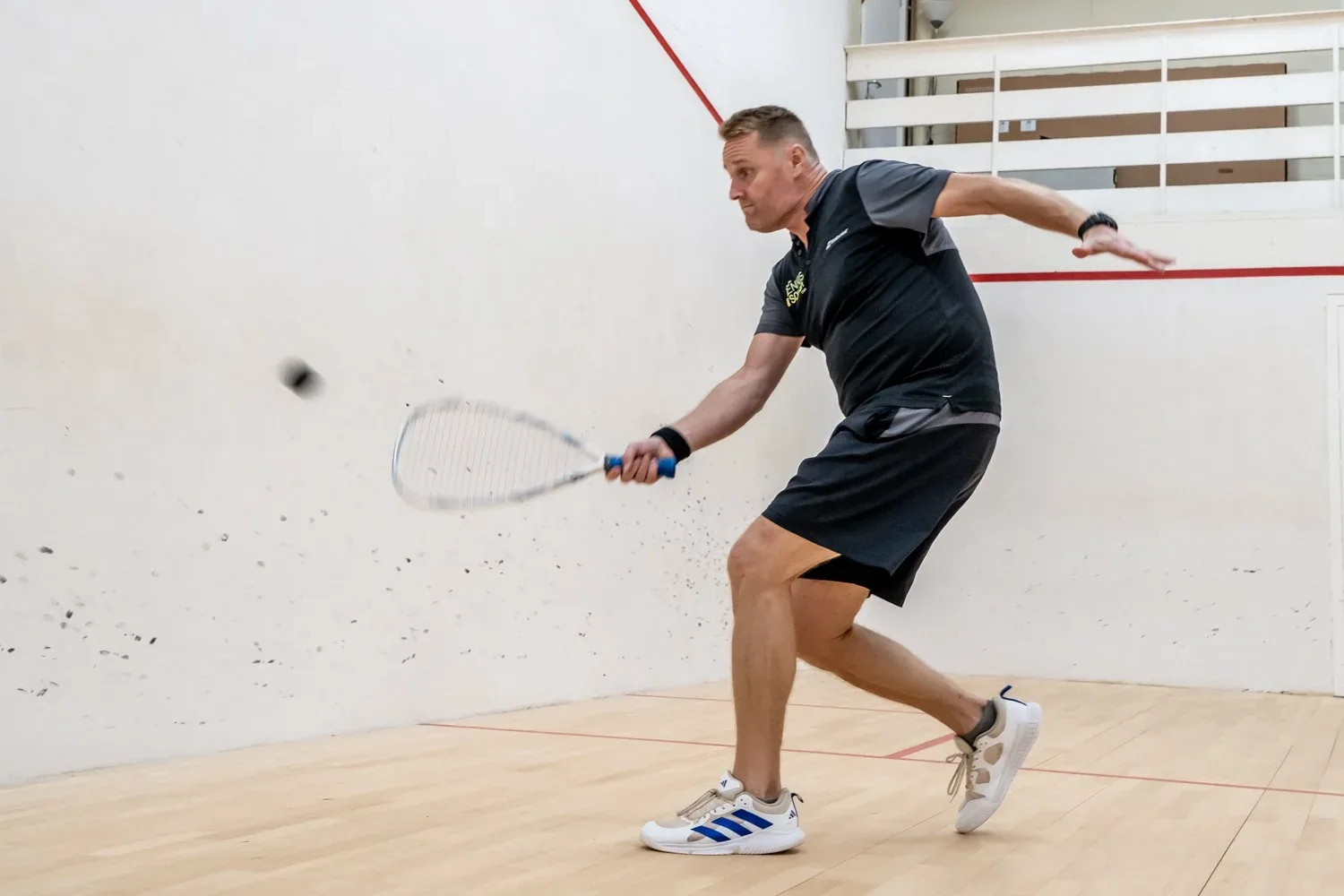
East Anglia Tennis & Squash Club
Norwich · 5 courts
How to warm up a squash ball
The quickest way is to hit it hard and often:
- Hit firm drives. Stand behind the short line and drive the ball straight up the side wall, letting it come back to you. Hard hits put the most heat into the ball.
- Hit it back and forth with your partner. One of you drives straight on the forehand side, the other on the backhand side, then swap.
- Volley it. Volleying against the front wall from close range keeps the ball moving fast with no time to cool on the floor.
Expect it to take a few minutes. You will feel the change: the ball starts sitting up off the back wall instead of dying in the corner. In practice sessions, some players roll the ball firmly under the sole of their shoe or squeeze it in their hand while waiting, which adds a little warmth.
Cold courts and dead balls
The WSF court specification asks for courts to be heated to between 15°C and 25°C, ideally 18°C to 20°C. On an unheated court in winter, the walls and air keep pulling heat out of the ball, so it never fully warms up. Rallies end in the back corners and even good players struggle.
If that happens, switch to a livelier ball. A single yellow instead of a double yellow, or a red dot for less experienced players, gives a game much closer to what you get on a warm court. The opposite applies on a hot day: a double yellow can feel too fast, and stronger players sometimes struggle to finish rallies.
A ball that still will not bounce after a good warm-up is probably worn out. Old balls go smooth and lose their grip on the walls. Replace it.
FAQ
Why does my squash ball not bounce?
It is cold, or it is too slow a ball for your level. Hit it hard against the front wall for a few minutes. If it still dies in the corners, use a single yellow, red or blue dot ball instead.
How long does it take to warm up a squash ball?
A few minutes of firm hitting. The rules allow up to four minutes of warm-up on court before a match, with players swapping sides after two.
Do you need to warm up a beginner squash ball?
Less so. Blue and red dot balls are designed to bounce well even when cool. They still get a little livelier as you play.
Can you warm a squash ball with your hands?
Squeezing and rolling it adds a little heat, but hitting it is far quicker and is what the rules allow time for.