Is squash hard to learn?
 By the Find My Squash Court team·
Updated ·
5 min read
Squash has a reputation as a brutal sport for the very fit. The truth is kinder. Getting a rally going is easier than in tennis, but playing it well takes years. Here is what is easy, what is hard and how long each stage usually takes.
The short answer
Squash is easy to start and hard to master. With a bouncy beginner ball, most people can keep a simple rally going within their first session or two, because the walls bring the ball back and there is no net to clear. The hard parts come later: hitting the ball consistently to the back corners, moving efficiently around the T, and lasting through long rallies. Expect a few months of weekly play before you enjoy proper games, and years to play well.
What makes squash easy to start
- The walls do half the work. In tennis, a missed shot means fetching the ball from the far fence. In squash, nearly every shot comes back off the front wall. You get many more hits per minute, which is how you learn.
- There is no net. The only low target is the tin, about half a metre high. Aim above it and the ball is usually in.
- Beginner balls help a lot. A blue or red dot ball is bigger and bouncier than the yellow dot ball experienced players use, so you have time to reach it. Squash ball dots explained shows which to pick.
- The rules are short. Hit the front wall above the tin, before the ball bounces twice. Most of the rest you can pick up as you go.
- You need little kit. Leisure centres hire rackets, and you can play in any indoor shoes with non-marking soles.
What makes it hard
- The ball dies. Once you move to a yellow dot ball, it stops bouncing much. Shots that reach the back corners are hard to dig out, and you have to move early.
- Accuracy matters more than power. Beginners hit hard and the ball comes back to the middle. Good players hit to the corners and along the side walls, which takes a long time to learn.
- Movement is a skill of its own. Getting back to the T after every shot, reading where the ball will go, and lunging without losing balance all take practice.
- The ball comes off the back wall. Learning to let the ball pass you and play it after it rebounds from the back wall feels unnatural at first.
- Sharing the space. Clearing for your opponent, and knowing when to stop and ask for a let, takes a while to become automatic.
How long it takes to learn
Everyone is different, and people who already play tennis or badminton tend to move faster. As a rough guide for someone playing once or twice a week:
| Stage | Typical time | What you can do |
|---|---|---|
| First rallies | 1 to 2 sessions | Keep the ball going with a bouncy ball |
| Playing games | 1 to 3 months | Serve, score and play full games to 11 |
| Club standard | 6 to 12 months | Rally with a yellow dot ball, play a box league |
| Strong club player | Several years | Control the ball, play deceptive shots, win long matches |
These are not milestones you must hit. Plenty of people play social squash happily for years without ever entering a league.
Compared with tennis and badminton
Most people find squash easier to start than tennis. The court is small, the ball always comes back and there is no serve to master before you can play. Tennis rewards good technique much earlier, because without it the ball goes into the net or out of the court.
Badminton is probably the easiest of the three to start, but like squash it gets much harder at club level. Squash is the most physically demanding of the three once rallies get long. Our comparisons of squash vs tennis and squash vs badminton go into more detail.
The racket feels different. If you play tennis, expect to keep hitting too hard and with too much wrist for the first few sessions. A squash racket is much lighter and the swing is more compact. A coach can fix this in one or two lessons.
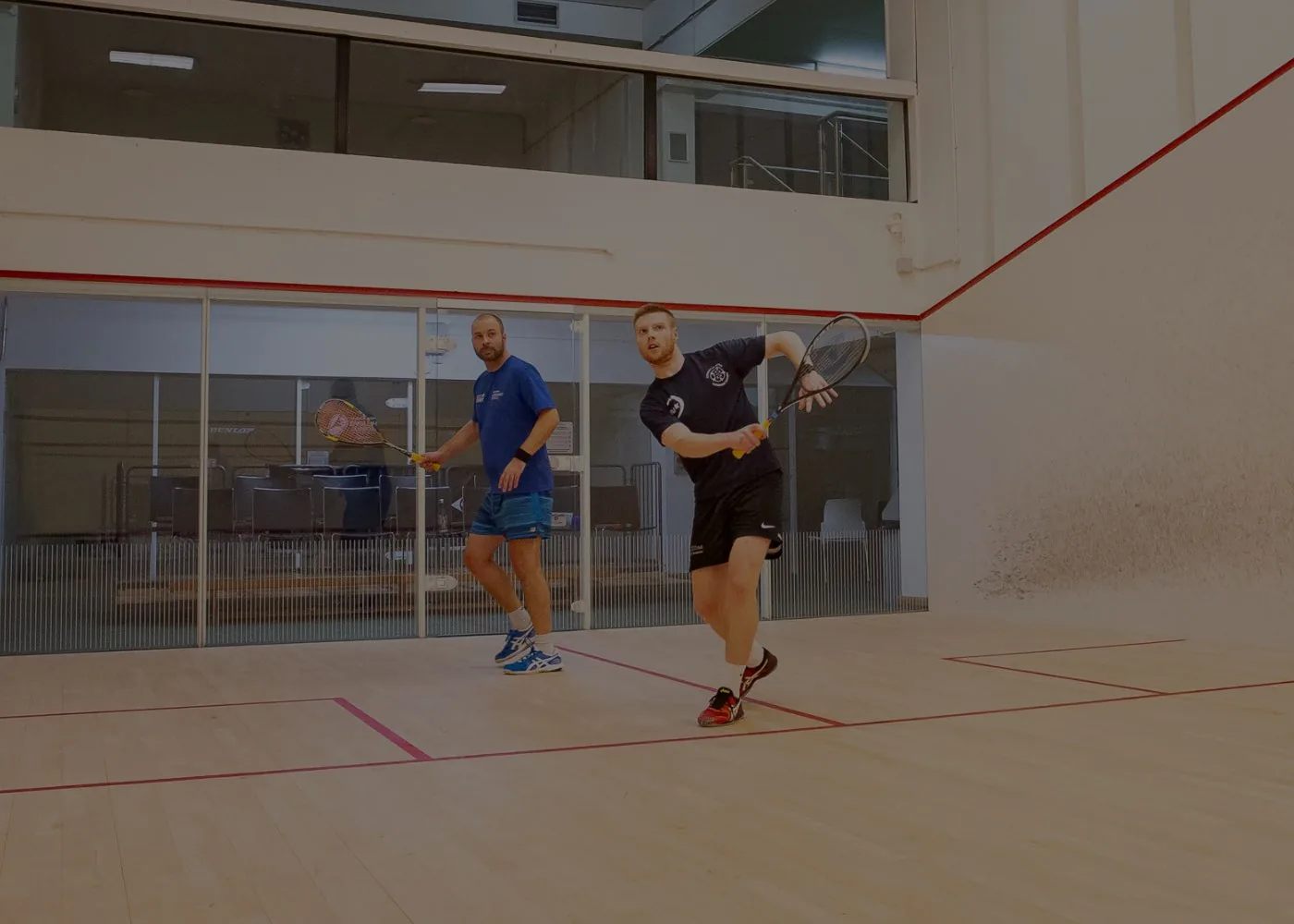
Allam Sport Centre, University of Hull
Hull · Glass-back courts
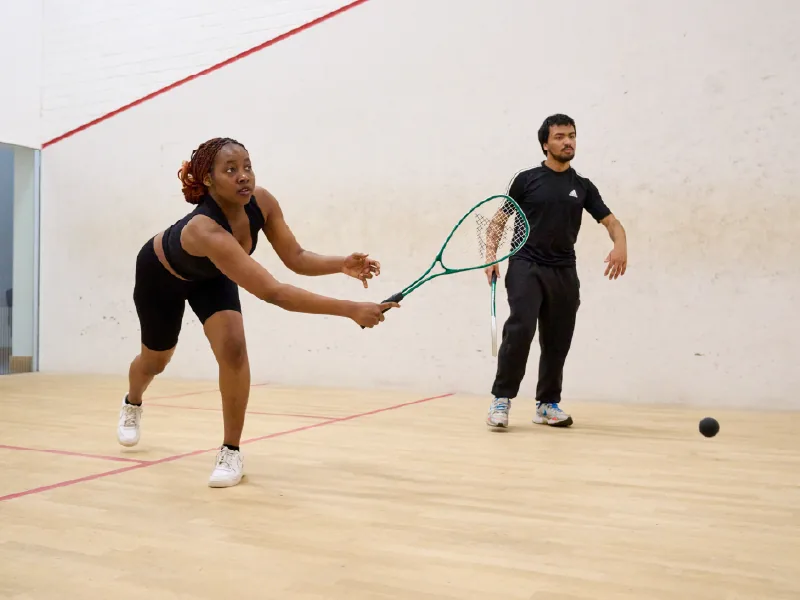
Sir Doug Ellis Woodcock Sports Centre (Aston University)
Birmingham · 2 courts
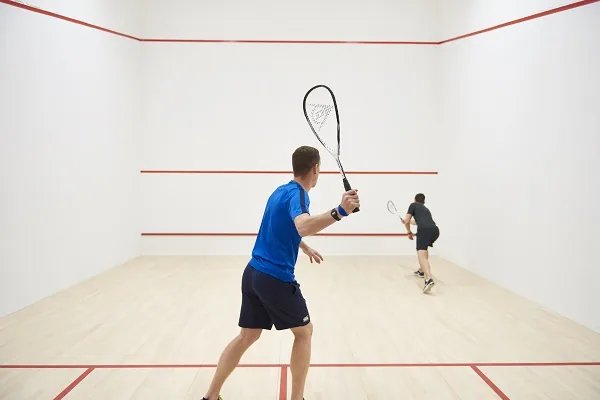
Strathclyde Sport
Glasgow · 2 courts
How to learn faster
- Take a few lessons early. A coach will sort out your grip, swing and movement before bad habits set in. Group beginner courses are the cheapest way in. Squash lessons for adults covers what to expect.
- Play little and often. Two 40-minute sessions a week beat one long one.
- Practise alone. Booking a court for yourself and hitting straight drives along each wall builds consistency faster than any match. See solo squash drills.
- Play people slightly better than you. Club nights and box leagues are the easiest way to find them.
- Use the right ball. Move up from blue to red to single yellow as your rallies get longer, not before.
It is also cheap to try. In the UK in 2026, a pay-and-play court at a leisure centre usually costs about £8 to £11 for 40 to 45 minutes, split between two players, with racket hire for a few pounds. Cities with the most squash coaching in our directory:
Do you need to be fit?
Not to start. With a bouncy ball and a partner at your level, a gentle game is within reach of most reasonably active people, and you can stop for a breather whenever you like. Squash becomes demanding as you improve, because rallies get longer and you cover more ground. Most players find their fitness improves along with their game.
If you have not exercised for a while, or have a heart condition, build up gradually and read is squash dangerous? before you start.
FAQ
Is squash harder than tennis?
It is usually easier to start, because the walls return the ball and there is no net. It is more tiring once rallies get long, and both take years to play well.
Can you learn squash as an adult?
Yes. Many club players started in their thirties, forties or later. Adult beginner courses and club nights are set up for exactly this.
How long does it take to get good at squash?
Most people playing weekly can enjoy proper games within a few months and reach a decent club standard within a year. Getting genuinely good takes several years.
Can you teach yourself squash?
You can learn the basics by playing with friends and practising alone, but a few lessons early on save a lot of time correcting bad habits later.