Squash vs badminton
 By the Find My Squash Court team·
Updated ·
5 min read
Squash and badminton are the two indoor racket sports most leisure centres offer, often in the same building. One uses a ball and four walls, the other a shuttlecock and a net, and they reward different skills.
The short answer
Squash is played in a walled box, with both players sharing the court and hitting a rubber ball against the front wall. Badminton is played over a high net on an open court, singles or doubles, with a feathered or plastic shuttlecock. Badminton is easier to start and very sociable as doubles. Squash is the harder workout per minute and more physical, because you chase a ball that dies in the corners. Both are cheap to play at council leisure centres, so trying each costs little.
Side by side
| Squash | Badminton | |
|---|---|---|
| Court | 9.75 m × 6.4 m, four walls | 13.4 m × 6.1 m (doubles); 5.18 m wide for singles |
| Net | None; a tin along the front wall | 1.524 m high at the centre |
| Object | Hollow rubber ball | Shuttlecock, feathered or nylon |
| Players | Mostly singles | Singles or doubles |
| Scoring | Point a rally, games to 11, best of five | Point a rally, games to 21, best of three |
| Energy cost (Compendium) | 7.3 METs, general play | 5.5 METs social; 7.0 competitive |
Court and net
A badminton court is longer than a squash court but slightly narrower, with a net across the middle. The shuttle has to cross the net and land inside the lines on the other side. In a sports hall several badminton courts usually sit side by side.
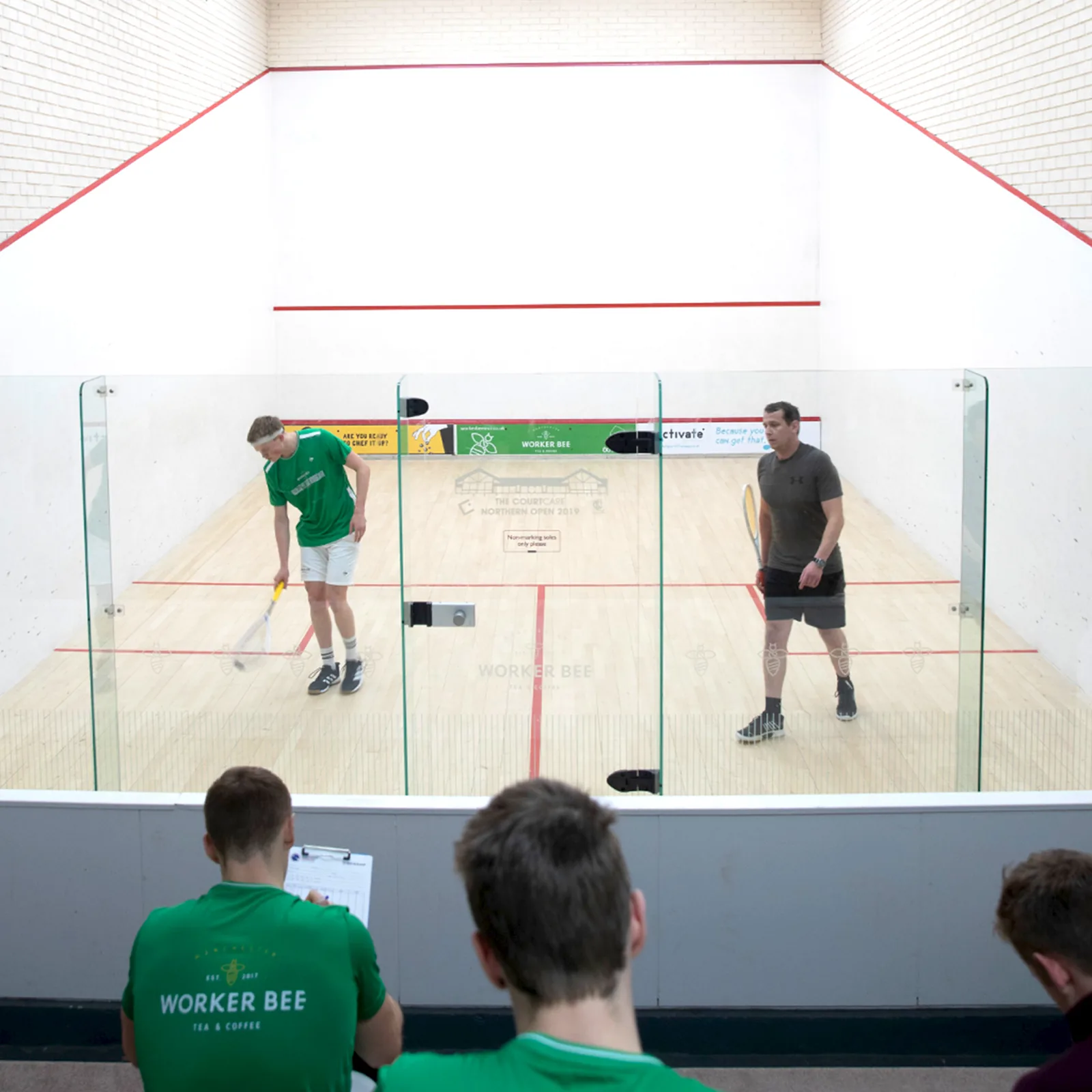
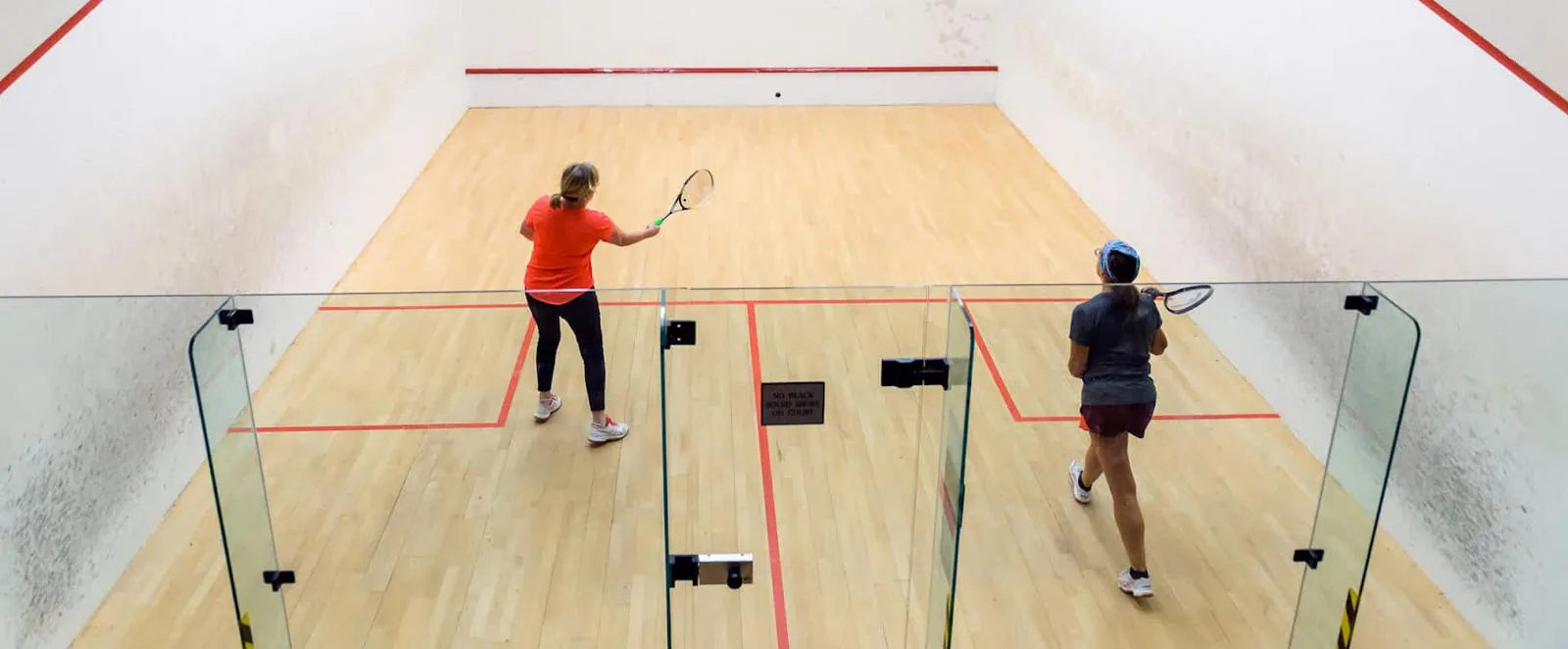
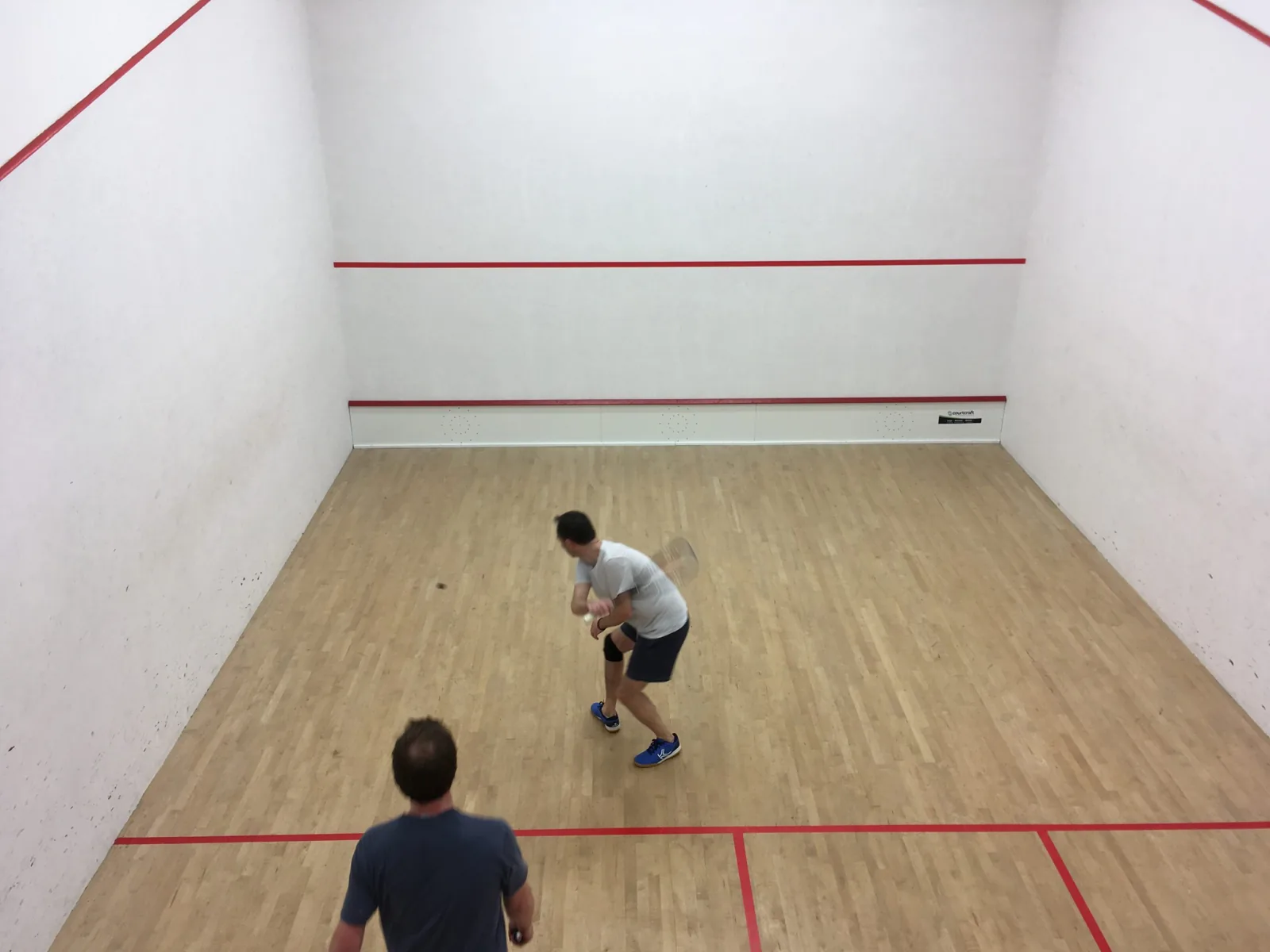
A squash court is a closed room with no net. Both players stand in the same space and hit the front wall in turn, keeping the ball above the tin and below the out line. The side and back walls are in play. For full measurements, see squash court dimensions.
Ball, shuttle and racket
The badminton shuttle has a cork or foam base and a skirt of feathers or nylon. It flies very fast off the racket but slows sharply because of drag, which is why badminton has both huge smashes and delicate drop shots at the net.
The squash ball is small, hollow and heavy by comparison. It needs warming up before it bounces, and it keeps much of its pace off the front wall. Read squash ball dots to choose the right one.
Rackets look similar but are not interchangeable. A badminton racket is very light, with a thin shaft. A squash racket is heavier and stiffer, built to hit a rubber ball against a wall.
How the games play
Badminton is about speed of hand, deception and jumping. The shuttle never touches the floor in a rally, so you play every shot in the air. Points come from steep smashes, net kills and moving your opponent from front to back. Wrist and fingers do much of the work.
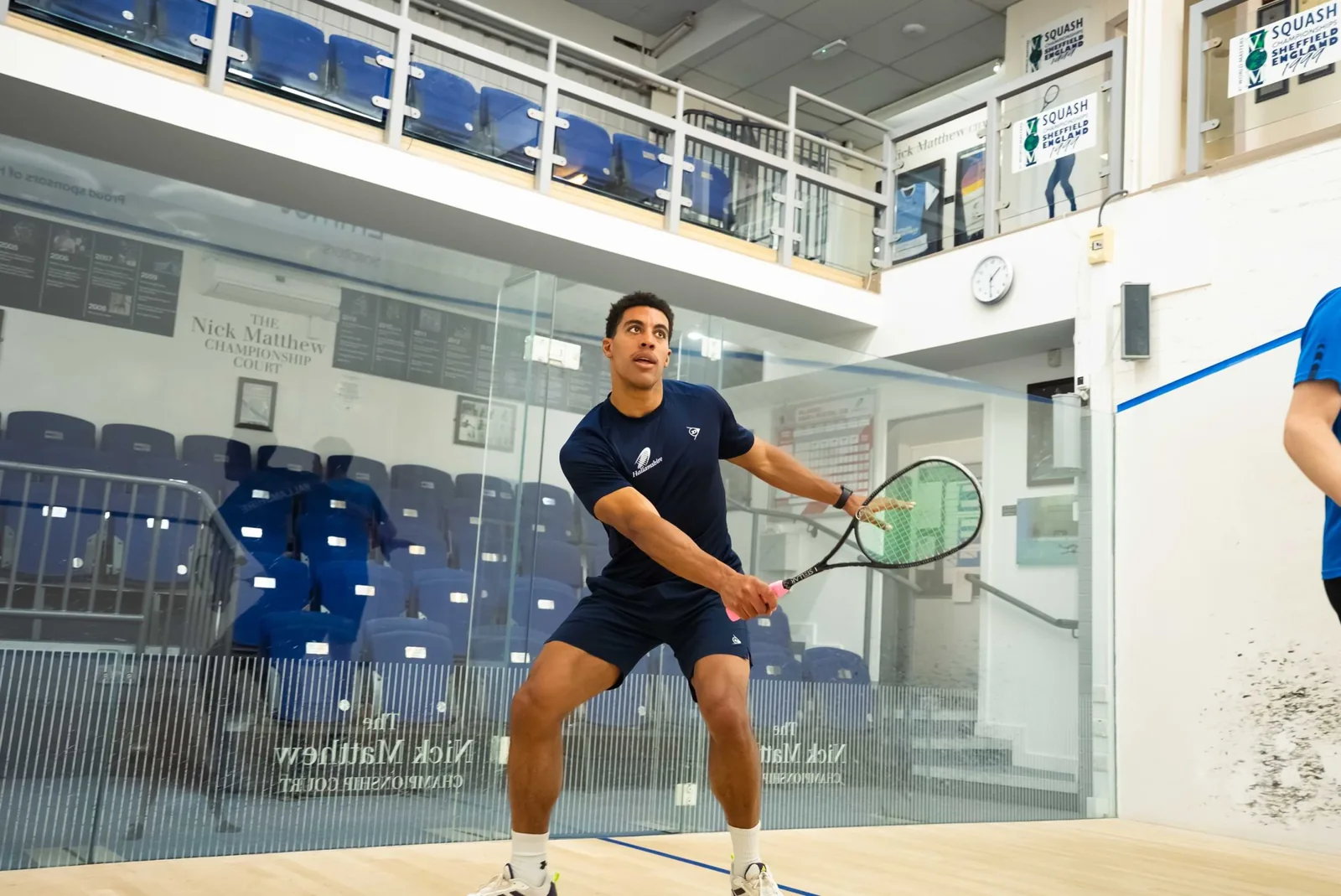
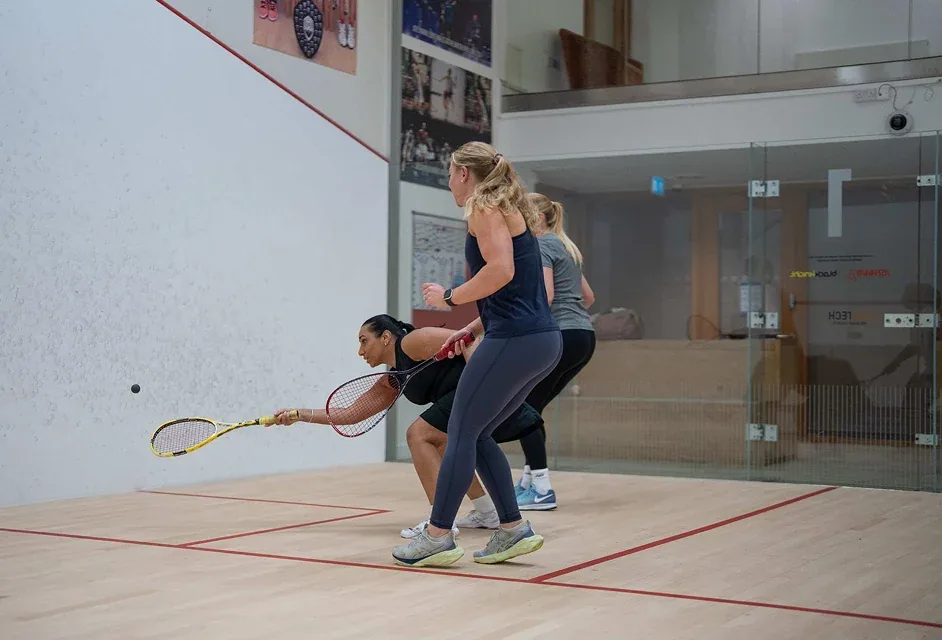
Squash is about movement and placement. You let the ball bounce (or volley it), hit it deep into the corners and fight for the middle of the court. The ball comes back off the walls at different angles, so reading it is a big part of the skill. Rallies tend to be longer, and there is more running and lunging.
Etiquette differs too. In badminton you have your own half. In squash you share the space and must give your opponent a clear path to the ball, which is why the let and stroke rules exist. See let vs stroke.
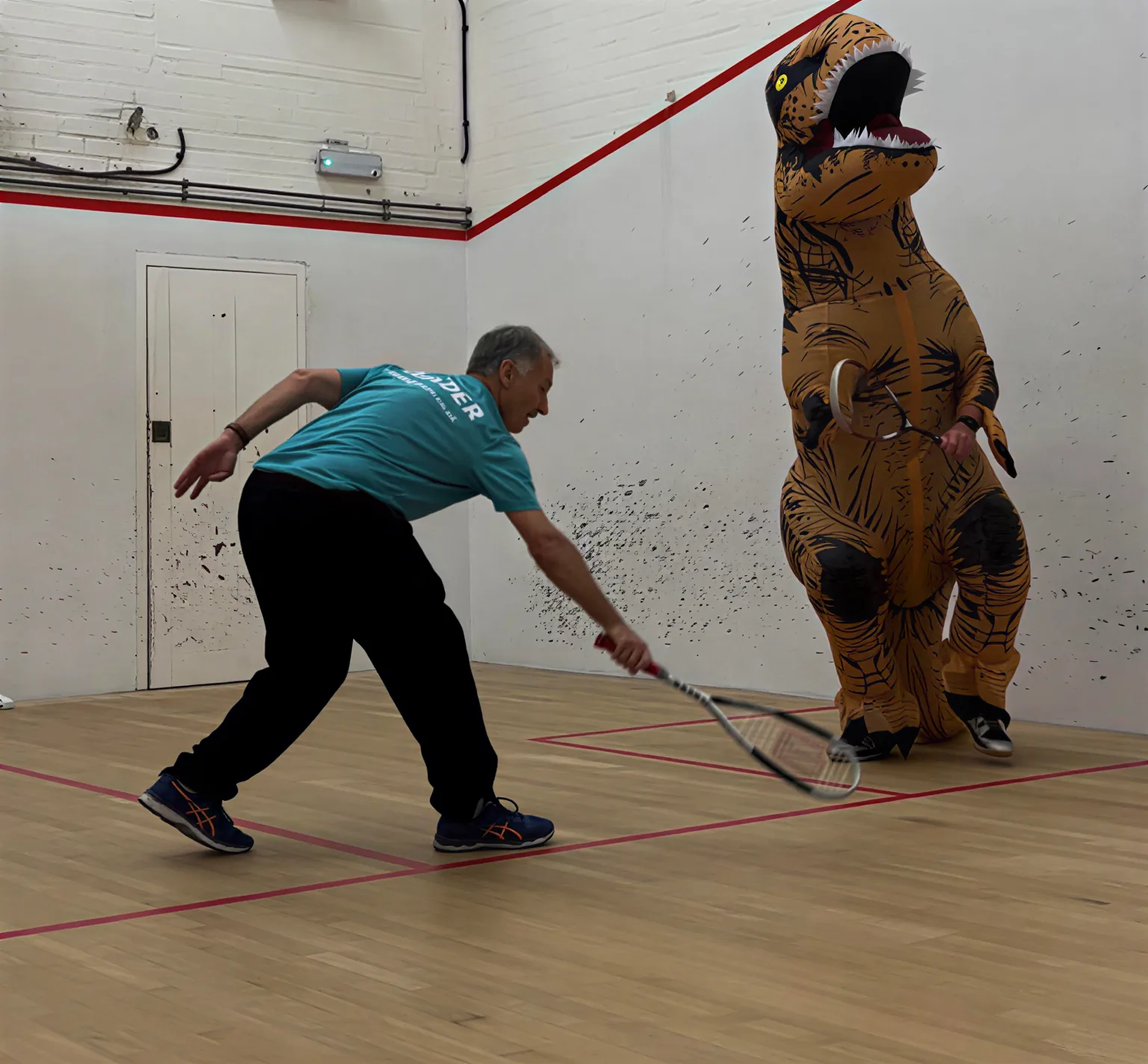
Badminton players on a squash court. Badminton players usually have quick hands and good lunges. Their main adjustment is letting the ball bounce and swinging through it instead of flicking at it.
Which is the better workout
The Compendium of Physical Activities gives social badminton a MET value of 5.5 and competitive badminton 7.0, against 7.3 for general squash. In everyday terms, a friendly game of badminton is moderate exercise, while a game of squash is usually vigorous from the start. Competitive badminton is very demanding, with lots of jumping and quick changes of direction, but most casual players do not reach that level.
Squash is also more of a contact risk, as you share the court with a swinging racket and a hard ball. Wear eye protection. Our guide on whether squash is dangerous covers the risks and how to avoid them.
Which one suits you
Choose badminton if you want to play in a group, enjoy fast hand work at the net, or want a game you can enjoy in your first session. Doubles in a sports hall is one of the easiest ways to play a racket sport with friends.
Choose squash if you want the harder workout, like a game against one opponent, and want something you can book for 40 minutes at short notice. You need only one partner and a court.
Many leisure centres offer both, so you can book badminton one week and squash the next. Our squash for beginners guide covers what to expect in your first month.
Littlehampton Badminton & Squash Club
Bognor Regis · Badminton and squash
Mount Pleasant Lawn Tennis Club
Dublin · Tennis, squash, badminton
Garforth Leisure Centre
Leeds · Six squash courts
FAQ
Is squash harder than badminton?
For most beginners, yes. A shuttle is easier to keep in the air than a squash ball is to reach, so rallies come sooner in badminton. Both are hard at a high level.
Does squash or badminton burn more calories?
Squash usually does for casual players. The Compendium rates general squash at 7.3 METs and social badminton at 5.5. Competitive badminton is close to squash.
Can you use a badminton racket for squash?
No. A badminton racket is far too light and would break hitting a squash ball. Use a squash racket; most centres hire them.
Are badminton and squash courts the same size?
No. A doubles badminton court is 13.4 m long and 6.1 m wide. A squash court is 9.75 m long and 6.4 m wide, with walls instead of a net.