Squash vs pickleball
 By the Find My Squash Court team·
Updated ·
5 min read
Pickleball has spread from the United States to sports halls and tennis clubs across the UK, Canada and Australia. Some people pick it up as a gentler alternative to squash. The two games have very little in common beyond the racket in your hand.
The short answer
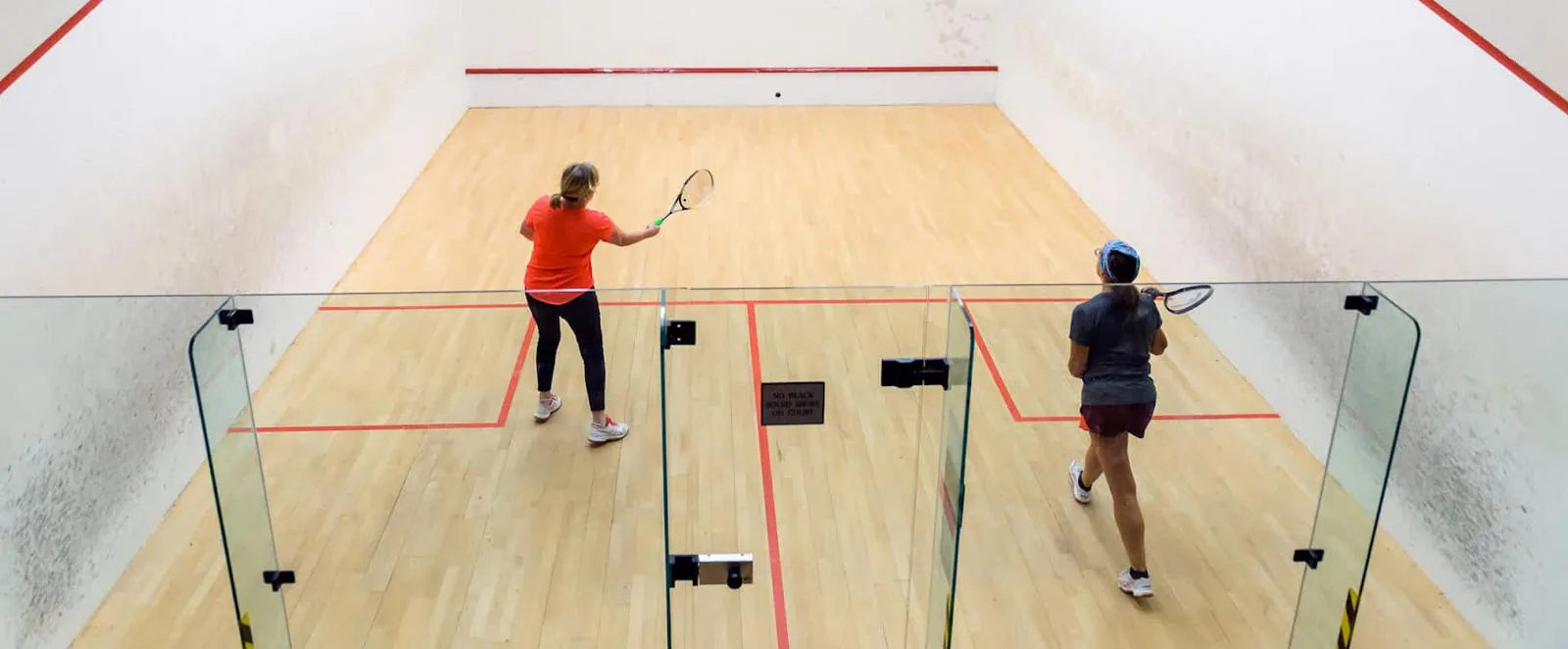
Squash is a fast indoor game for two, played in a walled box with a strung racket and a small rubber ball hit against the front wall. Pickleball is played over a low net on a court the size of a badminton doubles court, usually as doubles, with a solid paddle and a light plastic ball with holes. Pickleball is much easier to learn, gentler on the body and very social. Squash is the far harder workout and takes longer to learn. If you want intensity, pick squash. If you want an easy, friendly game, pick pickleball.
Side by side
| Squash | Pickleball | |
|---|---|---|
| Court | 9.75 m × 6.4 m, four walls | 13.41 m × 6.10 m (44 ft × 20 ft), open |
| Net | None; a tin along the front wall | 34 in (86 cm) at the centre, 36 in (91 cm) at the posts |
| Racket | Long, light, strung | Short solid paddle, no strings |
| Ball | Small hollow rubber ball | Light plastic ball with holes |
| Players | Mostly singles | Mostly doubles |
| Serve | Overarm or sidearm, onto the front wall | Underarm, diagonally across the net |
| Scoring | Point a rally, games to 11 | Games to 11; in doubles, traditionally only the serving side scores |
| Pace | Fast | Slow to medium |
Court, net and kitchen
A pickleball court is the same size as a badminton doubles court, with a net a little lower than a tennis net. Clubs and leisure centres often mark it out on a sports hall floor or a tennis court. Each side has a seven foot zone next to the net called the non-volley zone, or the kitchen. You cannot volley while standing in it, which stops players camping at the net and smashing everything.
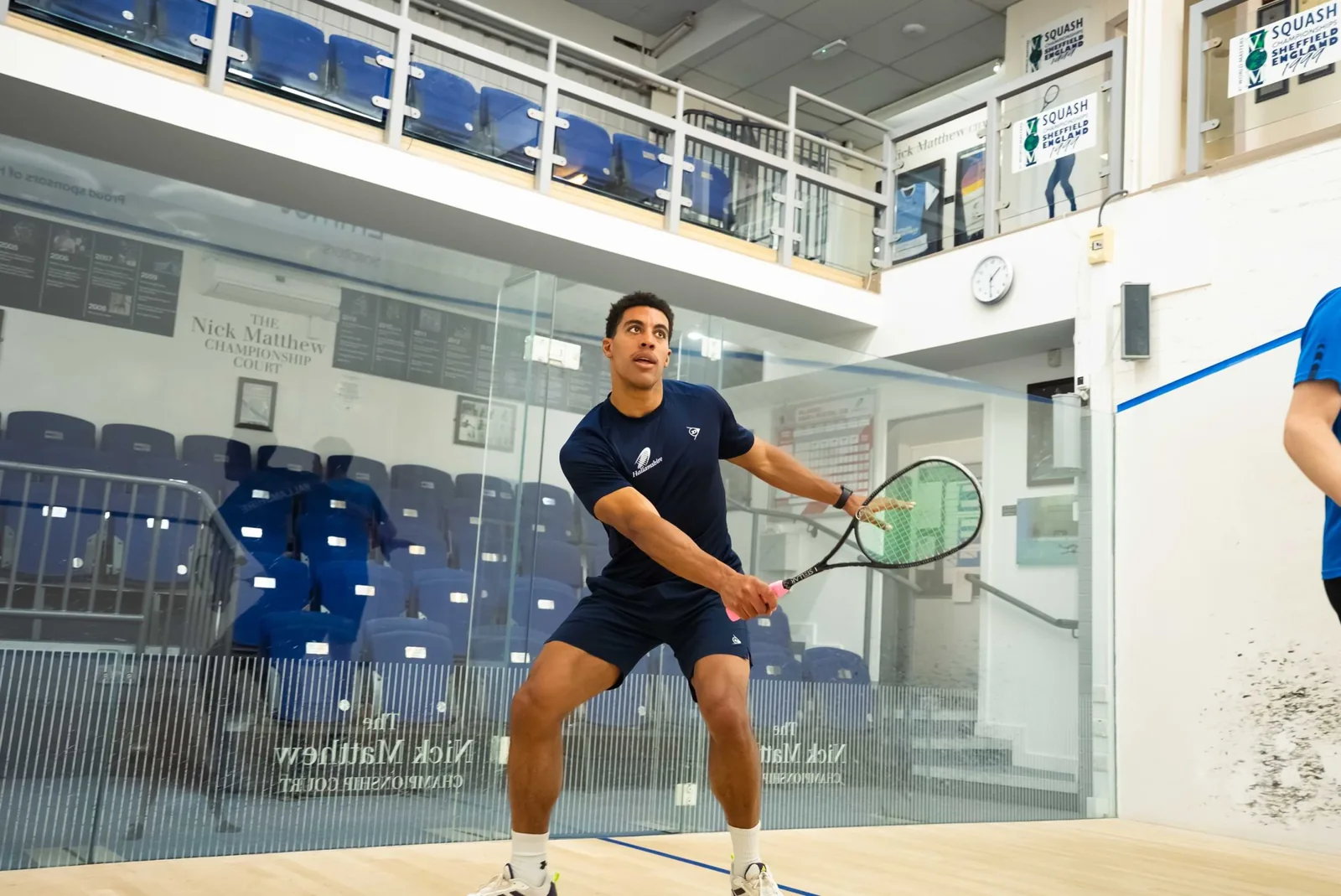
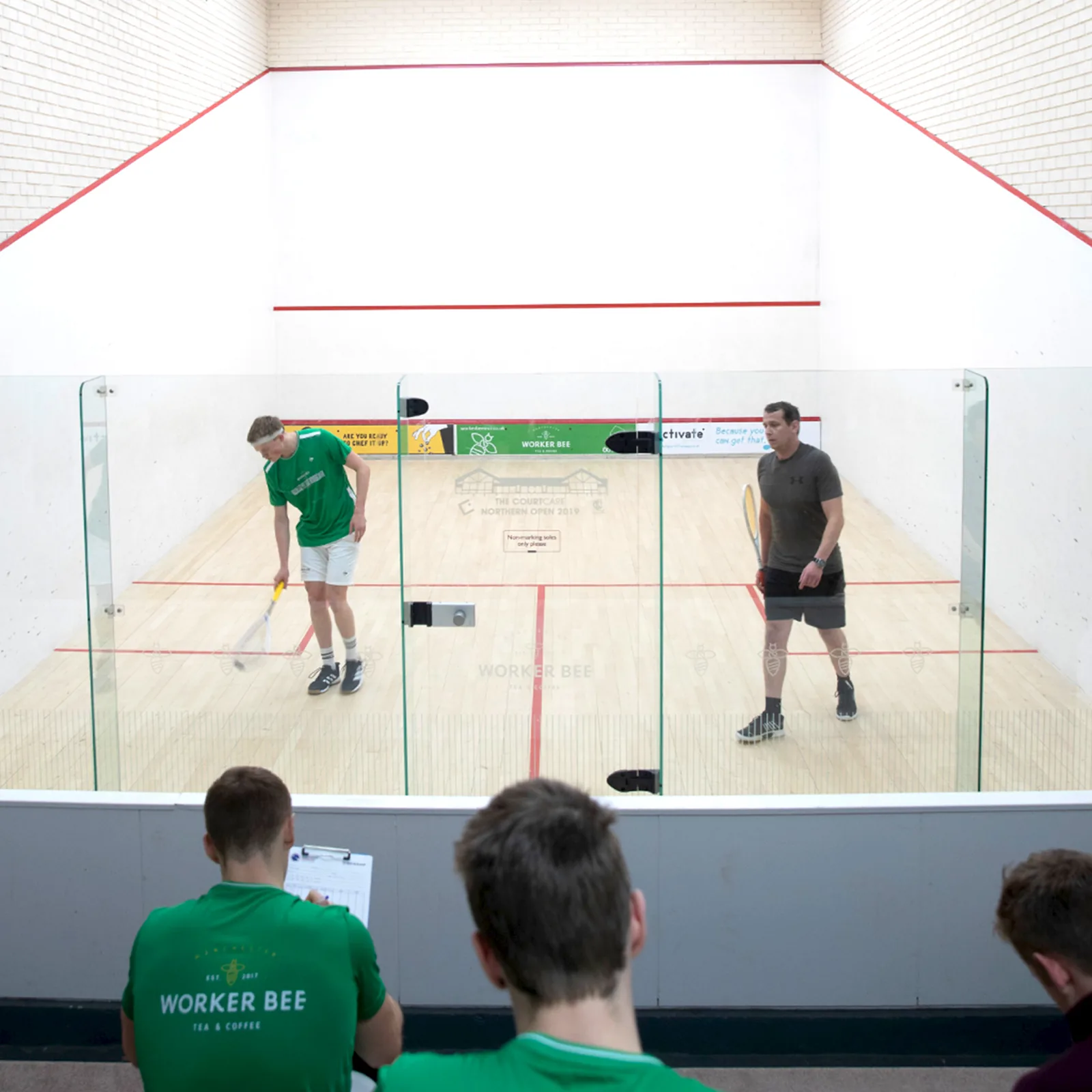
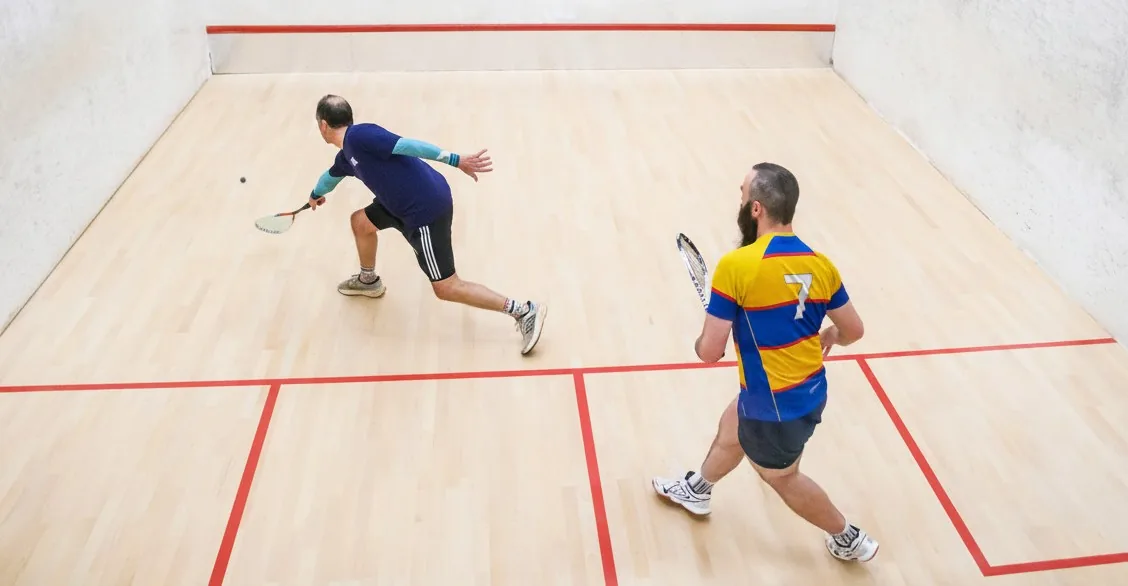
A squash court is a closed room with no net and no zones, apart from the service boxes. Both players share the space and hit the front wall in turn. The walls are part of the game, and using the side wall to send the ball into a corner is one of the main skills. See squash court lines for what each line means.
Paddle, racket and balls
A pickleball paddle is solid, roughly twice the size of a table tennis bat, with a short handle. The ball is plastic and full of holes, so it moves slowly through the air and does not bounce very high. That slow ball gives you time, which is why beginners can rally in their first ten minutes.
A squash racket is long and strung, and the ball is small, hollow and dead until warmed up. The ball comes off the front wall quickly and dies in the corners, so you must move early and far. Read squash ball dots for the beginner balls that make this easier.
Serving and scoring
Pickleball serves are underarm, struck below the waist, and go diagonally across the net. The receiving side must let the serve bounce, and the serving side must then let the return bounce too. After those two bounces, volleys are allowed outside the kitchen. Games are usually to 11, win by two. In traditional doubles scoring, only the serving side wins points, and each player on a team serves in turn. Rally scoring is being tried in some events.
In squash, the serve goes onto the front wall above the service line and lands in the back quarter on the other side. Every rally wins a point, games are to 11, win by two, and matches are usually best of five. Our guide on squash scoring covers the detail.
Watch the kitchen line. Squash players new to pickleball tend to rush forward and volley inside the non-volley zone, which loses the point. Stay behind the line until the ball has bounced.
Effort and injury risk
Pickleball is a gentle game. You cover a small area, the ball is slow and most rallies are short. That makes it popular with older players and people returning to sport after a long break. A long doubles session still adds up to a fair amount of walking and quick steps.
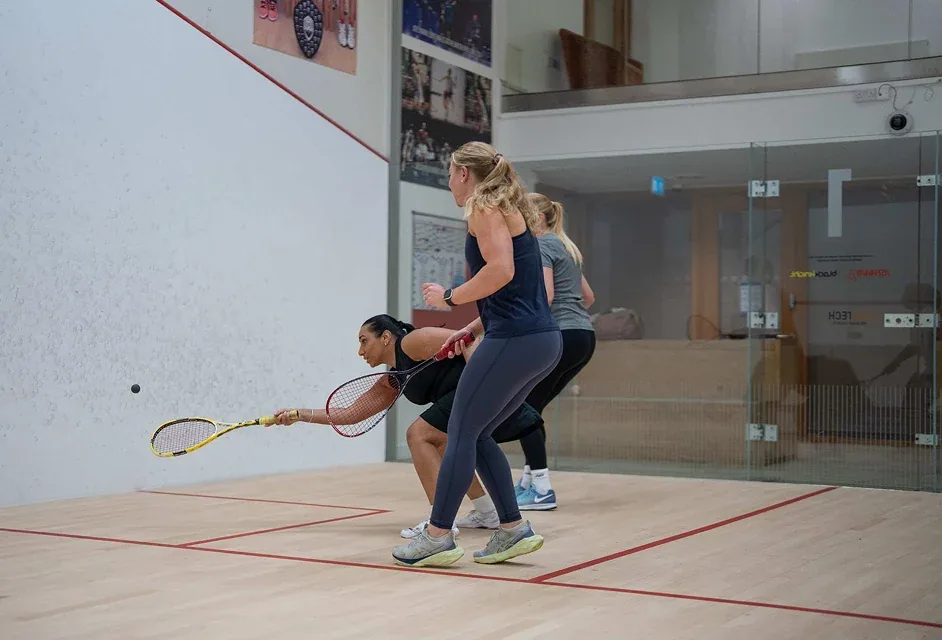
Squash is much more demanding. You run, stop, lunge and twist through most of a 40 minute booking, and your heart rate stays high. The Compendium of Physical Activities rates general squash at 7.3 METs, which counts as vigorous exercise. See how many calories squash burns.
The injury pattern follows the effort. Squash brings more strain on knees, calves and backs, and the risk of being hit by the ball or racket, so goggles matter. Pickleball injuries are often falls and strains from sudden movement. Our guide on whether squash is dangerous has the detail.
Which one to play
Choose pickleball if you want an easy, social game, have a mixed group of ages and abilities, or need something kind on the joints.
Choose squash if you want a hard workout in a short time, enjoy a game with a lot of tactics and movement, and have one regular partner.
Some venues now offer both. If you are new to squash, our guide on squash for beginners covers your first month on court.
FAQ
Is pickleball easier than squash?
Yes. The slow plastic ball, the small court and the underarm serve make pickleball easy to pick up. Squash takes several weeks before rallies flow.
Can you play pickleball on a squash court?
No. A pickleball court is 13.41 m long and needs a net, while a squash court is 9.75 m long with walls all round. Pickleball is usually played on badminton or tennis courts.
Is squash or pickleball better exercise?
Squash is the much harder workout. Pickleball is lighter work, which suits players who want something gentler.
Do squash skills help in pickleball?
Quick reactions and soft hands help. The bigger change is the short, compact paddle swing and the kitchen rule.