Squash court lines and the tin
 By the Find My Squash Court team·
Updated ·
6 min read
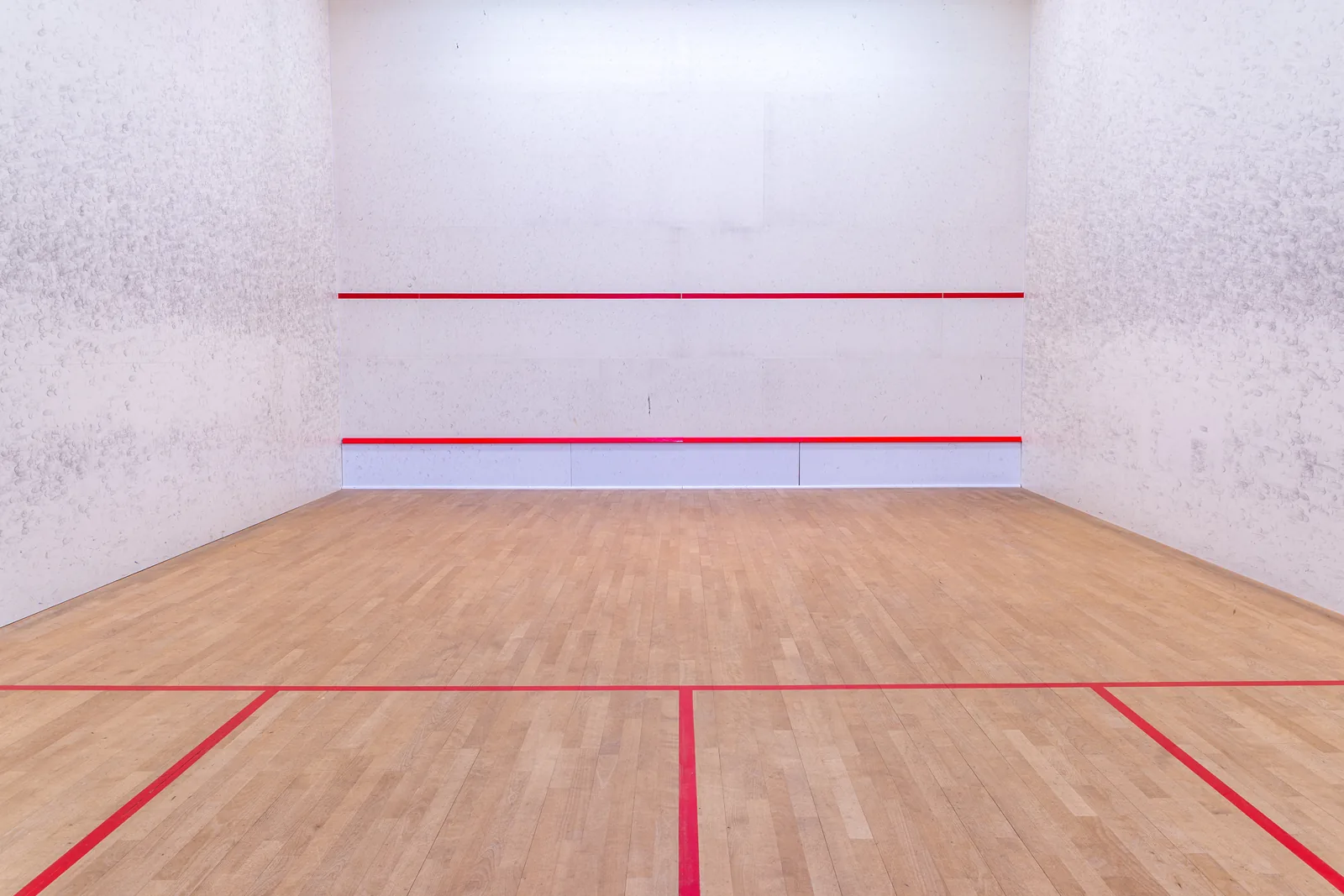
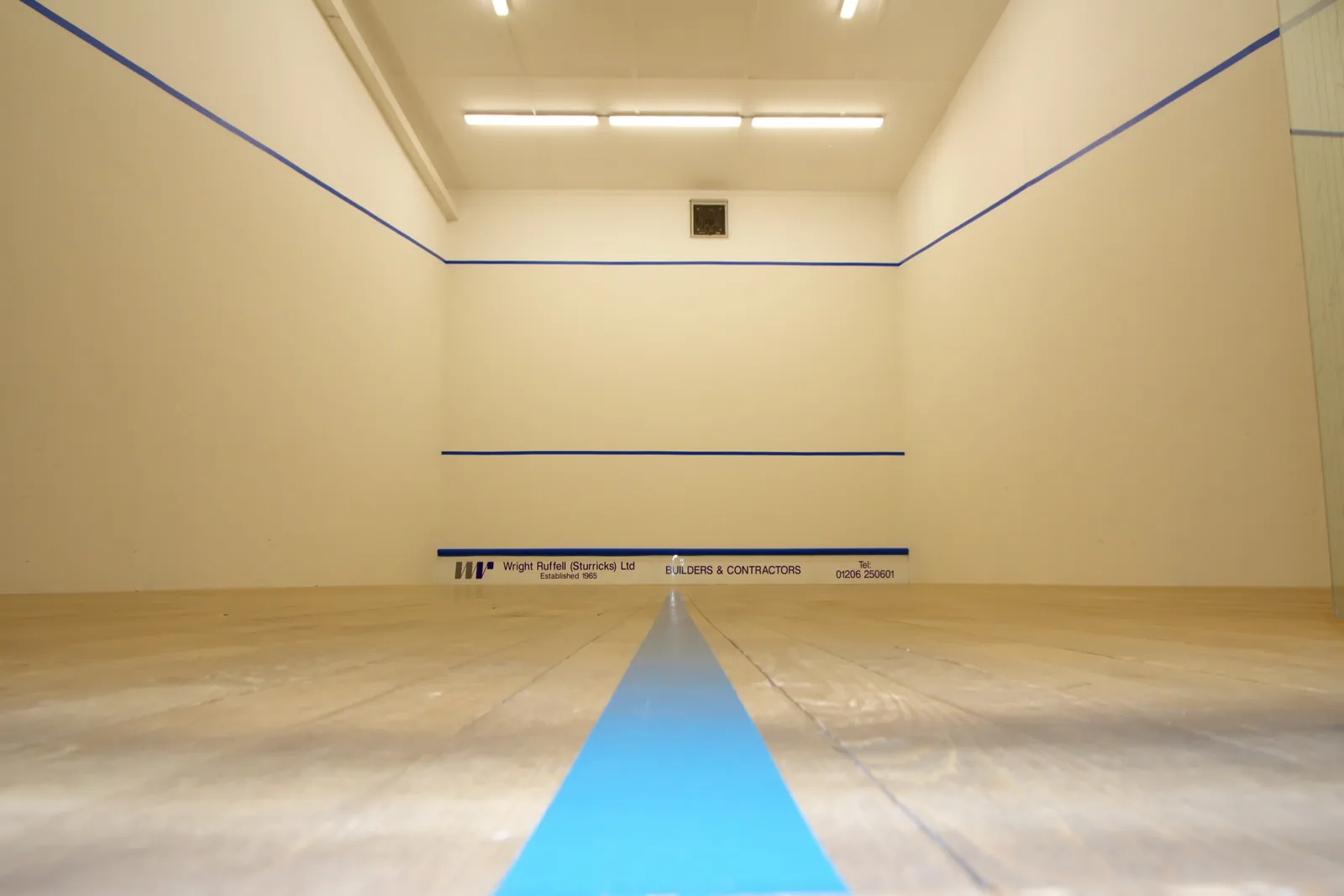
A squash court has three lines on the front wall, one on each side wall, one on the back wall and four groups of lines on the floor. Some matter on every shot, others only on the serve. Here is what each one does.
The short answer
The lines on the walls mark the playing area. The out line runs along the top of the front wall, down each side wall and across the back wall: touching it is out. The tin at the bottom of the front wall is out of play too, so a ball that hits it is down. The service line on the front wall only matters on the serve, which must hit above it. The floor lines (short line, half-court line and service boxes) also only matter for the serve.
The lines at a glance
| Line | Where | Height or position | When it matters |
|---|---|---|---|
| Out line | Front wall | 4.57 m | Every shot |
| Out line | Side walls | Slopes from 4.57 m to 2.13 m | Every shot |
| Out line | Back wall | 2.13 m | Every shot |
| Service line | Front wall | 1.78 m | Serve only |
| Tin | Front wall | Floor to 0.48 m | Every shot |
| Short line | Floor | 5.44 m from front wall | Serve only |
| Half-court line | Floor | Short line to back wall | Serve only |
| Service boxes | Floor | 1.6 m squares | Serve only |
For every measurement in metres and feet, see squash court dimensions.
The out line
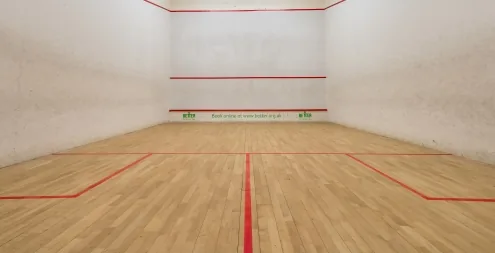
The out line is one continuous boundary around the top of the court. It runs across the front wall at 4.57 m, slopes down each side wall, and crosses the back wall at 2.13 m. The slope on the side walls simply joins the two heights.
Any shot that hits the wall on or above this line is out. So is a ball that hits a light or fitting above the line, clips the top edge of a wall or leaves the court altogether. The line is out because the rules count the whole line as part of the out-of-court area.
The back wall line is lower than you might expect. A high lob that sails over your opponent and hits the back wall above 2.13 m before bouncing is out. Good lobs drop in before reaching the back wall, or hit it below the line.
The tin
The tin is the strip along the bottom of the front wall, from the floor up to 48 cm. It acts like a net in tennis: your shot must hit the front wall above it. A ball that hits the tin, or hits the floor before reaching the front wall, is called "down" and you lose the rally.
The court specification requires the tin to make a distinctive noise when the ball hits it, so the marker and players can hear a down ball even when they cannot see it clearly. The top edge of the line is shaped to deflect the ball, so a ball that clips it rarely bounces back fairly.
The top of the tin counts as part of the tin. If the ball touches the line at the top, it is down.
Professional tournaments often lower the tin to 43 cm, which makes low attacking shots easier and rallies shorter. Club courts nearly always use the standard 48 cm.
Hit high, not low. Beginners lose more points to the tin than to anything else. Aim your drives a good metre above the tin. The ball will still come back deep, and you will give away far fewer points.
The service line
The service line sits across the front wall at 1.78 m. On the serve, the ball must hit the front wall above this line and below the out line. A serve that hits the service line itself is a fault, and with no second serve you lose the rally.
Once the serve is in, the service line means nothing. During a rally you can hit the front wall anywhere between the tin and the out line.
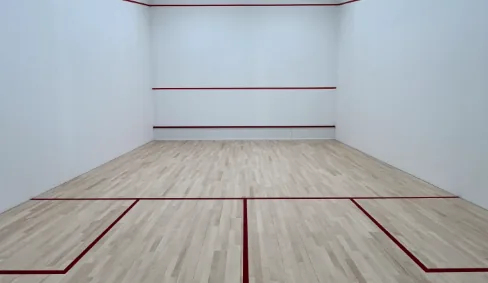
The floor lines
There are three parts to the floor markings:
- The short line runs across the full width of the court. It marks the front of the service boxes and the front edge of the area where the serve must land.
- The half-court line runs from the middle of the short line to the back wall. It splits the back of the court into a left and a right quarter.
- The service boxes are the two squares behind the short line, against each side wall. You serve with at least one foot inside one of them.
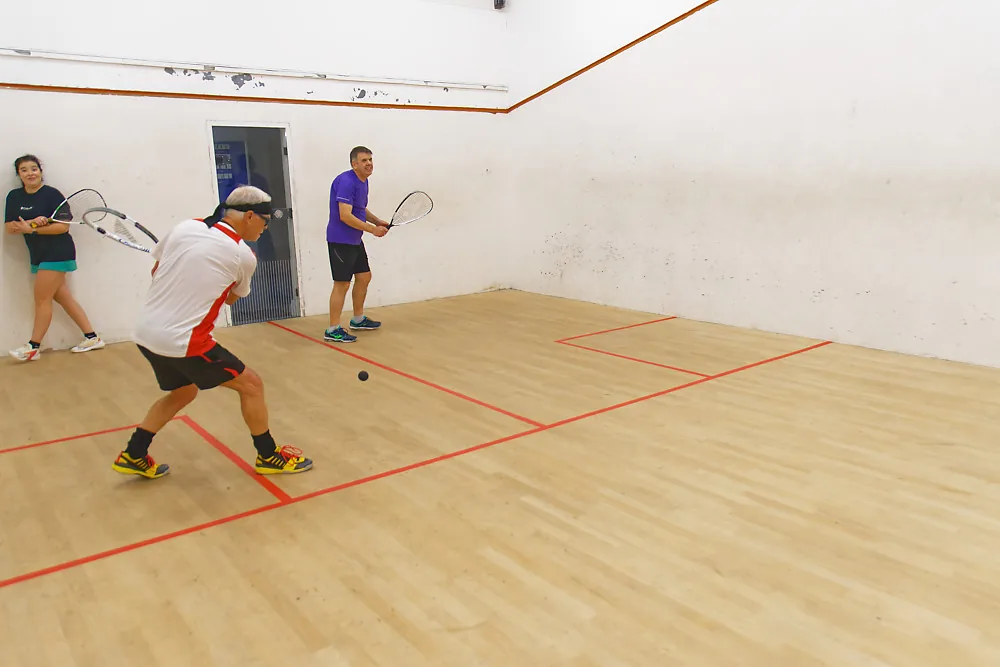
For the serve to be good, at least one of your feet must be on the floor inside the box, not touching any of its lines. The ball must then land in the back quarter on the other side of the court, without touching the short line or the half-court line. The receiver can volley the serve before it lands, in which case where it would have landed no longer matters.
After the serve, nothing on the floor matters. The ball can bounce anywhere in the court. The point where the short line and half-court line meet is the T, the spot players move back to between shots.
Norton Squash Club
Middlesbrough · Squash club
ESC Kingsdown
Bristol · 3 courts
Ferry Leisure Centre
Oxford · Leisure centre
Touching a line
The rule is simple: in squash, the line is always against you.
- Ball touches an out line on any wall: out.
- Ball touches the top of the tin: down.
- Serve touches the service line, the short line or the half-court line: fault.
- Server's foot touches a line of the service box, with no other foot inside the box: fault.
That is the opposite of tennis, where a ball touching the line is in. It is worth agreeing with a new opponent before you start, because people coming from tennis often get it wrong.
Line colours and glass courts
All lines are 50 mm wide. The WSF only asks that they contrast with the walls and floor, that all wall lines are one colour and all floor lines are one colour. Red is the most common, but blue, black and yellow all appear, especially on glass and show courts.
On a court with a glass back wall exactly 2.13 m high, there is no painted back wall line: the top of the glass is the line. If the glass is taller, the line is marked on the inside face.
FAQ
Is the line in or out in squash?
Out. Any ball touching an out line is out, a ball touching the top of the tin is down, and a serve touching the service line or a floor line is a fault.
Why does the tin make a noise?
The court specification requires it, so the marker and players can hear when the ball hits the tin even if they cannot see it clearly.
Do the floor lines matter during a rally?
No. They only apply to the serve. Once the serve is good, the ball can bounce anywhere on the floor.
What is the T in squash?
The point where the short line meets the half-court line. Players move back towards it between shots because it is the quickest place to reach every corner from.