Why is squash called squash?
 By the Find My Squash Court team·
Updated ·
4 min read
The name is literal. Squash is named after its ball, which squashes flat when it hits a wall. The story goes back to an English boarding school in the early 1800s and an older, faster game called rackets.
The short answer
Squash is called squash because of its soft, squashable ball. The game grew out of rackets, a sport played with a hard ball, at Harrow School in England around 1830. Pupils found that a punctured rackets ball squashed on impact with the wall and came off much slower, which made a new game with more shots and more running. It was first called squash rackets, and the first four squash courts were built at Harrow in 1864. Over time the name was shortened to squash.
Named after the ball
Pick up a squash ball and press it between your finger and thumb. It gives. Hit it hard against a wall and it flattens for a moment before springing back. That squashing is what the name describes.
It also explains how the game plays. A soft ball loses energy on every impact, so it does not fly back to you on its own. You have to chase it into the corners and dig it out. A hard ball, by contrast, rebounds so fast that the court has to be much bigger to give players any time at all.
Modern squash balls are still made from soft hollow rubber, and they still barely bounce until they are warm. Why you have to warm up a squash ball explains why.
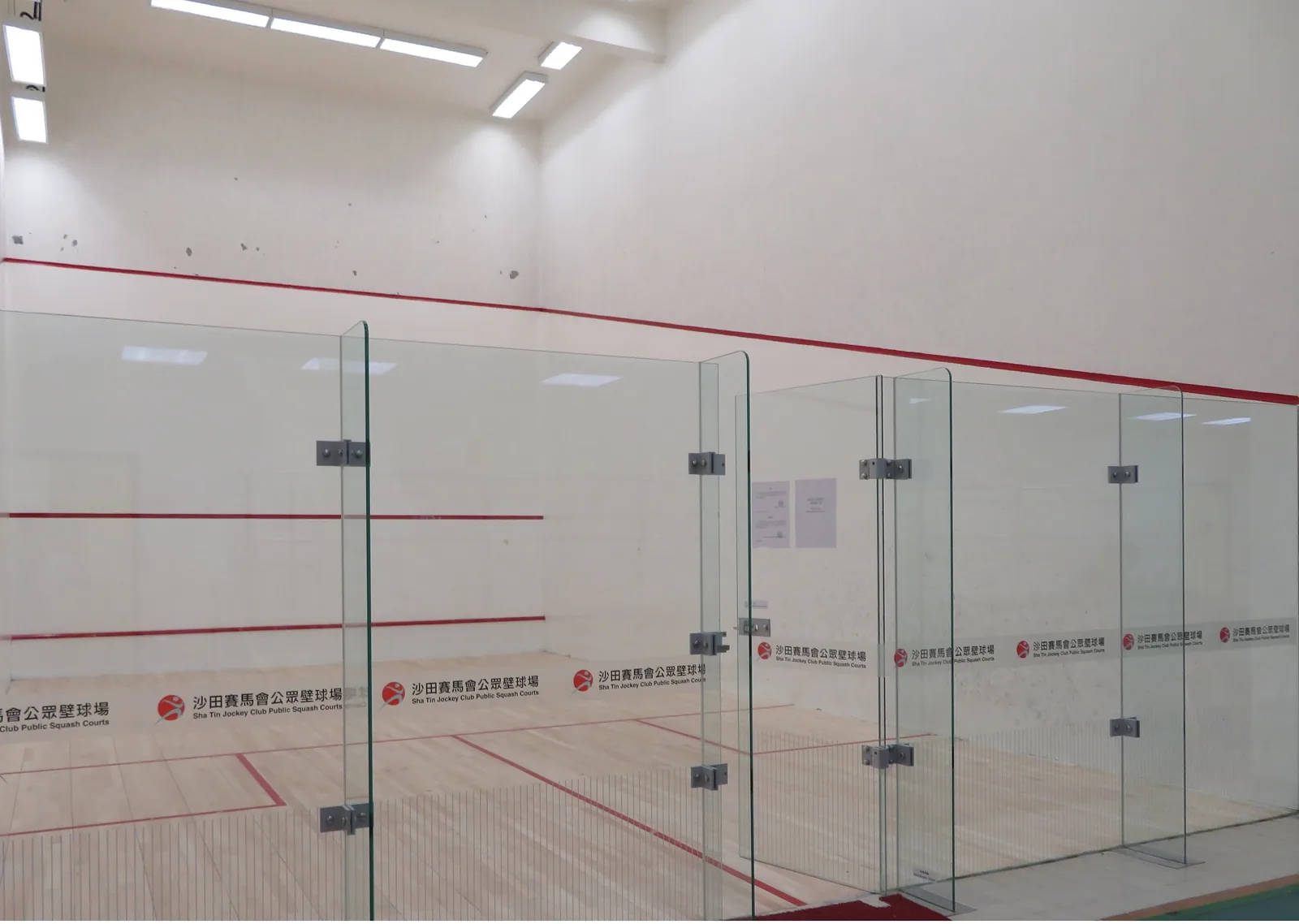
Rackets, the parent game
Rackets (or racquets) is an older British game played with a hard ball on a large walled court. The World Squash Federation's own history traces it to prisoners in the Fleet, a London debtors' gaol, in the early 1700s, and describes early courts as little more than stone walls and a paving floor. The ball is small, hard and very fast.
Rackets was played at several English public schools in the 1800s, Harrow among them. It is still played today, mostly at a handful of schools and clubs in Britain and North America, but it never spread the way its offshoot did.
Harrow and the first courts
The usual account dates squash to Harrow School, in north-west London, around 1830. Pupils discovered that a punctured rackets ball, which squashed when it hit the wall, gave a quite different game. It came off the wall slowly, so you could not wait for it to come back to you. You had to go and get it, and you could play a much wider range of shots, from soft drops to angles off the side walls.
The variant caught on. In 1864 Harrow built four outdoor courts, and squash became a sport in its own right. From there it spread to other schools and clubs, and later around the world.
Why the court is so small. A squash court is 9.75 m long, much shorter than a rackets court. A slow ball does not need the extra length. See squash court dimensions for the full plan.
Eden Epsom Tennis and Squash Club
Auckland · 5 courts
Hiscoes Gym Surry Hills
Sydney · Squash leagues
Westerfolds Templestowe Squash Centre
Melbourne · 8 courts
From squash rackets to squash
For a long time the full name was "squash rackets", to distinguish it from the parent game. You still see it in the names of old clubs and in the history of the national governing bodies. England Squash, for example, was once the Squash Rackets Association.
In everyday speech the second word dropped away, and the game is now just squash nearly everywhere. Clubs that also offer racketball (a related game with a bigger ball, see below) often call themselves squash and racketball clubs.
By the year 2000, according to World Squash's history, about 50,000 courts were in use in nearly 200 nations, and the sport is on the programme for the 2028 Olympic Games in Los Angeles.
Other names you might hear
| Name | What it means |
|---|---|
| Squash rackets | The original full name of squash. |
| Softball squash | The international game, as it was called in North America to tell it apart from hardball. |
| Hardball squash | A North American version played with a harder, faster ball. It survives mainly as hardball doubles, on a longer and wider court. |
| Racketball / Squash 57 | A game played on a squash court with a bigger, bouncier ball (57 mm) and a shorter racket. In England it is now promoted as Squash 57. |
| Racquetball | A separate American sport with its own court and rules, played with a short racket and a large bouncy ball. The ceiling is in play. |
For the differences in detail, read squash vs racquetball and racketball explained. For the full story from Harrow to the professional tour, see the history of squash.
FAQ
Where did squash originate?
At Harrow School in England, around 1830. Pupils adapted the older game of rackets using a punctured, squashy ball, and the school built four outdoor courts in 1864.
Is squash the same as rackets?
No. Rackets is the older parent game, played with a hard ball on a court about twice as long. Squash uses a soft ball on a much smaller court.
Why do some clubs say squash rackets?
It was the original full name of the game. Some older clubs and organisations kept it in their names after everyday speech shortened it to squash.
Is squash an Olympic sport?
It has been added to the programme for the 2028 Olympic Games in Los Angeles, after many years of the sport applying to join.