Racketball (Squash 57): rules and differences
 By the Find My Squash Court team·
Updated ·
5 min read
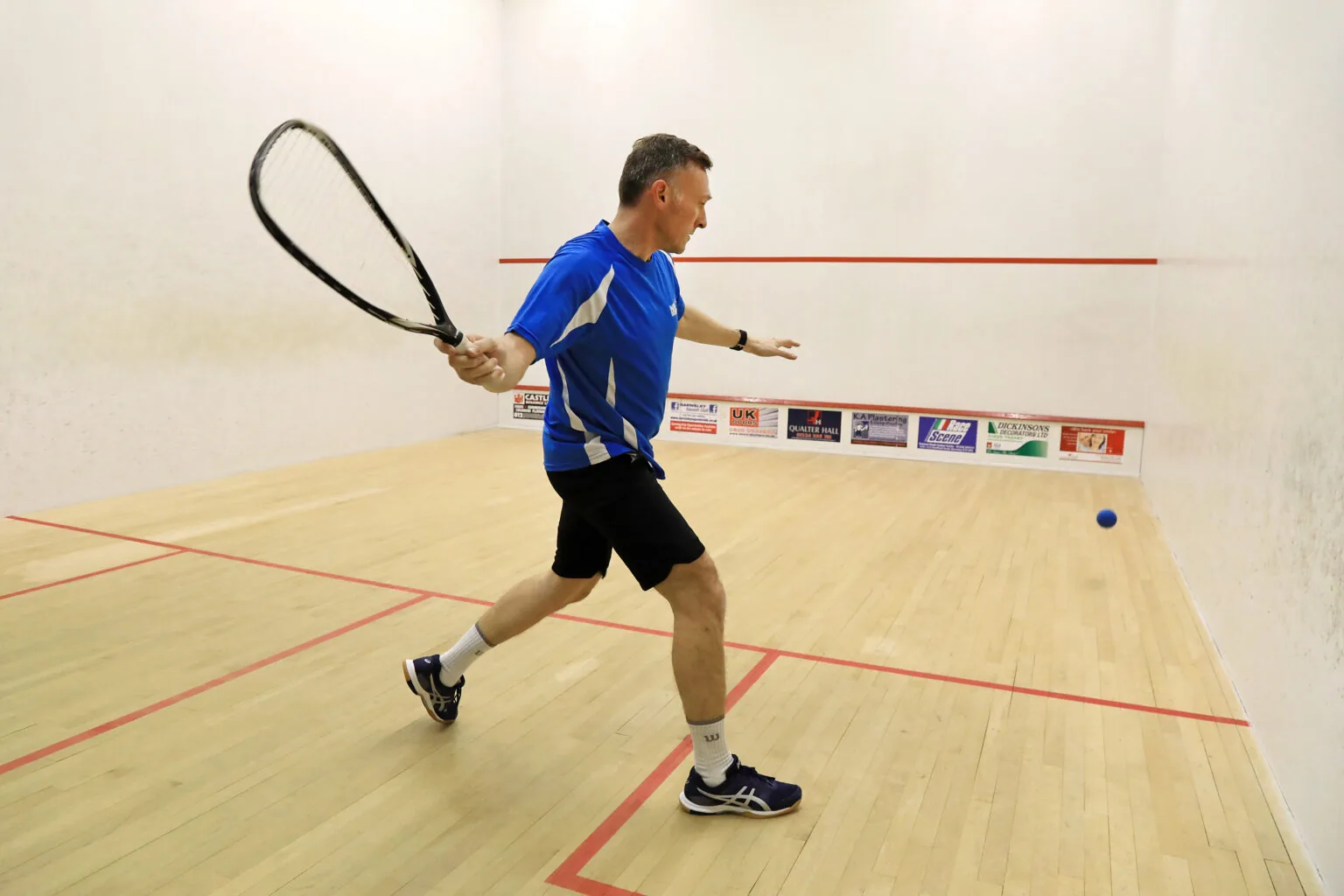
Racketball is squash's friendlier cousin: same court, bigger and bouncier ball, shorter racket. It is now officially called Squash 57, and most squash clubs in the UK play both.
The short answer
Racketball, renamed Squash 57 by the World Squash Federation in 2016, is played on a normal squash court with a 57 mm rubber ball and a short racket. The ball is bigger and bouncier than a squash ball, so rallies last longer and it is easier to learn. You serve by bouncing the ball on the floor first, the ceiling is out of play and scoring is point-a-rally to 11. It is a British game, created in 1976, and is different from American racquetball, which uses a larger court where the ceiling is in play.
What racketball is
Racketball was created in Britain in 1976 by Ian Wright, adapting American racquetball so it could be played on the thousands of squash courts already built across the country. It grew through squash clubs and leisure centres, and England Squash ran both sports for many years under the name England Squash and Racketball.
In 2016 the World Squash Federation began rebranding the game as Squash 57. The number is the diameter of the ball in millimetres. Many clubs and players still call it racketball, and you will see both names on booking systems and club noticeboards.
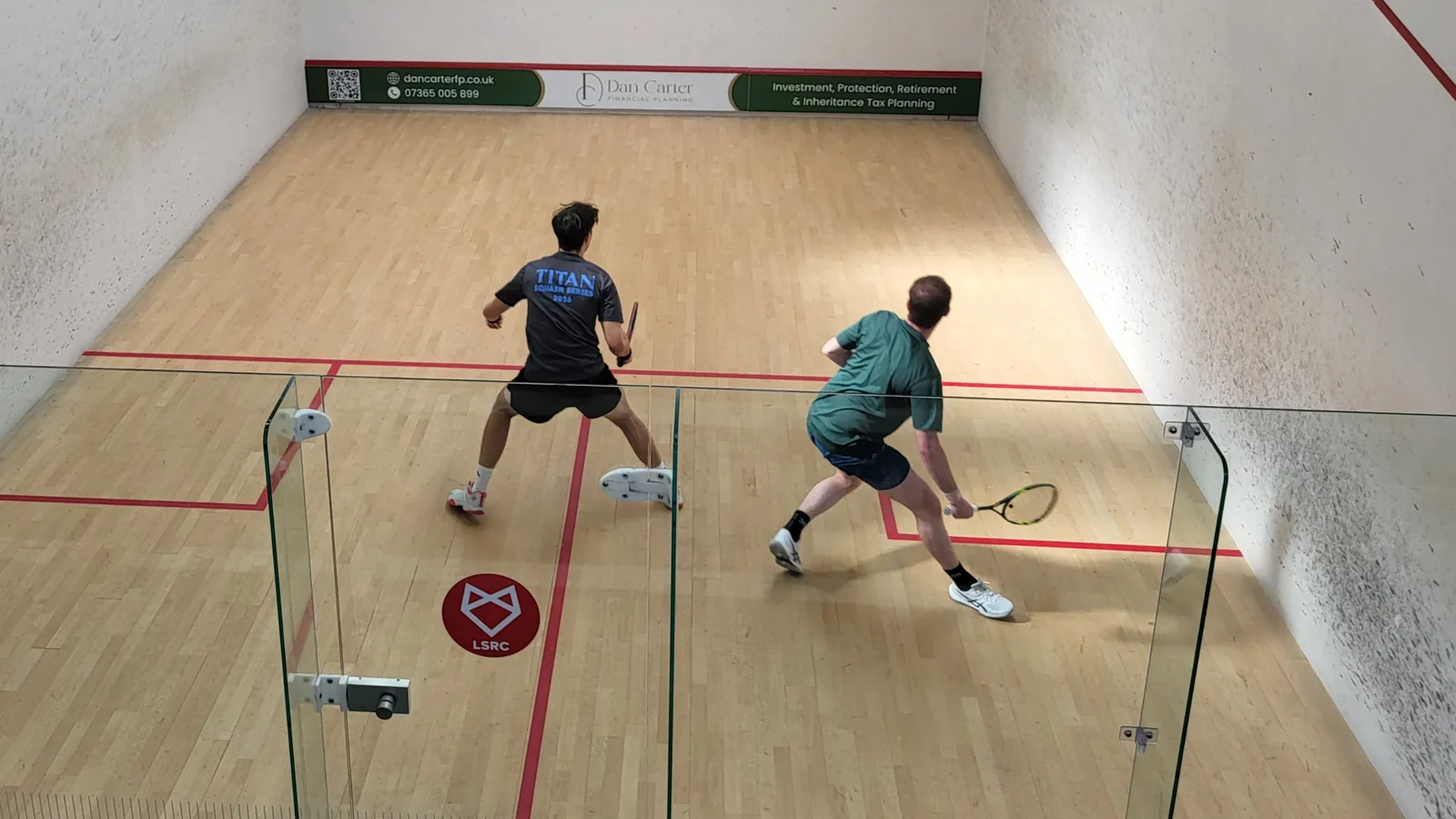
Racketball vs squash
| Squash | Racketball (Squash 57) | |
|---|---|---|
| Court | Squash court, 9.75 m by 6.4 m | The same squash court |
| Ball | 40 mm, slow, needs warming up | 57 mm, larger and bouncier |
| Racket | Up to 686 mm long | Shorter, with a large head |
| Serve | Hit from the hand, must land above the service line | Bounce the ball on the floor, then hit it |
| Tin | In play as the bottom limit | Same tin and out lines |
| Ceiling | Out | Out |
| Scoring | Point-a-rally to 11 | Point-a-rally to 11 |
| Learning curve | Steeper; short rallies at first | Gentler; rallies from the first session |
The big difference is the ball. A squash ball dies in the corners, so you have to chase it hard and hit it cleanly. A racketball keeps bouncing, which gives you time to get to it. That makes the game less punishing on the legs, though good players still hit hard and fast.
The main rules
If you know squash, racketball takes about five minutes to learn. The court, the lines, the tin and the let and stroke rules all carry over. The differences are:
- The serve. Drop the ball, let it bounce once on the floor, then hit it onto the front wall. It must land in the back quarter of the court on the opposite side, as in squash.
- Scoring. Point-a-rally to 11, with two clear points needed at 10-all. Matches are best of three or five games.
- The ceiling. Out of play, as in squash. This is one of the clearest differences from American racquetball.
Our guide to the rules of squash covers everything that applies to both games, and squash scoring explains point-a-rally.
Racketball is not racquetball. American racquetball is played on a court 40 by 20 by 20 feet where the ceiling is in play. The two games share a ball size and some history, but not the court. Our squash vs racquetball guide covers the American game.
Rackets and balls
A racketball racket is shorter than a squash racket, with a bigger head relative to its length. It is easier to control in tight spaces and forgiving on mishits. You can play a social game with a squash racket, but a proper racketball racket makes the game easier.
Squash 57 balls come in different speeds, and clubs usually keep a slower ball for experienced players and a bouncier one for beginners and social play. Ask at your club which one is normal there. Unlike a squash ball, a racketball ball does not need a long warm-up to bounce.
Eye guards are a good idea, and required for juniors at most clubs. The ball is big enough not to fit into an eye socket, but a racket can still catch you. See squash goggles.
Devon & Exeter Squash & Racketball Club
Exeter · Six courts
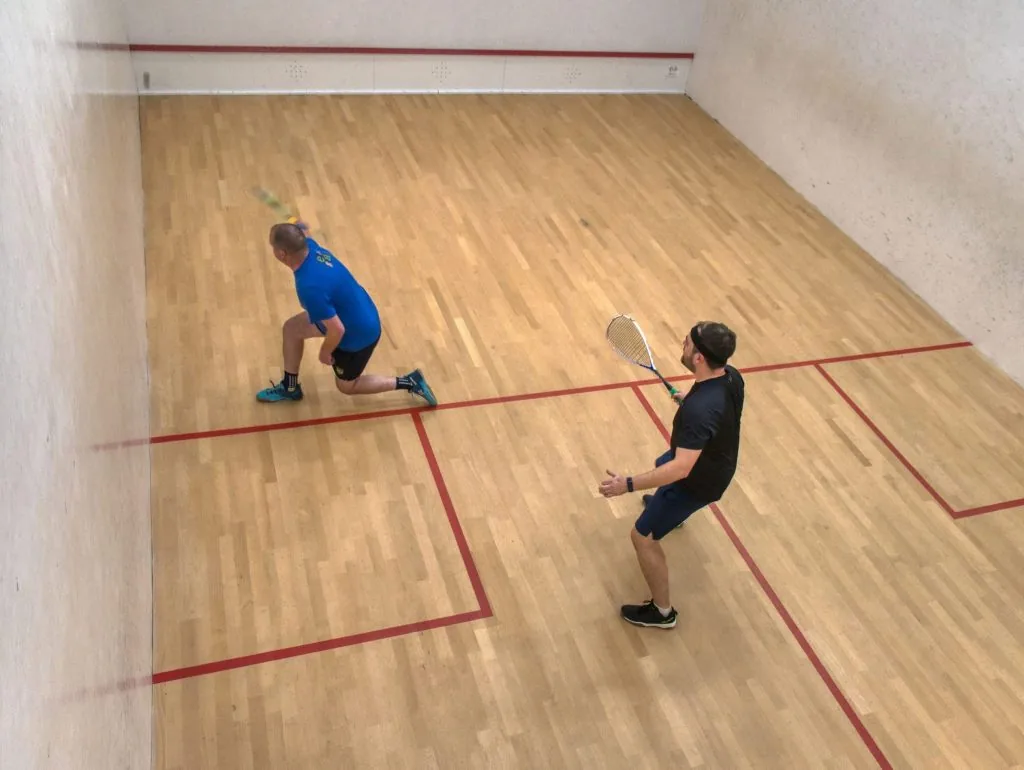
The Wyvern Squash
Taunton · Squash and racketball
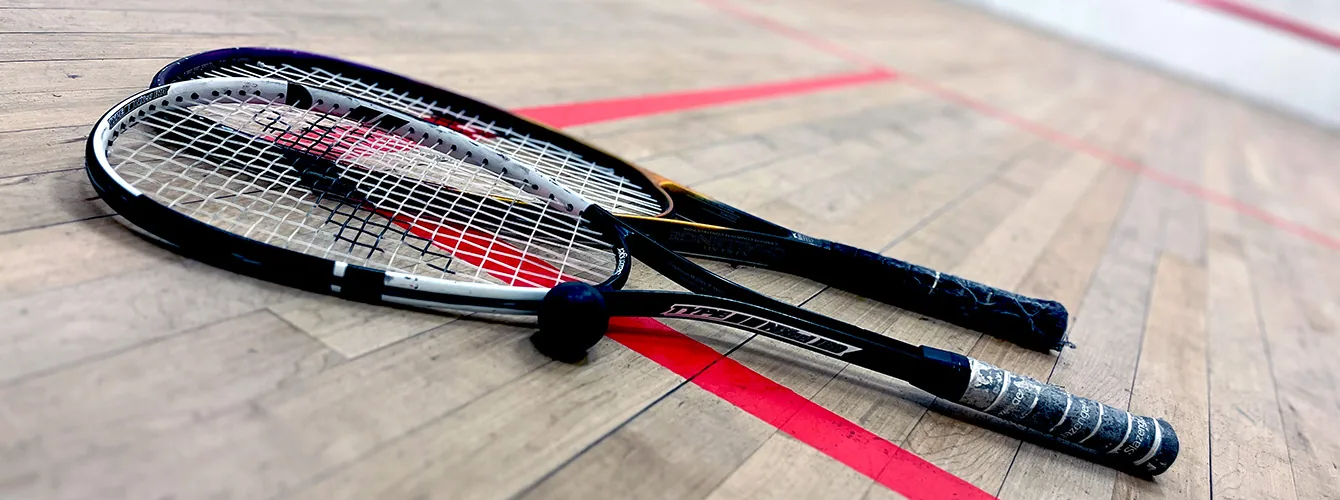
YMCA Taunton
Taunton · Court for racketball
Who it suits
- Beginners. Longer rallies from day one mean more fun and fewer frustrating first sessions. Many people start with racketball and move on to squash.
- Older players. The slower pace and longer rallies are kinder to knees and backs, and many veterans switch to it after years of squash. See squash over 50.
- Mixed-ability pairs. A stronger and a weaker player can enjoy a closer game than in squash.
- Squash players. It is a good change of pace and still a hard workout when both players are fit.
Where to play
Almost any squash court can be used for racketball, and most UK clubs list both on their booking systems. Many run racketball leagues and club nights. Courts are booked the same way as for squash: our guide on how to book a squash court explains the options. Outside the UK and Ireland, the game is less common, but Squash 57 is growing, and some Australian clubs also run racquetball competitions on their courts.
FAQ
Is racketball the same as squash 57?
Yes. The World Squash Federation began rebranding racketball as Squash 57 in 2016, after the 57 mm diameter of the ball.
Can you play racketball on a squash court?
Yes. Racketball is designed for a standard squash court, with the same lines, tin and out lines.
Is racketball easier than squash?
For beginners, yes. The bigger, bouncier ball gives you more time, so rallies are longer and easier to keep going.
Can I use a squash racket for racketball?
For a casual game it works, but a racketball racket is shorter with a bigger head and is easier to control with the larger ball.