How much does a squash court cost to build?
 By the Find My Squash Court team·
Updated ·
5 min read
Clubs, schools and the occasional homeowner all ask the same question: what does a squash court cost? Court builders rarely publish prices, because the answer depends on the building around the court as much as the court itself. Here is what drives the cost and how to get a figure you can trust.
The short answer
There is no fixed price, and neither England Squash nor the main court builders publish one. A full new build, with the building shell, foundations, heating, lighting and changing rooms, costs far more than fitting a court into an existing hall. Glass back walls and all-glass courts add more again. The court system itself, wall panels and floor, is only one part of the bill. Ask accredited court builders for quotes.
What you are paying for
A squash court is a room built to a precise specification. The cost breaks into four parts:
- The building shell. Walls, roof, structural slab, insulation and access. For a new build this is usually the biggest cost by far.
- The court walls. Either specialist plaster on masonry or a panel system. Panel systems are faster to install and more consistent.
- The floor. A sprung hardwood floor, usually maple, laid to tight tolerances so the ball bounces evenly.
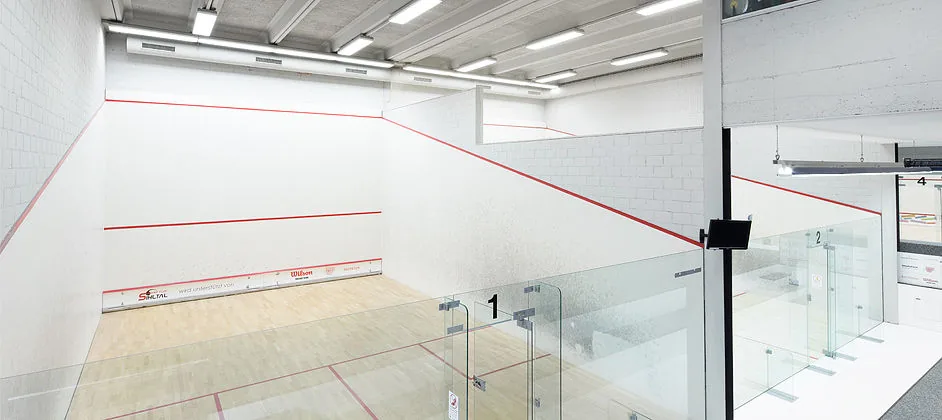
- The back wall and door. A solid back wall with a small door is cheapest. A glass back wall with a glass door costs more, but lets people watch.
Then add lighting, heating or air conditioning, ventilation, lines and tin, and any viewing gallery, changing rooms and booking system.
What pushes the price up
The court builder ASB lists the main drivers in its guidance on court pricing:
- Location. Local labour rates, transport and import costs.
- Indoor or outdoor. Outdoor courts need weather-resistant materials. Indoor courts have to fit around existing building services.
- Number of courts. Building several at once lowers the average cost per court.
- Layout. How the courts sit together and how much space you have.
- Wall system. Panel walls or glass walls make a big difference to both the look and the budget.
- Extras. Spectator seating, LED lighting, scoreboards and branding.
The most expensive option is an all-glass show court, the kind used for televised events. Glass back walls on a normal court sit in between. Our guide to glass squash courts explains the types.
Why published prices are rare
We could not find a current per-court price from England Squash or from a court builder. Builders such as ASB ask for the site details and send a quote instead, because the price depends on the location, the number of courts, the wall system, the state of the building and the extras you choose. Old figures still circulate online, but we could not trace them to a source, so we have left them out.
The practical answer is to treat the court system and the building as two separate budgets. A court inside an existing building with a suitable floor slab will cost far less than a new building. For any figure, ask for a written quote that says what is and is not included: shell, groundworks, heating, lighting and VAT.
Get at least three quotes. Ask each builder for a breakdown: walls, floor, back wall and door, lighting, lines and tin, and any building work. A low headline price often leaves out the slab, the heating or the lighting.
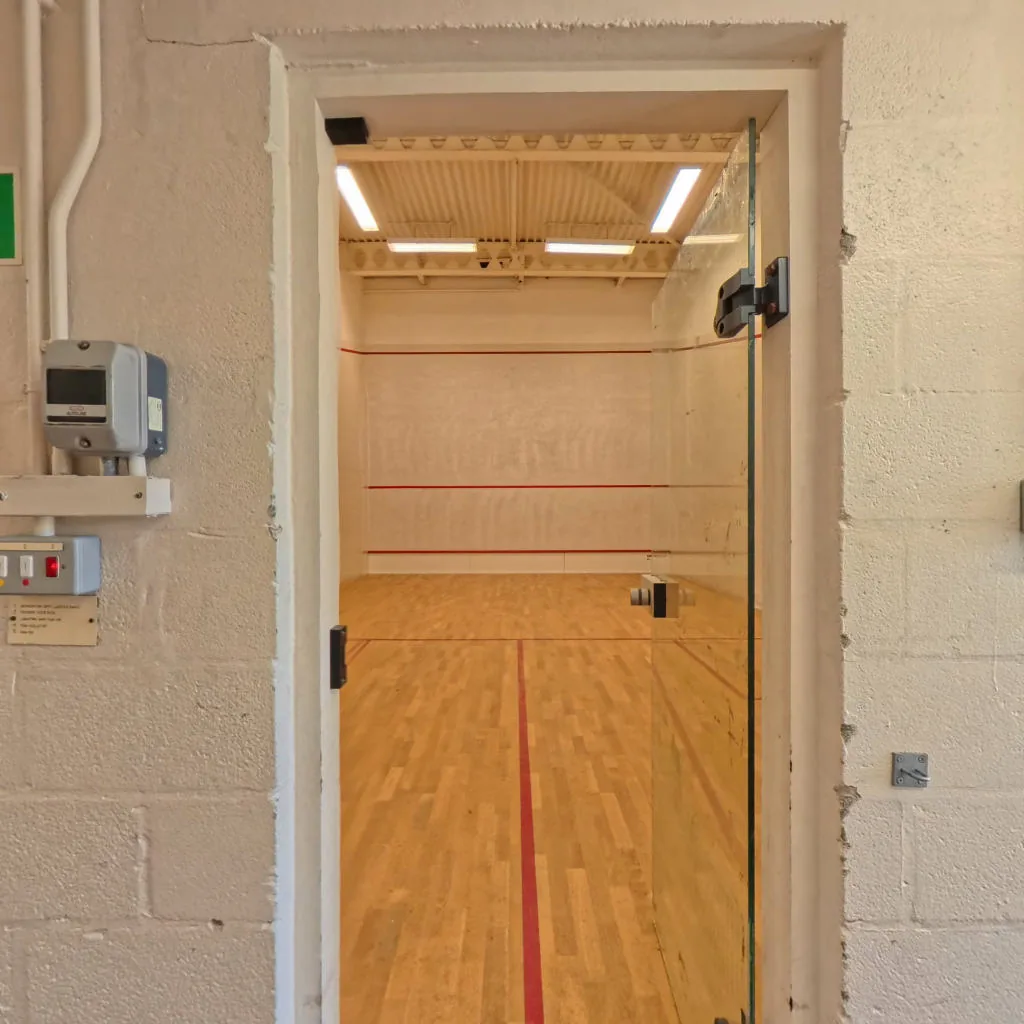
Concord Sports Centre
Sheffield · Three squash courts
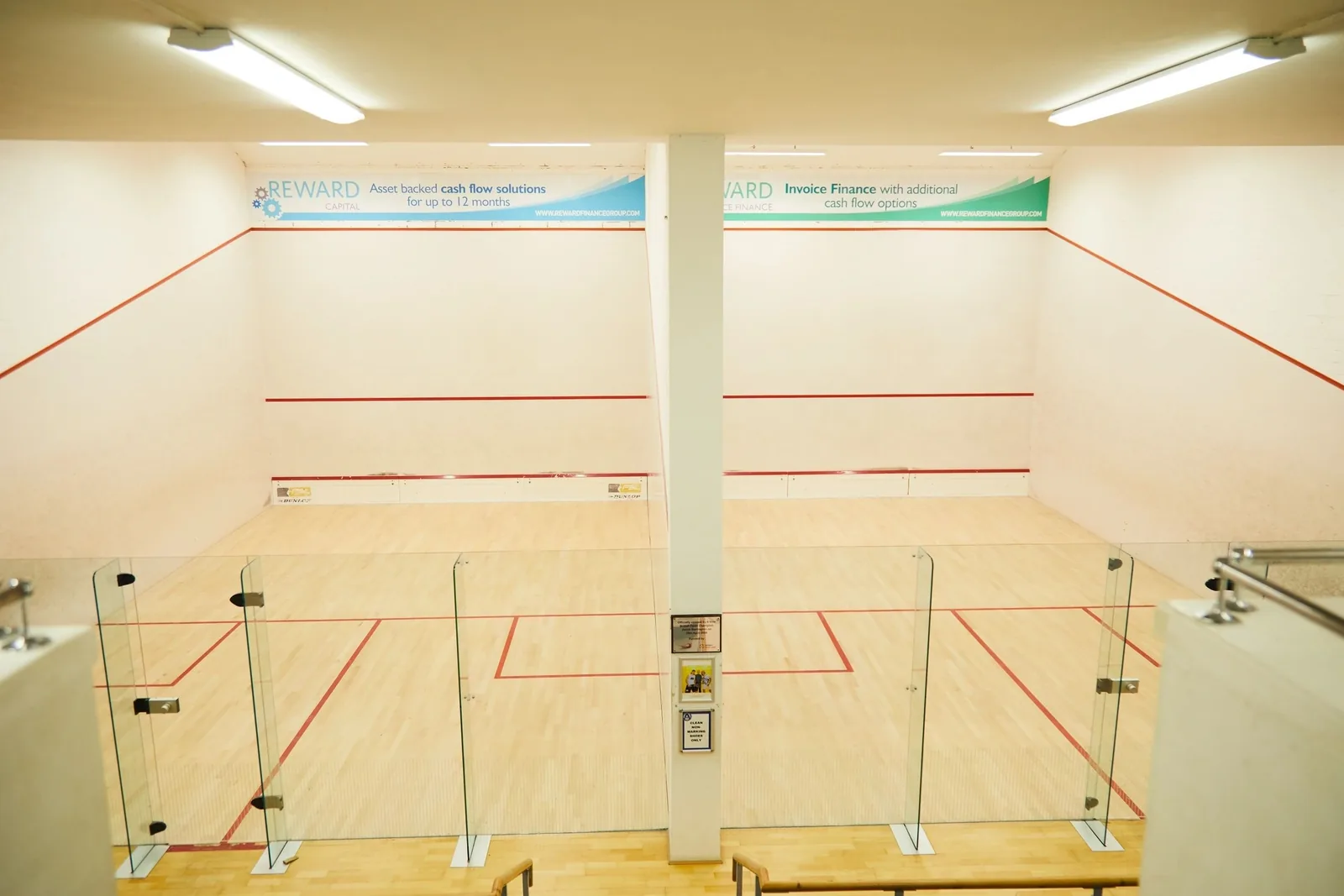
Chapel Allerton Lawn Tennis, Squash & Gym Club
Leeds · Glass-backed courts

POINT Sports.Wellness.Club Gerlingen
Stuttgart · Sprung floors
Refurbishing instead of building
Most clubs spend their money on refurbishment rather than new courts. Typical jobs, roughly from cheapest to most expensive:
- Repainting walls and lines.
- Replastering or patching walls that have cracked or gone "dead".
- Sanding and resealing the floor.
- New LED lighting, which also cuts running costs.
- Replacing a solid back wall with glass.
- Replacing the floor.
Many clubs do the painting with volunteers on a working weekend, which saves a lot.
Space and building needs
A singles court measures 9.75 m by 6.4 m inside the walls, and the out line on the front wall is 4.57 m high. You need extra space for wall thickness, a corridor or viewing area, and enough headroom for lighting. World Squash recommends a minimum clear height above the floor of 5.64 m. Our guide to squash court dimensions lists every measurement.
ASB's checklist for fitting a court includes a structural base, typically a 150 mm reinforced concrete slab, a level floor, enough ceiling height and an access opening of at least 2.4 m high by 1.8 m wide to get the panels in. A home court is possible, but few houses have a room or garage big enough.
Funding a court
Clubs usually fund courts with a mix of reserves, member loans, fundraising and grants. In England, Sport England has funded new and refurbished squash courts, and planning obligations (section 106 money) sometimes pay for sports facilities in new developments. National governing bodies such as England Squash, Squash Australia and Squash New Zealand can advise on funding routes. Once a court is open, court fees and memberships pay for upkeep; our guide to squash court hire costs shows typical charges.
FAQ
How much does a squash court cost to build in the UK?
There is no set price, and builders quote project by project. Fitting a court into an existing building costs far less than a new building around it, so get written quotes from accredited builders.
How big a space do you need for a squash court?
The playing area is 9.75 m by 6.4 m, plus room for the walls, a corridor and plenty of headroom. World Squash recommends at least 5.64 m clear height.
Is a glass back wall worth it?
For a club, usually yes. It lets people watch matches and coaching, which helps recruit members. It costs more than a solid wall.
Can you build a squash court at home?
Yes, if you have a large enough room or outbuilding with a strong, level floor and enough height. Most homes do not.