Glass squash courts
 By the Find My Squash Court team·
Updated ·
5 min read
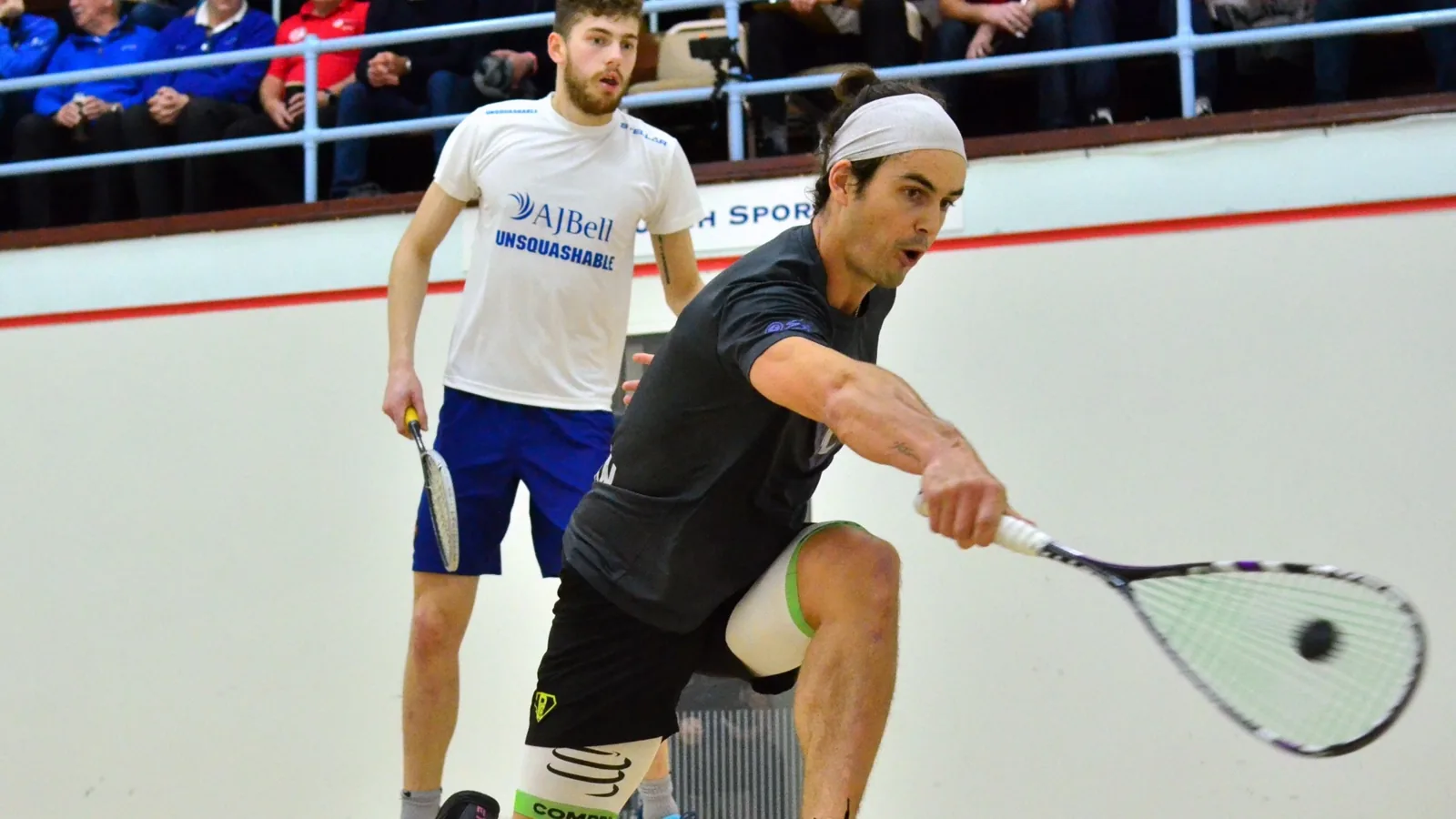
Glass changed squash. It let people watch a game that used to happen behind a closed door, and it put the sport on television. Today you will meet glass on three kinds of court, and each plays a little differently.
The short answer
A glass squash court uses toughened safety glass for some or all of its walls. The most common type is a normal court with a glass back wall and glass door, so spectators can watch from behind. Some clubs also have glass side walls. All-glass show courts, with four glass walls, are used for top tournaments and can be taken apart and moved. Glass plays a little faster and truer than plaster, and on an all-glass court the ball can be harder to see until your eyes adjust. To find one near you, filter our directory for glass-backed courts.
Three types of glass court
| Type | Glass walls | Where you find it |
|---|---|---|
| Glass-backed court | Back wall and door | Most modern clubs, universities and many leisure centres |
| Glass side wall court | Back wall plus one or both side walls | Show courts at larger clubs and national centres |
| All-glass court | All four walls, often with a painted or printed front wall | Professional events, national centres, a few clubs |
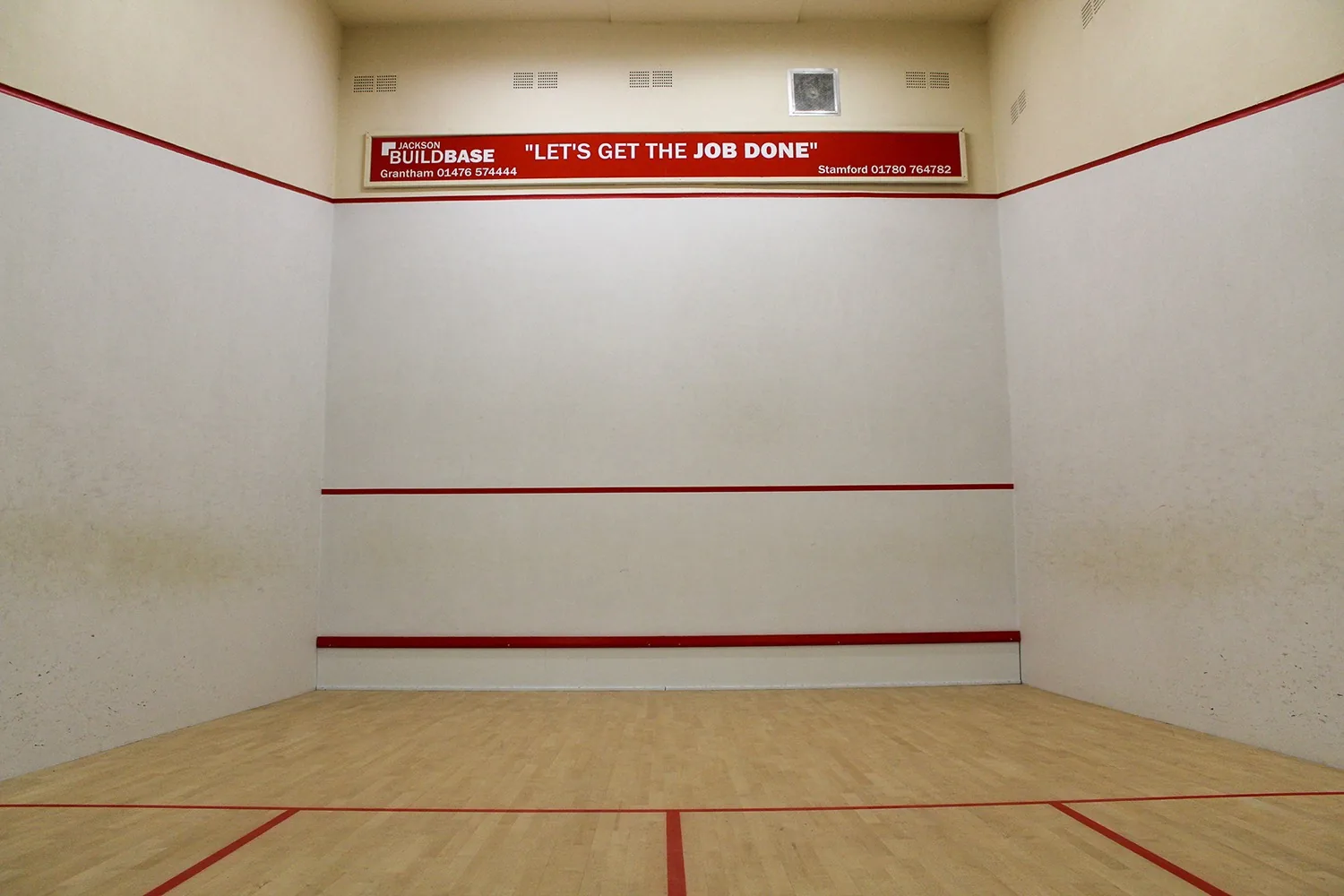
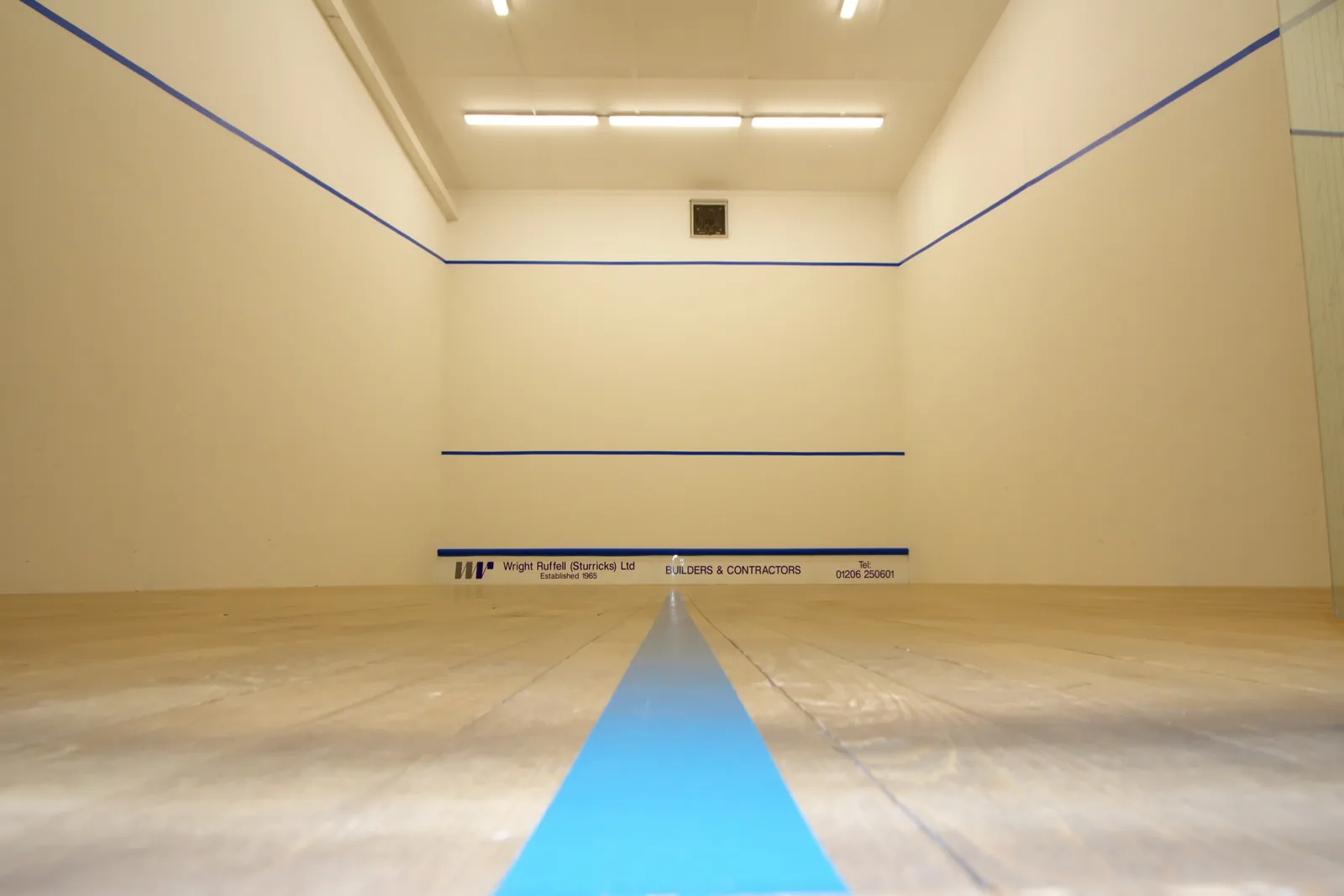
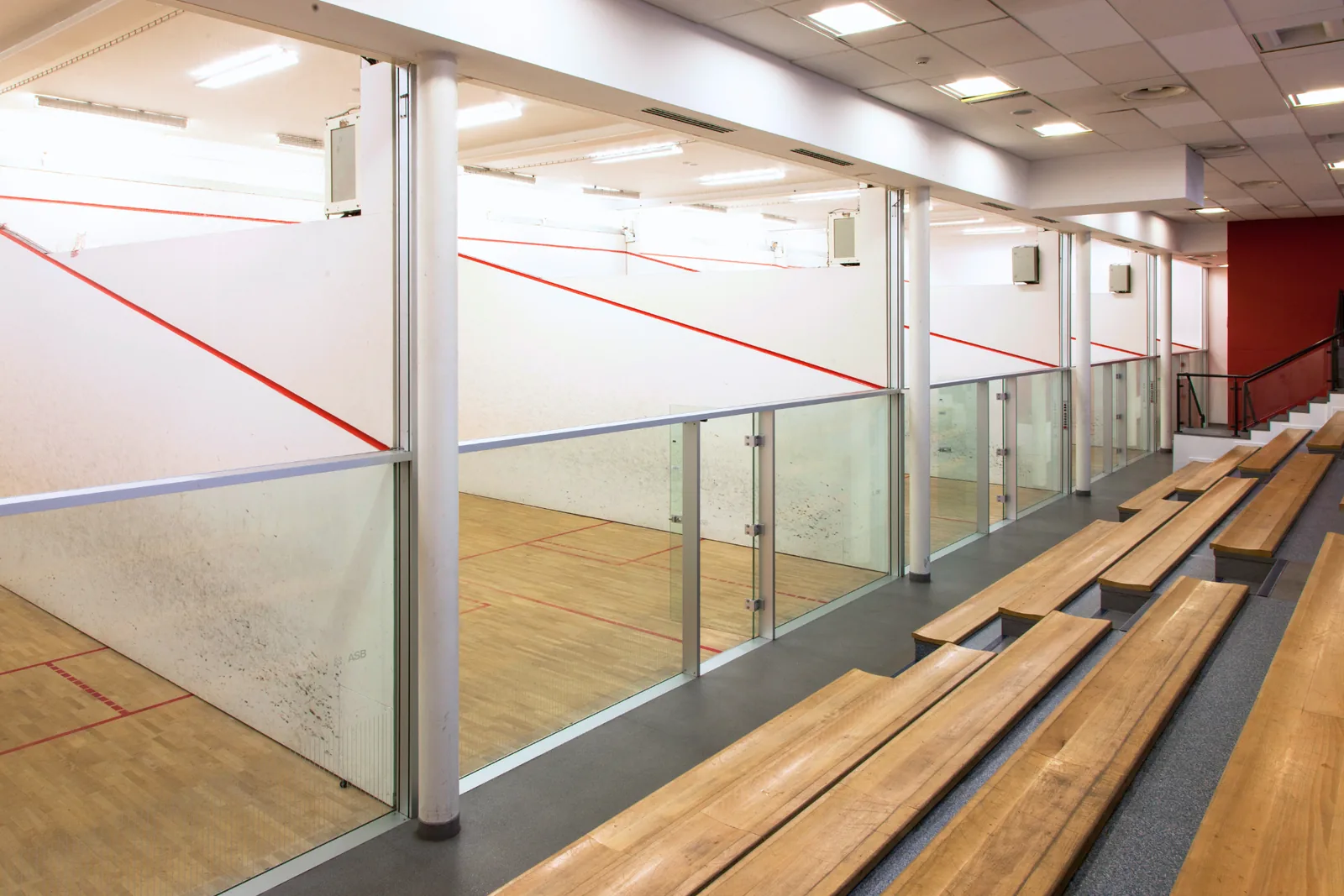
Older courts usually have a solid back wall with a small wooden door and a viewing gallery above. Many have been converted to glass backs during refurbishment.
How glass courts play
The walls of a squash court are meant to give a consistent bounce. Glass is hard and flat, so it plays consistently, but it is not quite the same as plaster:
- Back wall bounce. The ball can come off a glass back wall a little faster and lower than off plaster. You will notice it when you hit length into the back corners.
- Seeing the ball. On a glass-backed court you barely notice the difference. On an all-glass court, especially with a crowd or bright lights behind, the ball can be hard to pick up until your eyes adjust. Show courts often use one-way or printed glass to help.
- Grip. A glass back wall gets damp and slippery if the court is humid. Most players never touch the walls, but it matters if you put a hand out to stop.
- The door. Glass doors are flush with the wall and have recessed handles, so the ball does not catch on anything.
The court markings and the tin are the same as on any other court. Our guide to squash court lines explains them.
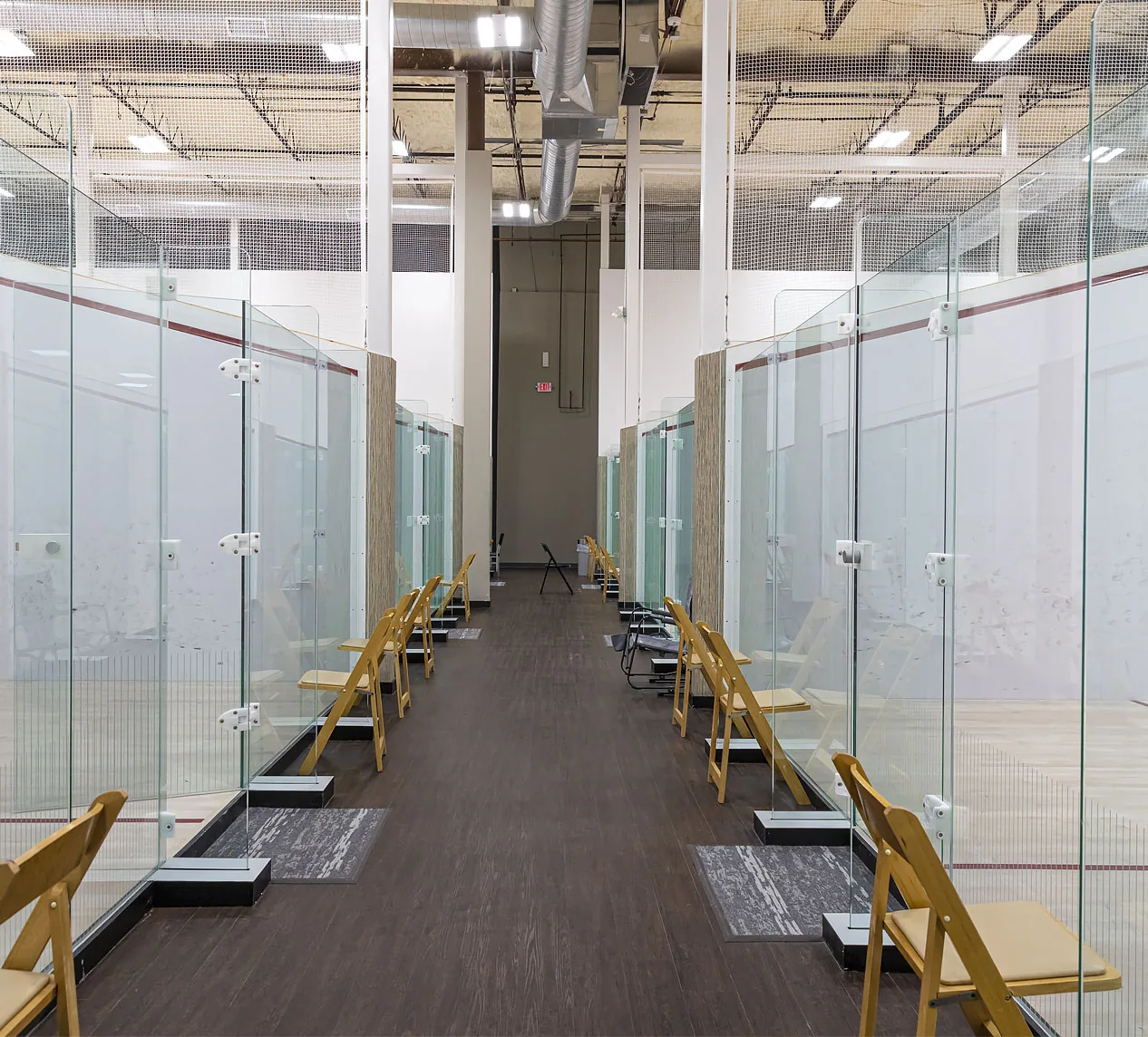
Houston Squash Club
Houston · Championship glass court
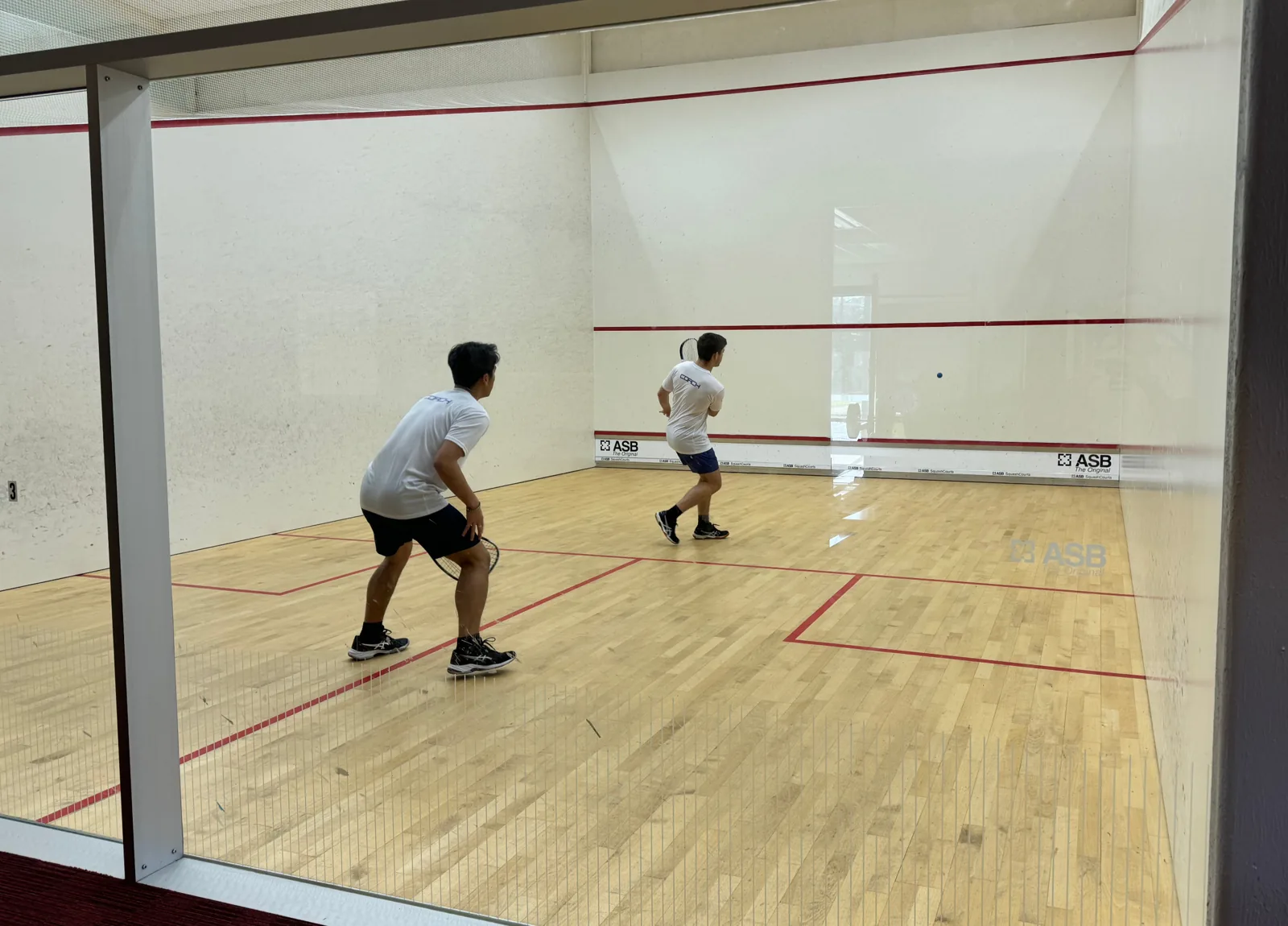
Grace Park Hawthorn Club
Melbourne · All-glass court
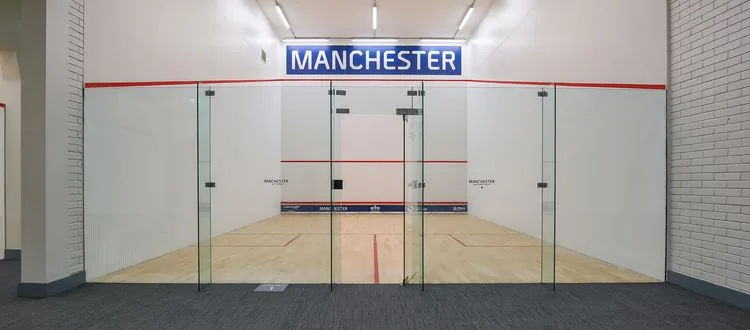
Moss Side Leisure Centre
Manchester · Three squash courts
All-glass show courts
The all-glass court is what you see on squash streams and television. It sits in the middle of an arena or public space with seating on all sides. The glass is toughened safety glass, often with a pattern or one-way treatment so players can see out less clearly than spectators see in.
Many are portable. They arrive in sections with their own floor and frame and can be set up in a few days. That is how squash has been staged in places such as Grand Central Terminal in New York and beside the pyramids at Giza, and it is how the Los Angeles 2028 Olympic event will be played. See squash at the 2028 Olympics.
Some clubs and national centres have permanent all-glass courts, often called show courts or championship courts. Playing on one for the first time feels very open. Spend a few minutes in the knock-up getting used to the background.
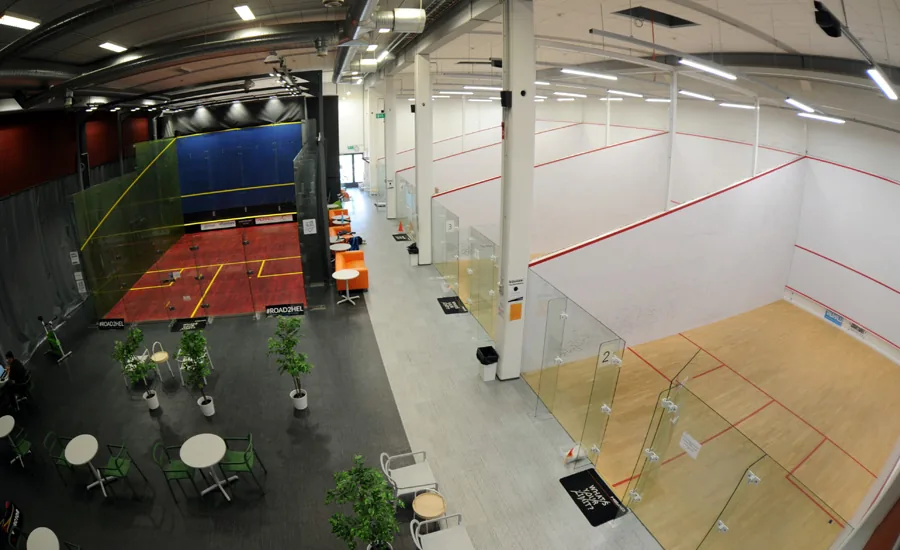
Glass courts you can book. Talihalli in Helsinki has seven squash courts plus a full-glass show court, which it describes as the only one in Finland, and the glass court costs the same to book as the others. It is a good way to get used to playing with people able to see in from every side.
Why clubs want glass
- Watching. Parents can watch junior coaching, team-mates can watch league matches, and newcomers can see what squash looks like before trying it.
- Coaching. A coach can watch and film from outside the court.
- Matches. Glass-backed courts with tiered seating are the natural home for club finals and county matches.
- Light. Glass makes a court and corridor brighter and less boxed in.
Glass costs more than a solid wall. Our guide to squash court building costs covers the trade-offs.
Where to play on glass
Glass-backed courts are now standard in new and refurbished clubs, so most cities have several. Courts with glass side walls and all-glass courts are rarer and usually belong to big clubs, universities and national or state centres. If you want to play on one, ask about guest or pay-and-play bookings: some show courts are kept for members, matches and coaching.
Cities with the most glass-backed squash courts in our directory:
FAQ
Is a glass squash court safe?
Yes. Courts use toughened safety glass designed to take the impact of the ball and of players, fitted in a frame by specialist court builders.
Does a glass back wall change how the ball bounces?
Slightly. Many players find the ball comes off glass a little faster and lower than off plaster, but the difference is small.
Why is it hard to see the ball on an all-glass court?
With glass on all sides there is no solid background, so lights and people behind the glass make the ball harder to pick up. Your eyes adjust after a few minutes.
Can anyone book a glass squash court?
Glass-backed courts are usually booked like any other court. Some all-glass show courts are kept for members, matches or coaching, so check with the venue.