Playing squash over 50
 By the Find My Squash Court team·
Updated ·
6 min read
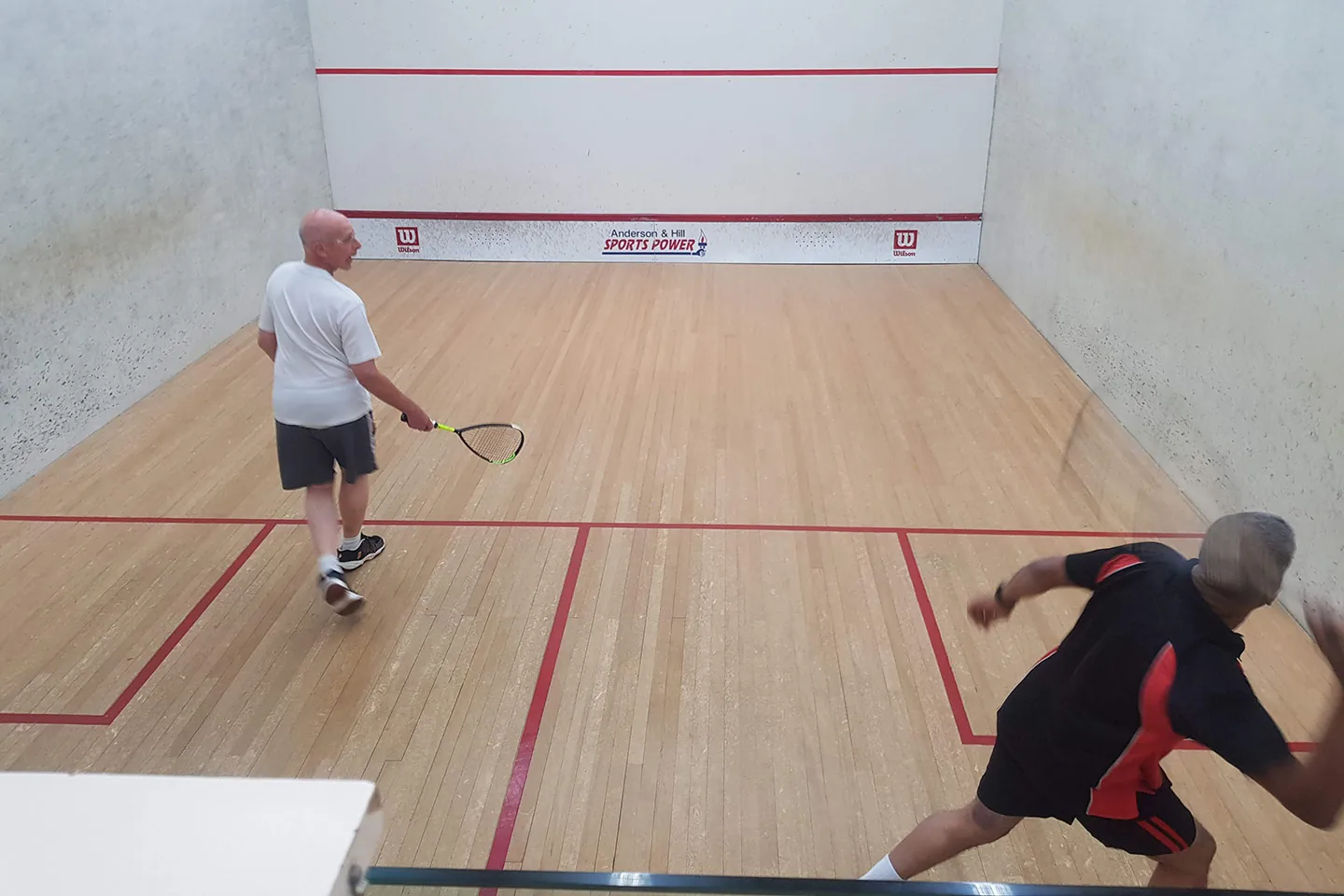
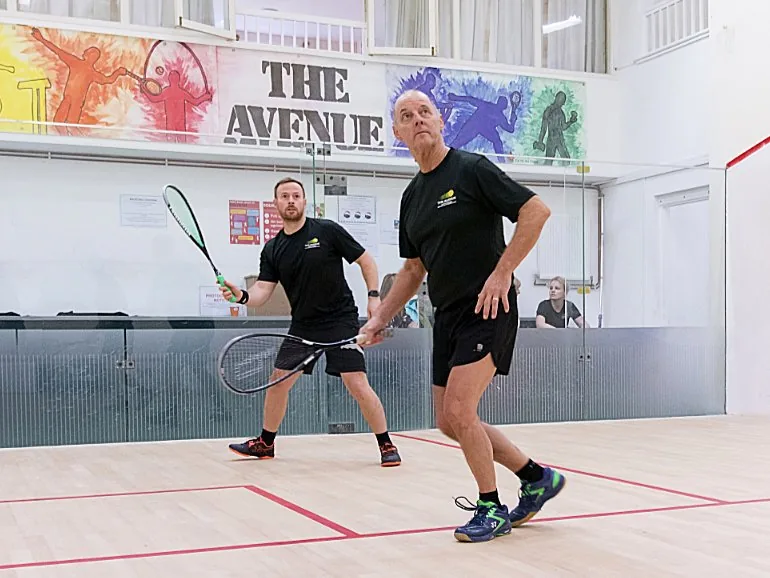
Walk into most squash clubs on a weekday evening and you will find plenty of players in their fifties, sixties and seventies. Squash is a sport you can keep playing for decades, as long as you adjust how you play and how you look after your body.
The short answer
Yes, you can play squash over 50, and many people start or return to it at that age. The key is to build up gradually, warm up properly, keep your legs strong and play regularly rather than in occasional bursts. Get a check-up before playing hard if you have heart risk factors or have been inactive for a long time. Slower formats such as Squash 57 (racketball), masters leagues and social club nights let you keep playing competitively at your own level.
Why keep playing
Squash covers several things that matter more with age, in one session:
- Heart and lung fitness. A 2017 study of 80,306 British adults, average age 52, linked racket sports with a lower risk of death from any cause and from cardiovascular disease.
- Balance and agility. Constant changes of direction train the balance and quick footwork that help prevent falls later in life.
- Leg strength. Lunging and pushing off keeps the thighs and hips working.
- Social contact. League fixtures, club nights and a drink afterwards. Many older players say this is the reason they stay.
- Thinking. Reading the ball, choosing shots and outwitting a faster opponent keeps your mind busy.
The NHS recommends adults aged 65 and over do at least 150 minutes of moderate activity a week, or 75 minutes of vigorous activity if they are already active, plus strength, balance and flexibility work on at least 2 days a week. Squash covers the vigorous activity and some of the balance work.
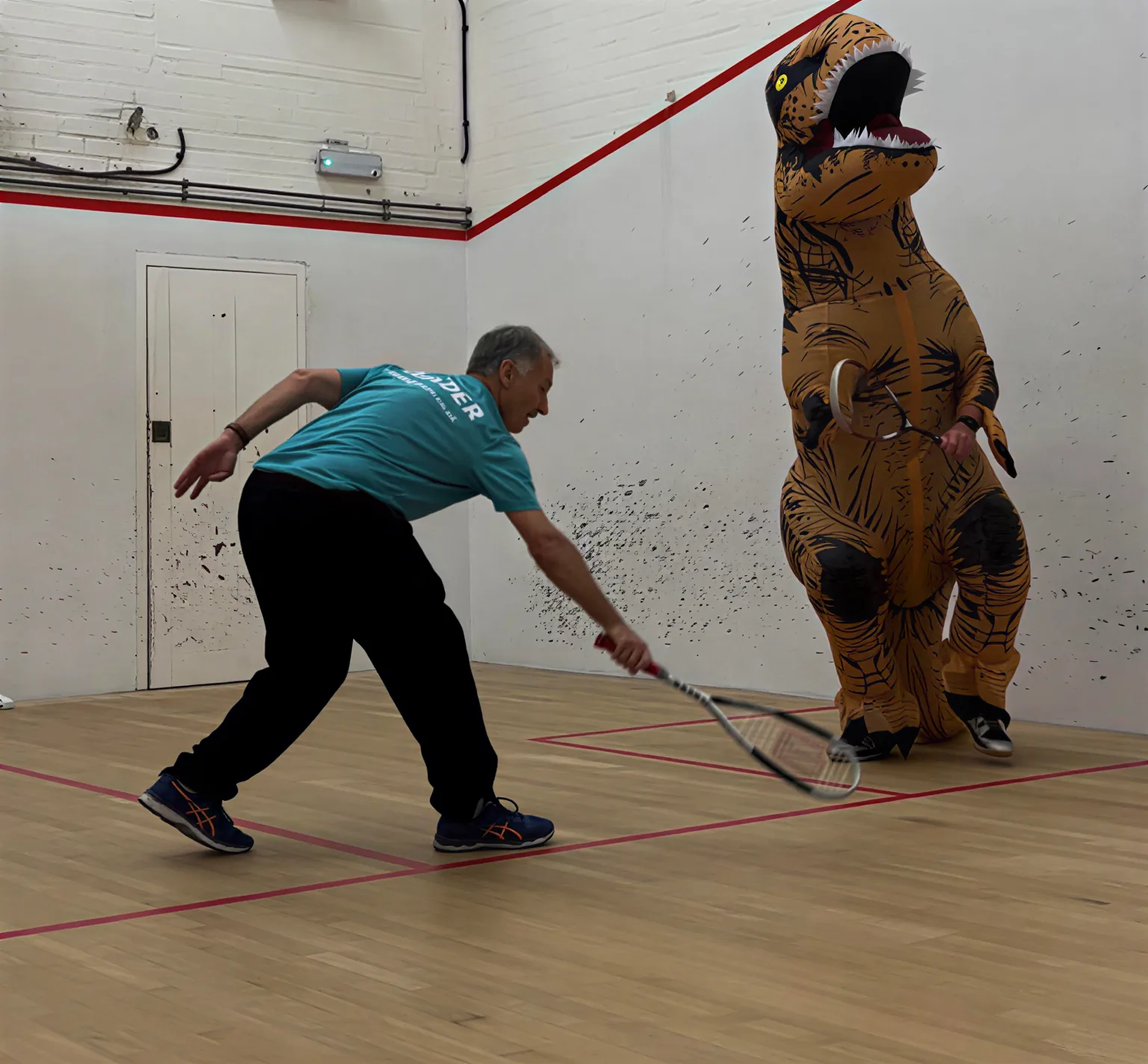
Before you start or return
The NHS advises speaking to a GP first if you have not exercised for some time, or if you have medical conditions or concerns. Squash is very intense, so take this seriously, especially if you have high blood pressure, heart disease, diabetes, a family history of early heart disease, or have had chest pain or dizziness during exercise. Our guide to squash, age and heart health explains why.
If you are returning after years away, your memory of how you used to play is the danger. Your shots will come back quickly. Your calves, knees and Achilles tendons need longer.
- Spend a few weeks building general fitness with walking, cycling or swimming.
- Start with solo hitting and gentle rallies, not a match.
- Play short games against someone at your level, and stop before you are exhausted.
- Add matches and extra sessions one at a time.
What changes after 50
Most players notice the same things:
- Slower recovery. You may need a full day or two between hard games.
- Tendons. The Achilles tendon and the tendons around the knee and elbow tolerate sudden increases in load less well. The NHS says tennis elbow is most common between 35 and 54. See tennis elbow from squash.
- Muscle and speed. Without strength work, you gradually lose muscle and a step of pace.
- Eyesight. Many players need glasses by this age. Ordinary glasses are not safe on court; read squash with glasses or contact lenses.
None of this stops you playing. It changes how you prepare.
Hamilton Squash and Tennis Club
Hamilton · Six courts and a gym
Kelvin Grove Club
Cape Town · Masters league
Mana Squash Club
Wellington · Borrow equipment
Adapting your game
- Warm up longer. Ten minutes of easy movement, lunges and side steps before you hit. Warming the ball is not enough. See a squash warm-up.
- Play the length game. Accurate drives to the back corners and good width make your opponent run and save your legs. Older players often beat younger, faster ones this way.
- Move better, not more. Return to the T after every shot and watch your opponent. Good anticipation replaces raw speed.
- Strengthen your legs and calves. Calf raises, squats, step-ups and some balance work once or twice a week.
- Pick a forgiving racket. A lighter racket with a bigger sweet spot is easier on the elbow. See how to choose a squash racket.
- Wear proper court shoes and protective eyewear. Both prevent injuries that take longer to heal as you get older.
- Cool down. Walk around and stretch gently after the game.
Take the let. Collisions and racket strikes hurt more and heal slower with age. If you are not sure you can play the ball safely, stop and ask for a let.
Formats that suit older players
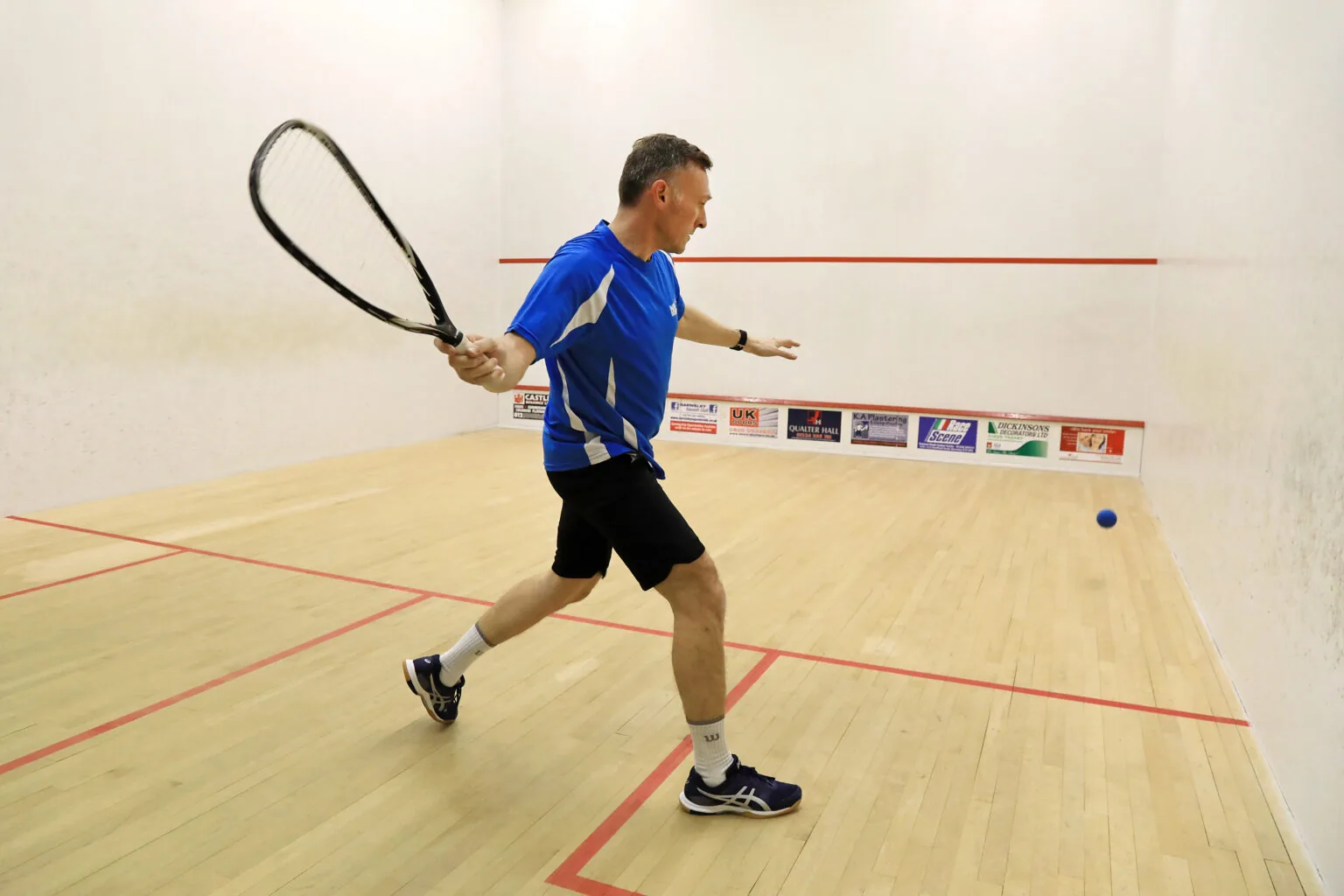
Squash 57 (racketball). Played on a squash court with a larger, bouncier ball and a racket with a bigger head. Rallies are longer and the ball is easier to reach, so it is less punishing on the body. World Squash now calls the game Squash 57, after the ball's 57 mm diameter. Many UK clubs run both games. See racketball explained.
Masters squash. Masters competitions split players into age groups so you play people of a similar age. The World Masters Championships, for example, start at over-35 and go up in five-year steps, to over-80 for men. Many county and national associations run masters leagues and tournaments.
Doubles. On a standard court or a wider doubles court, you cover less ground. See doubles squash.
Club nights and box leagues. A box league matches you with players of a similar standard each month, whatever their age. See squash box leagues.
Finding the right club
Look for clubs with daytime or early evening social sessions, a racketball section, masters teams and a coach who runs adult improver sessions. Leisure centres often have off-peak daytime court prices, which suit retired players. Ask whether the club has a defibrillator and where it is kept.
Cities with the most squash clubs in our directory:
FAQ
Is 50 too old to start squash?
No. Plenty of people take up squash in their fifties. Start with lessons or a beginner session, build fitness gradually and see a GP first if you have health concerns or have been inactive.
Is squash safe for older people?
For most healthy older adults, yes, with a sensible build-up, a proper warm-up and protective eyewear. The main risks are tendon injuries and, for people with heart disease, the very high intensity.
Is racketball easier than squash for older players?
Generally yes. The bigger, bouncier ball slows the game down and makes rallies longer, so there is less sprinting and lunging.
How often should I play squash over 50?
Two or three times a week works for many players, with a rest day between hard games. Add one or two strength sessions to protect your legs.