Squash strings and tension
 By the Find My Squash Court team·
Updated ·
5 min read
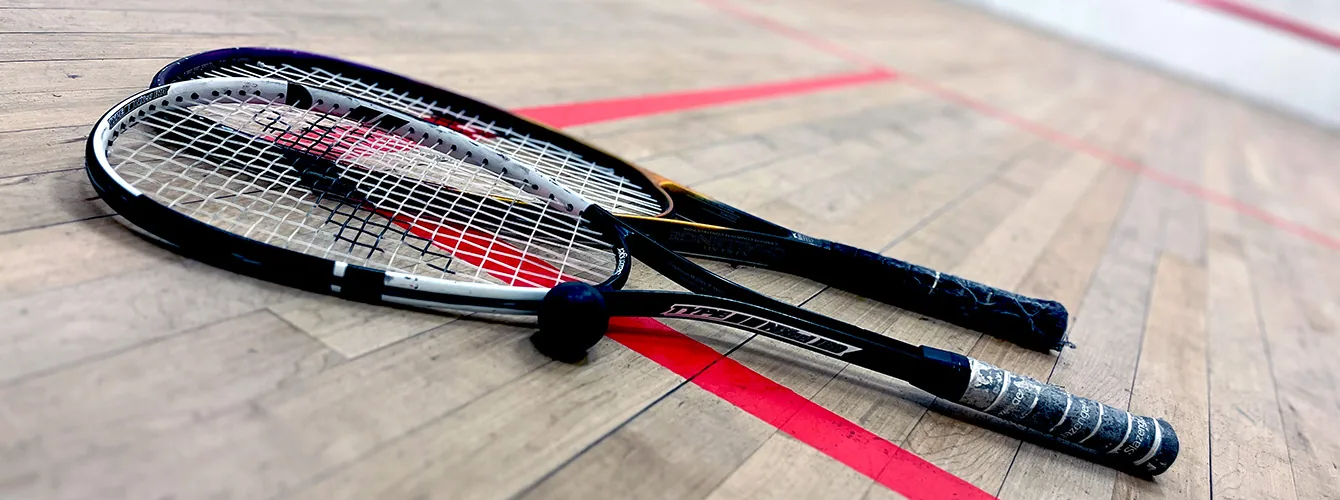
Strings are the cheapest part of a squash racket to change and the one most club players ignore. A fresh set at the right tension can make an old racket feel new.
The short answer
Squash strings are thin synthetic strings, usually between about 1.10 mm and 1.30 mm thick. Thinner strings grip the ball and give more feel but break sooner; thicker ones last longer. Most frames print a recommended tension range in the mid to high 20s (lb), and many club players sit around 25 to 27 lb. Lower tension gives more power and a bigger sweet spot; higher tension gives more control. Strings lose tension even when the racket sits in a bag, so restring regularly, not only when one snaps.
Types of squash string
Almost every squash string sold today is synthetic. The main types:
- Multifilament. Hundreds of fine fibres wrapped together. Soft, comfortable and good at holding the ball on the strings. The most common choice for club players and most pros.
- Synthetic gut (solid core). A single nylon core with an outer wrap. Cheaper and durable, with a firmer feel. Often what comes in a racket straight from the shop.
- Natural gut. Made from animal intestine. Lively and comfortable but expensive and quick to fray. Rare in squash today.
Many rackets are sold pre-strung with a basic string. That is fine to start with. When it breaks or goes dead, restringing with a better multifilament is one of the cheapest upgrades you can make.
Gauge: thin or thick
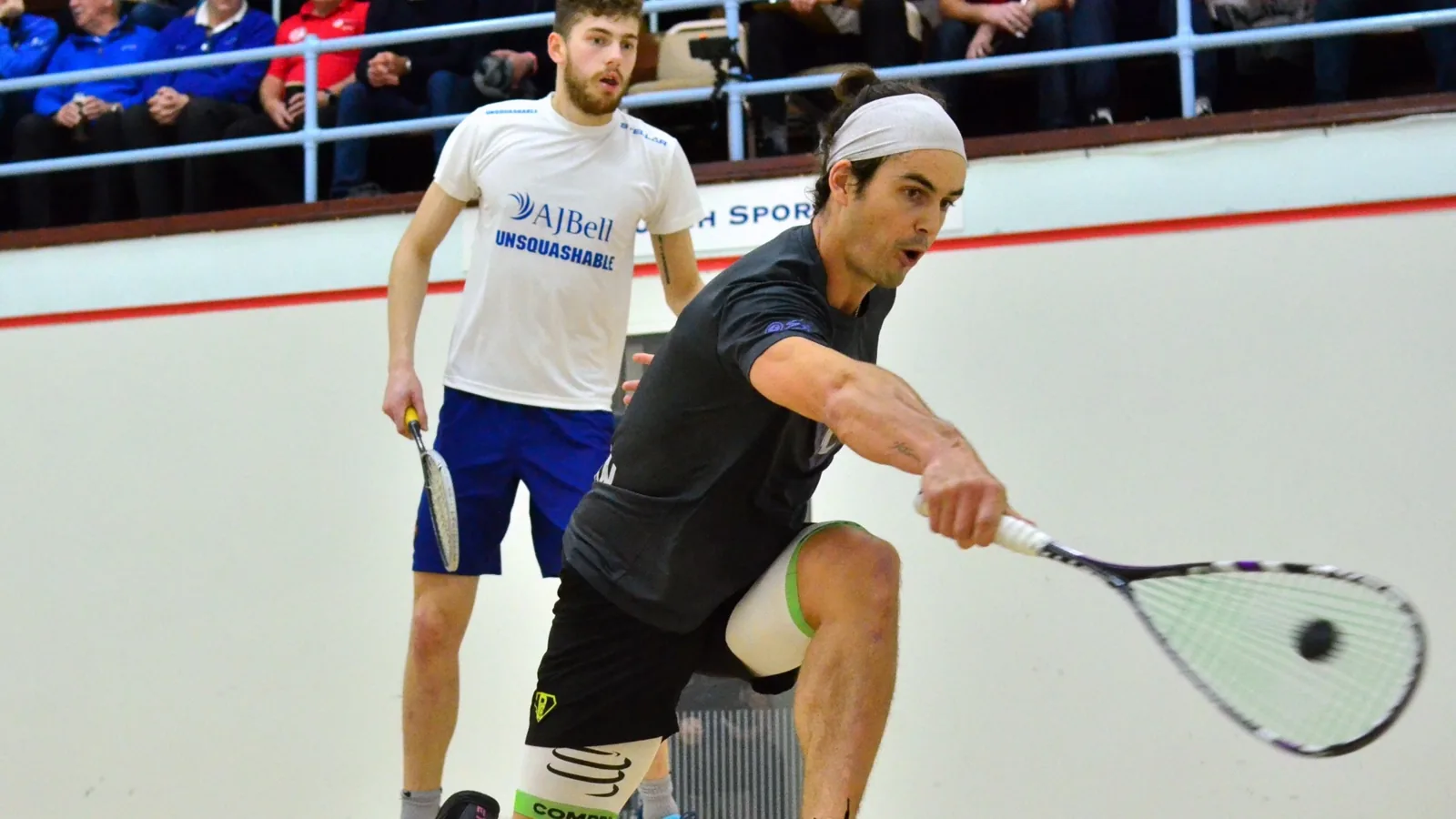
Gauge is the thickness of the string. Squash strings run thinner than most tennis strings. Different makers group them slightly differently, but roughly:
| Thickness | Usual label | What you get |
|---|---|---|
| About 1.10 to 1.16 mm | 18 gauge | Most bite on the ball and most feel; breaks soonest |
| About 1.16 to 1.25 mm | 17 gauge | The middle ground used by many club players |
| About 1.26 mm and up | 16 gauge | Durable and firm; less spin and touch |
If you break strings often, go a little thicker. If your strings last for months and the racket feels dull, try thinner.
String tension
Tension is how tightly the strings are pulled when the racket is strung, measured in pounds (lb) or kilograms. Most rackets have a recommended range printed on the frame, usually near the throat. Stay inside it: going over the range can stress the frame, and some makers will not honour a warranty if you do.
- Lower tension (around 22 to 25 lb). The strings act like a trampoline. More power with less effort and a larger sweet spot, at the cost of some precision.
- Middle tension (around 25 to 27 lb). Where most club players end up.
- Higher tension (around 28 lb and up, within the frame's range). A firmer string bed for players who swing hard and want the ball to go exactly where they aim.
Two small points catch people out. First, a racket strung at 27 lb does not stay at 27 lb: the strings start relaxing straight away. Second, the same tension feels different on different stringing machines, so if you find a setup you like, keep using the same stringer.
Not sure where to start? Ask for the middle of the range printed on your frame, with a 1.18 to 1.20 mm multifilament. Play with it for a few weeks before you change anything, and change only one thing at a time: tension or string, not both.
When to restring
Strings wear out in two ways. They break, which is obvious. Or they go "dead": they lose tension and elasticity, the ball flies off less predictably and short shots become harder to control. Dead strings are the more common problem for club players because nothing forces you to notice.
Signs your strings need changing:
- The strings move out of line and stay there after a rally.
- You see fraying or notches where the main and cross strings meet.
- The racket feels flat or "boardy" compared with how it felt new.
- The ball keeps landing shorter or less accurately than you expect.
A rule of thumb borrowed from tennis is to restring as many times a year as you play each week. Play twice a week, restring about twice a year. Heavy hitters and players who use thin strings will need more.
Clubs often have a member or local shop who strings rackets. Leave the racket a day or two before a match if you can, and keep a second racket in your bag in case a string goes mid-game. Our guide to what to bring to a squash game has the full list.
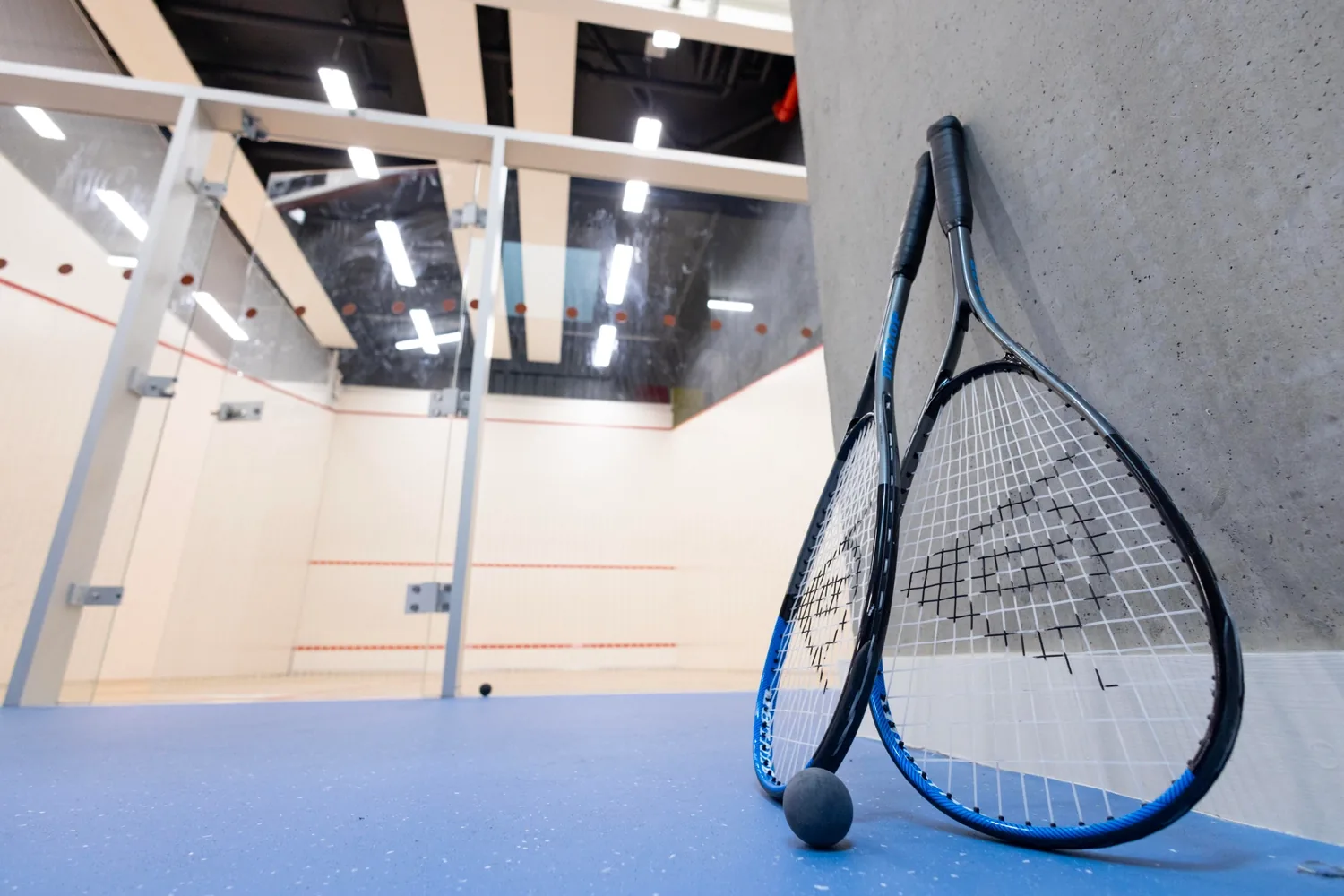
Picking a setup
- Beginner, playing once a week. Keep the factory strings until they break or feel dead, then ask for a mid-gauge multifilament in the middle of the frame's range.
- Club player, two or three times a week. Multifilament around 1.18 to 1.20 mm at about 25 to 27 lb. Restring every few months.
- Hard hitter who breaks strings. A thicker gauge, or a durable synthetic gut, at the higher end of your range.
- Player with a sore arm. Softer multifilament at lower tension is usually more comfortable. Racket weight and grip size matter too: see squash racket weight and balance.
YMCA Taunton
Taunton · Bring your own racket
UCD Sport Facilities (Belfield)
Dublin · No equipment provided
Oxford Brookes Sport, Headington
Oxford · Racket hire £2
At venues that do not provide equipment, a broken string with no spare racket can end your session early. Check the venue page before you go.
FAQ
What tension should I string my squash racket?
Use the range printed on your frame. Most frames recommend a range in the mid to high 20s (lb), and many club players choose 25 to 27 lb. Lower gives more power, higher gives more control.
How often should I restring a squash racket?
A common rule is as many times a year as you play each week. Strings lose tension even when you are not playing, so do not wait for one to break.
Are thinner squash strings better?
Thinner strings grip the ball better and give more feel, but they break sooner. Club players often settle on about 1.18 to 1.20 mm as a balance of feel and durability.
Can I use tennis strings in a squash racket?
Most tennis strings are thicker and stiffer than squash strings, so they feel dead in a squash frame. Use strings made for squash.