How to hold a squash racket
 By the Find My Squash Court team·
Updated ·
5 min read
Most bad habits in squash start in the hand. A sound grip is quick to learn, and it lets you play forehands, backhands and volleys without changing anything mid-rally.
The short answer
Hold a squash racket as if you are shaking hands with it. With the racket face on its edge, the V between your thumb and index finger sits on the top edge of the handle, slightly towards the side of your index finger. Spread the index finger a little up the handle like a trigger finger, keep the grip relaxed and hold near the end without letting the butt slip out. Tilt the face slightly open. Use the same grip for forehand and backhand, and keep the racket head up with your wrist slightly cocked.
The basic squash grip
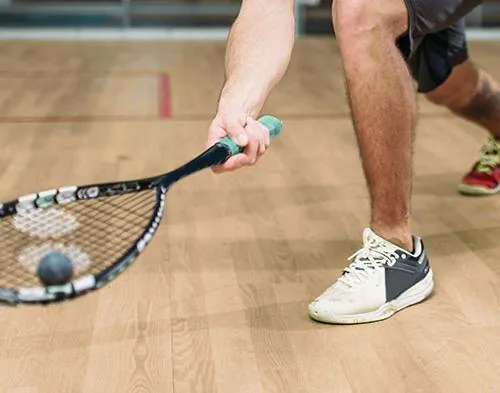
Coaches call it the handshake grip, and it is close to what tennis players call the continental grip. The racket face is open, tilted back a little towards the ceiling, which helps you slice under the ball and keep it low.
The grip is the same for right- and left-handed players, mirrored. The directions below assume you are right-handed; left-handers swap left and right.
Step by step
- Hold the racket by the throat with your other hand, head pointing away from you and the strings on edge, as if the racket were standing on its frame.
- Put your playing hand on the handle as if shaking hands. The V between thumb and index finger should line up with the top edge of the handle, just on the left of centre.
- Turn the face slightly open. Rotate the racket a touch so the strings face a little upwards. Most coaches teach this from the first lesson.
- Spread your index finger. Leave a small gap between it and your middle finger, like a trigger finger. This gives you control of the racket face.
- Wrap your thumb round so it rests between the index and middle finger, not straight up the back of the handle.
- Check your position on the handle. Hold near the end, with the butt cap inside or just at the heel of your hand. Choking up too far shortens your reach; hanging off the end loses control.
- Relax. Grip firmly enough that the racket does not twist on contact, and no tighter.
Why one grip for both sides
In tennis, players often change grip between forehand and backhand. Squash rallies are too quick for that. The ball comes off the walls at angles you cannot always predict, and you may play a forehand, a backhand volley and a boast within two seconds.
The handshake grip works on both sides because the open face lets you strike the ball cleanly from either side of your body. It also suits the low, sliced shots that keep a rally going. When players try a "western" forehand grip from tennis, the face closes and the ball tends to go into the tin.
Wrist and racket head
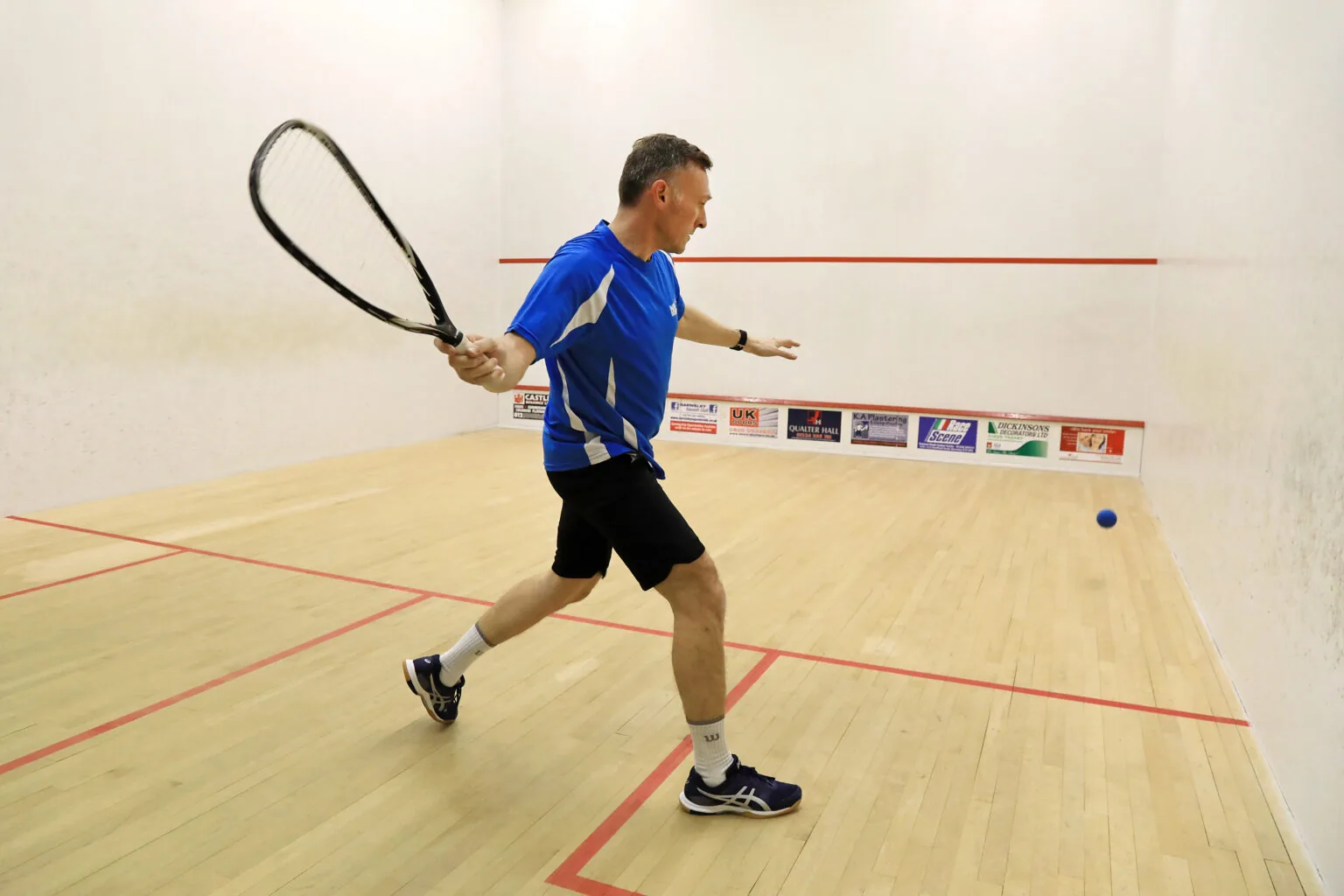
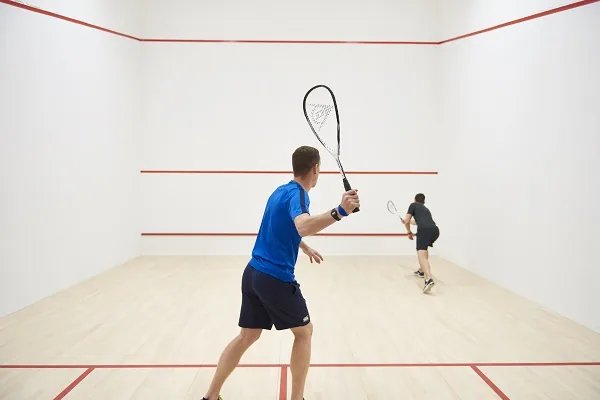
A good grip goes with a cocked wrist. Keep the wrist bent slightly back so the racket head points up and forms roughly a right angle with your forearm. Squash players keep the head up between shots and through most of the swing.
- Ready position. Racket in front of you, head above wrist height, so you can move it to either side.
- Preparation. Take the racket back early with the head up, as on the forehand and backhand drives.
- Contact. The wrist stays firm through the ball. The power comes from your legs, body rotation and forearm, not from flicking the wrist.
Our guides to the squash forehand and squash backhand build on this.
Quick self-check. Stand side-on to a wall and hold the racket out with the face parallel to the wall. If the face points down at the floor, your grip has turned closed. If it points up at the ceiling a lot, it is too open. You want it on edge with a slight tilt back.
Common grip mistakes
- Frying-pan grip. The palm sits flat on the back of the handle and the face points at the ceiling. Common in beginners. The ball pops up and you struggle on the backhand.
- Hammer grip. All fingers squeezed together, no gap for the index finger. You lose fine control of the face.
- Squeezing too hard. A tight grip tires your forearm and makes the swing stiff. Tighten slightly at contact, then relax.
- Hand creeping up the handle. Common late in a session when you get tired. Glance down between rallies.
- Changing grip between sides. Habit from tennis or badminton. It works until the ball is fast, then you are caught out.
- Grip too thin or too slippery. A worn grip makes you squeeze harder. See how to regrip a squash racket.
Getting your grip checked
A coach can fix a grip in a few minutes that might take you months to sort out alone. Most clubs run group sessions for adult beginners, and many leisure centres have a club night with a coach. If you are new to the game, squash lessons for adults covers what to expect.
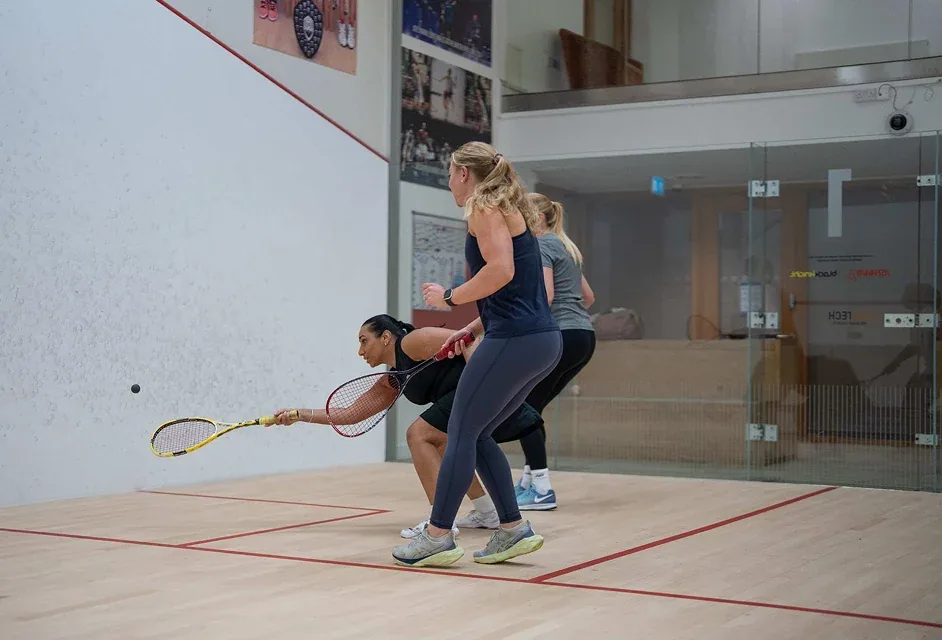
Edgbaston Priory Club
Birmingham · Coaching and academy
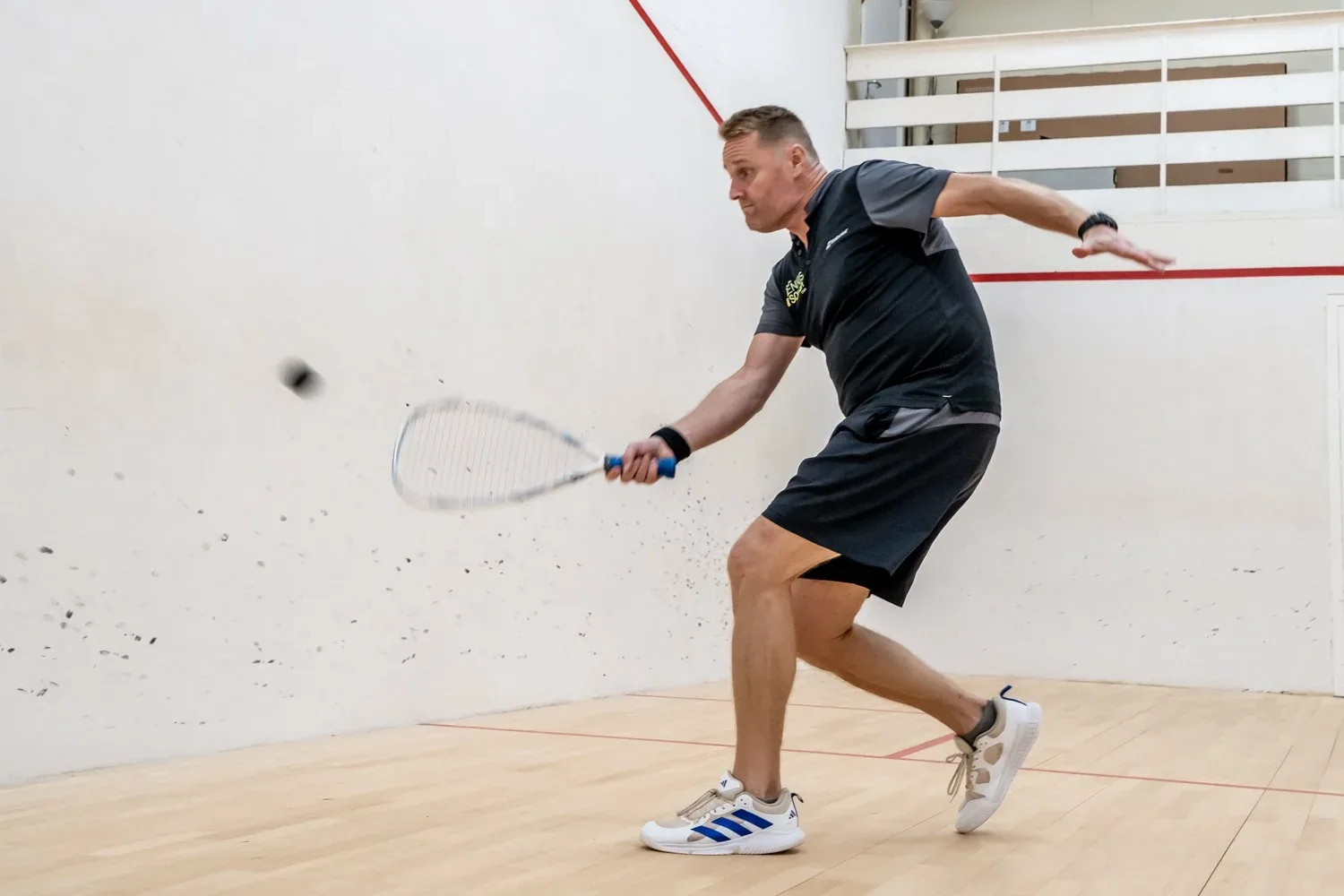
East Anglia Tennis & Squash Club
Norwich · Adult coaching
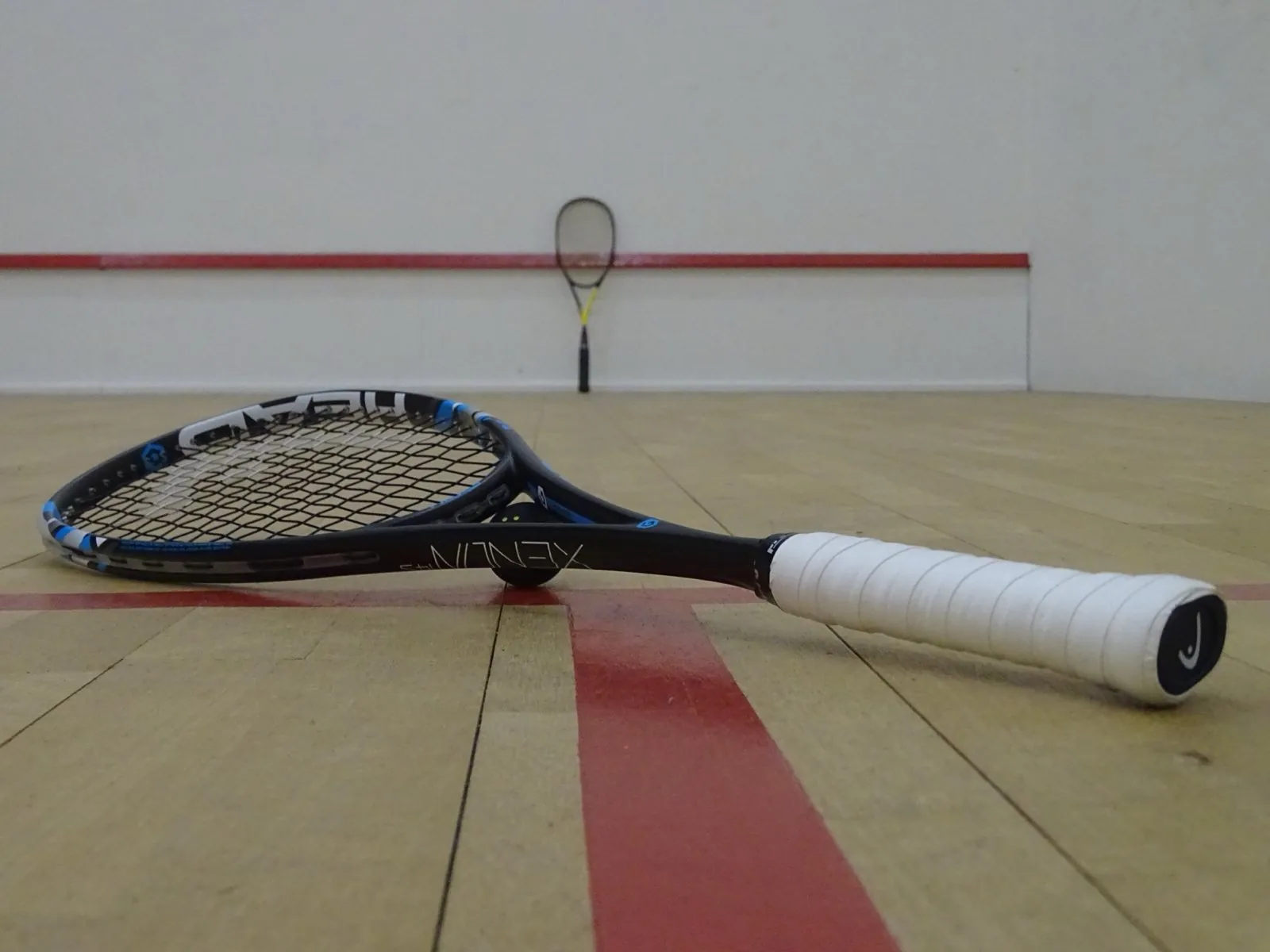
Ruston’s Sports & Social Club
Lincoln · Coaching for non-members
Cities with the most squash coaching in our directory:
FAQ
Do you change grip for backhand in squash?
No. Squash players use the same handshake grip for forehand and backhand. Rallies are too quick to change, and the open racket face works on both sides.
How tight should I hold a squash racket?
Firm enough that the racket does not twist when you hit the ball, and no tighter. A relaxed grip gives a smoother swing and tires your forearm less.
Is the squash grip the same as tennis?
It is close to the tennis continental grip, with the racket face slightly open. It is not the same as the eastern or western forehand grips many tennis players use.
Where should my hand be on the handle?
Near the end, with the butt of the racket at the heel of your hand. Holding further up shortens your reach; holding off the end loses control.