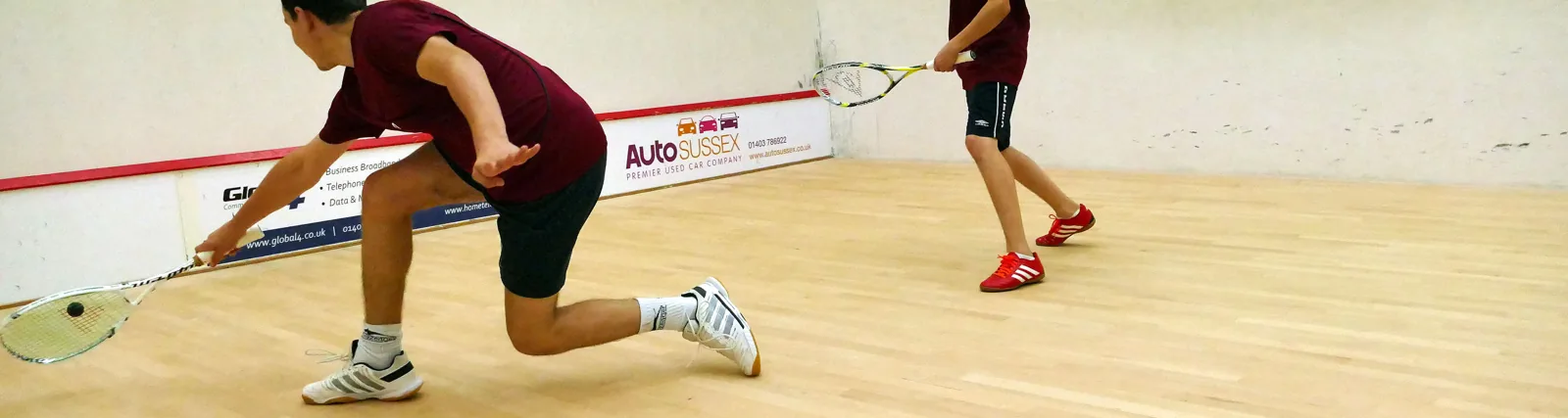
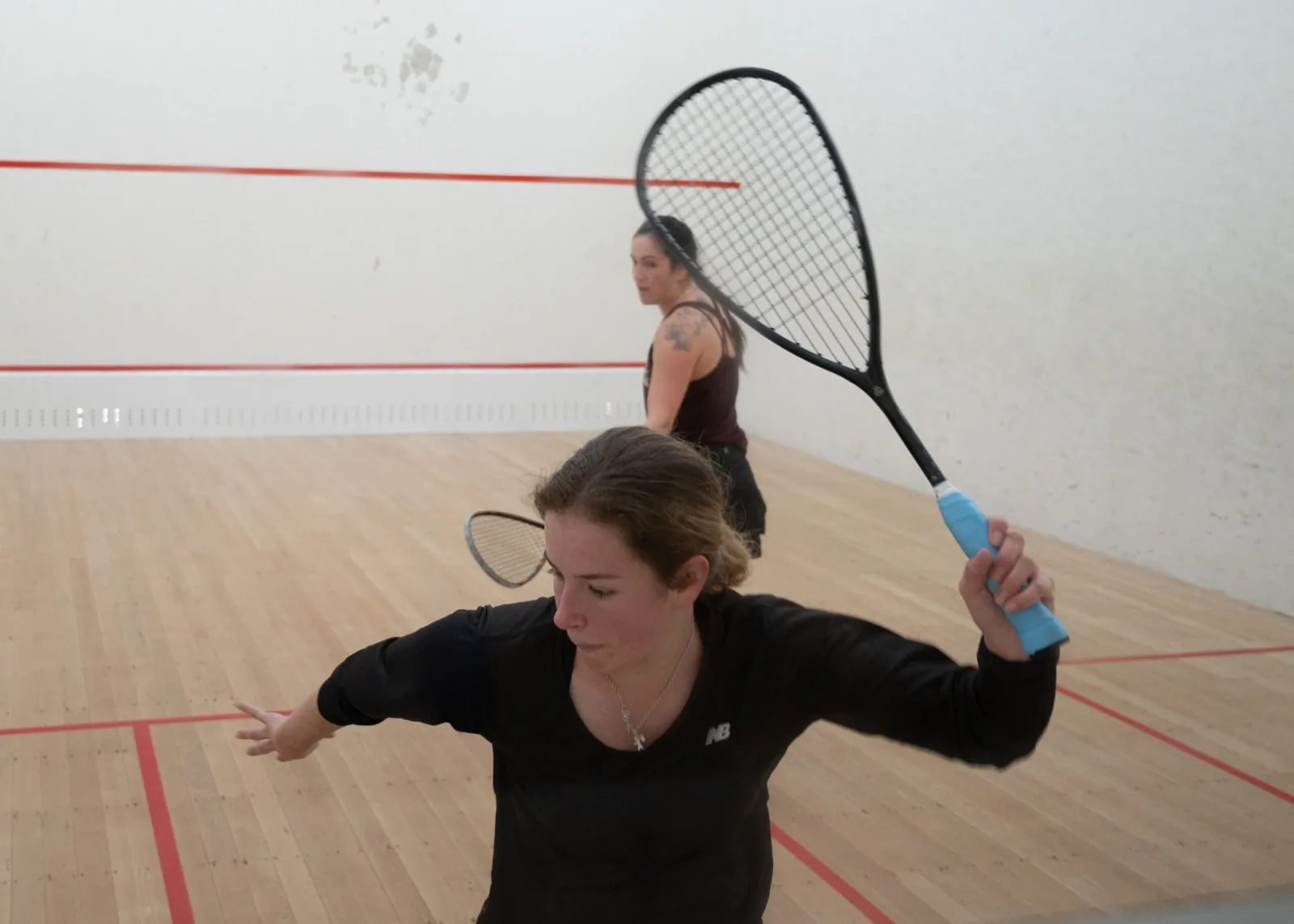
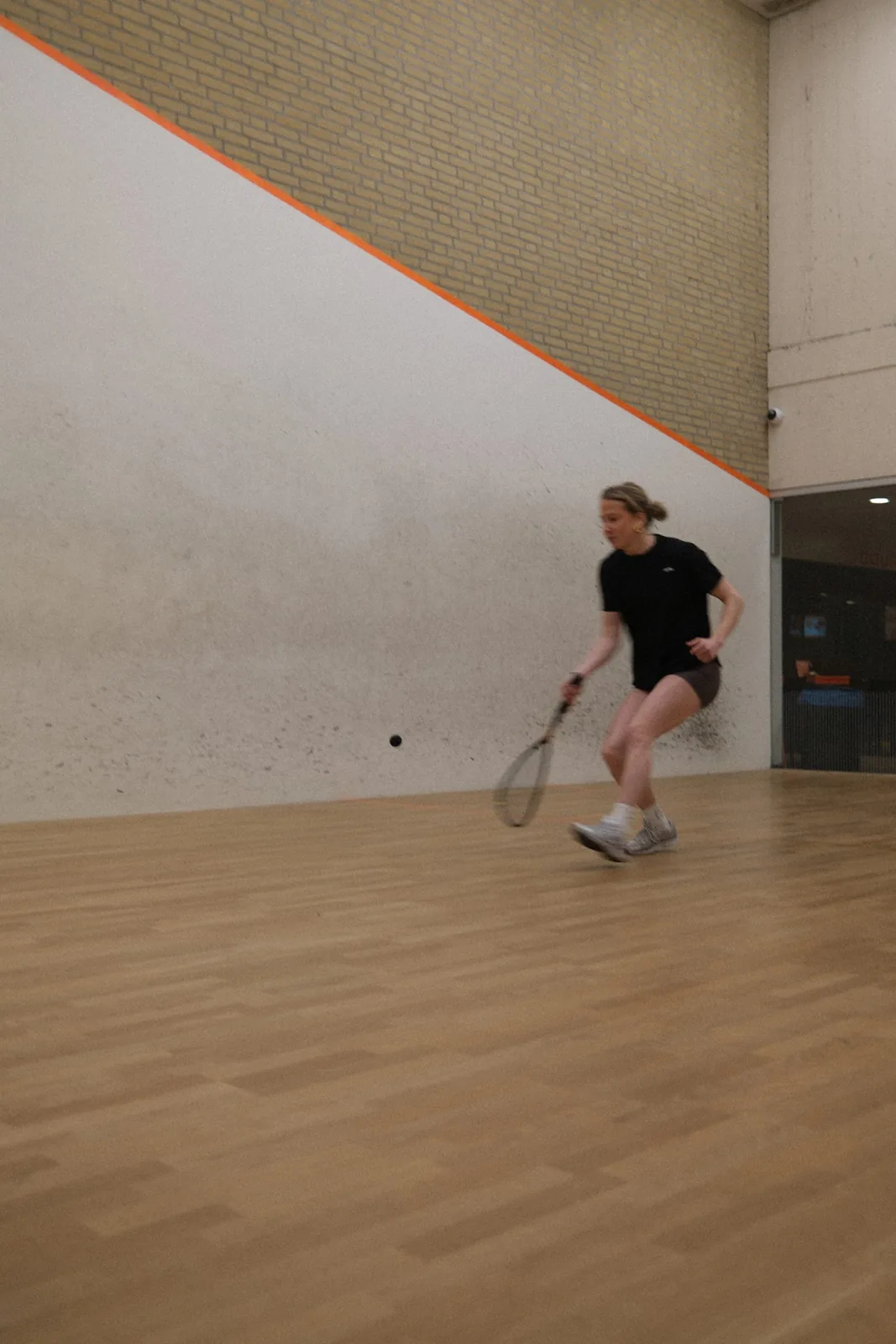
Squash forehand basics
 By the Find My Squash Court team·
Updated ·
7 min read
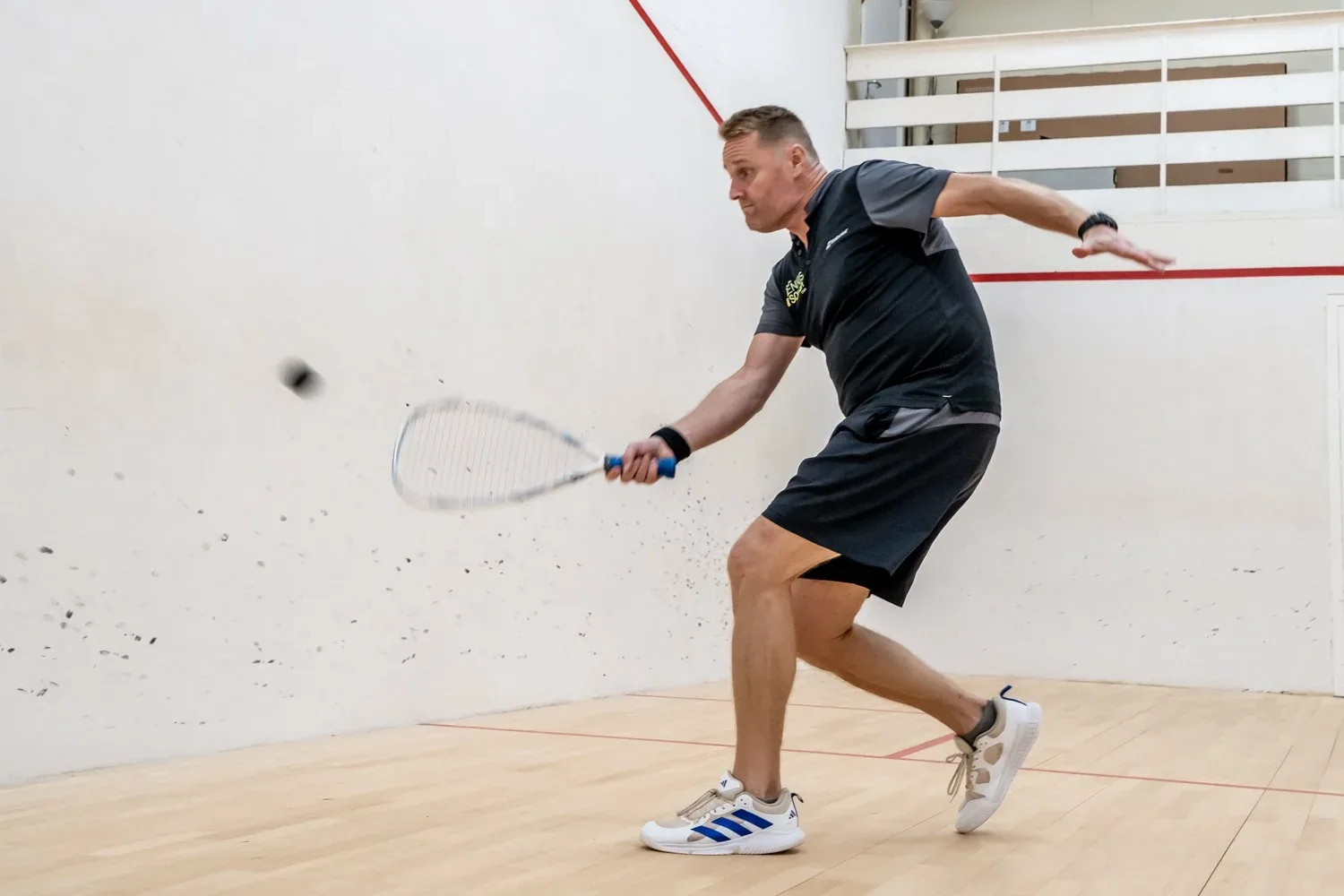
The forehand is the shot most new players hit first and fix last. A compact swing, an early racket and the right distance from the ball will keep it low and tight to the wall, which is where it does damage.
The short answer
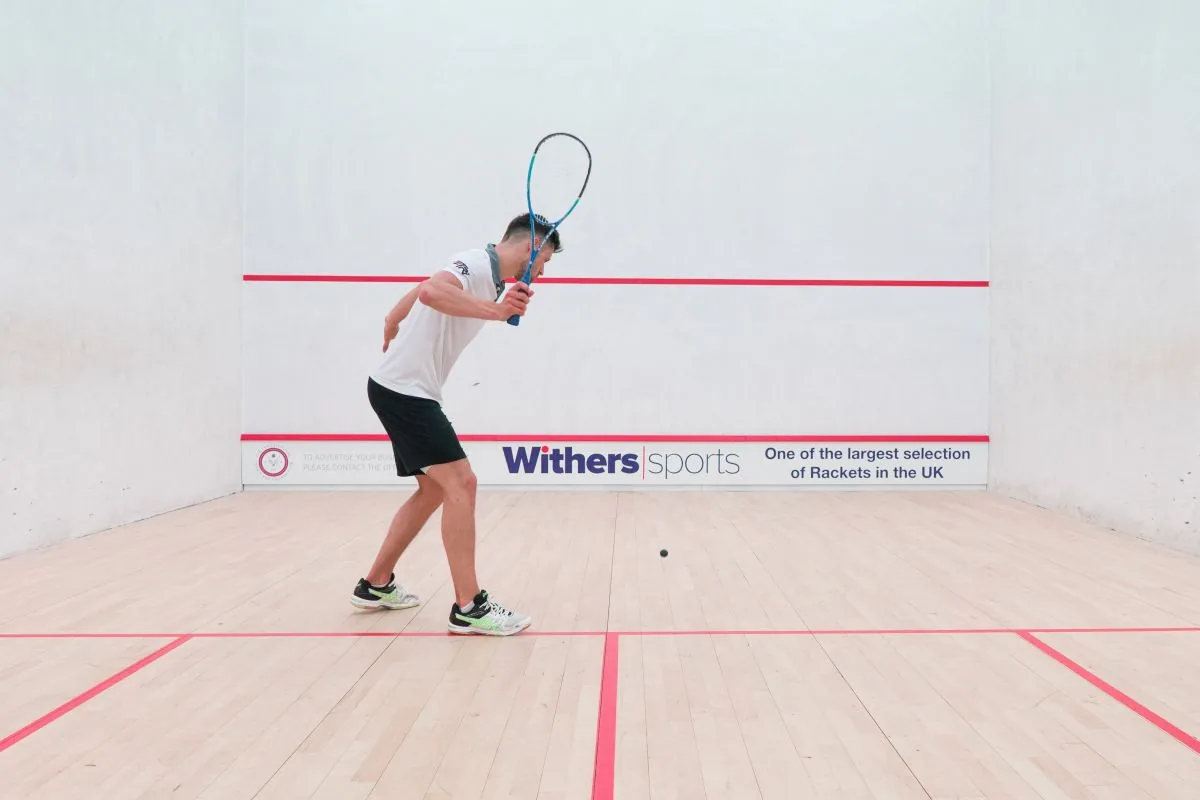
A squash forehand is played on your racket side (the right for a right-hander). Take the racket back early with the head up and the wrist cocked, turn your shoulders so your chest faces the side wall, and step towards the ball with your front foot. Swing on a short arc, meet the ball beside your front foot with a slightly open face, and let the racket finish up towards your opposite shoulder. Power comes from the legs and body turn, not the wrist. Aim to hit the front wall a little above the tin so the ball dies in the back corner.
What the forehand is for
On the forehand side you will play drives (straight length down the wall), cross-courts, drops, volleys and the boast. They all share the same basic swing. Learn the straight drive first: if you can hit the ball parallel to the side wall so it bounces behind the service box and reaches the back wall low, most other forehand shots follow from that.
The squash forehand is shorter and more compact than a tennis forehand. The court is small, the ball comes back fast, and your opponent is standing a metre or two away. A long, looping swing takes too much time and is a safety risk. Most coaches teach a swing that starts with the racket up near head height and finishes at about the same height on the other side.
Before anything else, check your grip. Squash uses one handshake grip for both sides with the face slightly open. Our guide on how to hold a squash racket covers it step by step.
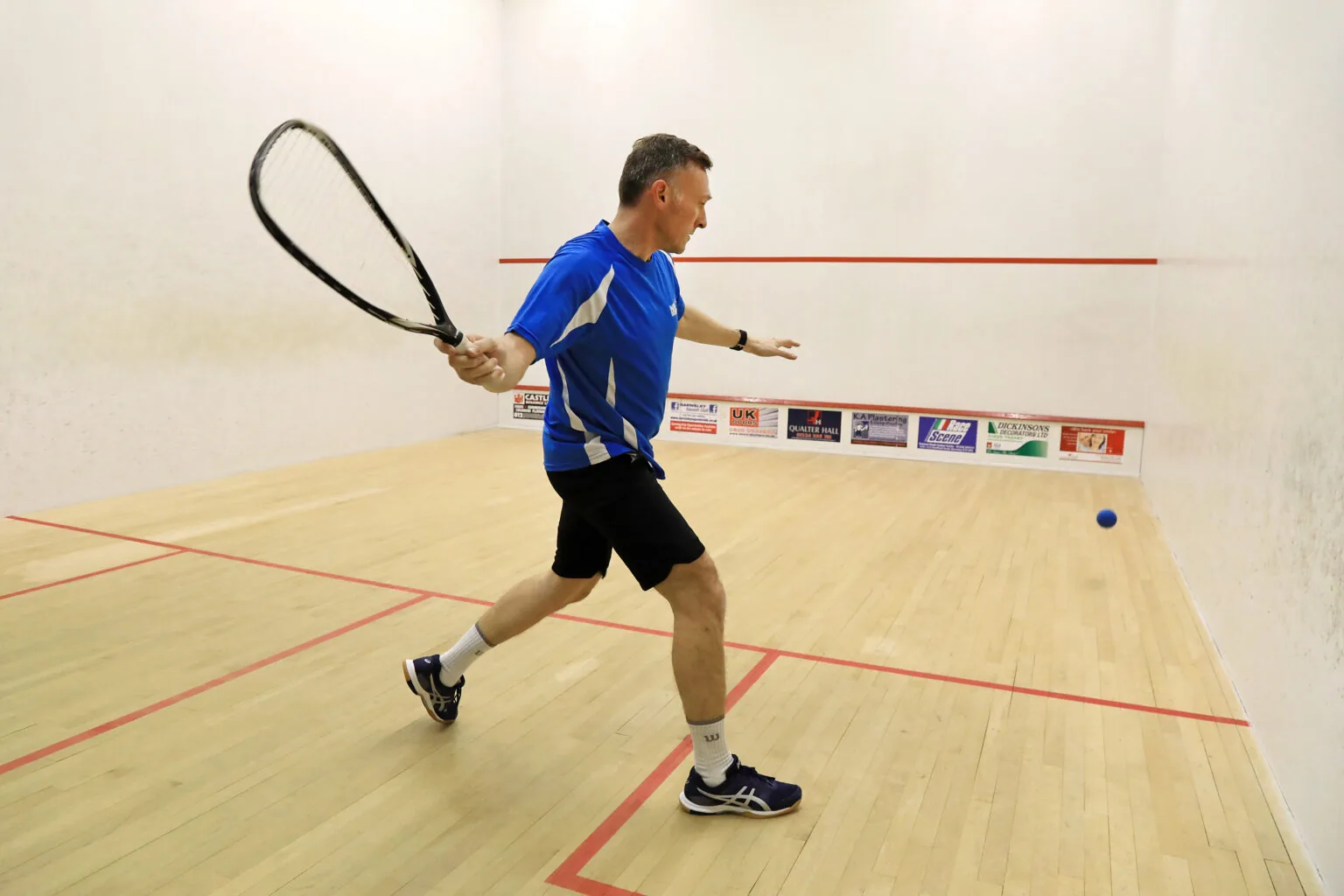
Preparation
Most forehand problems are preparation problems. If the racket is late, the swing is rushed and the ball goes anywhere.
- Racket up as you move. Lift the racket as soon as you see the ball coming to your forehand, while you are still moving. The head should be at least level with your head, the wrist cocked so racket and forearm make roughly an L.
- Turn side-on. By the time you hit, your chest should face the side wall, not the front wall. Turning the shoulders stores the energy you use in the swing.
- Get the distance right. Stop about a racket and an arm's length from the ball. Too close and your elbow gets jammed; too far and you reach and lose control.
- Step in with the front foot. A right-hander usually steps in with the left foot on the forehand side. In the back corner, or when the ball is wide, hitting off the right foot is fine and often faster. Coaches call this the open stance.
The swing and contact
Think of the swing as three parts: drop, swing, finish. From the high back position, the racket head drops slightly as you start to rotate. Your elbow leads, then the forearm turns over and the racket face comes through to the ball.
- Contact point. Meet the ball roughly level with your front foot, or a little in front of it. Hit it later, beside your back foot, and it drifts into the middle of the court.
- Open face. Keep the strings tilted slightly up at contact. This puts a little slice on the ball and keeps it low. A closed face sends it into the tin.
- Firm wrist. The wrist stays cocked and firm through contact. Flicking it gives power you cannot control.
- Low and level. Bend your knees to get down to the ball rather than dropping the racket head below the wrist. In squash you lower your body, not the racket.
For a straight drive, aim at a point on the front wall about a third of the way up, between the tin and the service line. The ball should bounce once just behind the service box and then reach the back wall low. For a cross-court, take the ball a little earlier, in front of your body, and aim so it hits the side wall behind your opponent.
Follow-through and recovery
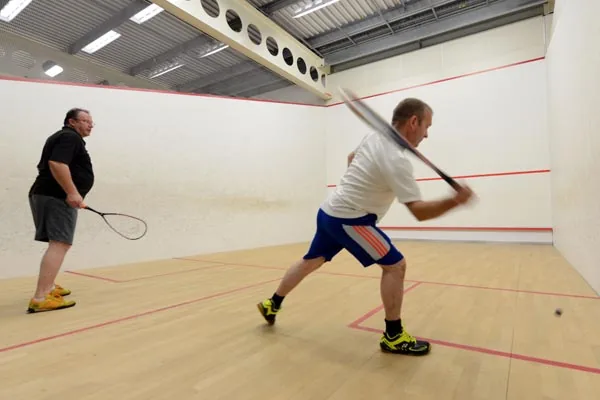
After contact, let the racket carry on towards the front wall and up towards your opposite shoulder. Keep it short. A big wrap-around finish is dangerous in a squash court because your opponent may be behind you, and it slows your recovery.
The rule on the follow-through is about safety. Under the World Squash rules, an excessive swing counts against you when the referee decides lets and strokes, so club players are taught to keep it compact from the first lesson. See squash rules for how lets and strokes work.
As soon as the ball leaves the strings, push off your front foot and move back towards the middle of the court. Watch your opponent's racket, not the front wall. Our guide to the T position explains why.
Racket-head check. Ask a partner to film you from behind the glass for a few rallies. Pause on the moment just before the swing starts. If the racket head is down by your knee, you are preparing late. It should be up by your ear.
Common forehand mistakes
- Swinging like a tennis player. A long, low-to-high topspin swing lifts the ball and makes it bounce out from the back wall. Keep the swing short and the face open.
- Facing the front wall. Without the shoulder turn, everything comes from the arm, and the ball goes cross-court whether you want it to or not.
- Standing too close. Crowding the ball cramps the swing and pulls it into the middle. Give yourself room.
- Dropping the racket head. Common on low balls. Bend your knees instead.
- Watching the result. Stopping to admire a good drive leaves you stranded at the side. Hit, then move.
- Hitting everything hard. A well-placed drive at medium pace beats a hard one that comes back to the middle. Pace comes after accuracy.
How to practise it
The quickest way to a reliable forehand is straight drives on your own. Stand just behind the service box, feed the ball gently to the side wall and drive it back down the wall, over and over. Count how many you can hit in a row that land behind the service box. Our page of solo squash drills has more routines.
Then add movement: feed, hit, move back to the T, return to the ball. A coach can feed you balls to different parts of the court so you practise the swing under pressure. Many clubs run group coaching for adults; see squash lessons for adults.
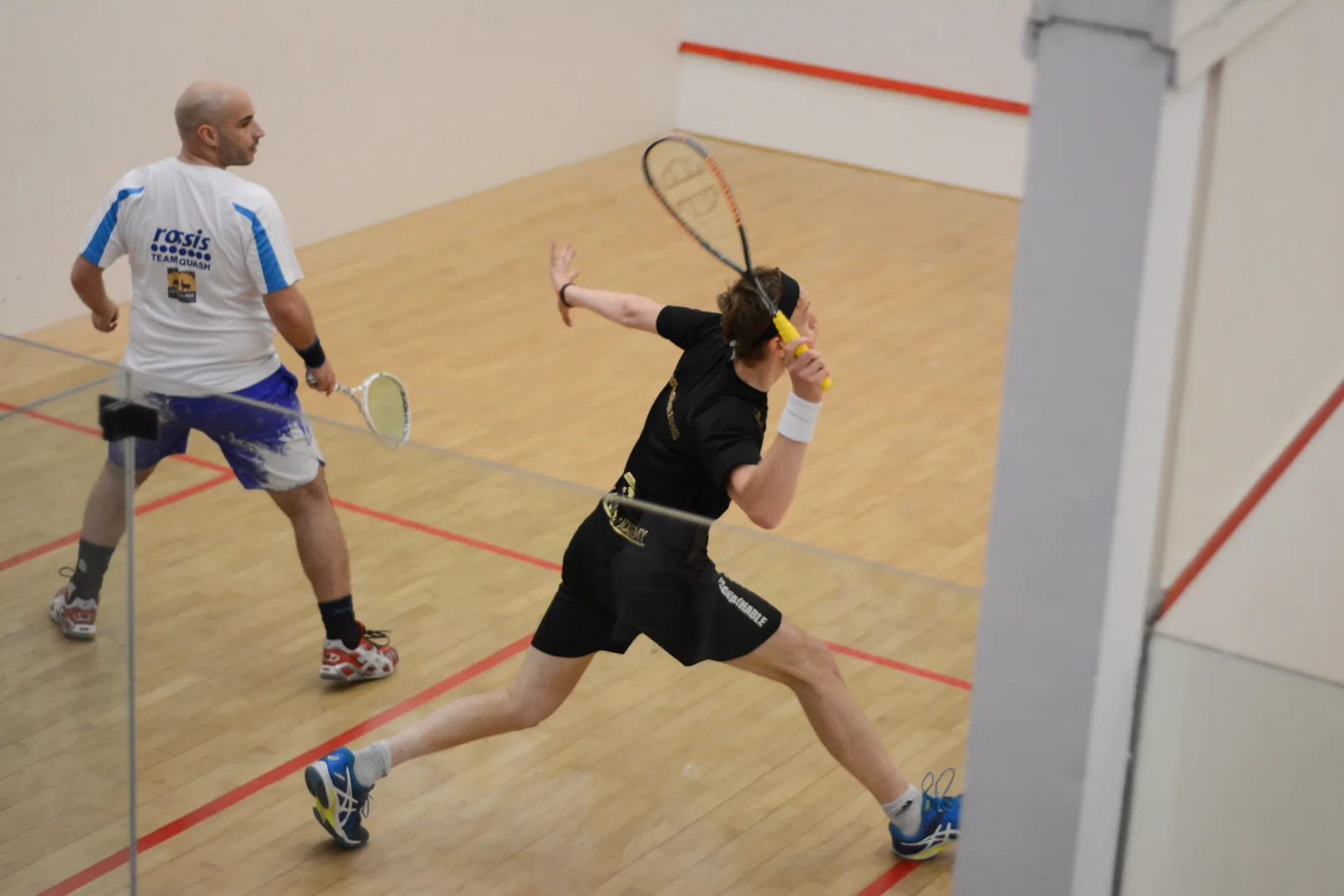
Rossis Leisure
Norwich · Coaching and leagues
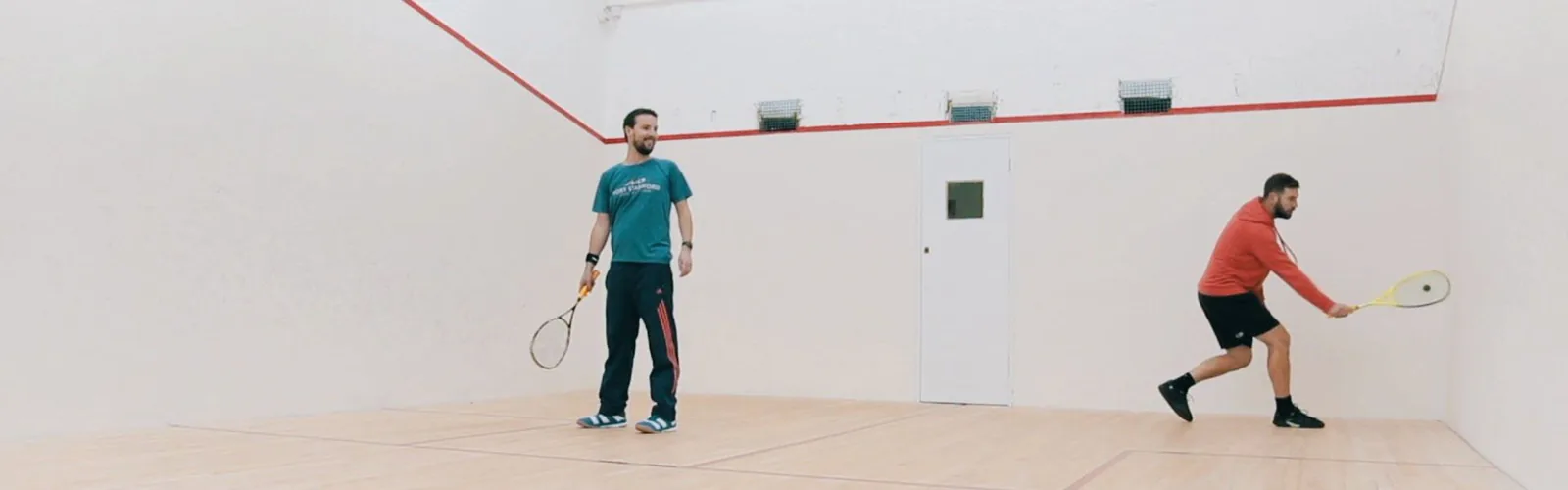
Fort Stamford Health & Fitness
Plymouth · Four courts, coaching
Leicestershire Tennis & Squash Club
Leicester · Glass-back court
Cities with the most squash coaching in our directory:
Once the forehand is solid, the backhand often feels easier than you expect. Read our squash backhand guide next.
FAQ
Should I use a different grip for the forehand?
No. Squash uses the same handshake grip on both sides with the face slightly open. Changing grip takes time you do not have in a fast rally.
Which foot do I step with on the forehand?
A right-hander usually steps in with the left foot, so the body is side-on. In the back corner or under pressure, playing off the right foot is common and correct.
Why does my forehand keep hitting the tin?
Usually the racket face is closed at contact, or you are dropping the racket head instead of bending your knees. Open the face a little and get lower.
How hard should I hit a forehand drive?
Hard enough that the ball reaches the back wall low, and no harder. Aim for length and tightness to the side wall first; add pace once you can repeat it.