The squash drop shot
 By the Find My Squash Court team·
Updated ·
6 min read
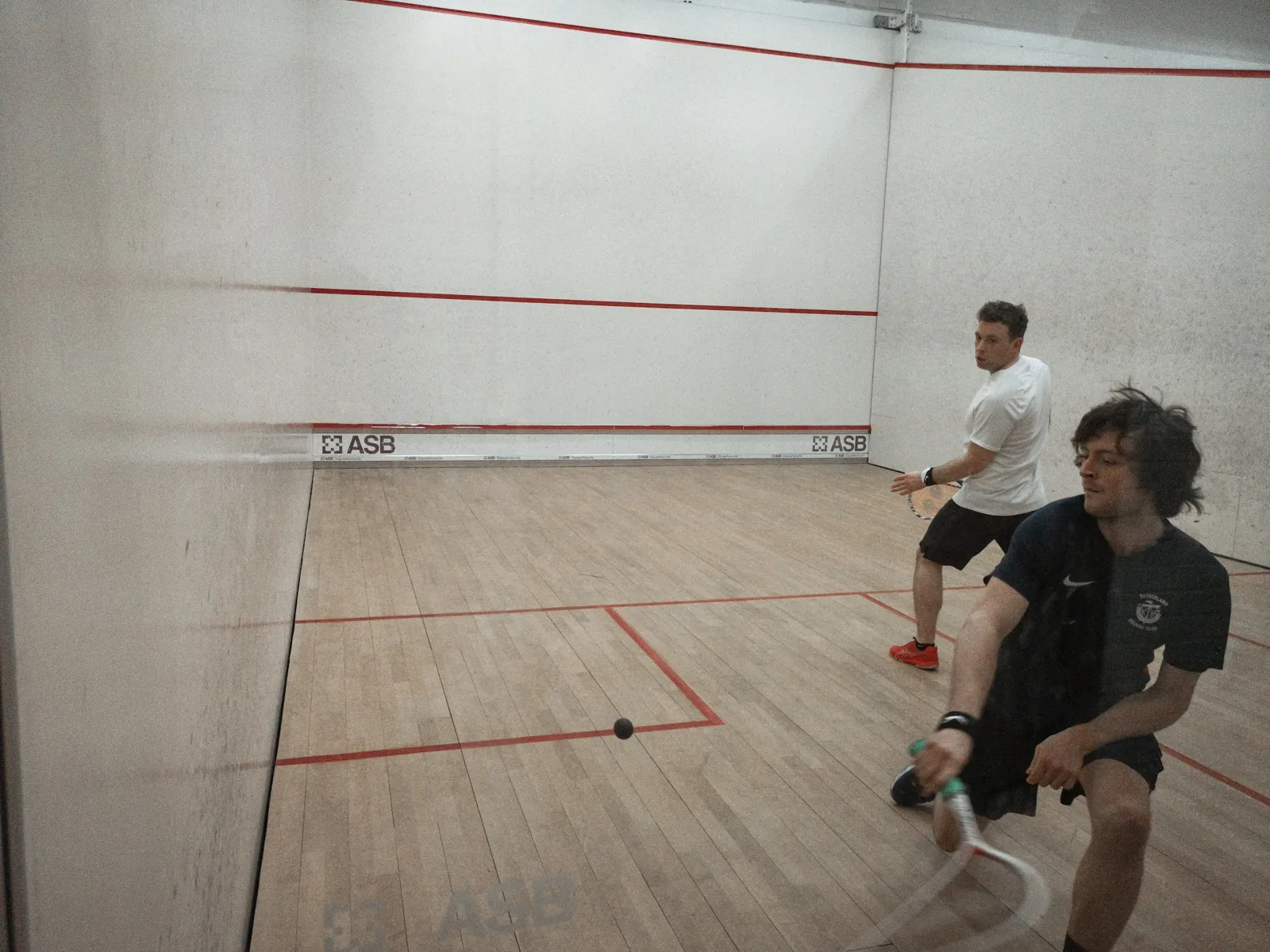
The drop shot is the soft shot that lands just above the tin and dies in the front corner. Played at the right moment it wins rallies outright. Played at the wrong moment it hands your opponent an easy kill.
The short answer
A squash drop shot is a soft shot aimed just above the tin so the ball bounces twice near the front wall, ideally landing in the nick where wall meets floor. To play one, get close to the ball, bend your knees, use a short swing with an open racket face and a firm wrist, and guide the ball rather than hit it. Play the drop when you are in front of your opponent and they are behind you or out of position. Behind your opponent or under pressure, play to the back instead.
What a drop shot does
Squash is a game of length and width: you push your opponent into the back corners with drives, then move them forward. The drop shot is the main way of moving them forward. A good drop lands close to the side wall, close to the front wall and low, so the second bounce comes before your opponent can get there.
Even if they reach it, they are stretched in the front corner and you are on the T. Their reply is usually weak. That is why coaches say a drop does not need to win the point. It needs to make the next shot hard for them.
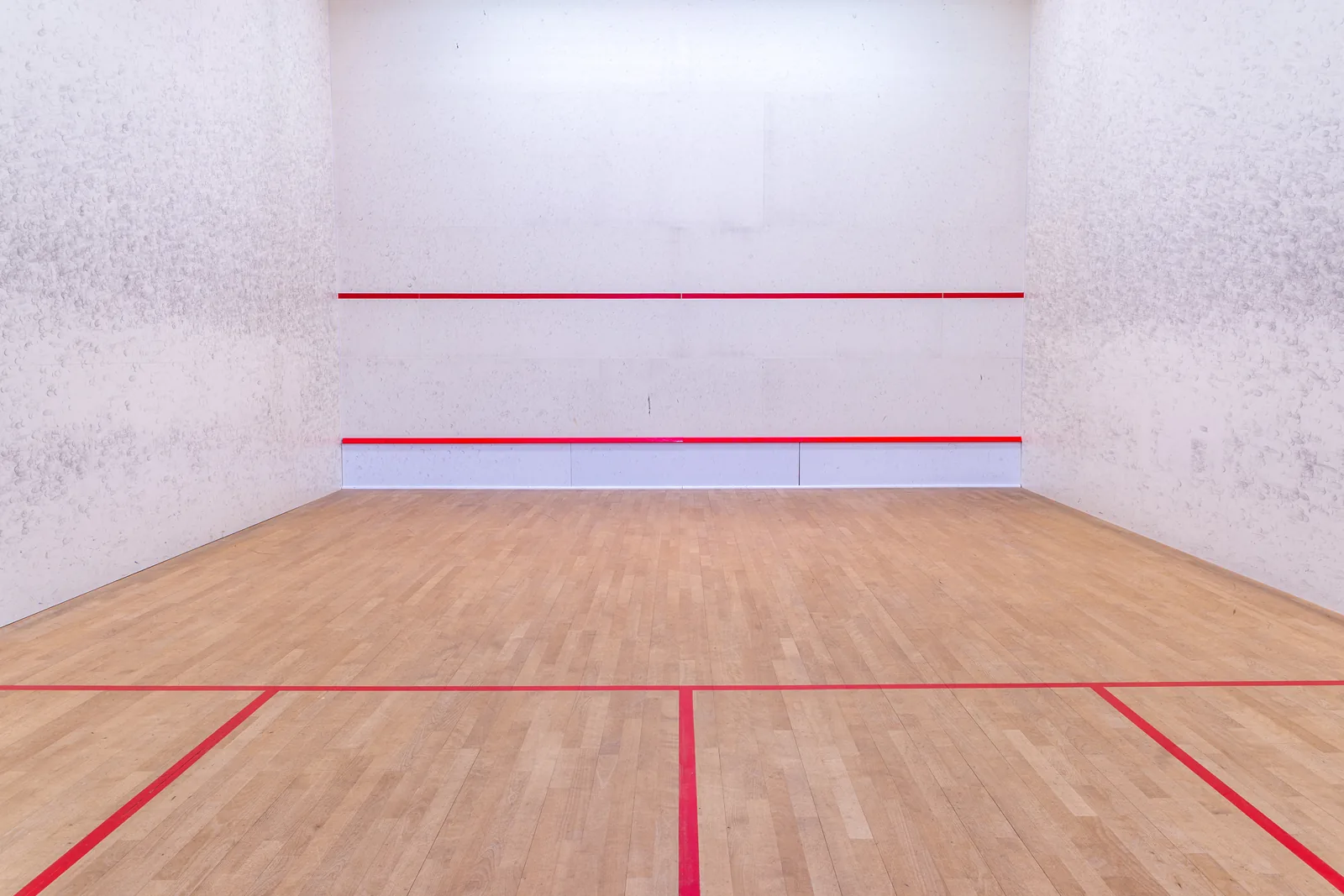
The front wall has a metal or board strip at the bottom, the tin, which sits 48 cm (19 inches) high on a singles court. A drop that touches the tin is a lost point, so you aim a little above it. See squash court lines for every line on the court.
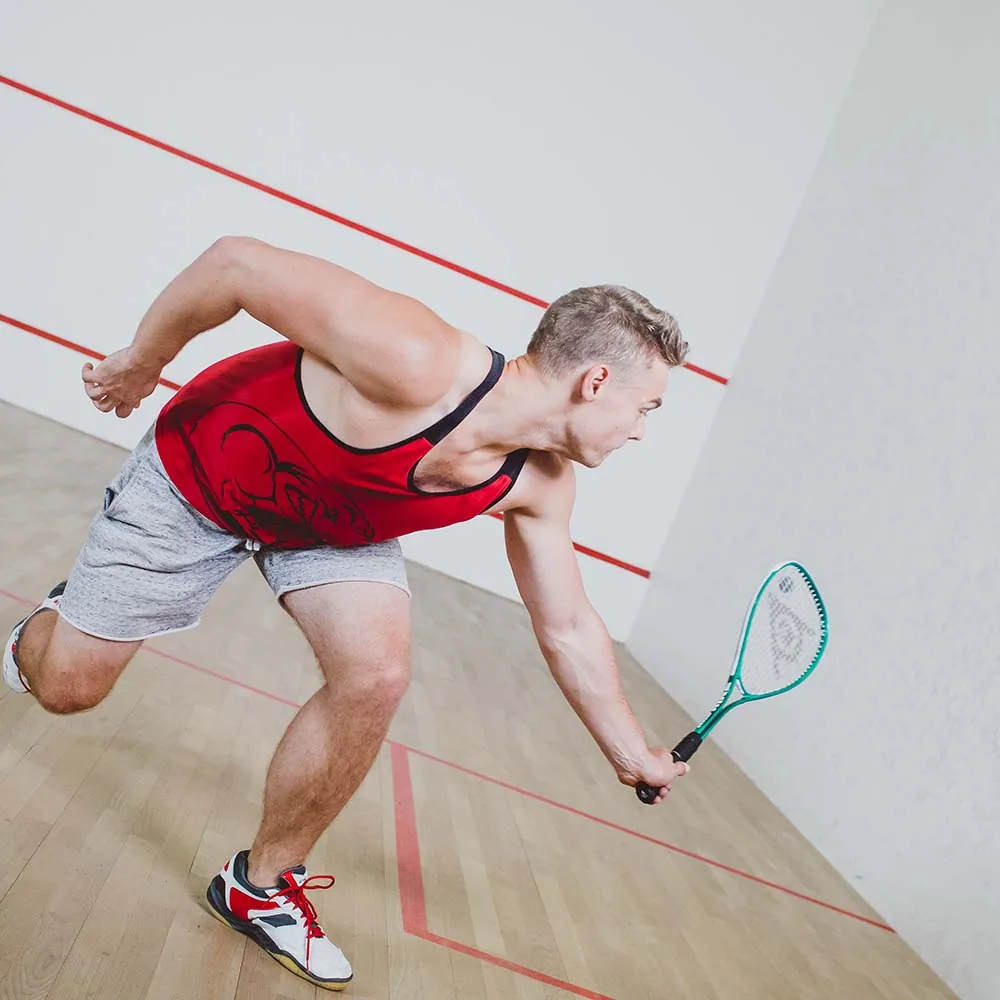
How to play a drop shot
- Get close. Move right up to the ball. Drops played from a stretch lose control. Your front foot should land close to where you will hit the ball.
- Get low. Bend your front knee and lower your body so your eyes are nearer the ball. Keep your back fairly upright.
- Racket up, short swing. Prepare the racket as if for a drive, so your opponent cannot read it, then use a short, slow swing from about shoulder height.
- Open face, firm wrist. Tilt the strings up and keep the wrist firm. The open face puts slice on the ball, which takes the pace off and makes it die after the bounce.
- Guide it. Meet the ball out in front and push the strings under and through it towards the front wall, as if you were placing it there.
- Hold the finish, then move. A short, controlled follow-through. Then push back off your front foot towards the T, because a good opponent will run it down.
The ideal target is a few centimetres above the tin, so the ball bounces first close to the front wall and the second bounce is near the side wall. Hitting the side wall first (a drop that comes off the side wall onto the front) also works, especially from the back of the court, but the straight version is easier to learn.
Straight drops, cross-court drops and the counter-drop
- Straight drop. Played from the front half, parallel to the side wall, landing in the same front corner. The safest drop and the one to learn first.
- Cross-court drop. Aimed at the opposite front corner, hitting the front wall and then ideally the side-wall nick. Harder, because a slightly loose one goes back to the middle.
- Counter-drop. Your opponent drops, you reach it and drop again. Useful when they hang back after their own drop.
- Volley drop. A drop played before the bounce from near the T. Very effective against high, soft balls. See how to volley in squash.
- Boast. Not strictly a drop, but it does the same job from the back: the ball hits the side wall first and then the front, dying in the opposite front corner.
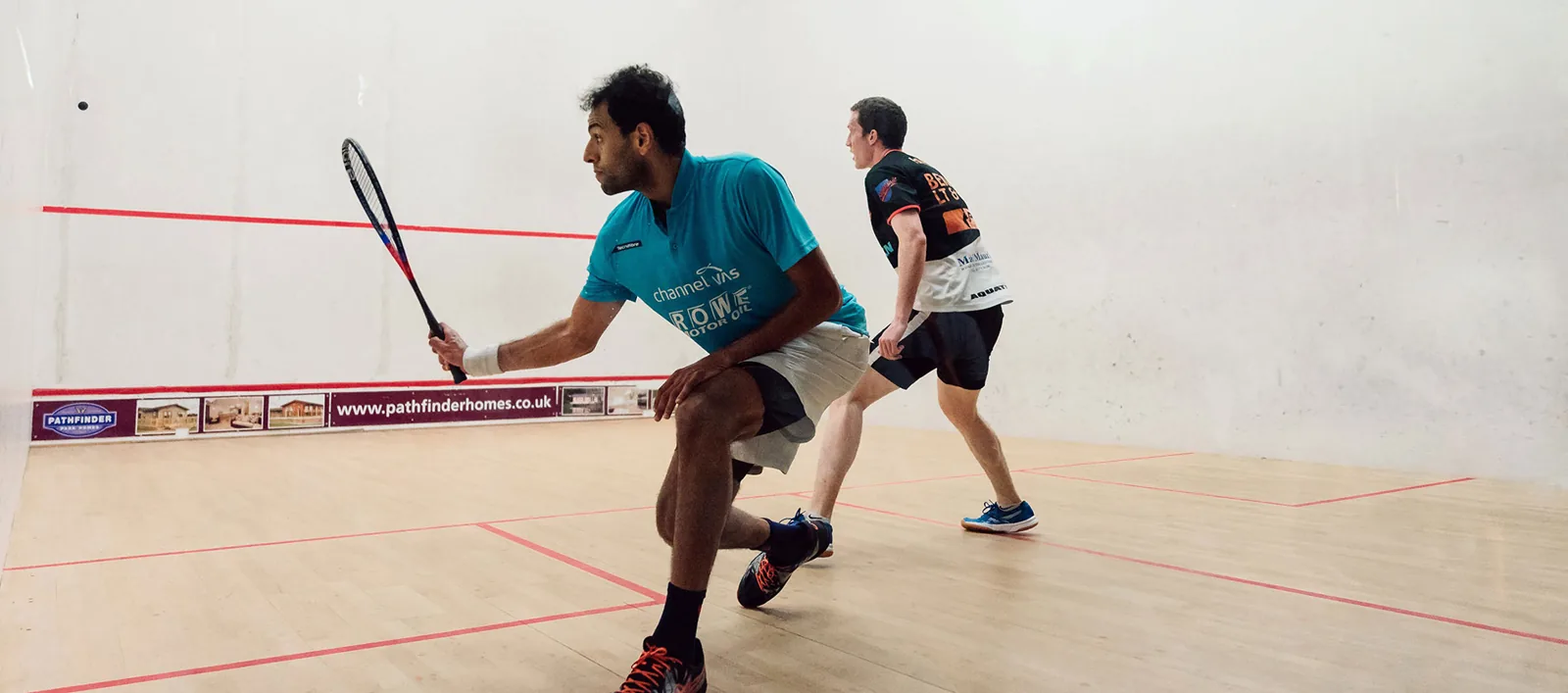
When to play the drop
Choosing when to play the drop matters more than the stroke itself. Club players often lose points by playing good-looking drops at bad times.
| Situation | Drop? |
|---|---|
| You are in front of the short line and your opponent is behind you | Yes, a good time |
| Your opponent has just played a weak shot that sits up in the middle | Yes, or a kill |
| Your opponent is slow or tired | Yes, it makes them run the full length |
| You are deep in a back corner | Usually no; play length or a boast |
| Your opponent is in front of you near the T | No, they will be on it straight away |
| You are stretched and off balance | No, it will float up |
A simple rule: drives first, drops when you have earned them. Our guide to squash tactics explains how length sets up the drop.
Disguise. Prepare every shot the same way, with the racket up. If you only lift the racket high for drives and keep it low for drops, your opponent will start moving forward before you hit.
Common drop shot mistakes
- Hitting from too far away. Reaching for the ball makes the face wobble. Take one more step.
- Standing up. Straightening the legs at contact lifts the ball. Stay low until the ball has left the strings.
- Aiming too high. A drop that hits well above the tin bounces out into the court. Aim low and accept that you will hit the tin sometimes while learning.
- Swinging too hard. A drop needs very little pace. The open face and short swing do the work.
- Admiring it. Good opponents get to more drops than you expect. Recover to the T every time.
Drills for the drop
- Drop to yourself. Stand in front of the short line near a side wall. Hit a soft straight drop, let it bounce, then drop again. Keep it going.
- Boast and drop. With a partner: one player plays a boast from the back, the other plays a straight drop from the front, then a drive. A classic club routine.
- Target practice. Put a towel or a pair of shoes in the front corner and try to land the ball near it.
See solo squash drills for more routines you can do alone.
Oxford Brookes Sport, Headington
Oxford · One court, viewing area
The Wyvern Squash
Taunton · Glass-back court
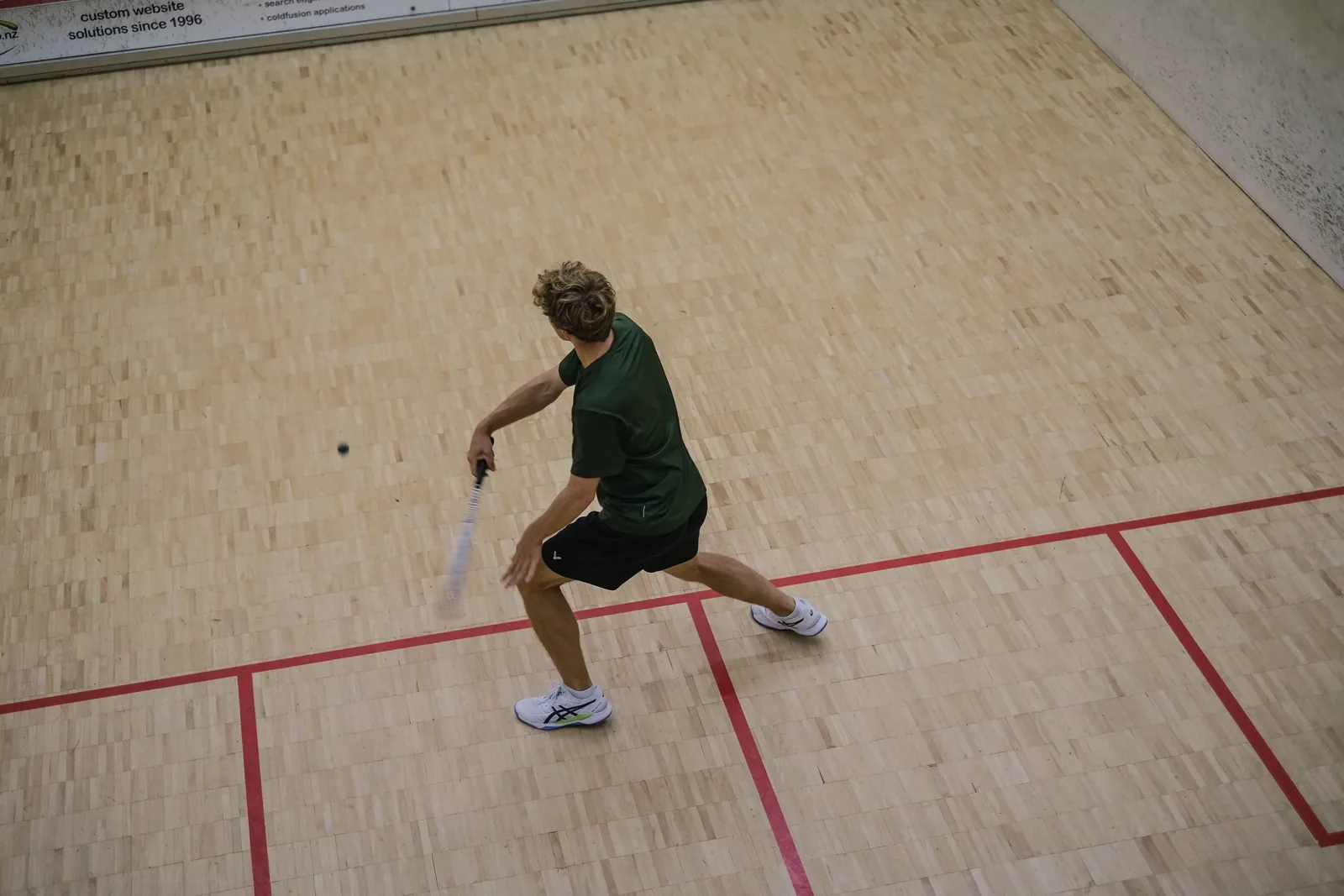
Herne Bay Rackets Club
Auckland · Four glass-back courts
FAQ
What is a nick in squash?
The nick is the join between a wall and the floor. A drop or kill that lands in the side-wall nick rolls along the floor and is almost impossible to return.
How high is the tin in squash?
On a standard singles court the top of the tin is 48 cm (19 inches) above the floor.
Should beginners play drop shots?
Yes, but learn to drive to length first. A drop works best once you can push your opponent to the back of the court.
Why does my drop shot sit up in the middle?
You are probably hitting it too high or too hard, or standing up as you hit. Get closer, stay low and aim just above the tin.