How to volley in squash
 By the Find My Squash Court team·
Updated ·
6 min read
A volley is any shot you hit before the ball bounces. In squash it is the quickest way to take time away from your opponent, and the shot that separates people who chase the ball from people who control the middle of the court.
The short answer
To volley in squash, stay near the T with your racket up at head height, so you are ready before the ball arrives. Turn side-on, take a short backswing, step towards the ball and hit it in front of your body with a firm wrist and an open face. Keep the swing compact: a volley is a punch, not a full drive. Aim for length down the wall or a volley drop to the front. Volley any ball you can reach comfortably that would otherwise go past you to the back of the court.
Why volley at all
Every time you let a ball go past you, you have to follow it into the back corner. That costs you time and energy, and your opponent gets to walk to the T. Volley the same ball from the middle of the court and your opponent is the one who has to scramble.
Volleying also stops your opponent from using the lob and the high cross-court as easy ways out of trouble. If they know you will cut the ball off from the T, they have to hit it higher and wider, which is harder.
You are allowed to volley any ball in squash, including the serve. The only requirement is that the ball reaches the front wall above the tin and below the out line, as with any shot. See squash rules for the details.
Getting ready to volley
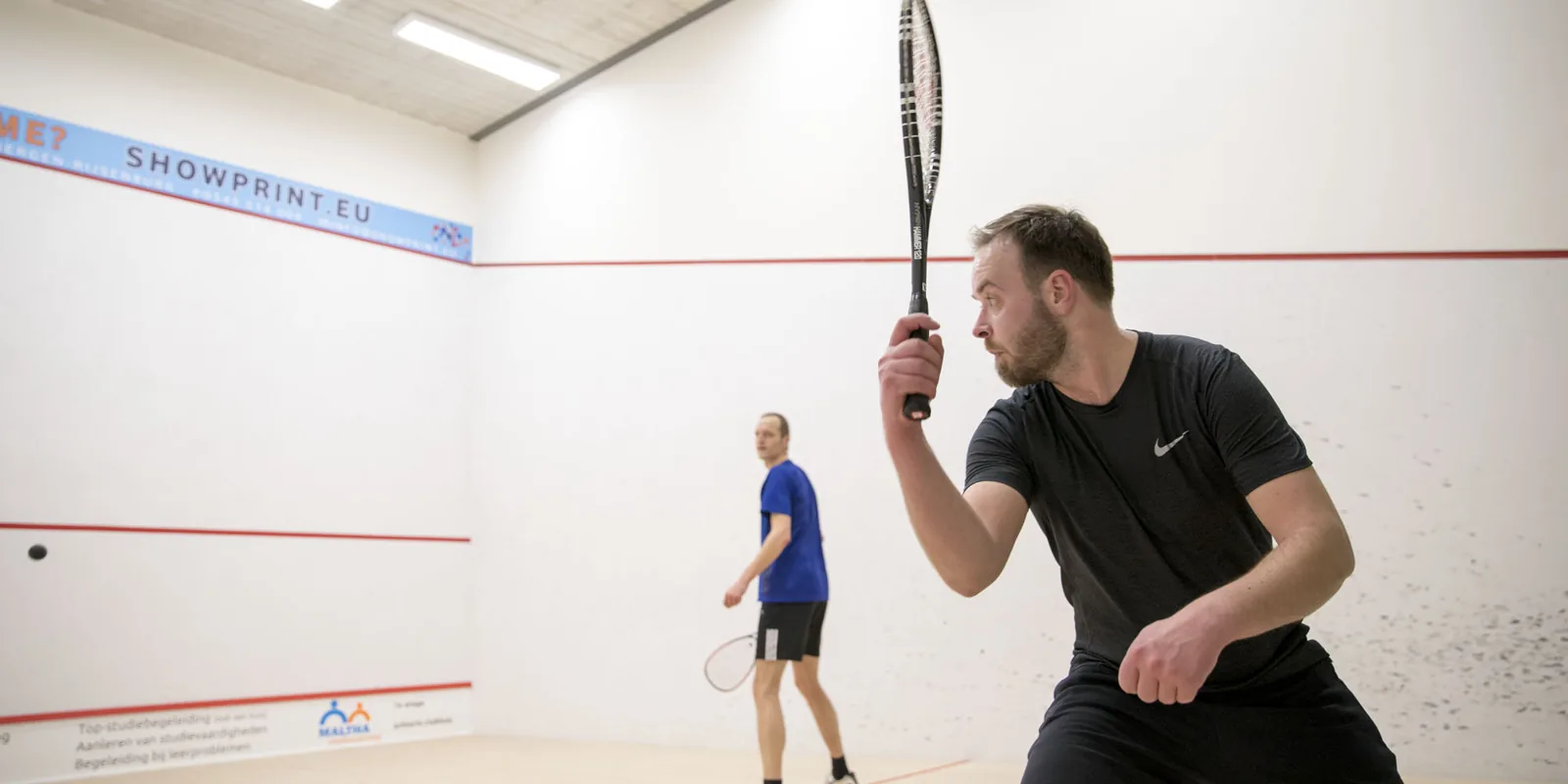
Most missed volleys are missed before the ball arrives. If your racket is down by your knees when your opponent hits, you will never get it up in time.
- Racket up on the T. Between shots, hold the racket in front of you with the head at about chest or head height.
- Watch the ball off their racket. Turn your head to see your opponent hit. You can usually tell from their swing whether the ball is going high and wide.
- Move early. Take one or two quick steps to the side so the ball is beside you, not on top of you.
- Turn your shoulders. Even on a fast volley, a small shoulder turn gives you control.
Our guide to the T position covers where to stand so the volley is available.
Volley technique
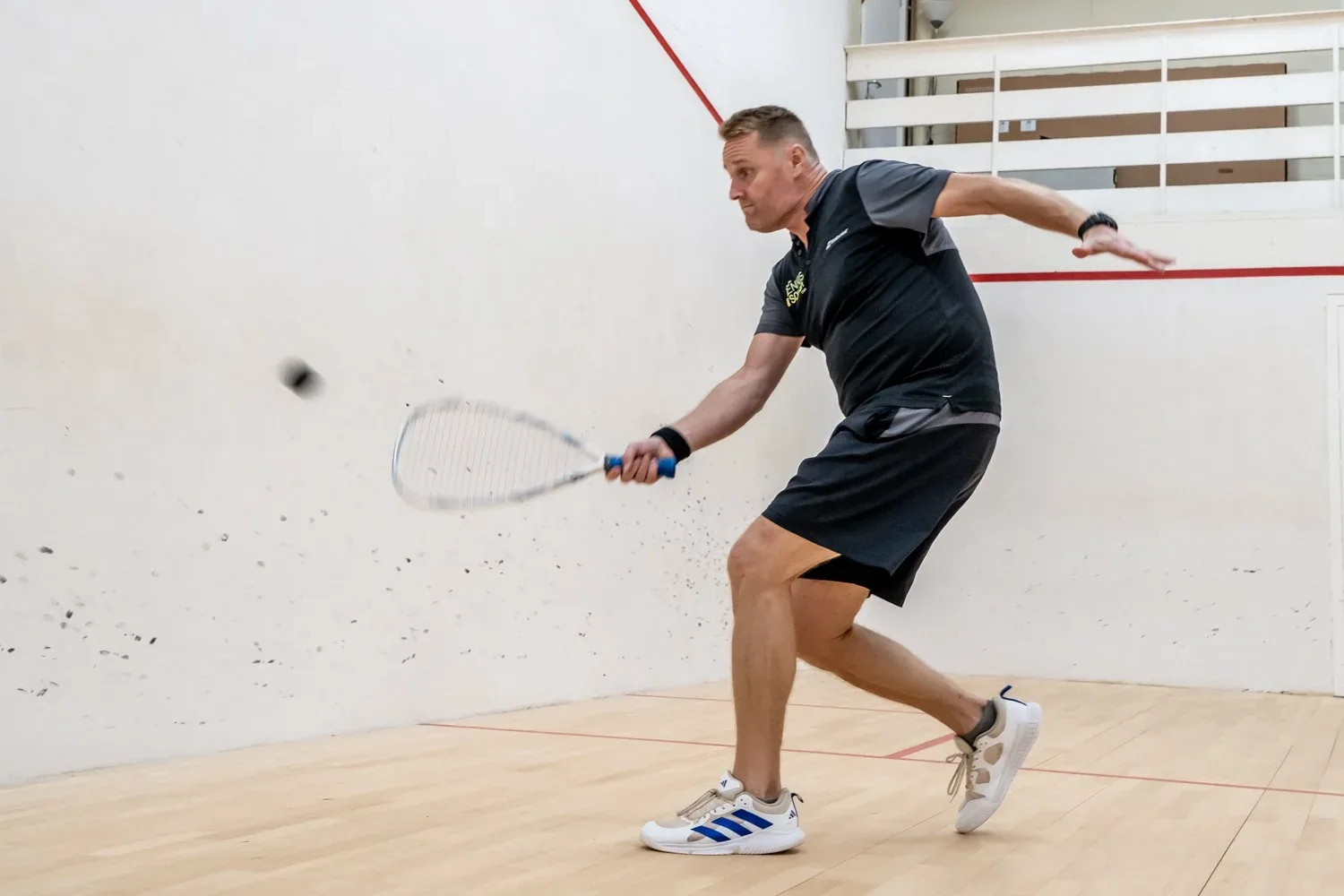
The grip is the same handshake grip you use for every shot. What changes is the size of the swing.
- Short backswing. Take the racket back only to around shoulder height. There is no time for more, and you do not need it: the ball already has pace.
- Hit in front. Meet the ball in front of your leading foot. Taking it late, beside your body, pushes it into the middle of the court.
- Firm wrist, open face. Keep the wrist cocked and firm. A slightly open face gives you control and keeps the ball from rising.
- Punch through. Push the racket through the ball towards your target and stop the follow-through early.
- Recover. Volleys happen near the T, so you are already in position. Get the racket back up straight away.
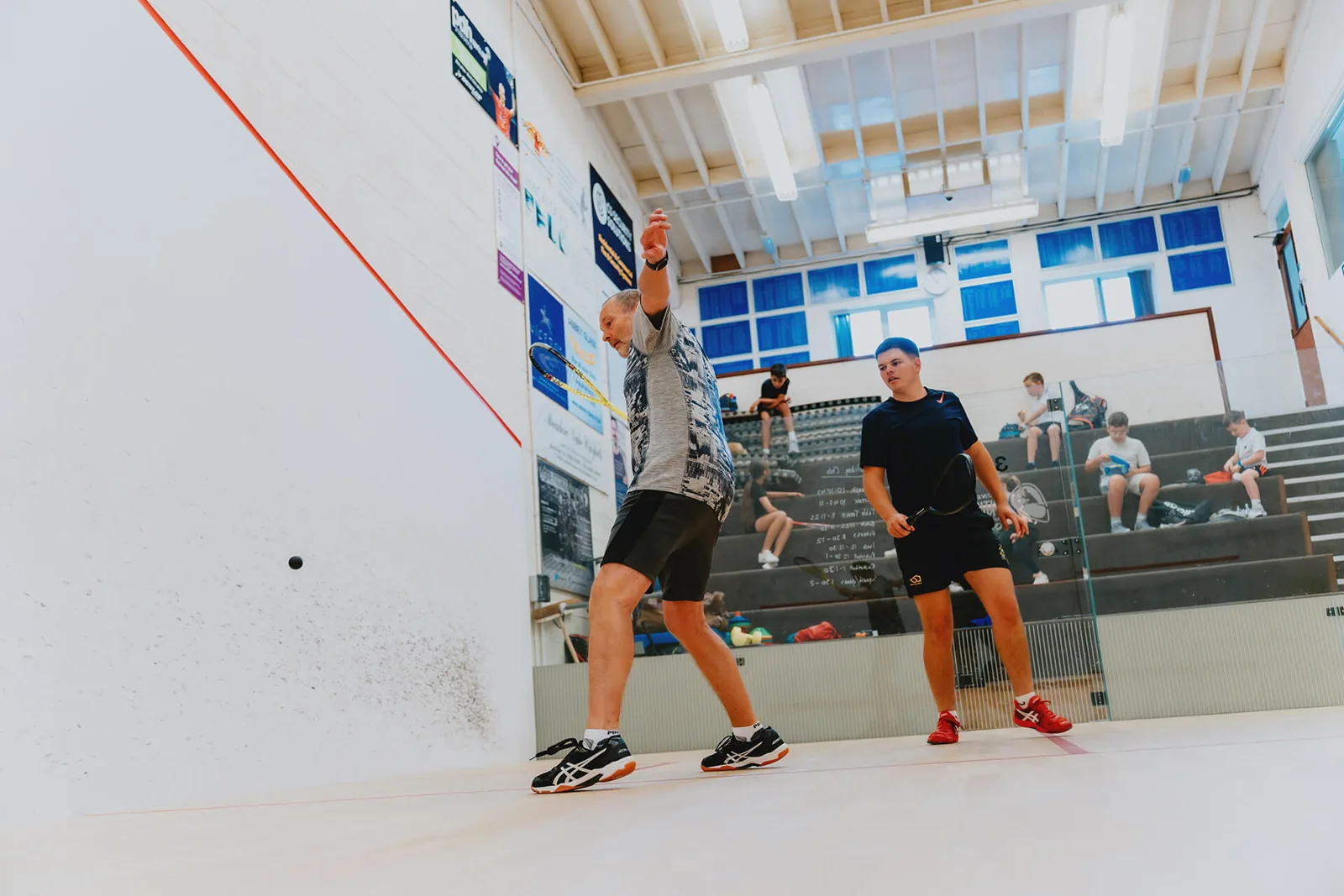
Types of volley
| Volley | What it does | When to play it |
|---|---|---|
| Straight volley drive | Sends the ball low down the wall to the back | Your opponent is in front of you or out of position |
| Cross-court volley | Hits the side wall behind your opponent | They are stuck on one side of the court |
| Volley drop | Short, soft volley into the front corner | They are behind you at the back of the court |
| Volley kill | Hard, low volley aimed just above the tin | A loose ball in the middle of the court |
| Defensive volley | A high block back down the wall | You are stretched and need time |
For the volley drop, the same principles apply as for any drop: short swing, open face, soft contact. Our guide to the squash drop shot goes through it in detail.
When to volley and when to let it go
Volley a ball when you can reach it comfortably from the middle of the court and it would otherwise go to the back. Let it go when:
- The ball is going out, above the out line on the back wall or side walls. If you volley it, it is in play.
- It is so high or wide that you would have to reach right back behind you to hit it.
- It is coming straight at your body with pace. Step aside and let the back wall slow it down.
- It will bounce in the middle and sit up for you. An easy ball off the back wall is better than a stretched volley.
A useful club rule of thumb: if you can volley it from within a step or two of the T, do. If you have to run backwards to get it, let it go.
Watch your eyes. Volleys put you closer to your opponent's swing and the ball comes back quickly. Protective eyewear is compulsory for juniors and doubles in many competitions and a sensible choice for everyone. See squash goggles.
Volley drills
- Volley to yourself. Stand just in front of the short line and volley the ball straight to the front wall and back, without letting it bounce. Start slowly, then add pace. Count how many you can keep going on the forehand, then the backhand.
- Alternate sides. The same drill, alternating forehand and backhand volleys. This trains you to keep the racket up in front.
- Volley drives with a partner. One player stands behind the service box and drives, the other volleys from the T straight back. Swap after a few minutes.
- Lob and volley. Your partner lobs cross-court from the front; you volley it straight from the T before it reaches the back.
More routines are in our solo squash drills guide.
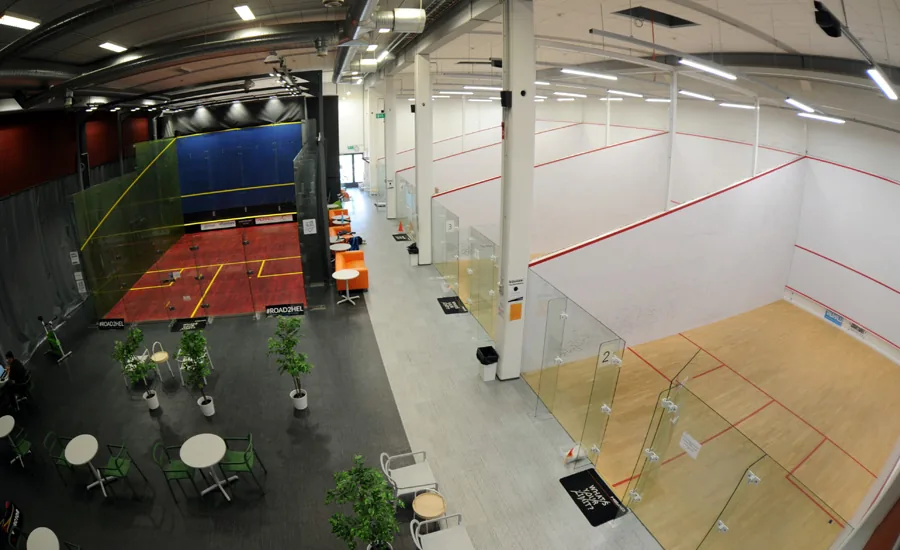
Talihalli (Talin sulkapallo- ja squashkeskus)
Helsinki · Eight courts

Mutch Park Tennis + Squash
Sydney · Four glass-back courts
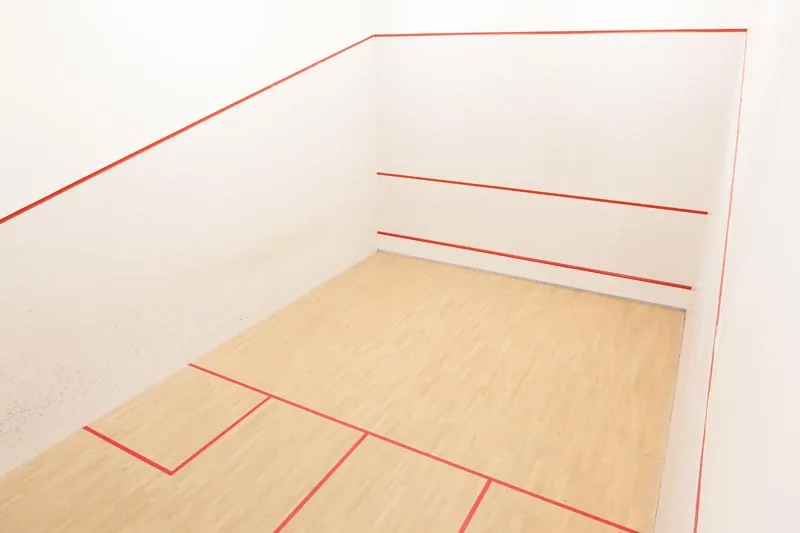
York Squash Club
York · Glass-backed show court
FAQ
Can you volley the serve in squash?
Yes. The receiver may volley the serve as long as the return reaches the front wall above the tin. Many good players volley a loose serve to take the ball early.
Is a ball you volley out of court still out?
If you hit the ball before it touches the wall above the out line, it is in play and you have chosen to volley it. Let a ball go if it is clearly going out.
Why do my volleys go into the tin?
Usually the racket face is closed or you are taking the ball too low. Keep the face slightly open and volley balls that are around head and shoulder height to begin with.
Should beginners volley?
Yes, from early on. Start with slow volleys to yourself. Volleying keeps you in the middle of the court and saves a lot of running.