Why squash players go back to the T
 By the Find My Squash Court team·
Updated ·
6 min read
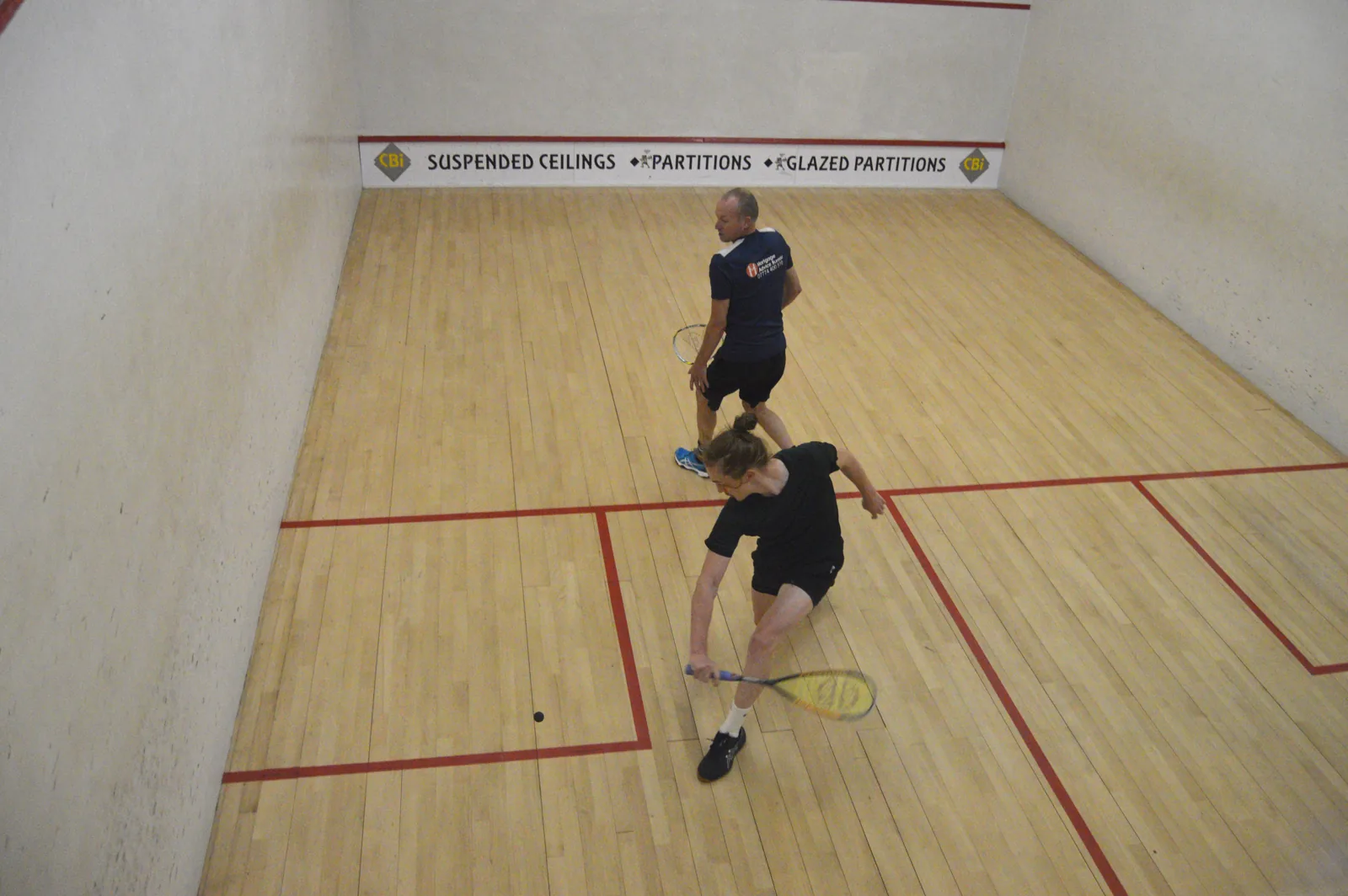
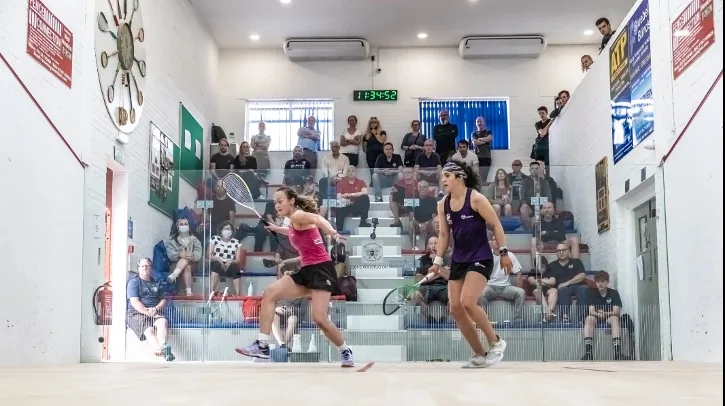
Watch any good squash match and you will see both players drift back to the same spot in the middle of the court after almost every shot. That spot is the T, and the fight for it shapes nearly every rally.
The short answer
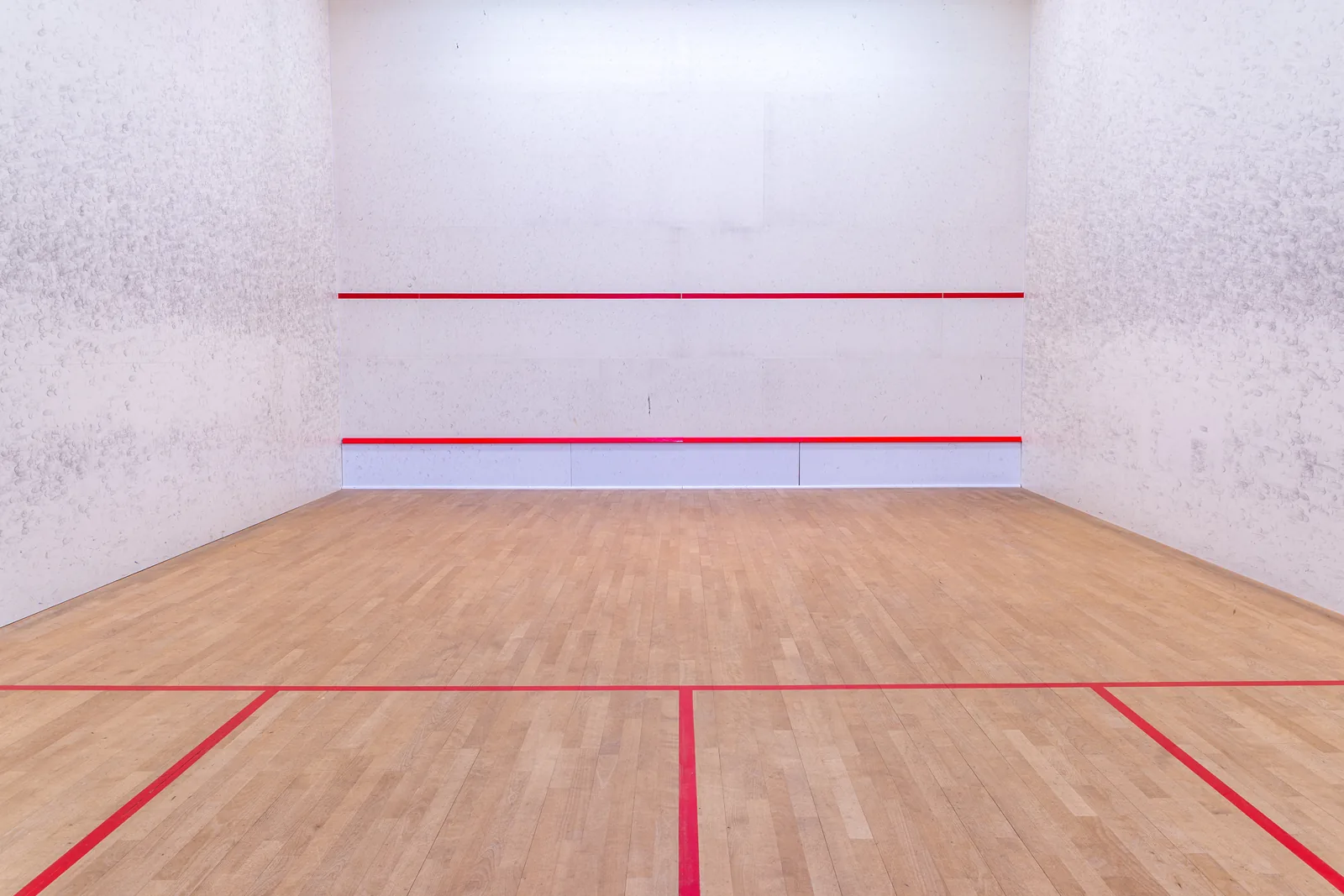
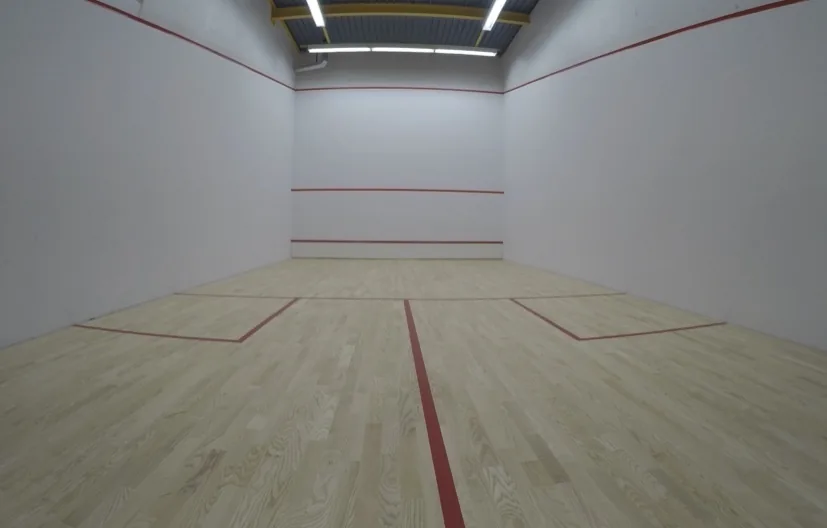
The T is where the short line meets the half-court line on a squash floor, roughly in the middle of the court. Players go back to it after each shot because from there they can reach all four corners in a few steps. Owning the T means your opponent has to hit around you, while you cover the court with less running. In practice most players stand a step or so behind the T, which gives a little more time to reach balls going to the back. Your aim in a rally is to keep the T for yourself and push your opponent away from it.
Where the T is
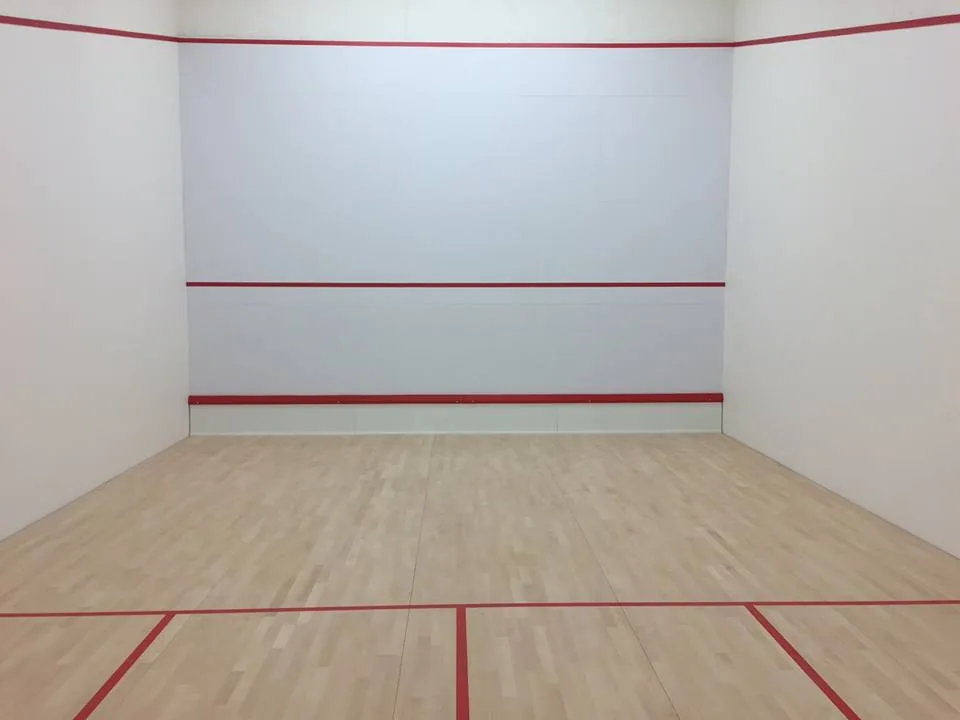
A singles squash court is 9.75 m long and 6.4 m wide. The short line runs across the court 4.26 m from the front wall, and the half-court line runs from the short line to the back wall, splitting the back of the court into two halves. Where they meet, they make a T shape. Our guide to squash court lines shows every marking.
The T sits about 4.26 m from the front wall and about 5.5 m from the back wall, so it is slightly nearer the front than the true middle of the court. That is one reason most players wait a step behind it, as explained below.
Why the T matters
- Shortest distance to every corner. From the T you can reach both front corners and both back corners in two or three steps, and the side walls in one or two.
- Volley chances. Balls passing near the T can be volleyed before they reach the back. See how to volley in squash.
- Pressure on your opponent. If you are on the T, your opponent has to play an accurate shot to get the ball past you. Loose shots come straight to you.
- Less running. Over a match, short movements from a central spot save a lot of energy compared with chasing from wherever you last hit.
Most tactics in squash come back to the T. Length and width push your opponent to the back and sides, away from it. Drops and the boast drag them forward. The player who controls the T usually controls the rally. Our guide to squash tactics builds on this.
Where exactly to stand
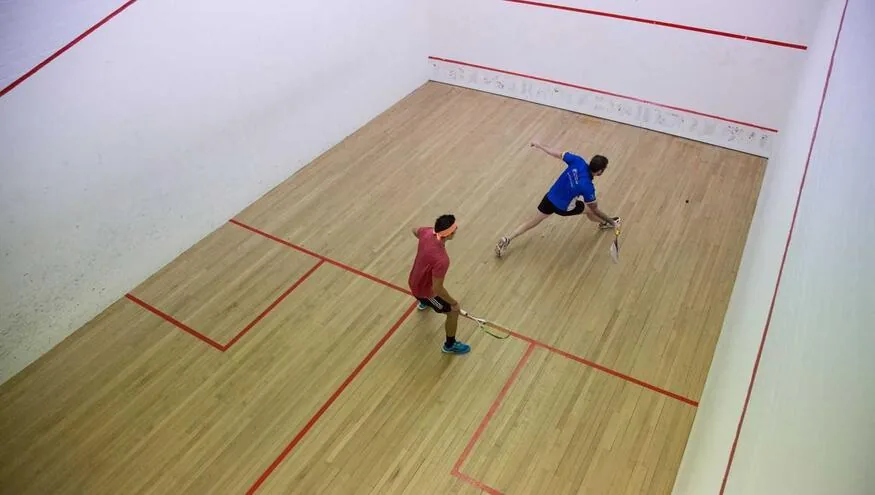
The T is a reference point, not a fixed spot. Where you stand depends on where the ball is:
- Opponent in a back corner. Stand a step or so behind the T and slightly towards their side, so you can cover a straight drive and still reach a short ball.
- Opponent at the front. Move up a little, level with or just in front of the T, to cover their drop or counter-drop. Stay far enough back to reach a lob.
- Opponent in the middle. If they are on the T and you are behind, stay out of their swing and watch for the gap.
Most club coaches teach players to wait slightly behind the T rather than on it. A ball to the back corner is the most common shot in squash, and those extra centimetres give you more time to reach it.
How to get back to the T
- Push off after the shot. Drive off your front foot as soon as you have hit. Do not stop to watch your shot.
- Take a direct path. Go back along roughly the line you came in on, so you do not get in your opponent's way.
- Turn to watch. As you arrive, turn your head and shoulders to see your opponent hit. The front wall tells you nothing until it is too late.
- Split step. Land on both feet with knees bent just as they strike, ready to move. Our squash footwork guide covers this in more detail.
Hitting a good shot buys you time to get back. A loose drive that comes back to the middle means you will not reach the T before your opponent does. Height and length are your friends: a higher, slower shot to the back gives you more time to recover.
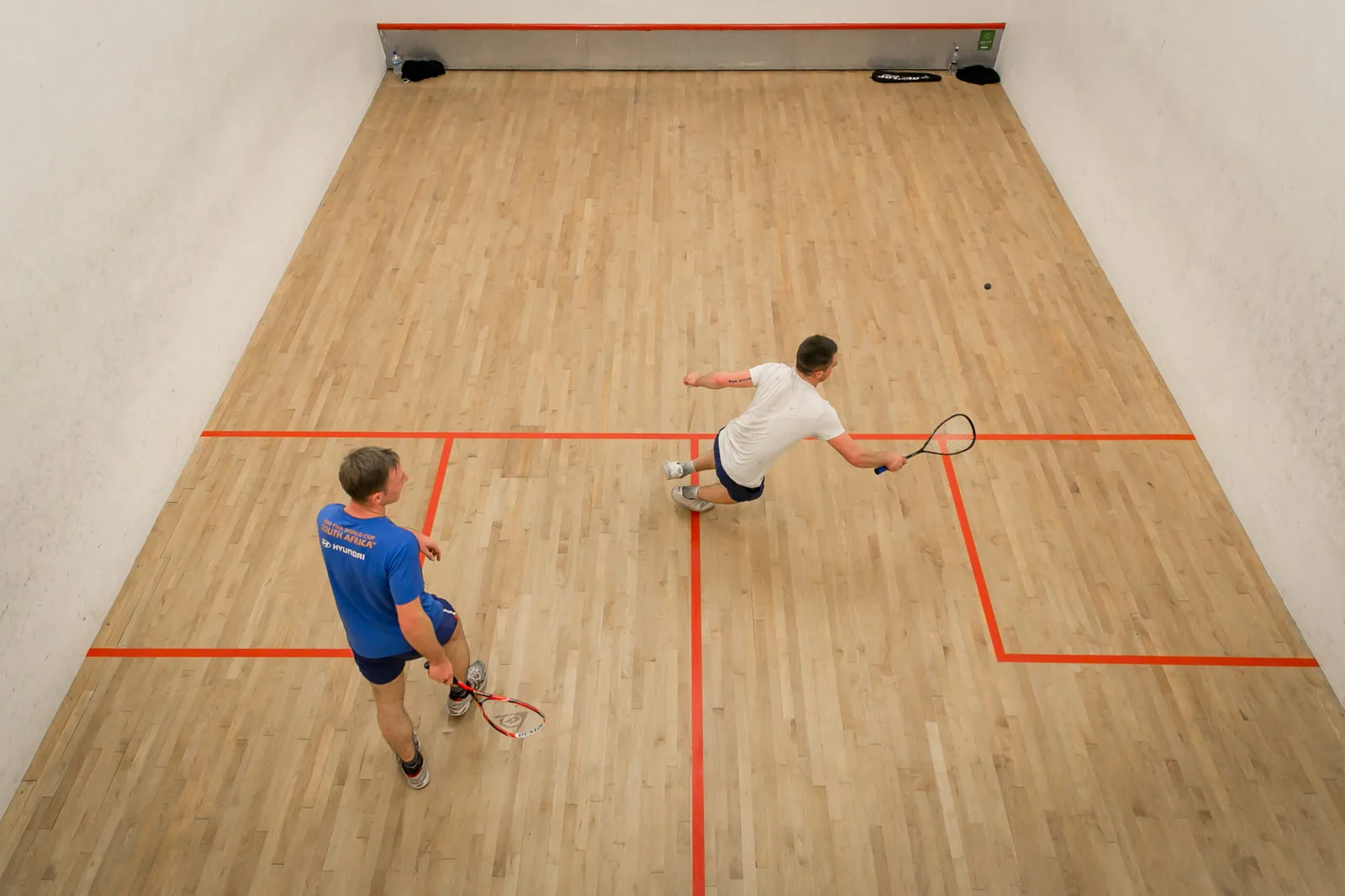
Clearing the ball. Under the World Squash rules, after you hit you must give your opponent a fair view of the ball, room to play it and a direct path to it. Returning to the T along a sensible line helps you do that. Blocking the path costs you lets and strokes. See let vs stroke.
Taking the T from your opponent
Your opponent wants the T as much as you do. To move them off it:
- Hit good length. A straight drive that dies in the back corner forces them to leave the T to reach it.
- Go wide on the cross-court. A cross-court that hits the side wall behind them, rather than coming through the middle, pulls them to the side and back.
- Use the lob. A high ball over their head when they are at the front gives you time to take the T.
- Mix in short shots. Once they start waiting deep, a well-timed drop drags them forward and opens the back again.
Common mistakes
- Staying where you hit. The most common club fault. Every shot should end with you moving back.
- Standing on the T facing the front wall. You cannot see your opponent hit. Turn to watch.
- Hanging too far forward. Waiting in front of the short line makes the back corners hard to reach.
- Hitting to the middle. A ball that comes back through the T gives it to your opponent.
FAQ
What is the T in squash?
The point where the short line meets the half-court line on the floor, near the middle of the court. Players return to it between shots.
Should you stand exactly on the T?
Usually a step or so behind it, and a little to the side your opponent is hitting from. Adjust depending on where the ball is.
How far is the T from the front wall?
The short line is 4.26 m from the front wall on a standard singles court, so the T is 4.26 m back and centred across the 6.4 m width.
Why do I never get back to the T in time?
Usually because your shots come back to the middle, or because you stop to watch them. Hit higher and deeper to buy time, and start moving as soon as you have hit.