Getting fit for squash
 By the Find My Squash Court team·
Updated ·
6 min read
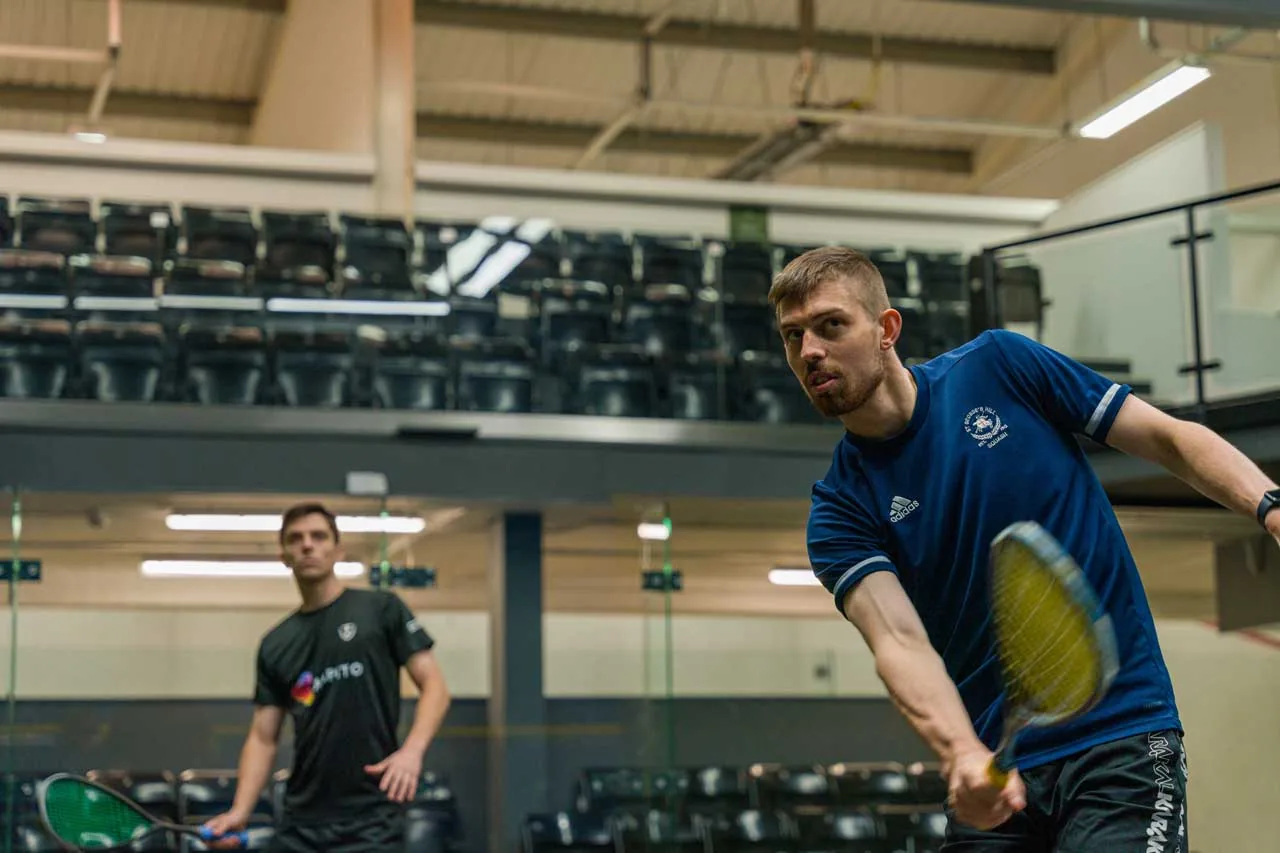
Squash fitness is its own kind of fitness. Runners and gym regulars are often surprised how quickly a squash court leaves them breathless, because the game asks for repeated short sprints, deep lunges and sharp turns with very little rest.
The short answer
To get fit for squash, combine four things. Build an aerobic base with steady running, cycling or swimming so you recover between rallies. Add interval work, such as ghosting or short sprints with short rests, to copy the stop-start pattern of a rally. Strengthen your legs and core with squats, lunges and planks so you can lunge and change direction safely. Keep your hips, hamstrings and calves mobile. Above all, play regularly: matches and drills build squash fitness better than anything else. If you are starting from inactivity, build up gradually.
What squash asks of your body
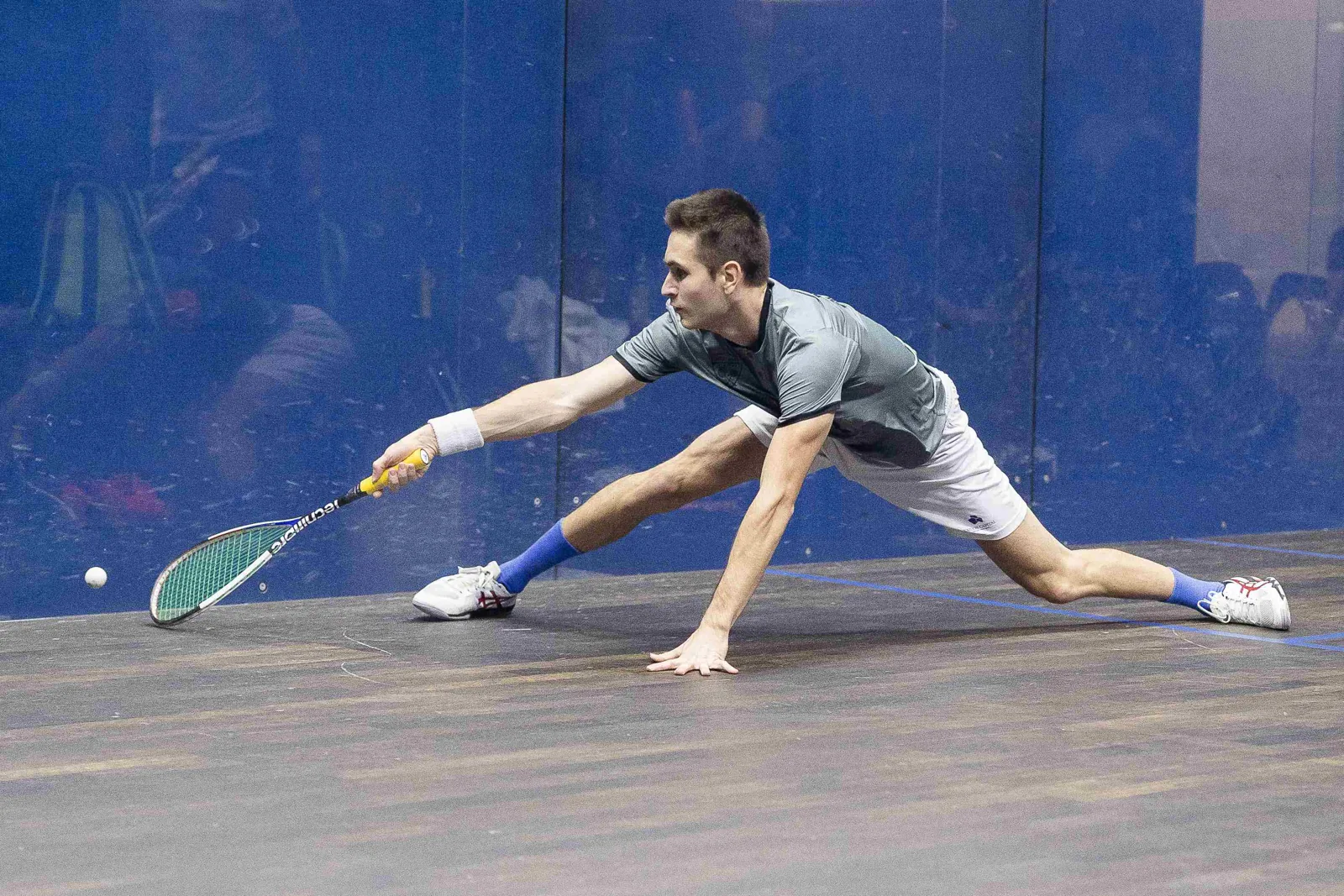
A rally lasts a few seconds to a minute or more, with a short pause between points and a longer break between games. During a rally you sprint short distances, stop, lunge, push back and turn, many times over. That makes squash a mix of aerobic fitness (to keep going and recover between rallies) and anaerobic fitness (for the bursts of speed).
It also loads the legs heavily. Each lunge to the front puts a lot of force through the front knee and thigh, and the turns stress the ankles and hips. The upper body matters less for fitness, though a strong core helps you stay balanced while you swing.
The NHS lists sports such as football, rugby, netball and hockey as vigorous activity. Squash is not named, but it is a fast, stop-start running sport of the same kind. For adults it recommends at least 150 minutes of moderate activity or 75 minutes of vigorous activity a week, plus strengthening activities on at least 2 days a week (NHS physical activity guidelines). Regular squash, with a little strength work, covers that. For more on the health side, see is squash good exercise.
Aerobic base
A good aerobic base is what lets your heart rate drop quickly between rallies, so you start each point fresh. Without it, you can play well for a game and then fade.
- What to do. Steady running, cycling, rowing or swimming at a pace where you can still talk in short sentences.
- How much. Two sessions of 20 to 40 minutes a week is a reasonable start for a club player, on top of squash.
- Low impact options. If your knees or ankles complain, cycling, rowing and swimming spare the joints.
Interval and on-court work
Interval training copies the rhythm of squash: hard work, short rest, repeat. It is the fastest way to improve how you cope with long, hard rallies.
- Ghosting. Moving to the corners of the court and back to the T with a shadow swing, in sets of 30 to 60 seconds. It is the most squash-specific conditioning there is. See ghosting in squash.
- Court sprints. Sprint from the back wall to the front wall and back several times, then rest. Or shuttle across the width of the court.
- Off-court intervals. Short hill sprints, bike intervals or rowing intervals with recovery periods of similar length.
- Pressure drills with a partner. One player feeds to the corners while the other moves and hits for a set time. Hard, but very close to a real match.
Keep interval sessions to once or twice a week. They are tiring and you need recovery days.

Strength and stability
Strong legs and a stable trunk let you lunge, stop and push off without losing form. They also help protect the knees, hips and back from the repeated loading of the game.
| Area | Exercises | Why it helps |
|---|---|---|
| Thighs and hips | Squats, forward and reverse lunges, step-ups | Deeper, more controlled lunges and faster recovery |
| Glutes | Hip bridges, side-lying leg raises, lateral band walks | Keeps the knee in line on the lunge |
| Calves and ankles | Calf raises, single-leg balance | Quick pushes off the floor, steadier ankles |
| Core | Planks, side planks, dead bugs | Balance while you swing and turn |
| Shoulder and forearm | Light band rows and external rotations, wrist curls | Helps the hitting arm cope with volume |
Two short sessions a week of 20 to 30 minutes are enough for most club players. Bodyweight versions work well; you do not need a gym.
Health check first. Squash is intense. If you have a heart condition, chest pain or dizziness on exertion, are returning after a long break, or have other health concerns, see a doctor before you start hard training or matches. Our guide to squash and heart risk explains what to watch for.
Mobility and recovery
- Warm up properly. Raise your heart rate and move through lunges, leg swings and shoulder circles before you play. See how to warm up for squash.
- Stretch afterwards. Gentle stretches for hip flexors, hamstrings, calves and glutes after play help you feel less stiff the next day.
- Rest days. Fitness improves during recovery, not during the session. Avoid playing hard every day.
- Sleep and fluids. Drink water during and after play; a court gets warm and you sweat a lot.
Pain that lasts, swells or gets worse with play is not something to train through. Our guide to common squash injuries covers the usual ones.
A sample week
For a club player who plays twice a week and wants to get fitter:
| Day | Session |
|---|---|
| Monday | Squash match or club night |
| Tuesday | Strength, 25 minutes |
| Wednesday | Steady run, bike or swim, 30 minutes |
| Thursday | Squash match, finishing with 10 minutes of ghosting |
| Friday | Rest or easy walk |
| Saturday | Solo drills and court sprints, or a match |
| Sunday | Strength and mobility, 25 minutes |
Starting from a low fitness level
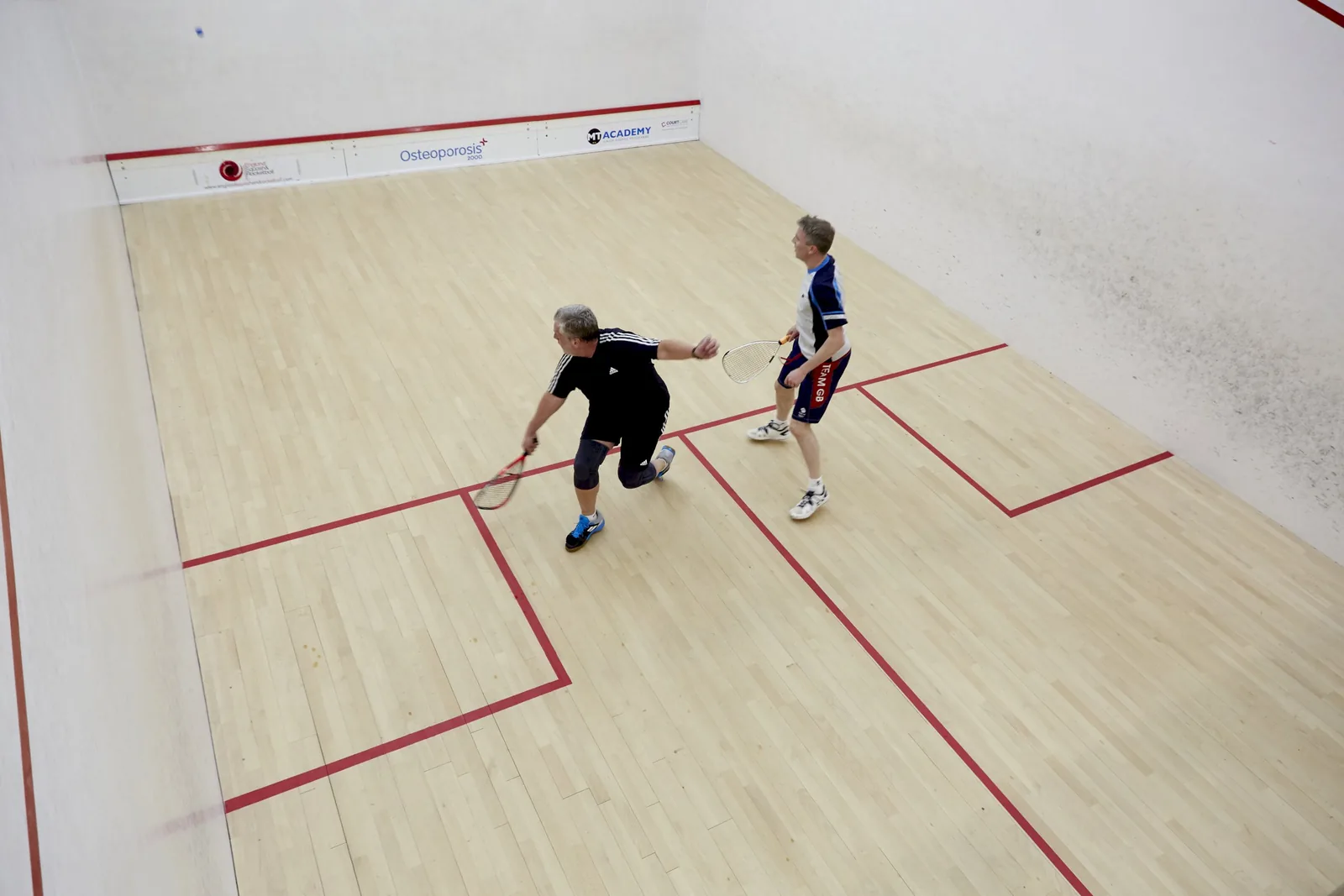
You do not need to be fit to start squash. Many people use the game to get fit. Start with friendly games, racketball or coaching sessions, which are slower, and take rests whenever you need them. Our guide to squash for beginners has more, and squash over 50 covers starting later in life.
Build up the number and length of sessions over several weeks rather than jumping straight into long, hard matches. Squash fitness comes quickly once you play regularly.
FAQ
Is squash good for fitness?
Yes. It works your heart and lungs hard and builds leg strength and agility. Squash is a fast, stop-start game of the kind the NHS treats as vigorous activity.
How can I improve my stamina for squash?
Build an aerobic base with steady running, cycling or swimming, add interval training such as ghosting, and play regularly. Improving your movement efficiency also saves energy.
Do I need to go to the gym to get fit for squash?
No. Bodyweight squats, lunges, calf raises and planks at home, plus on-court ghosting and sprints, cover most of what a club player needs.
How many times a week should I play squash to get fit?
Two or three sessions a week, with rest days in between, is a common pattern for club players. Add one or two short strength sessions for the best results.