Is squash good exercise?
 By the Find My Squash Court team·
Updated ·
5 min read
If you want a lot of exercise in a short time, few sports beat squash. Here is what a game does for your body, how it fits the weekly guidelines, and who should take it slowly.
The short answer
Yes. Squash is vigorous exercise that works your heart, lungs and legs hard in a short time. A 40 minute game counts towards the NHS target of 75 minutes of vigorous activity a week, and the stop-start rallies work like interval training. It also builds speed, agility and balance. It is less good as strength training for the whole body, and the fast turns bring some injury risk. Build up gradually if you are new or returning, and wear eye protection.
How hard squash works you
The Compendium of Physical Activities rates general squash at 7.3 METs, meaning it uses about seven times the energy of sitting still. Fast, competitive play reaches about 12 METs. Activities from about 6 METs up count as vigorous, so even a friendly game qualifies.
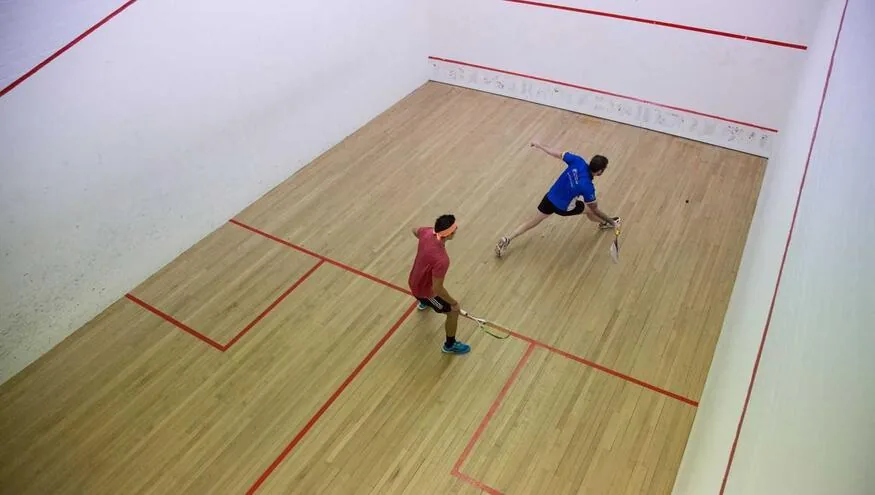
Two things make squash especially demanding. First, the court is small and the ball comes back quickly, so there is little rest within a rally. Second, the ball dies low in the corners, so you are constantly lunging, bending and pushing back up. A 40 minute booking is short, but most people come off court soaked. Our guide on calories burned playing squash turns the MET values into calories for different body weights.
How it fits the weekly guidelines
The NHS physical activity guidelines ask adults aged 19 to 64 for one of these each week:
- at least 150 minutes of moderate activity, or
- 75 minutes of vigorous activity, or
- a mix of the two,
plus strengthening activities that work all the major muscle groups on at least two days a week.
A minute of vigorous activity counts roughly the same as two minutes of moderate activity. Two games of squash a week, each a 40 minute booking, give you around 80 minutes of court time. Allow for warm-ups and breaks between games, and that is still close to the vigorous target on its own. Add a weekly brisk walk or bike ride and you are comfortably there.
What a game works
- Heart and lungs. Rallies are short, hard efforts with brief pauses, which is the pattern of interval training. Regular players get better at recovering quickly between efforts.
- Legs and hips. Lunges, split steps and pushing off to change direction work your thighs, glutes and calves through every game.
- Core. Twisting to hit and bracing as you stretch for the ball work the muscles around your trunk.
- Speed, agility and balance. You react to the ball, read your opponent and change direction many times a minute. That keeps footwork sharp in a way steady cardio does not.
- Bone. Impact and loading help keep bones strong. Studies of racket players show more bone in the playing arm, especially in people who started young. See squash benefits for the research.
Your opponent sets the workout. A game against someone much better or much weaker is short rallies and lots of waiting. Play someone at your level and the rallies, and the exercise, get longer.
What squash does not cover
Squash does not give you balanced strength. The playing arm and legs get a lot of work, the other arm very little, and nothing in a game is heavy lifting. The NHS strength advice still applies: twice a week, work all the major muscle groups with weights, bodyweight exercises or resistance bands.
It is also one-sided. Club players often add exercises for the non-playing side and for the back and hips, which also help prevent injuries. Our guide to squash fitness has routines that suit players.
Who should take care
Squash is safe for most healthy adults, but its intensity means some people should start slowly:
- New or returning players. Start with relaxed rallies and short games, and add intensity over a few weeks.
- People with heart symptoms or conditions. If you have chest pain, unusual breathlessness, dizziness or a known heart problem, see a doctor before you play. Our guide to squash and heart risk explains why.
- People with knee, back or ankle problems. The lunges and twists can aggravate them. Good shoes and a proper warm-up help.
Every player should wear eye protection designed for squash. The ball is small enough to fit into the eye socket. See is squash dangerous for more.
Getting the most from it
- Warm up for five to ten minutes before you hit: light jogging, side steps and lunges. Our squash warm-up has a routine.
- Play twice a week if you can. Regular games build fitness much faster than one long session.
- Play someone at a similar level, or join a box league where you are matched with similar players.
- Drink water between games, and stop if you feel faint or unwell.
- Add two short strength sessions a week to cover what squash misses.
If you are starting from scratch, squash for beginners covers your first month.
FAQ
Is squash good exercise for losing weight?
It burns a lot of energy for the time spent, which helps. Weight loss also depends on diet and overall activity, so squash works best as one part of a plan.
Is squash better exercise than the gym?
Squash is excellent for fitness, speed and agility. A gym is better for building strength evenly. Many players do both.
How many times a week should I play squash?
Two games a week gives most of the vigorous activity adults need. Add strength training on two days for a full week.
Is squash too hard for unfit people?
Not if you build up. Start with gentle rallies and short games, use a bouncier blue or red dot ball, and take breaks between games.