Squash and knee pain
 By the Find My Squash Court team·
Updated ·
6 min read
Squash asks a lot of your knees. Every lunge to the front corner bends the knee under load, and every turn twists it on a planted foot. Sore knees are common, especially when you start playing more. Most cases settle with rest and a few changes. Some need a proper look.
The short answer
Knee pain in squash usually comes from overload: pain at the front of the knee around or below the kneecap after lunging, which builds over weeks. Sudden pain after a twist, with swelling, locking or the knee giving way, points to a ligament or cartilage injury instead. For overload pain, cut back your squash, use ice and painkillers, and strengthen your thighs and hips. Get urgent advice if the knee is badly swollen, will not take weight, locks or gives way.
Why squash is hard on knees
Three movements do most of the damage:
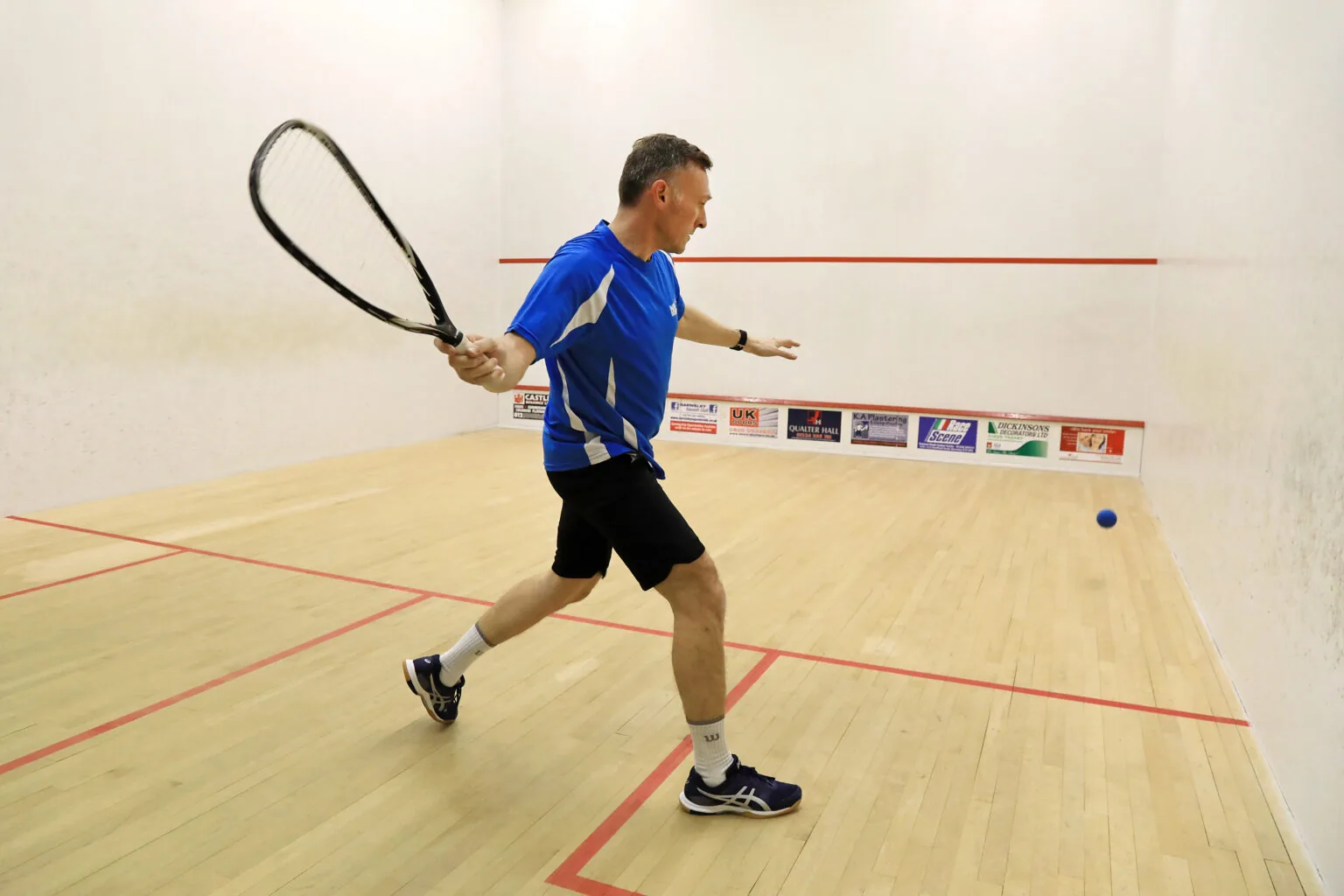
- The lunge. Reaching a short ball means a long step with the knee bent deeply under your body weight, then pushing back to the T. A match can involve dozens of these.
- The turn. Squash is full of changes of direction. Twisting with your foot planted on a grippy court floor puts a sideways and rotational load through the knee.
- The stop. Braking from a sprint near the front wall loads the front of the knee and the patellar tendon.
Add a sudden increase in how often you play, tired legs late in a long match, weak thigh and hip muscles, or old shoes, and knees start to complain.
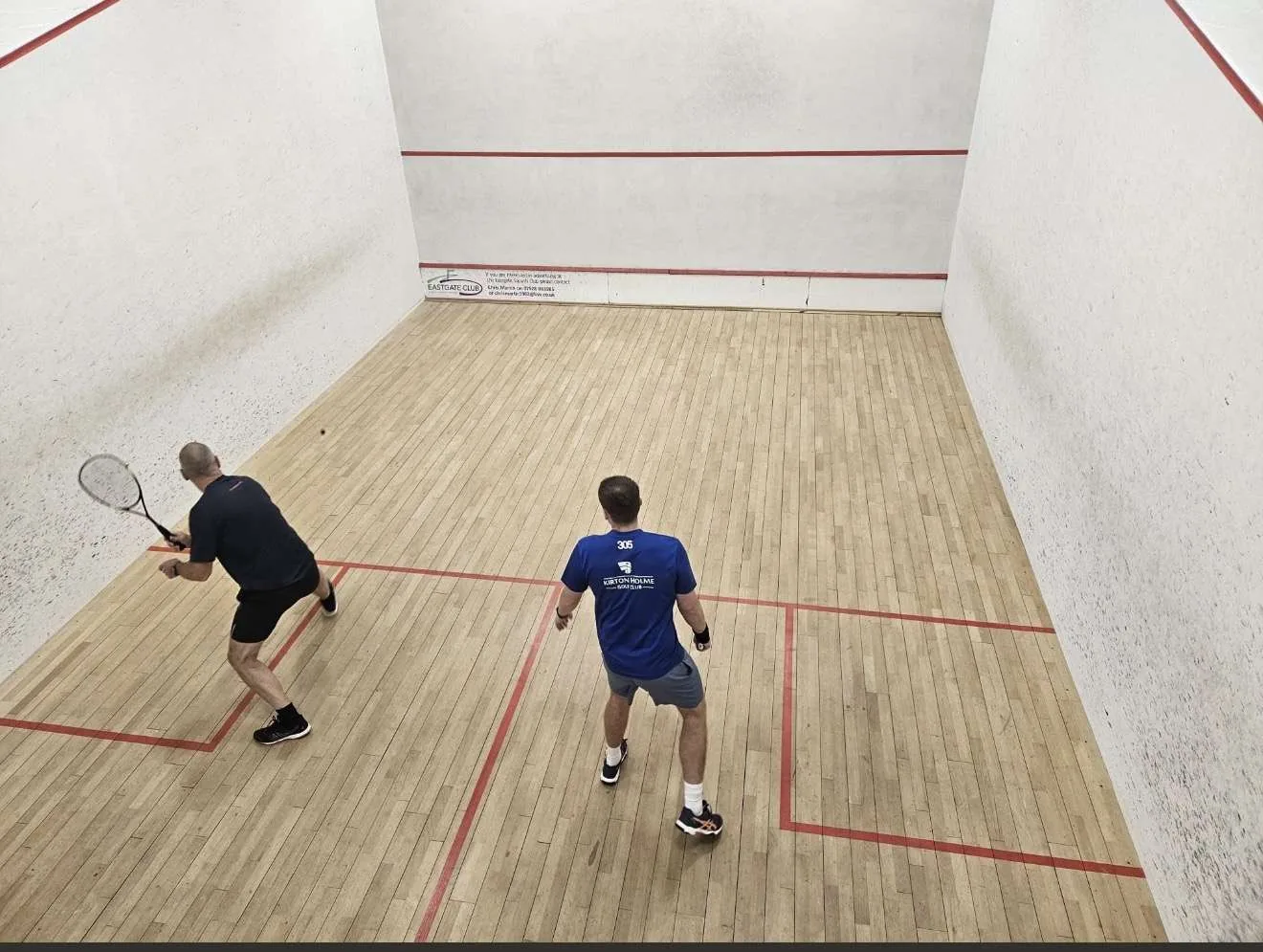
Common types of knee pain
| What you feel | Likely cause | How it starts |
|---|---|---|
| Ache around or behind the kneecap, worse on stairs, squatting or after sitting | Front-of-knee overload (patellofemoral pain) | Gradually, over weeks |
| Pain between the kneecap and the shin, worse on lunging and jumping | Tendon pain (patellar tendinopathy) | Gradually, after a lot of play |
| Pain on the inside or outside of the knee after a twist, maybe a pop | Ligament sprain or tear | Suddenly |
| Swelling, catching, locking, or a knee that will not straighten | Torn meniscus (cartilage) | Suddenly, or slowly in older players |
| Stiffness and aching in older players, worse after a long session | Osteoarthritis | Over months and years |
This table is a guide, not a diagnosis. Several of these can overlap, and a physiotherapist or doctor can tell them apart by examining the knee.
The NHS describes tendon pain in this area as pain between the kneecap and shin, usually from repetitive running or jumping. In squash, the lunge and the push back to the T do the same job.
What to do first
For knee pain that has built up gradually, without a clear injury, the NHS suggests:
- Put as little weight on the knee as you can for a few days, and avoid standing for long periods.
- Use an ice pack or a bag of frozen peas wrapped in a tea towel for up to 20 minutes every 2 to 3 hours.
- Take painkillers such as paracetamol, or use ibuprofen as a gel or tablets if it is suitable for you.
The NHS says knee pain should start to improve within a few days. Stop playing squash while it settles. Lunging on a sore knee is the fastest way to turn a few days off into a few months.
Keep moving, carefully. Rest from squash does not mean rest from everything. Walking, cycling and swimming are usually fine if they do not make the pain worse, and they keep your fitness ticking over.
Getting back on court
Come back in steps, and let the knee tell you how fast to go. Pain that is mild during play and settled by the next morning is usually acceptable. Pain that is worse the next day means you did too much.
- Solo hitting first. Drive the ball up and down one wall with little movement.
- Gentle rallies with a partner who will keep the ball in the back of the court.
- Practice routines that include short movements to the front.
- Short games, then full matches.
Our guide to solo squash drills has sessions that work well for the first step.
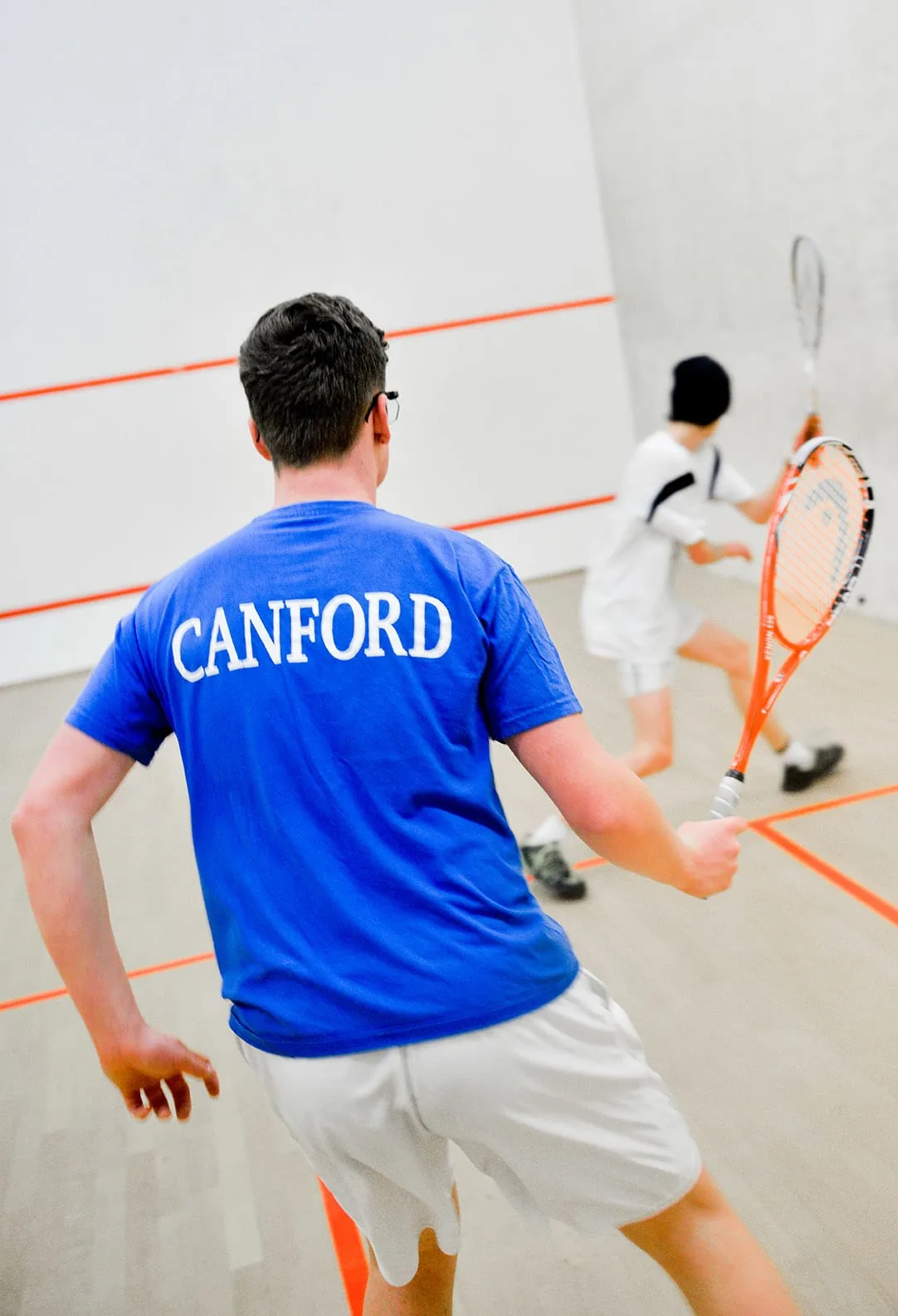
Canford Squash Club
Bournemouth · Four courts
Carlton Squash Club
Bedford · Two heated courts
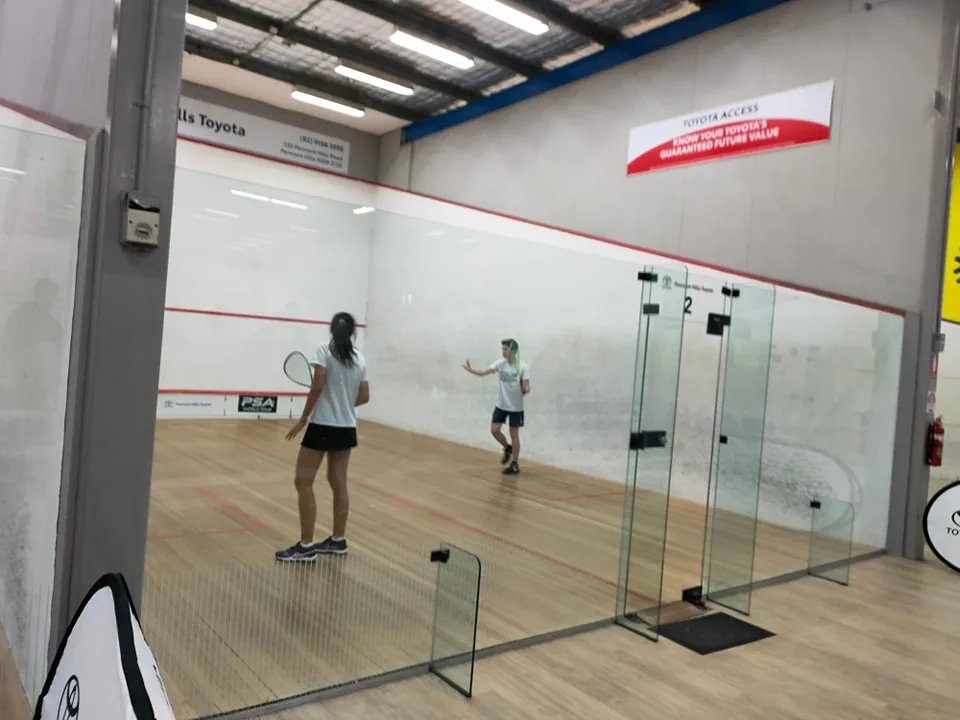
Thornleigh Squash & Fitness
Sydney · Nine glass-back courts
Protecting your knees
- Strengthen your thighs and hips. Squats, split squats, step-ups and side-lying leg raises once or twice a week. Strong quads and glutes take load off the knee.
- Lunge with good form. Keep your knee in line with your foot, not collapsing inwards. A coach can spot this in one session.
- Warm up properly before you hit. See a squash warm-up.
- Wear court shoes with good grip and cushioning, and replace them when the soles are smooth or the cushioning has gone. Our guide to squash shoes explains what to look for.
- Increase your playing slowly. Add one extra session at a time, not three.
- Improve your movement. Better footwork means fewer desperate lunges. See squash footwork.
When to get help
The NHS says to get urgent advice from 111 if the knee is very painful, you cannot move it or put weight on it, it is badly swollen or has changed shape, or it locks, gives way or clicks painfully. A very high temperature with a red, hot knee can mean infection and also needs urgent help.
See a GP or physiotherapist if the pain has not improved within a few weeks. In many parts of the UK you can refer yourself to NHS physiotherapy without seeing a GP first. The NHS knee pain page has the full list of symptoms.
FAQ
Is squash bad for your knees?
Squash puts more load on the knees than many sports because of the lunging and turning. Most players with strong legs, good shoes and sensible build-up play for decades without serious knee trouble.
Should I wear a knee support for squash?
A support can make a sore knee feel more stable and comfortable, but it does not fix the cause. Use it alongside strengthening, not instead of it.
Can I play squash with a torn meniscus?
That depends on the tear and your symptoms. If your knee locks, catches or gives way, stop playing and get it assessed before you return.
Why do my knees hurt after squash but not during?
Overload pain often shows up after the session or the next morning, once you have cooled down. It is a sign to play a little less and build strength before increasing again.