Squash footwork basics
 By the Find My Squash Court team·
Updated ·
6 min read
Good squash players rarely look rushed, and the reason is in their feet. Efficient footwork gets you to the ball early, balanced and with time to choose a shot, then gets you back to the middle before the reply.
The short answer
Squash footwork is about moving from the T to the ball and back in as few, well-balanced steps as possible. Start each movement with a small split step as your opponent hits, push off towards the ball, and finish with a lunge on your racket-side foot for most front-court shots. Keep your weight low, your racket up and your upper body fairly upright. After the shot, push back off the front foot and return to the T. Practise the patterns without a ball (ghosting) until they feel automatic.
The basic idea
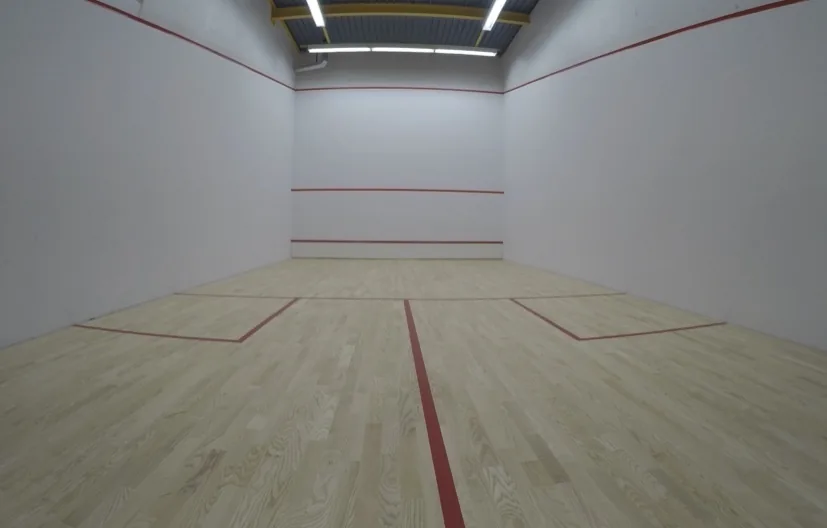
Think of the court as six spots around a centre point: the two front corners, the two side positions level with the T, and the two back corners. Almost every shot in a rally is played from near one of these spots, and you return to the T in between. Footwork is the set of movement patterns that link the T to each spot.
The goals for every movement are the same:
- Arrive at the ball with time to spare rather than at the last moment.
- Stop at the right distance from the ball, about a racket and an arm's length.
- Be balanced at contact, so the stroke is steady.
- Push off quickly to recover to the T.
Why the T matters is covered in our guide to the T position.
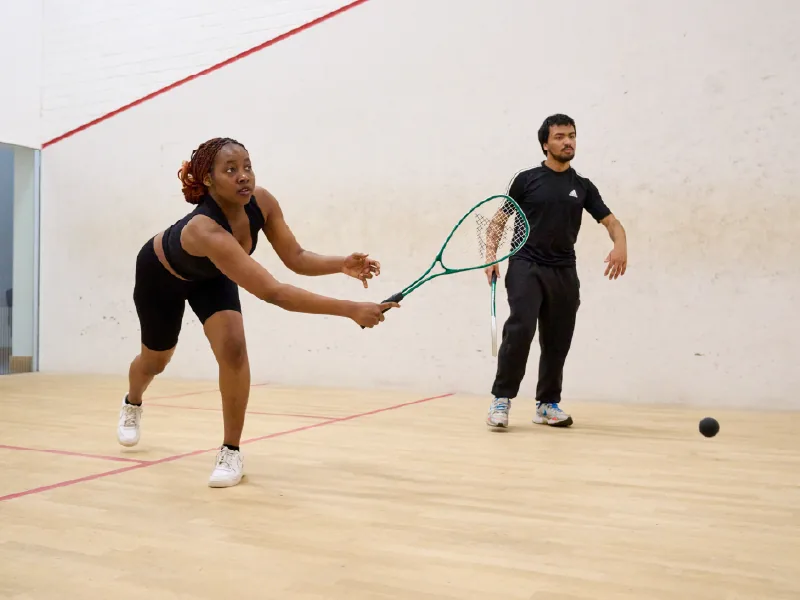
The split step
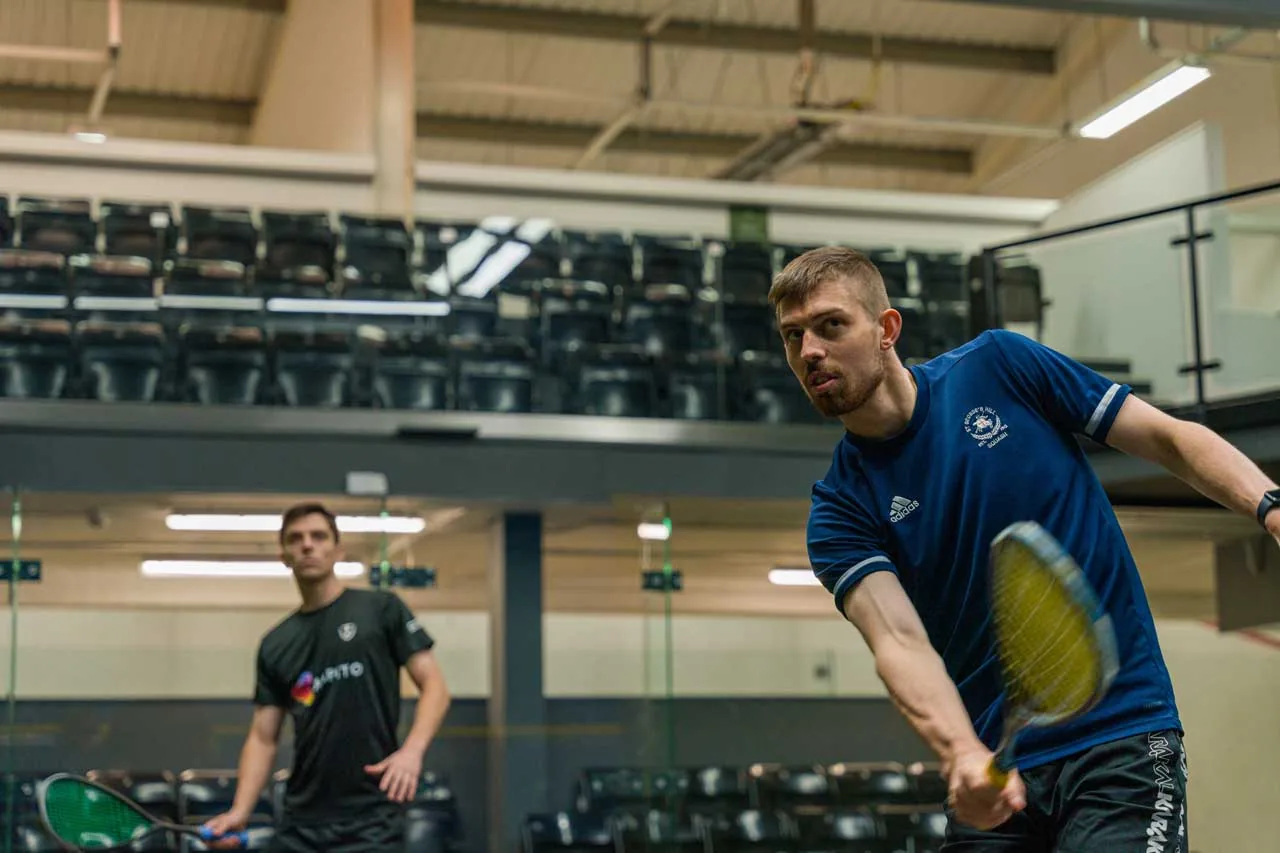
Just as your opponent hits the ball, do a small hop or bounce so both feet land at the same time, about shoulder-width apart, knees slightly bent. This is the split step. It puts you on the balls of your feet and lets you push off in any direction the moment you see where the ball is going.
The timing matters more than the height. Land as their racket meets the ball. Too early and you are flat-footed when it comes off the strings; too late and you are still in the air.
Moving to the front corners
- First step. Push off from the split step with a quick step towards the ball. Many coaches teach a short first step with the foot nearer the ball.
- Running steps. One or two longer strides, depending on how far the ball is. Keep your racket up as you move.
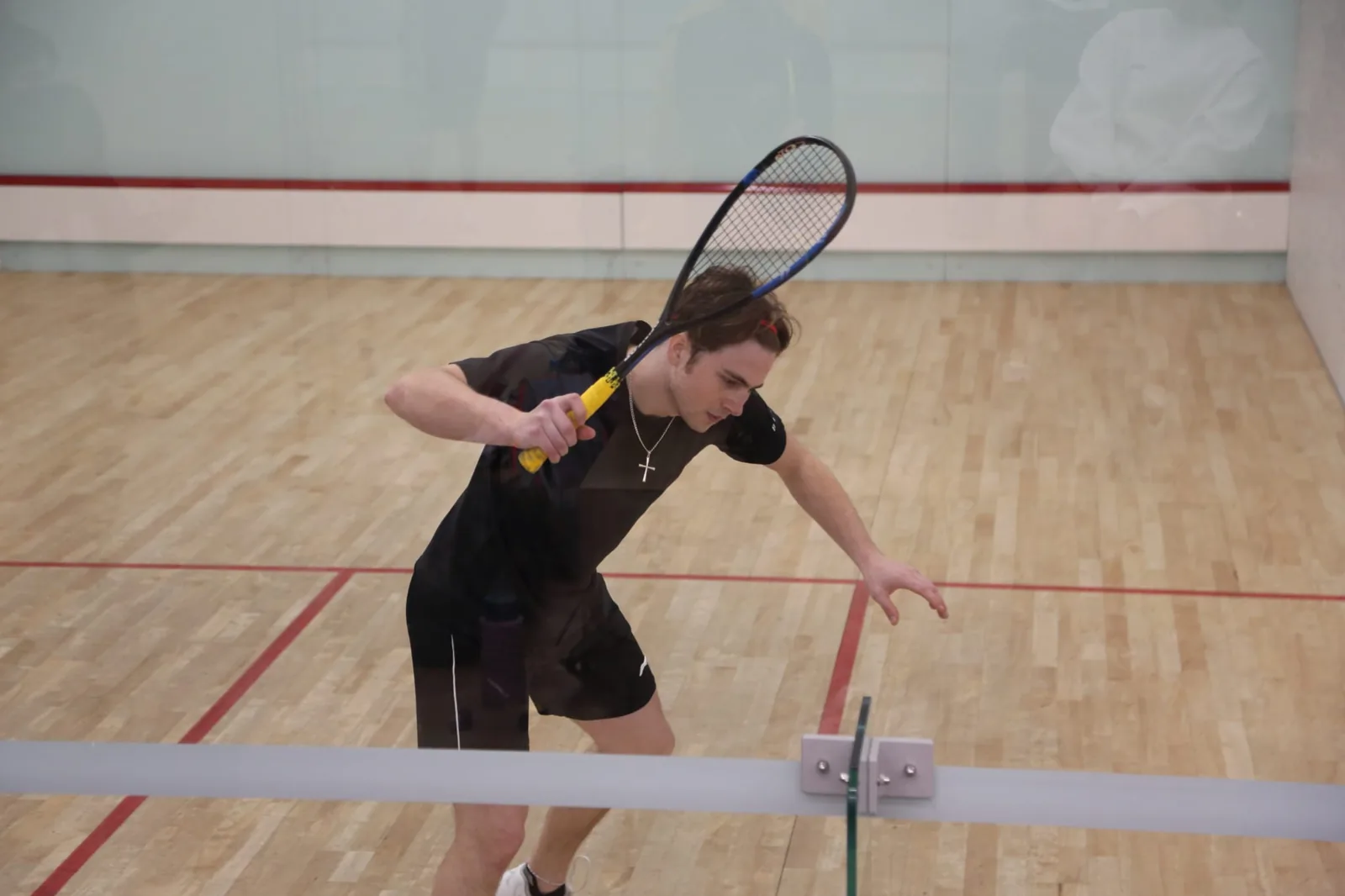
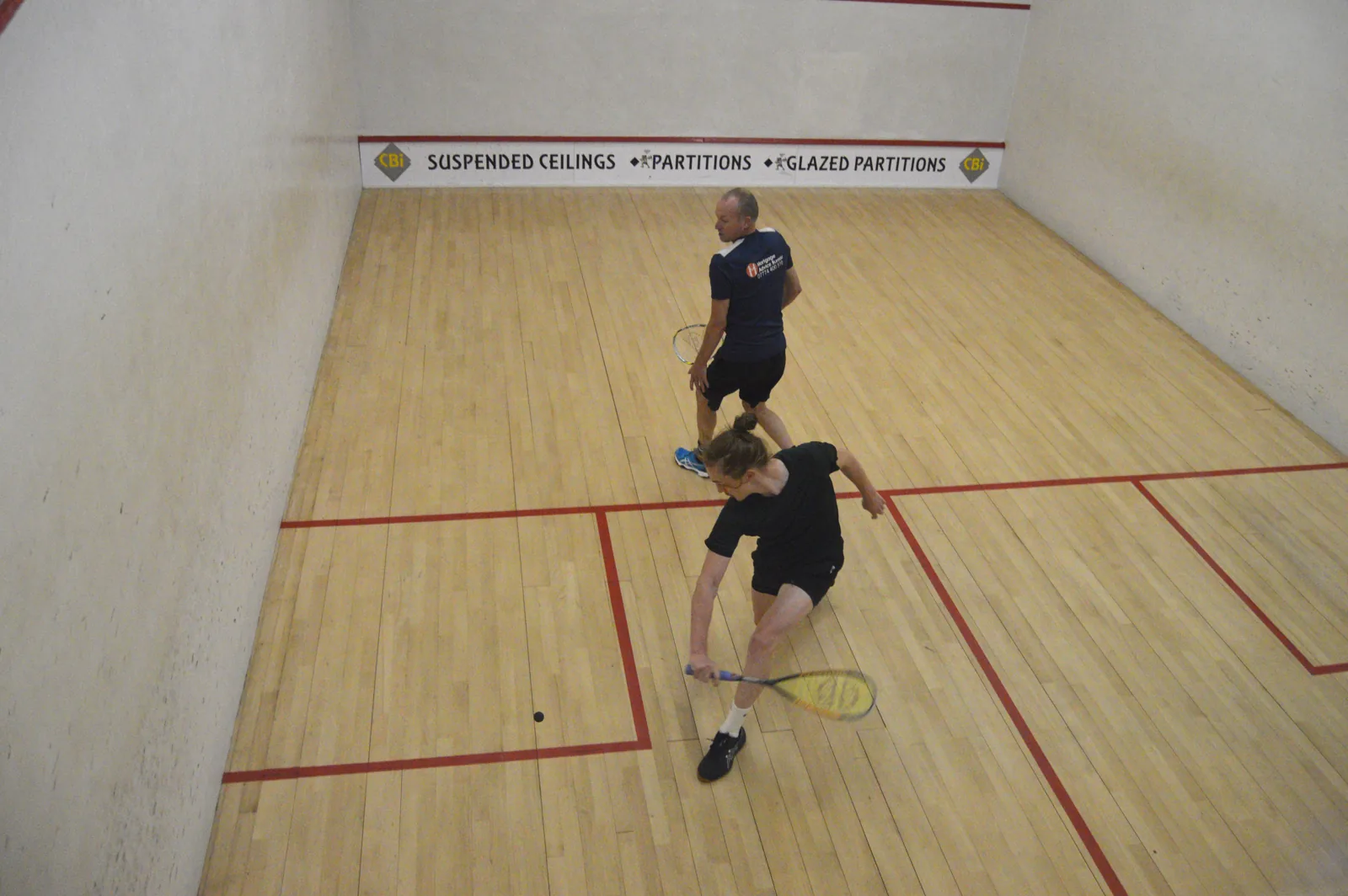
- Final lunge. Land on your racket-side foot (the right for right-handers) for both forehand and backhand at the front. Your toe points roughly at the ball or the front corner.
- Push back. After the shot, drive off the front foot and take the same path back to the T.
Some coaches teach a left-foot finish on the forehand front corner for an open stance. Both work. What matters is that you are balanced and can recover.
Moving to the back corners
Moving backwards is harder because you are moving away from the front wall and have to turn. The usual pattern is to turn your shoulders first, then take a crossover or a couple of shuffle steps back towards the corner.
- Back forehand corner. A right-hander turns to the right and usually finishes with the right foot, or steps across with the left if there is time.
- Back backhand corner. Turn to the left and finish on the right foot across the body. Stay a little further from the back wall than feels natural so the ball comes out to you.
- Do not back-pedal facing the front wall. It is slow, and you can lose your balance or trip.
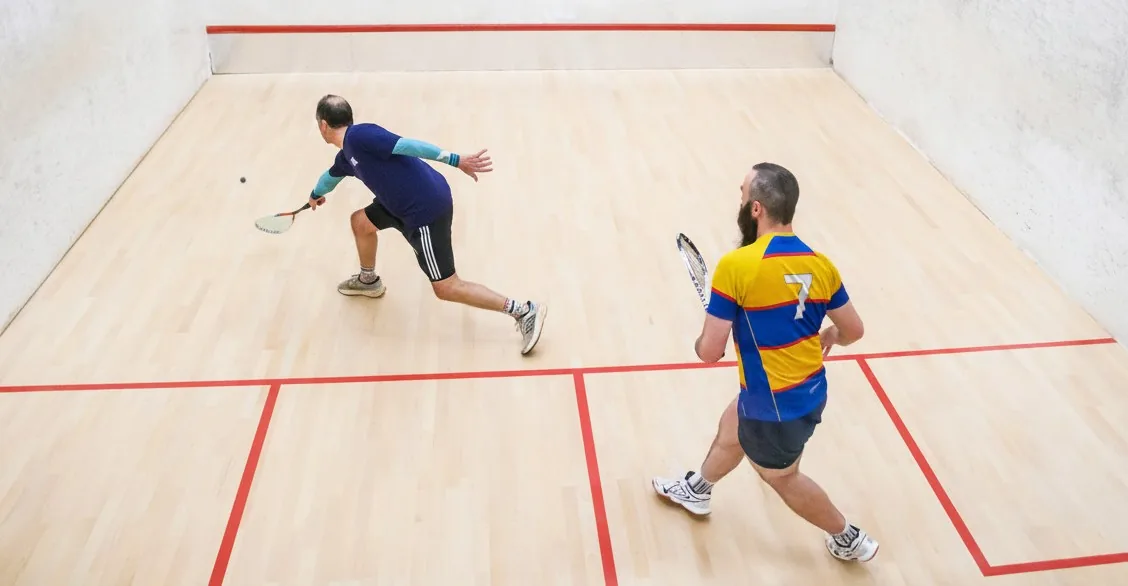
The lunge
The lunge is the most common final step in squash and the one that takes most of the strain. A good one looks like this:
- Front knee bent, roughly over the ankle or a little in front of it, not collapsing inwards.
- Heel lands first, then the foot rolls through.
- Back leg extended behind, with the back foot turned out for balance.
- Upper body fairly upright, not folded over the knee.
- Racket arm free to swing, other arm out for balance.
Lunging puts a lot of load through the front knee and thigh. Leg strength helps you lunge safely, and pain at the front of the knee that lasts after play is worth getting checked. See squash knee pain.
Shoes make a difference. Running shoes have thick heels that roll on a sideways lunge and black soles that mark the floor. Use non-marking indoor court shoes with a low, flat sole. Our squash shoes guide explains what to look for.
Common footwork mistakes
- Not returning to the T. Staying where you hit the ball leaves the whole court open.
- Flat feet. Standing still on your heels as your opponent hits. Use the split step.
- Running straight at the ball. You end up too close and cramped. Curve slightly so you arrive side-on with room to swing.
- Too many small steps at the end. Shuffling about next to the ball wastes time. Aim for a clean final lunge.
- Leaning over the front knee. Folding forward makes recovery slow and strains the back.
How to train your footwork
The most effective footwork training is ghosting: moving round the court from the T to each corner and back, playing an imaginary shot, without a ball. It lets you repeat the patterns many times at match speed.
Leg strength and endurance help too. Squats, lunges and short interval runs are common parts of a club player's routine. See getting fit for squash for more, and always warm up before fast court sessions.
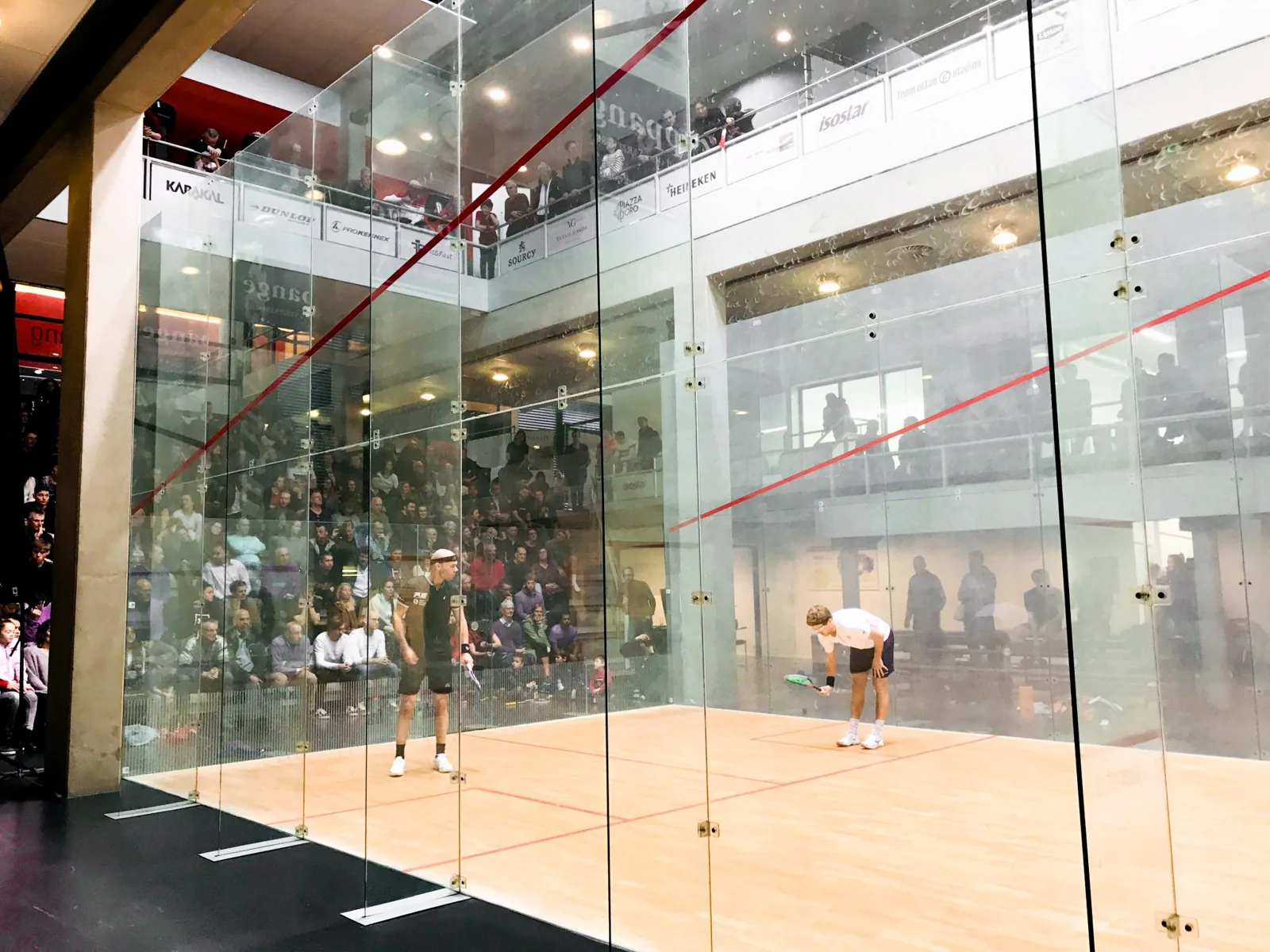
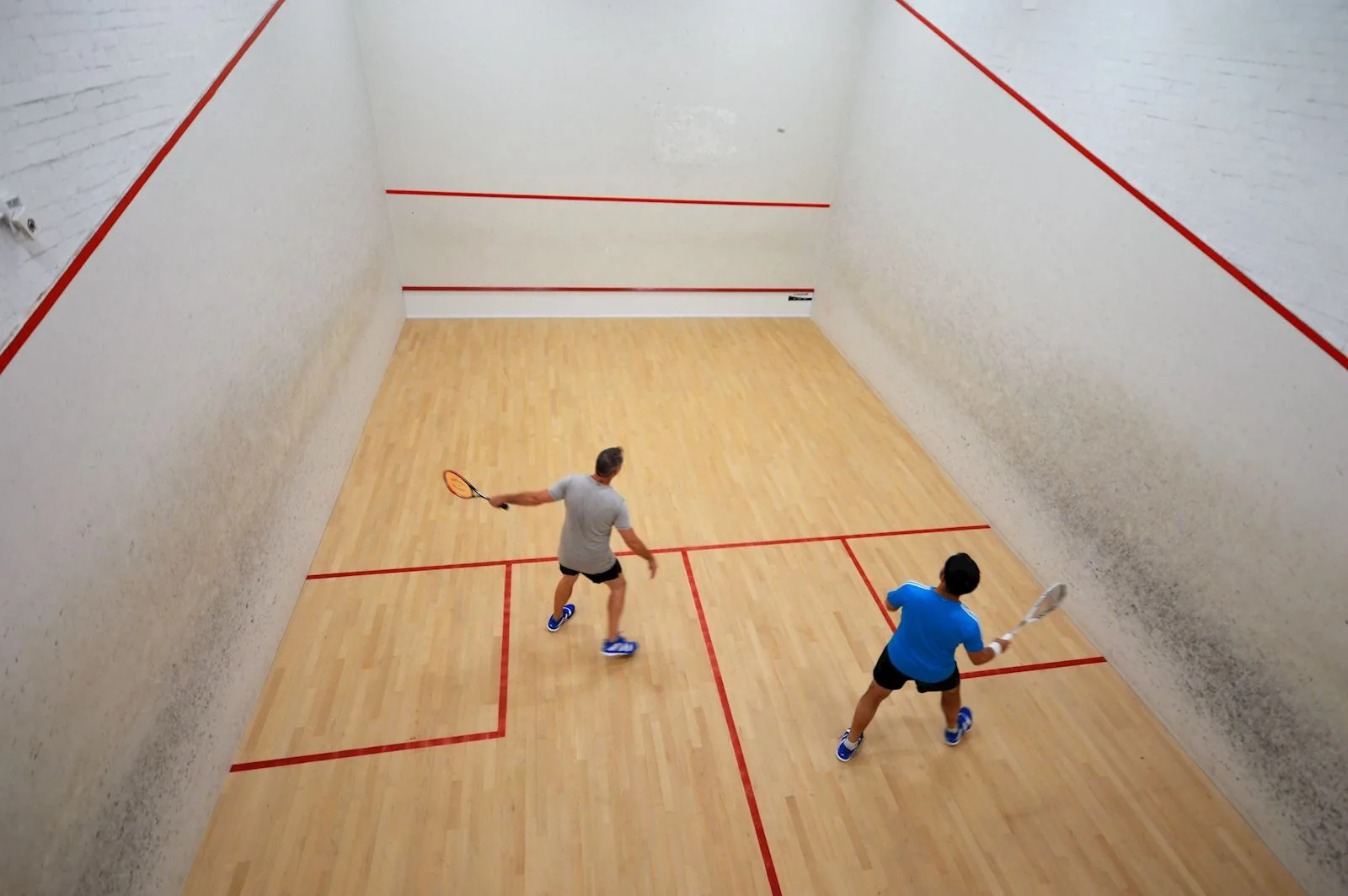
Frans Otten Stadion
Amsterdam · 21 courts
Abercorn Sports Club
Edinburgh · Three courts, coaching
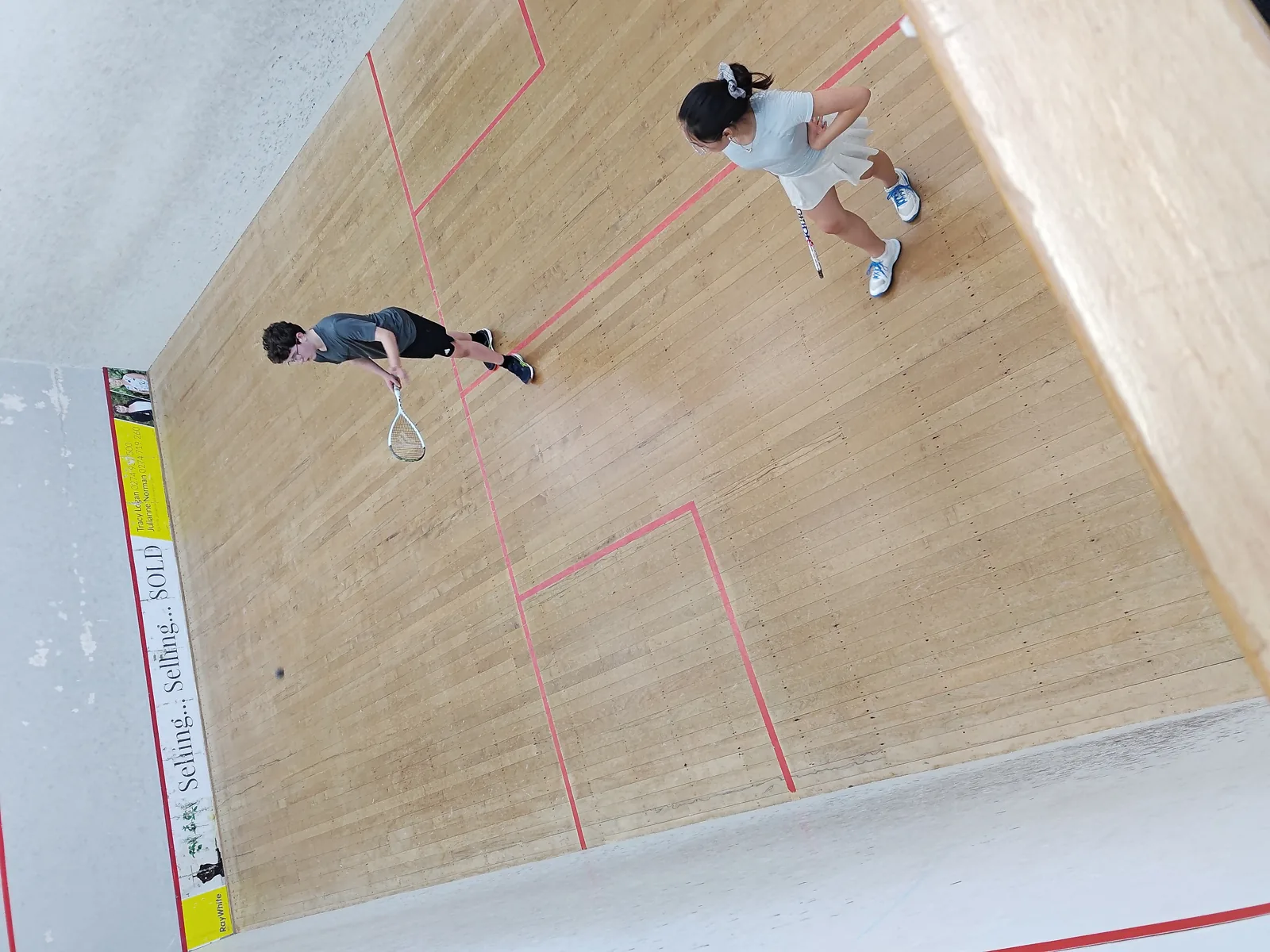
Khandallah Tennis & Squash Club
Wellington · Four courts, coaching
FAQ
Which foot should I lunge on in squash?
Most coaches teach a lunge on the racket-side foot (the right for right-handers) for front-court shots on both sides. Some use the other foot on the forehand front corner. Balance and recovery matter more than the rule.
What is a split step in squash?
A small hop as your opponent hits the ball so you land on both feet, knees bent, ready to push off in any direction.
How do I get faster around a squash court?
Move more efficiently first: split step, early first step and a clean lunge. Then add ghosting and leg strength work.
Is squash footwork the same as badminton footwork?
The ideas are similar, with a centre base and a lunge to the front. Squash adds the walls, so you have to give the ball room to come off the back and side walls.