Ghosting: squash training without a ball
 By the Find My Squash Court team·
Updated ·
5 min read
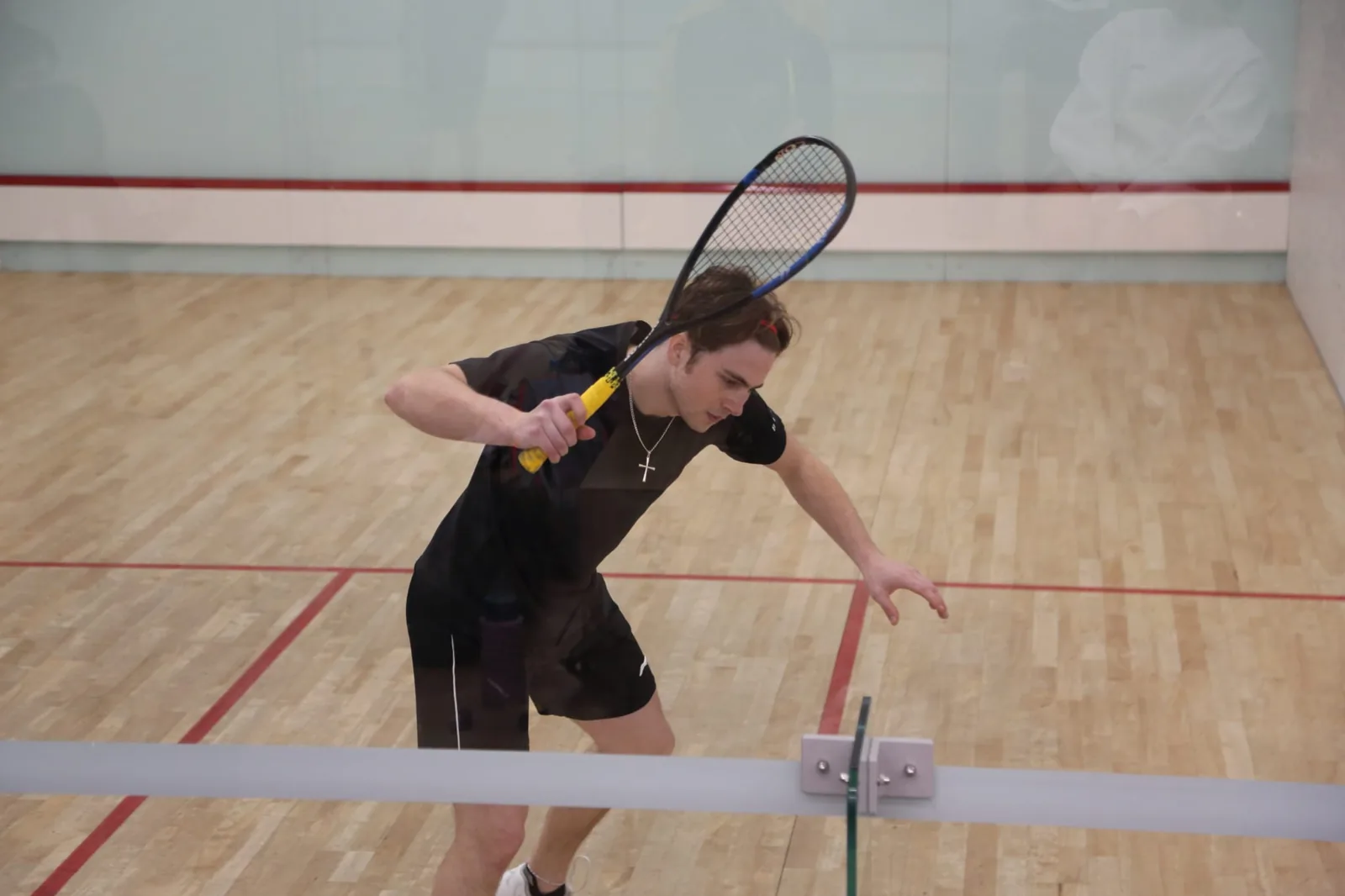
Ghosting looks odd from the gallery: a player alone on court, darting into corners and swinging at nothing. It is one of the most useful ways to train for squash, because it drills the movement patterns of a rally without a ball getting in the way.
The short answer
Ghosting is squash movement practice without a ball. You start on the T, move to a corner or side of the court, play a full shadow swing as if hitting a real shot, then recover to the T and go again. A typical set lasts 30 to 60 seconds, followed by a rest of similar or longer length, repeated several times. It trains footwork, balance, racket preparation and squash-specific fitness at the same time. Do it with good form first, then add speed.
What ghosting is
The name comes from playing against an imaginary opponent, a ghost. You go through the movements of a rally exactly as you would in a match: split step on the T, move to the ball, shadow swing, recover. The only thing missing is the ball.
Without a ball, you can concentrate on the movement and repeat it far more often than in a rally. Coaches use ghosting both to teach footwork and as conditioning, because squash rallies are short bursts of very fast movement with brief pauses, and ghosting copies that pattern closely.
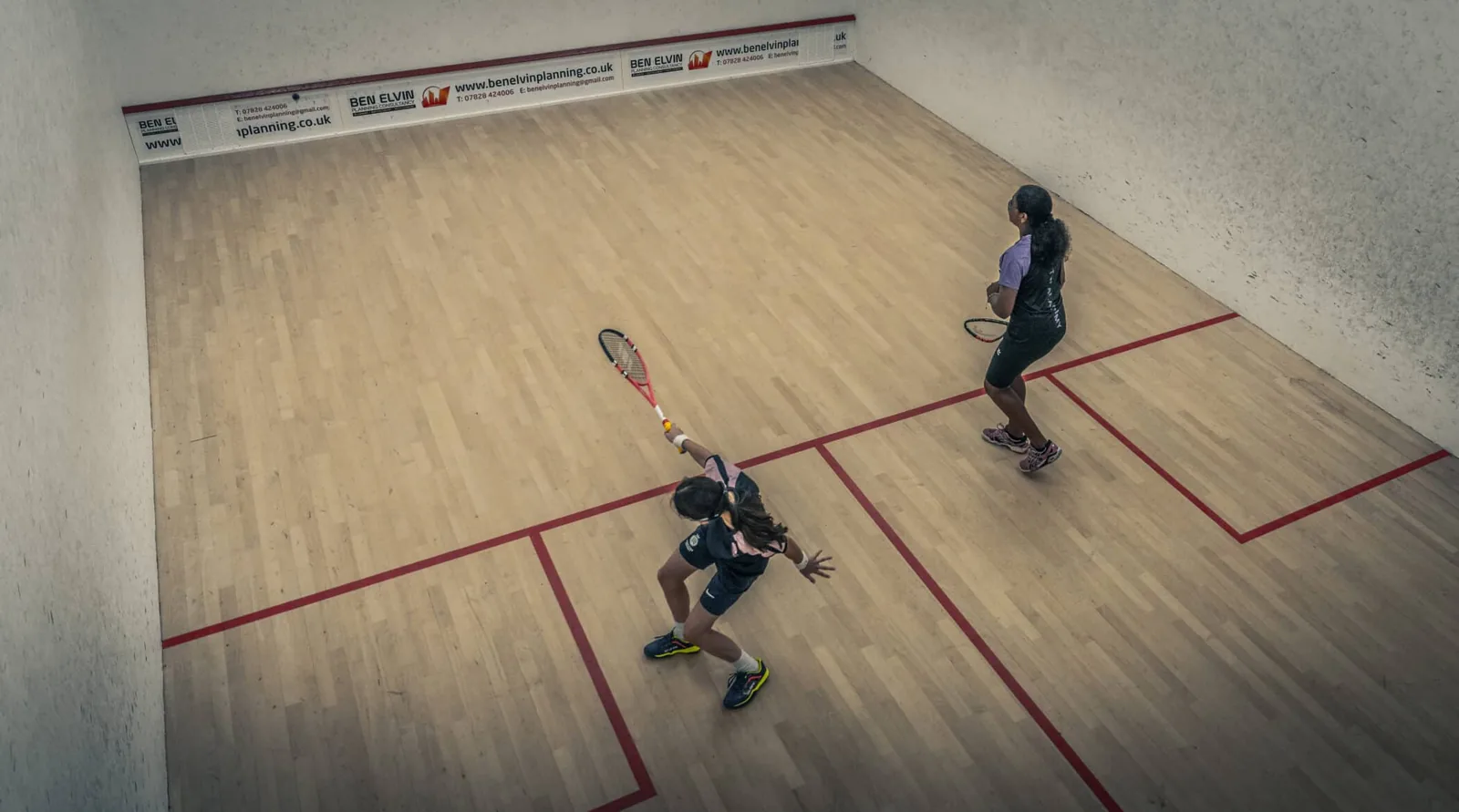
Why ghost
- Better movement. You groove the paths from the T to each corner, so in a match your feet know where to go.
- Early preparation. Every repetition includes getting the racket up and turning. That habit carries into your game.
- Squash fitness. Ghosting raises your heart rate quickly and works the legs through lunges and changes of direction, close to how a match does.
- No partner needed. You only need a court, or even a quiet space of similar size.
- Balance and recovery. You practise pushing back from the lunge to the T, which is where many club players are slow.
Our guide to squash footwork explains the movement patterns in detail.
How to ghost
- Warm up first. Five to ten minutes of easy movement and dynamic stretches. Ghosting is explosive. See how to warm up for squash.
- Start on the T. Racket up in front of you, knees slightly bent.
- Split step. A small bounce, as if your opponent is hitting.
- Move to the corner. Use your normal footwork, finishing with a lunge or the right stance for that corner.
- Shadow swing. A full, controlled swing with proper preparation, contact point and short follow-through. Picture the ball.
- Recover. Push back to the T along a sensible line and split step again.
- Repeat. Keep going for the length of the set, then rest.
Hold the racket every time. Ghosting without a racket loses half the benefit, because you skip the preparation and swing.
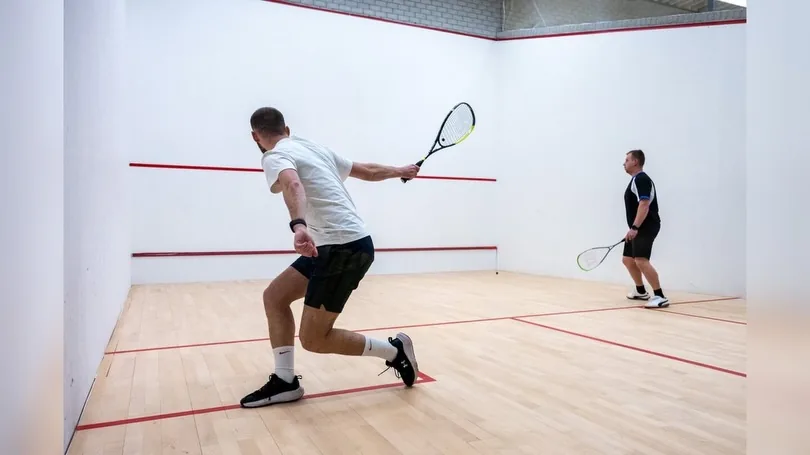
Ghosting patterns
Most coaches use six points: front left, front right, middle left, middle right (level with the T, near the side walls), back left and back right.
- Random six-point. A partner or coach points or calls a corner and you go there. This is closest to a match because you react rather than plan.
- Set sequence. Front right, back left, middle right, front left and so on, in a fixed order. Easier to do alone.
- Front and back on one side. Front forehand, back forehand, repeat. Good for working on one weak side.
- Front corners only. Short, sharp movements and lunges, good for leg endurance.
- Back corners only. Practises the turn and the longer movement into the back of the court.
Alone, you can use numbered cones or simply count corners in your head. Some players call out the corners from a phone app with random timing.
Form before speed. A fast ghost with sloppy lunges trains sloppy lunges. Start slow and smooth, then speed up only as long as your technique holds. If your knees or back hurt during ghosting, stop and get it looked at before you carry on.
Sample ghosting sessions
| Level | Work | Rest | Sets |
|---|---|---|---|
| New to ghosting | 30 seconds, steady pace | 60 seconds | 5 to 6 |
| Regular club player | 45 seconds, match pace | 45 to 60 seconds | 8 to 10 |
| Fitter league player | 60 seconds, fast | 30 to 45 seconds | 10 to 12 |
These are starting points, not rules. Count the corners you reach in each set and try to keep the number steady from the first set to the last. If it drops a lot, your rest is too short or the work is too long.
Ghosting fits well at the end of a solo practice session, or as a separate 20 minute conditioning session once or twice a week. For the bigger picture, see getting fit for squash.
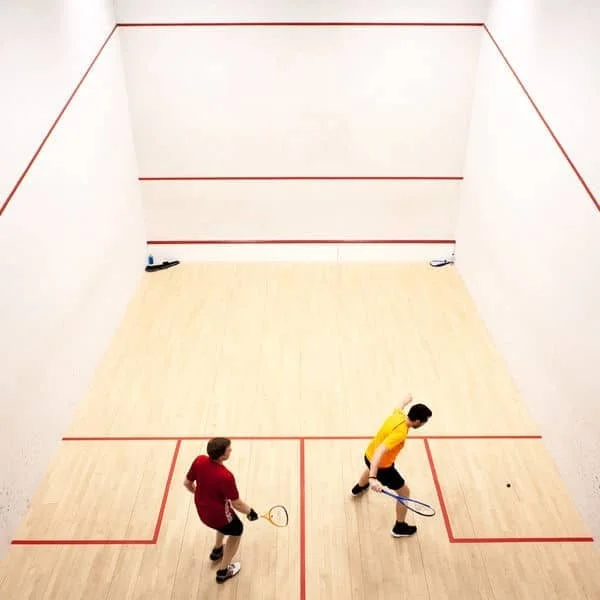
Common mistakes
- Not going back to the T. Stopping halfway between corners. Recovery is half the exercise.
- No split step. Running from corner to corner without the pause and bounce that a real rally has.
- Lazy swings. A half swing or none at all. Prepare the racket and swing as you would in a match.
- Racket down between corners. Keep it up, as you should in a game.
- Too long, too soon. Long sets at full pace on day one lead to sore legs and poor form. Build up gradually.
FAQ
What does ghosting mean in squash?
Moving around the court and playing shadow shots without a ball, as if against an imaginary opponent. It trains footwork and fitness.
How long should you ghost for?
Sets of 30 to 60 seconds with a similar rest are typical. Most club players do 5 to 12 sets, depending on fitness.
Can you ghost without a squash court?
Yes. Any clear space about the size of a court works. Mark six points with cones or tape. A court is better because the walls help you judge distances.
Is ghosting good for fitness?
Yes. It is one of the most squash-specific fitness drills, working the legs, heart and lungs through short bursts of movement with brief pauses, like a match.