Doubles squash: rules and courts
 By the Find My Squash Court team·
Updated ·
5 min read
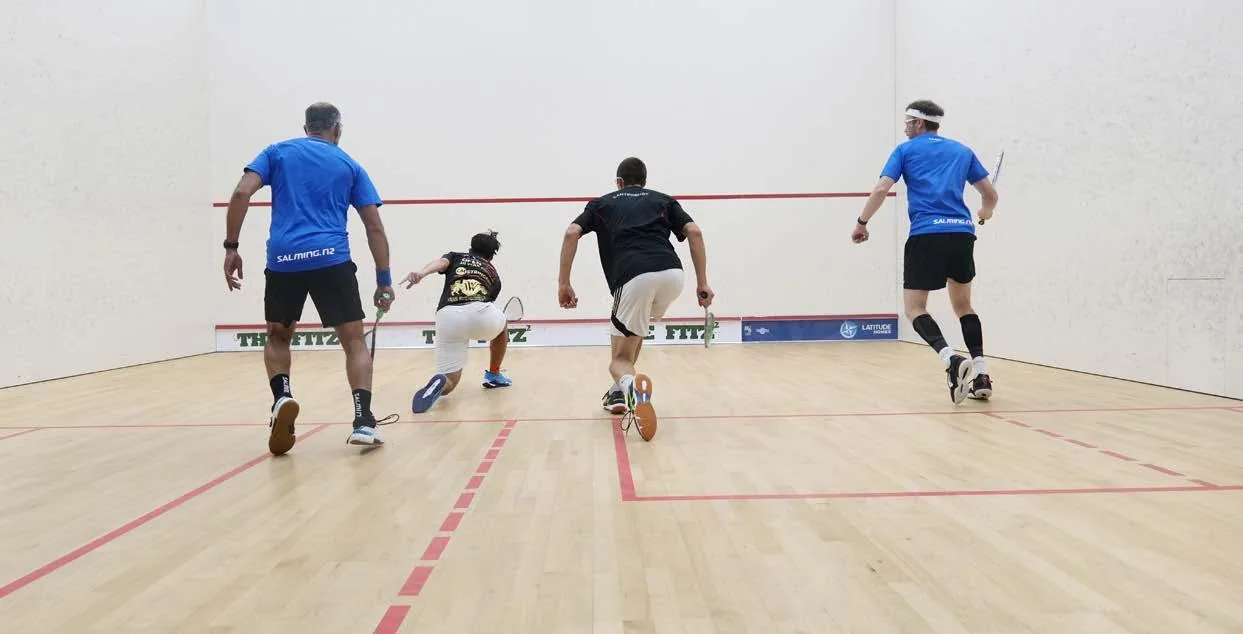
Doubles squash puts four players and four rackets in one box. It is fast, sociable and a little chaotic, and it needs a wider court than singles if you want to play it properly.
The short answer
Doubles squash is played by two teams of two, taking turns to hit the ball. Under World Squash doubles rules, the court is the same 9.75 m length as a singles court but wider: 7.62 m, or 8.42 m for world events and the Commonwealth Games, against 6.4 m for singles. Eye guards are compulsory for everyone, and scoring is point-a-rally, usually to 11. Each player serves in turn until their team loses a rally. Few clubs have a dedicated doubles court, but some have movable walls that turn two singles courts into one.
The doubles court
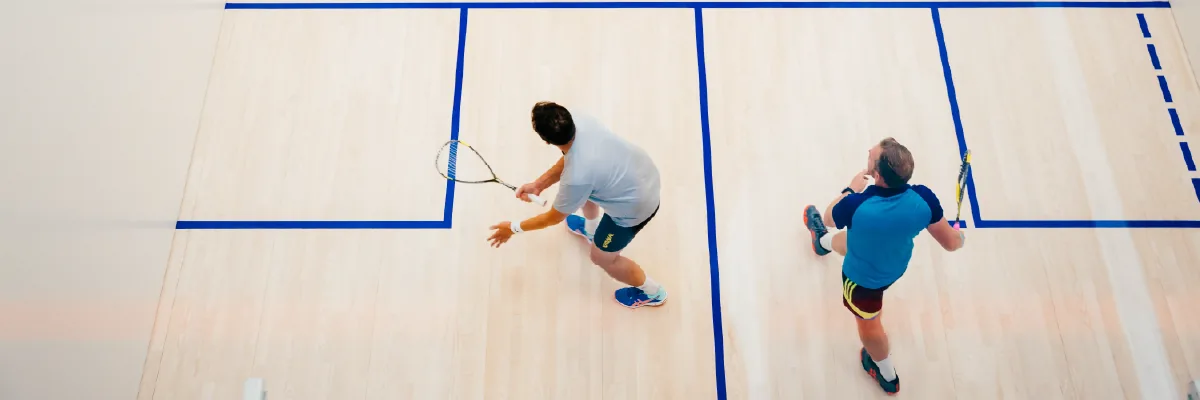
The World Squash Federation doubles rules set out a court that matches singles in length and in its wall markings, but is wider.
| Singles court | WSF doubles court | |
|---|---|---|
| Length | 9.75 m | 9.75 m |
| Width | 6.4 m | 7.62 m, or 8.42 m for world and Commonwealth Games events |
| Front wall out line | 4.57 m | 4.57 m |
| Service line | 1.78 m | 1.78 m |
| Top of the tin | 0.48 m | 0.48 m |
The extra width came after a review of the 2006 Commonwealth Games, when four players on a 7.62 m court proved crowded. The wider court gives more room and rewards angled attacking shots.
Many clubs never built a doubles court, because it takes the space of more than one singles court and is used less. A common compromise is a pair of side-by-side singles courts with a movable dividing wall. Opened up, the space is wider than a WSF doubles court, so it plays a little differently, but it works well for club doubles nights. Our guide to squash court dimensions has the full singles specification.
How doubles is scored and served
The WSF doubles rules, in force since November 2010, follow singles closely. The differences are about serving order and space.
- Scoring. Point-a-rally: the team that wins a rally scores, whether or not it served. Games are to 11, and a match is best of three or five. Games to 15 are an approved alternative.
- Serving order. Each team names its first and second server before the match. The first server for the team that wins the spin serves until their team loses a rally. Then the other team's first server takes over. When that team loses a rally, the second servers take their turns.
- Service box. At the start of a game, and each time service passes to the other team, the server can choose either box. After winning a rally they switch boxes.
- Receiving sides. Each team announces which partner receives on which side at the start of a game, and can change only between games.
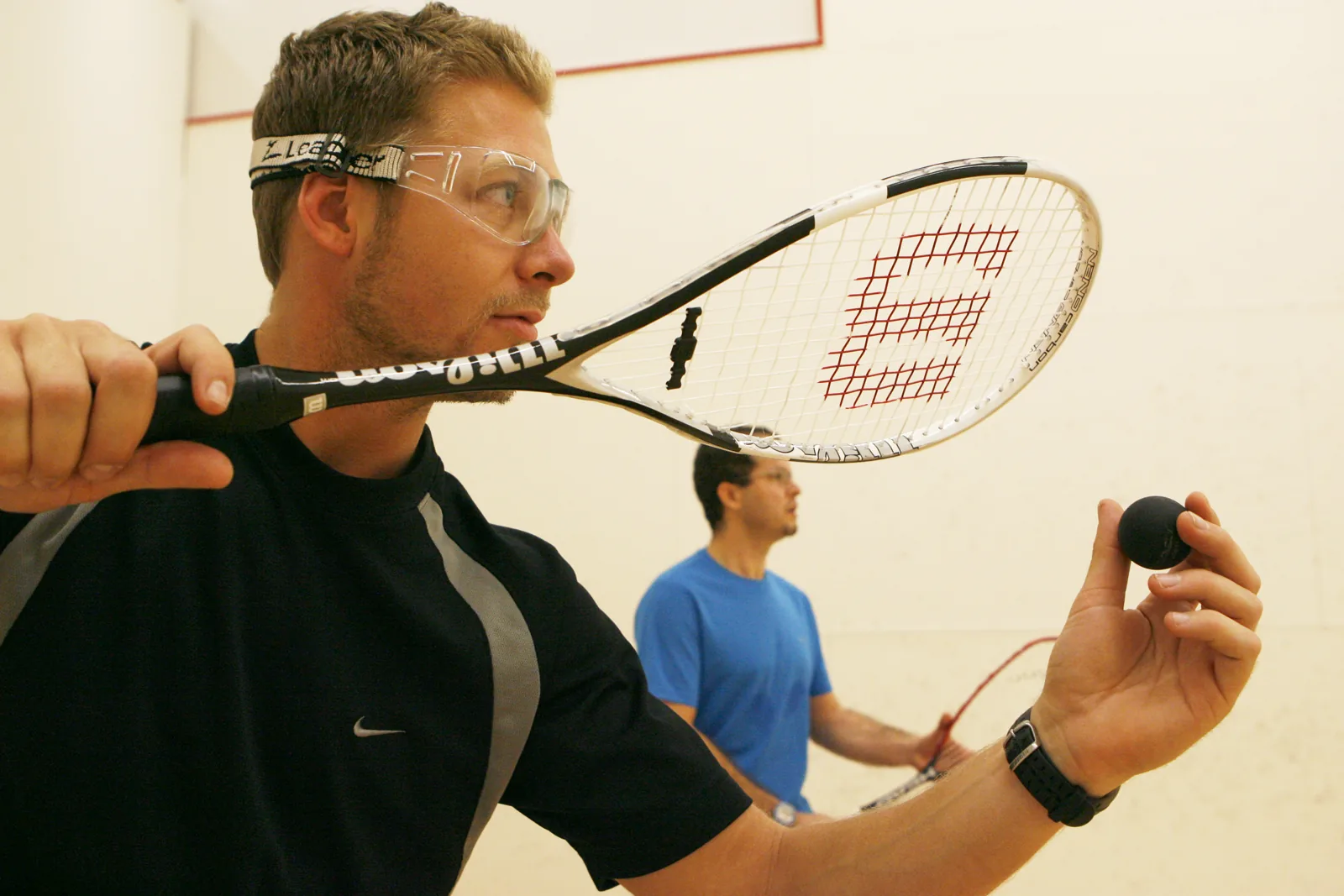
- Eye guards. All four players must wear them at all times. In singles they are compulsory only for juniors and some events, so many club players will need to buy a pair. See our guide to squash goggles.
- Warm-up. Each team gets up to two and a half minutes on court.
Lets and strokes work on the same principles as singles: if an opponent blocks your access or your swing, you can appeal. With four people on court, the referee's job is busier. The guide to let vs stroke explains the singles version.
How the game plays
Doubles is less about running yourself into the ground and more about angles, hands and teamwork. Rallies are often longer, but each player covers less floor.
- Sides. Before each rally, players are set as right-wall or left-wall receivers. In the rally itself you can go anywhere, but most pairs keep roughly to their side, with the stronger backhand player often on the left.
- Front and back. When one partner goes short, the other usually drops back. Pairs who move like a seesaw cover the court best.
- Angles. With a wider court, boast shots and cross-court nicks become bigger weapons. Straight drives down the wall are still the safest shot.
- Safety. Swing compactly, call for the ball and stay out of the path of your partner. Players often use heavier rackets with tighter strings, which suits shorter swings.
Trying doubles at a singles club. Some clubs run casual doubles on a normal singles court. It is cramped and needs very short swings, so play it slowly and wear eye guards. It is no substitute for a proper doubles court, but it is a fun way to try the format.
Hardball doubles in North America
In the United States and parts of Canada, the traditional doubles game is hardball doubles. It uses a harder, faster ball on a much bigger court, 13.72 m long and 7.62 m wide (45 by 25 feet), with a high ceiling. It is a separate game from WSF softball doubles, with its own professional circuit and clubs. A few clubs outside North America have hardball doubles courts too.
Where to play doubles
Doubles-ready venues are rare, so it helps to know where they are. A few in our directory:
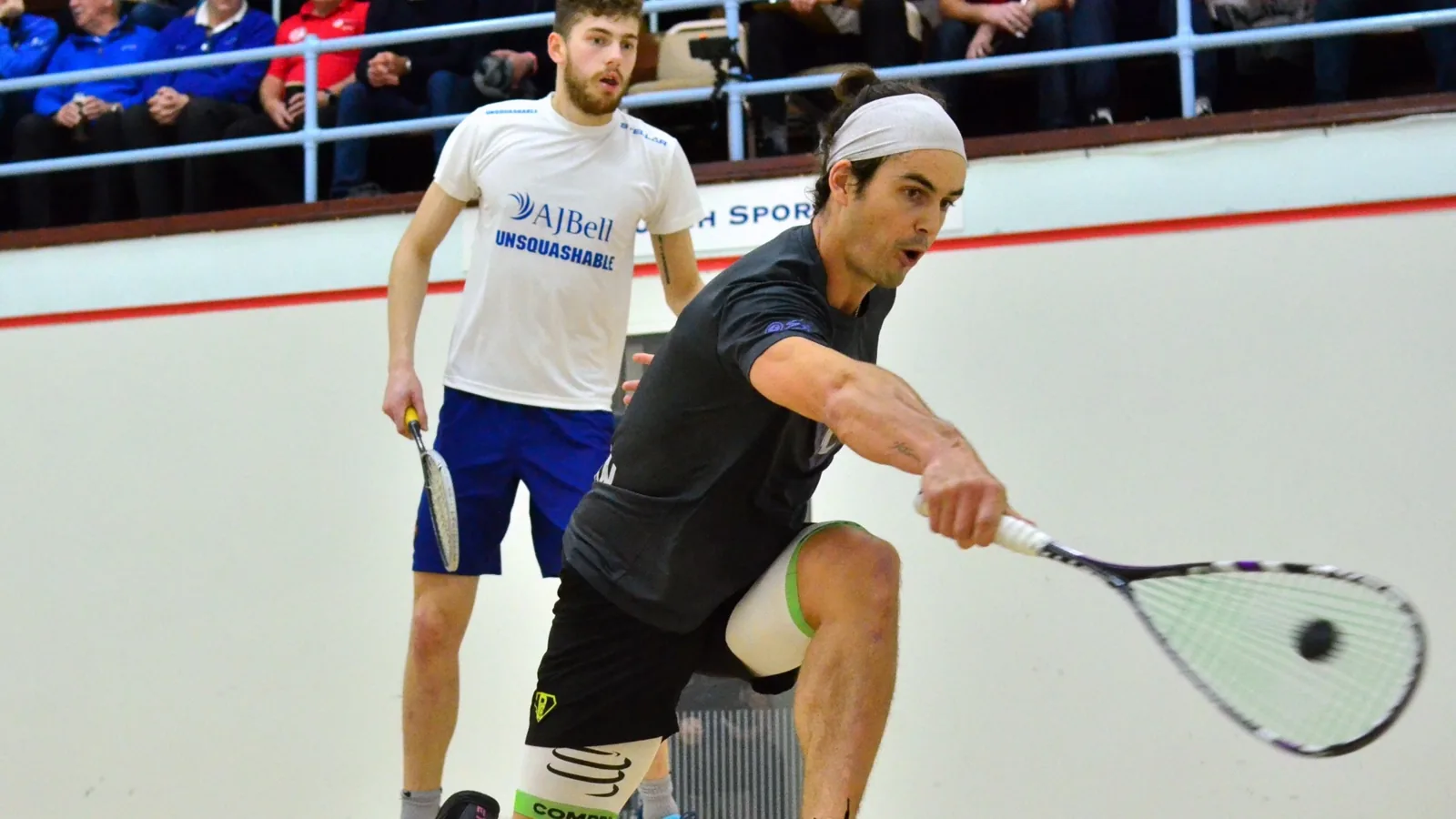
Edinburgh Sports Club
Edinburgh · Hardball doubles court

Glasgow Club Scotstoun
Glasgow · Converts for doubles
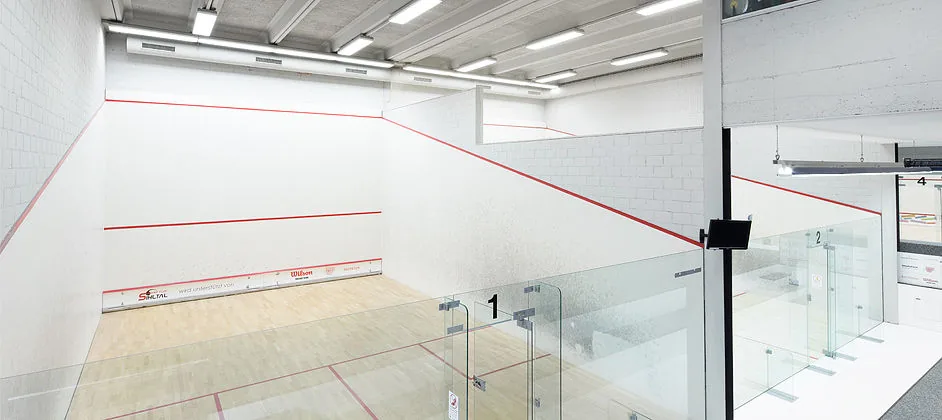
Sihlsports
Zurich · Movable doubles walls
Christchurch Squash Club in New Zealand has four doubles courts, and Portsmouth's Ravelin Sports Centre can open two courts into one. New Zealand has a strong doubles culture, and its clubs often run doubles nights and tournaments.
FAQ
Can you play doubles squash on a normal court?
You can for fun, with short swings and eye guards, but it is cramped. Official doubles uses a court 7.62 m or 8.42 m wide instead of 6.4 m.
How is doubles squash scored?
Point-a-rally scoring, with games to 11 and matches best of three or five. The WSF rules also allow games to 15.
Do you have to wear goggles in doubles squash?
Yes. The World Squash doubles rules require all four players to wear eye guards at all times.
Is doubles squash in the Commonwealth Games?
Yes. Men's, women's and mixed doubles are played at the Commonwealth Games on the wider 8.42 m court.