Squash tactics for club players
 By the Find My Squash Court team·
Updated ·
6 min read
Most club matches are not won with brilliant shots. They are won by the player who makes fewer errors, keeps the ball away from the middle and makes the other person do the running. A few simple tactical habits will win you more games than a new racket.
The short answer
The core squash tactic is to hit the ball to the four corners and away from your opponent, then get back to the T. Start with length: drives that land behind the service box and die near the back wall. Keep them tight to the side walls. Once your opponent is pushed to the back, use drops and the boast to bring them forward. Hit cross-courts wide, so they reach the side wall behind your opponent. Cut out loose shots to the middle, play to your opponent's weaker side and, when in doubt, hit straight and deep.
The basic principles
Squash tactics come down to time and space. Every shot either gives your opponent time or takes it away, and either pulls them away from the middle or lets them stay there. Five principles cover most of it:
- Hit to the corners. The four corners are the furthest points from the T. Make your opponent go there.
- Keep the ball tight. A ball close to the side wall is hard to attack and hard to return cleanly.
- Avoid the middle. A ball that comes back through the centre of the court is the easiest one to punish.
- Get back to the T. After every shot, move back to cover the court. See why squash players go back to the T.
- Make fewer errors. At club level most points end with a mistake into the tin or out of court, not a winner. Give yourself a margin above the tin.
Length first
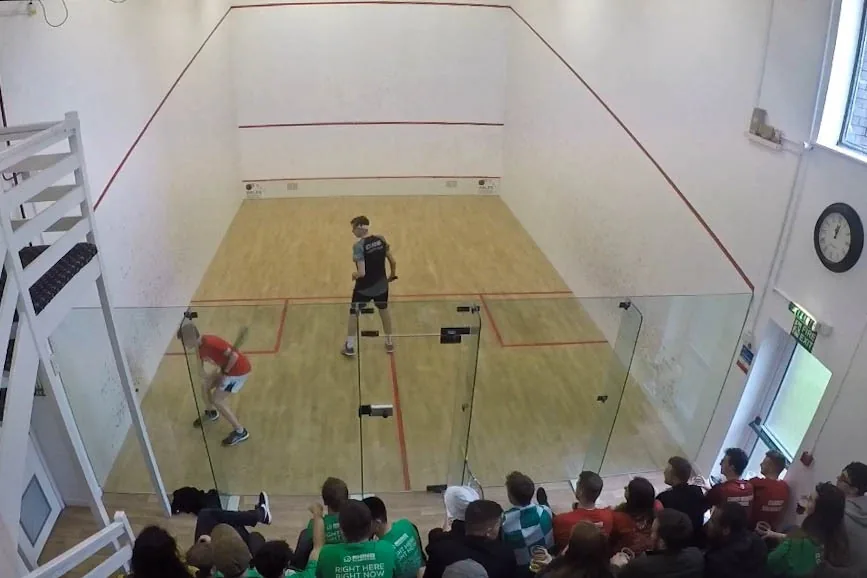
The straight drive to length is the most important shot in squash. A good length drive bounces once around the back of the service box and reaches the back wall low, so it dies in the corner rather than bouncing out. Your opponent has to go deep into the corner to dig it out, and you get time to take the T.
- Straight is safe. Straight drives down the wall are lower risk than cross-courts. If you are under pressure, go straight.
- Width on the cross-court. A cross-court should hit the side wall around or behind your opponent, so it cannot be volleyed from the T. A cross-court that misses the side wall comes back through the middle.
- Use height. When you are stretched, a higher, slower drive or a lob gives you time to recover. Not every ball needs to be hit hard.
Our guides to the forehand and backhand cover the drive itself.
When to go short
Once you have pushed your opponent to the back, the front of the court opens up. That is the time for short shots:
- Drop shot. Played when you are in front of your opponent and they are behind you or slow to recover. See the squash drop shot.
- Boast. A ball hit into the side wall first, so it comes off the front wall into the opposite front corner. Useful from the back when you cannot drive, and as an attacking shot when your opponent hangs back.
- Kill. A hard, low shot aimed just above the tin, best from a loose ball near the T.
The rule most coaches give club players: earn the short shot with length. Short shots from the back of the court, or when your opponent is in front of you, tend to get punished.
Playing your opponent
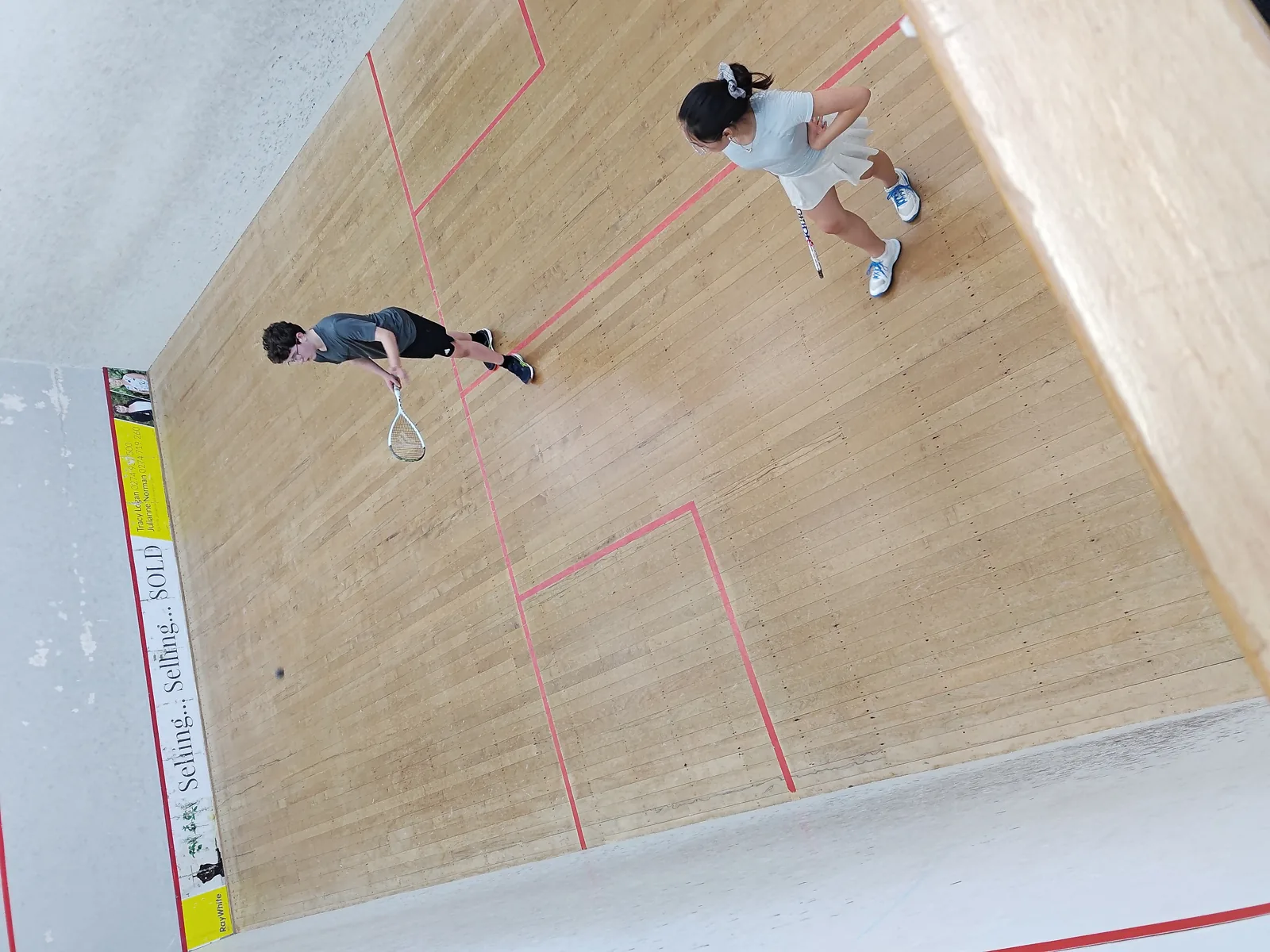
After a few rallies you will notice patterns. Use them.
| If your opponent | Try |
|---|---|
| Hits hard and fast | Slow the game down with height and lobs; let them make errors |
| Is slow around the court | Make them run front to back: length, then drop |
| Has a weak backhand | Keep the ball on that side, especially to the back corner |
| Hangs back on the T | Drops and the boast |
| Rushes forward | Straight drives and lobs over their head |
| Volleys well | Hit lower, and wider on the cross-court |
| Struggles in the back corners | Tight straight length, again and again |
Do not change a winning game. If something works, keep doing it until your opponent shows they can deal with it.
Between games. You get a short break between games (up to two minutes under the World Squash rules). Use it to decide one thing to keep doing and one thing to change. One idea you can actually follow is worth more than five you cannot.
Match tactics
- Start steady. In the first game, play solid length and find out how your opponent moves. Risky shots early hand them confidence.
- Close out games. At game ball, play the percentage shot: straight and deep. Most club games are lost at the end by a hurried drop into the tin.
- Watch the score. Squash is played to 11 points per game with point-a-rally scoring in most club and competition play, so every rally counts. See squash scoring.
- Pace yourself. In a best-of-five match, keeping rallies long can work in your favour if you are the fitter player. See getting fit for squash.
Tactical mistakes club players make
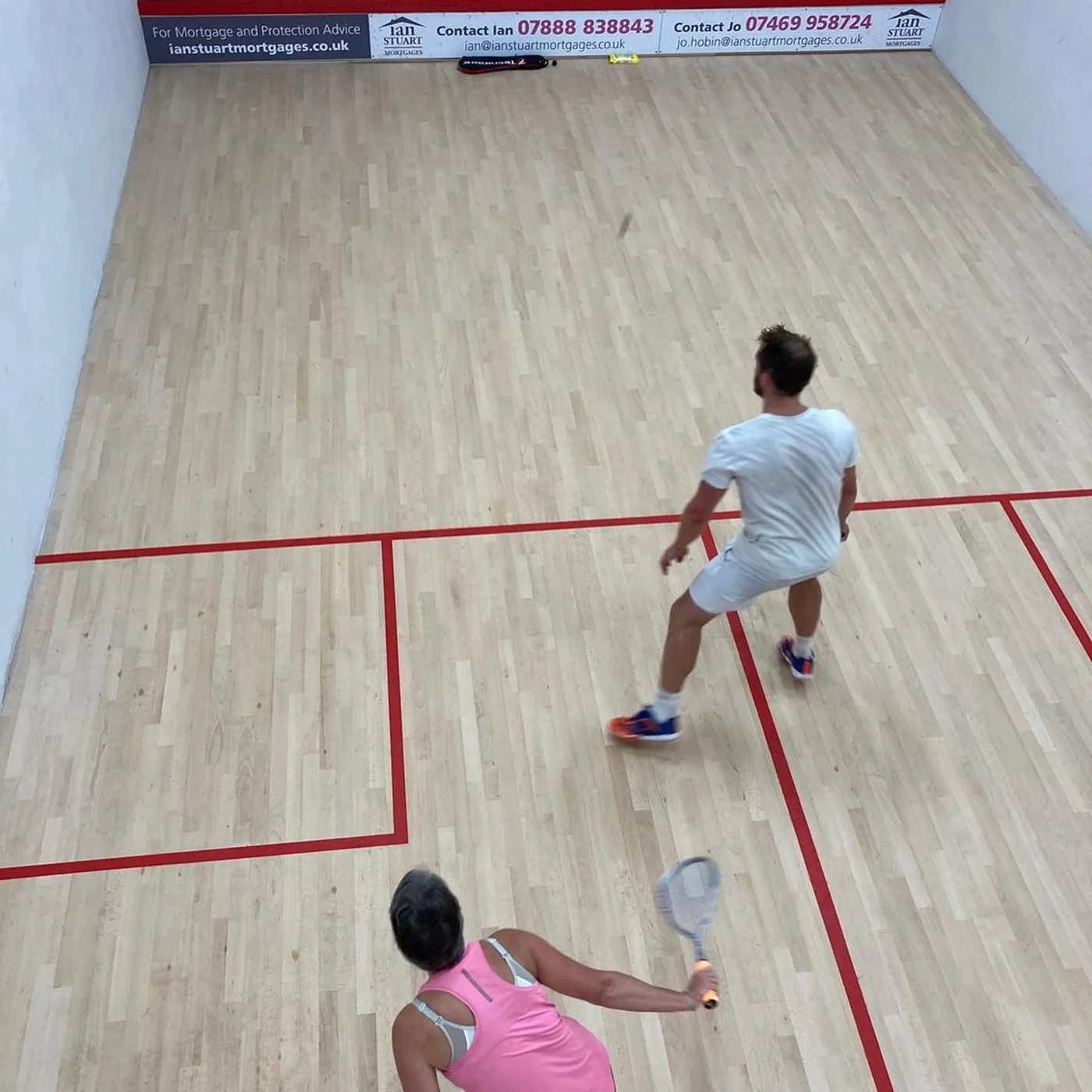
- Going for winners too early. Drops and kills from the back of the court that end in the tin.
- Too many cross-courts. Each one that misses the side wall gives your opponent the T.
- Hitting everything hard. Pace without accuracy brings the ball back to the middle faster.
- Ignoring the score. Playing a risky shot at 10-9 down when a safe drive would keep you in the game.
- Not moving after the shot. Even a great shot is wasted if you stand and watch it.
The best way to put tactics into practice is regular competitive play. A box league or ladder gives you a run of matches against players of a similar standard. See how squash box leagues work.
Cities with the most squash leagues in our directory:
FAQ
What is the most important shot in squash?
The straight drive to length. It pushes your opponent to the back, keeps the ball away from the middle and gives you time to take the T.
How do I beat someone who hits harder than me?
Slow the rally down with height and lobs to the back corners, keep the ball tight and wait for their errors. Hard hitters often struggle with slow, deep balls.
When should I play a drop shot?
When you are in front of your opponent and they are behind you or out of position. Avoid drops from deep in the back corners.
Should I play to my opponent's backhand?
At club level, often yes. Most players are weaker on one side, usually the backhand, and especially in the back corner.