Squash backhand basics
 By the Find My Squash Court team·
Updated ·
6 min read
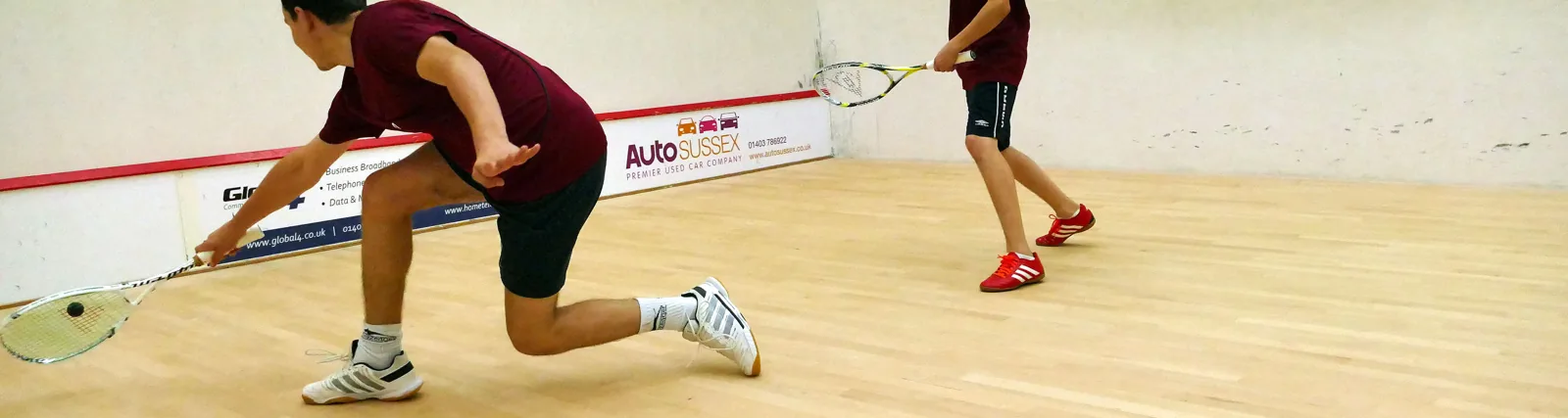
Players coming from tennis often dread the squash backhand. In fact many club players end up preferring it, because the body turn is natural and the swing is easier to keep compact.
The short answer
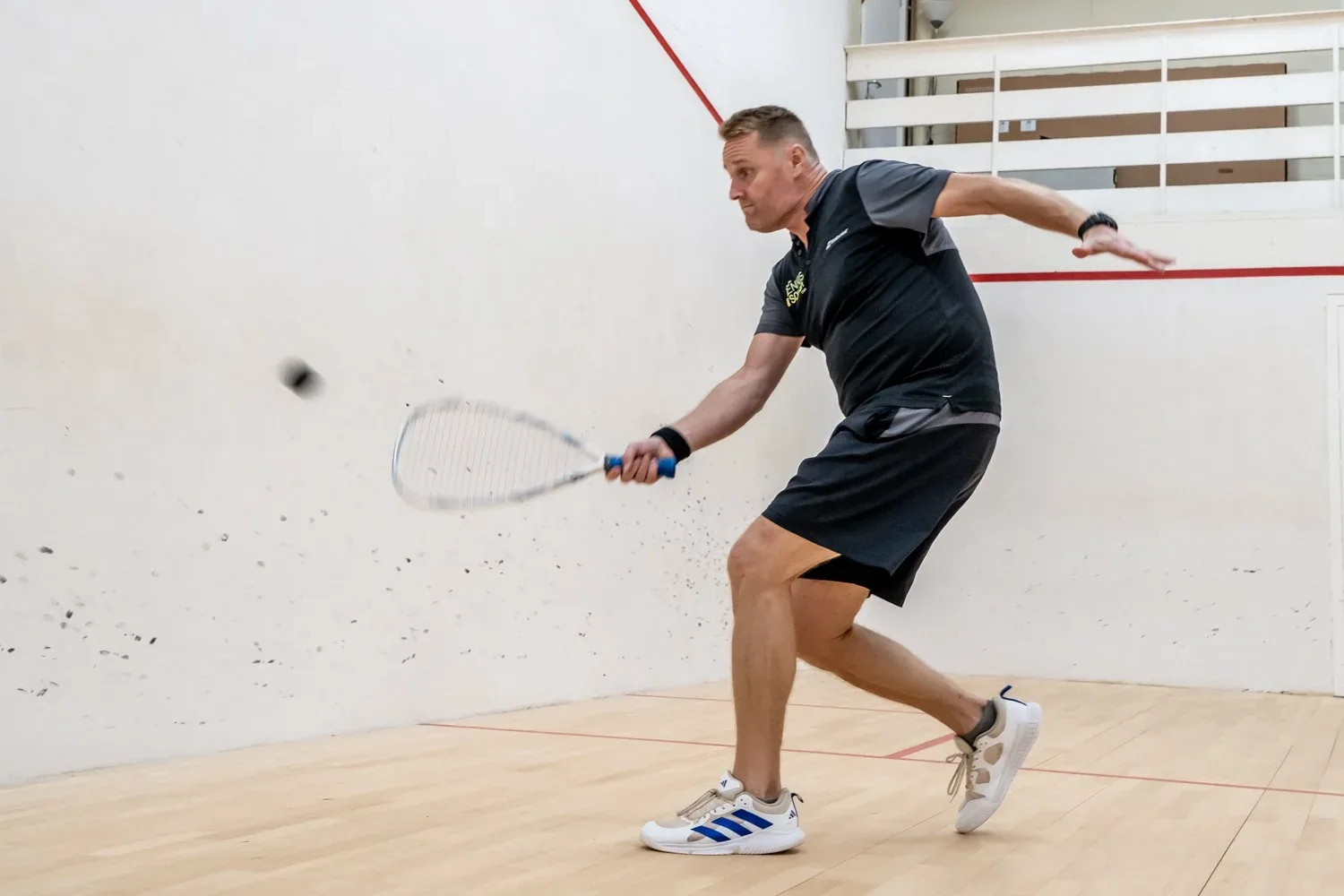
A squash backhand is played on your non-racket side (the left for a right-hander). Use the same handshake grip as the forehand. Turn early so your back is half towards the front wall, take the racket up behind your opposite shoulder with the wrist cocked, and step towards the ball with your racket-side foot. Swing through on a short arc, meet the ball slightly in front of that front foot with an open face, and finish with the racket pointing up towards the front wall. Keep your shoulders turned through contact rather than opening them early.
Why the backhand is different
On the forehand, your body is behind the racket arm. On the backhand, your arm swings away from your body and across the front of it. That makes the turn of the shoulders more important. Without it, the racket has nowhere to go but round in a flat circle.
The good news is that you do not change grip. Squash uses a single handshake grip with the face slightly open for both sides, so there is nothing to adjust between shots. If the backhand feels weak, check the grip first: a hand that has crept round to a forehand position closes the face on the backhand side. Our guide on how to hold a squash racket shows the correct position.
Preparation
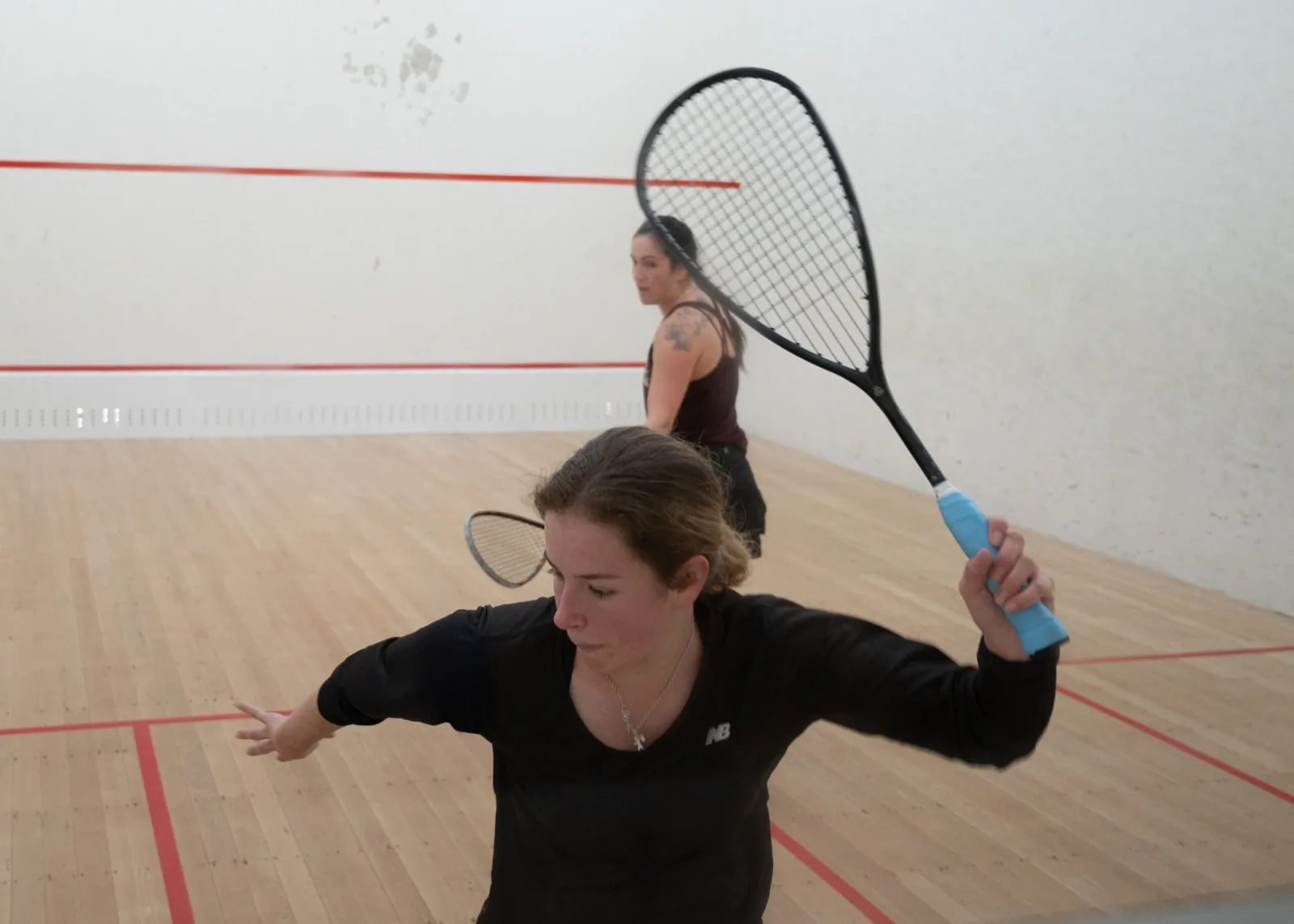
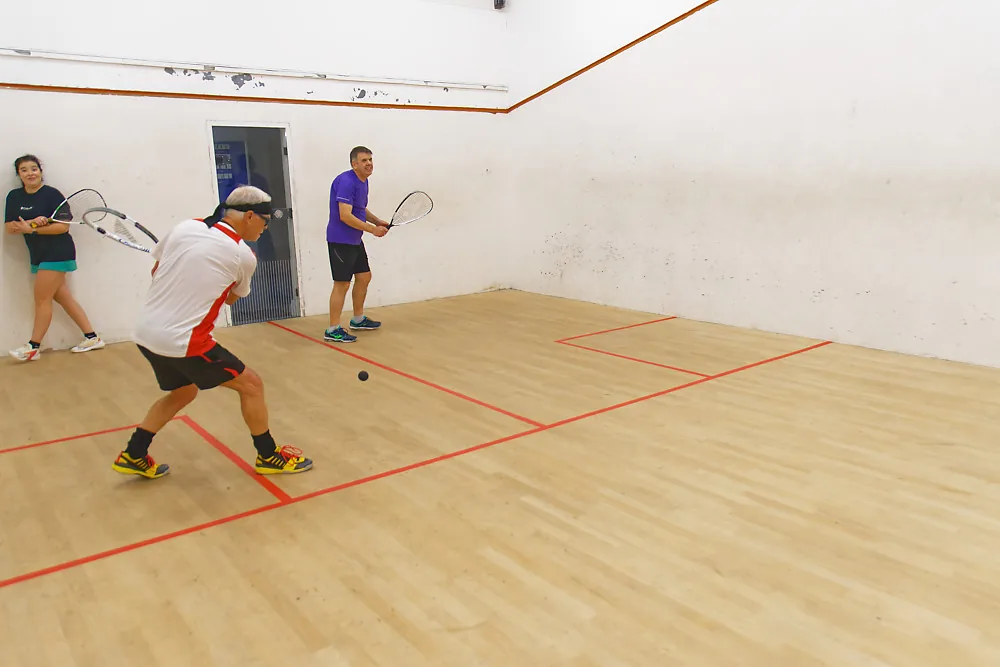
- Turn first. As soon as the ball comes to your backhand, turn your shoulders so the back of your racket shoulder points towards the front wall. You should be able to see the ball over that shoulder.
- Racket up. Take the racket up behind your head on the backhand side, wrist cocked, so the racket head points at the ceiling or slightly back. Your elbow is bent at about a right angle.
- Leave a gap. Stop a racket and an arm's length from the ball. On the backhand side it is very easy to get too close, because you step across your body.
- Step in. A right-hander steps in with the right foot on the backhand. The front foot points roughly towards the side wall or front corner, not straight at the front wall.
Swing and contact
The backhand swing starts from the shoulder. The elbow leads, the forearm unrolls and the racket head comes through to the ball. Your other arm helps: many coaches teach players to let it go back as the racket goes forward, which keeps the shoulders from opening too early.
- Contact point. A little in front of your front foot. The backhand contact point is usually slightly further forward than the forehand one.
- Open face, firm wrist. The strings face slightly up at contact and the wrist stays firm. This gives a little slice and keeps the ball low.
- Get down to it. Bend your knees for a low ball rather than dropping the racket head.
- Stay side-on. Keep your chest facing the side wall through contact. If you swing round to face the front wall, the ball goes cross-court.
For a straight backhand drive, aim at a spot on the front wall between the tin and the service line so the ball lands behind the service box and dies in the back corner. For a cross-court, take the ball earlier and further in front.
Finish and recovery
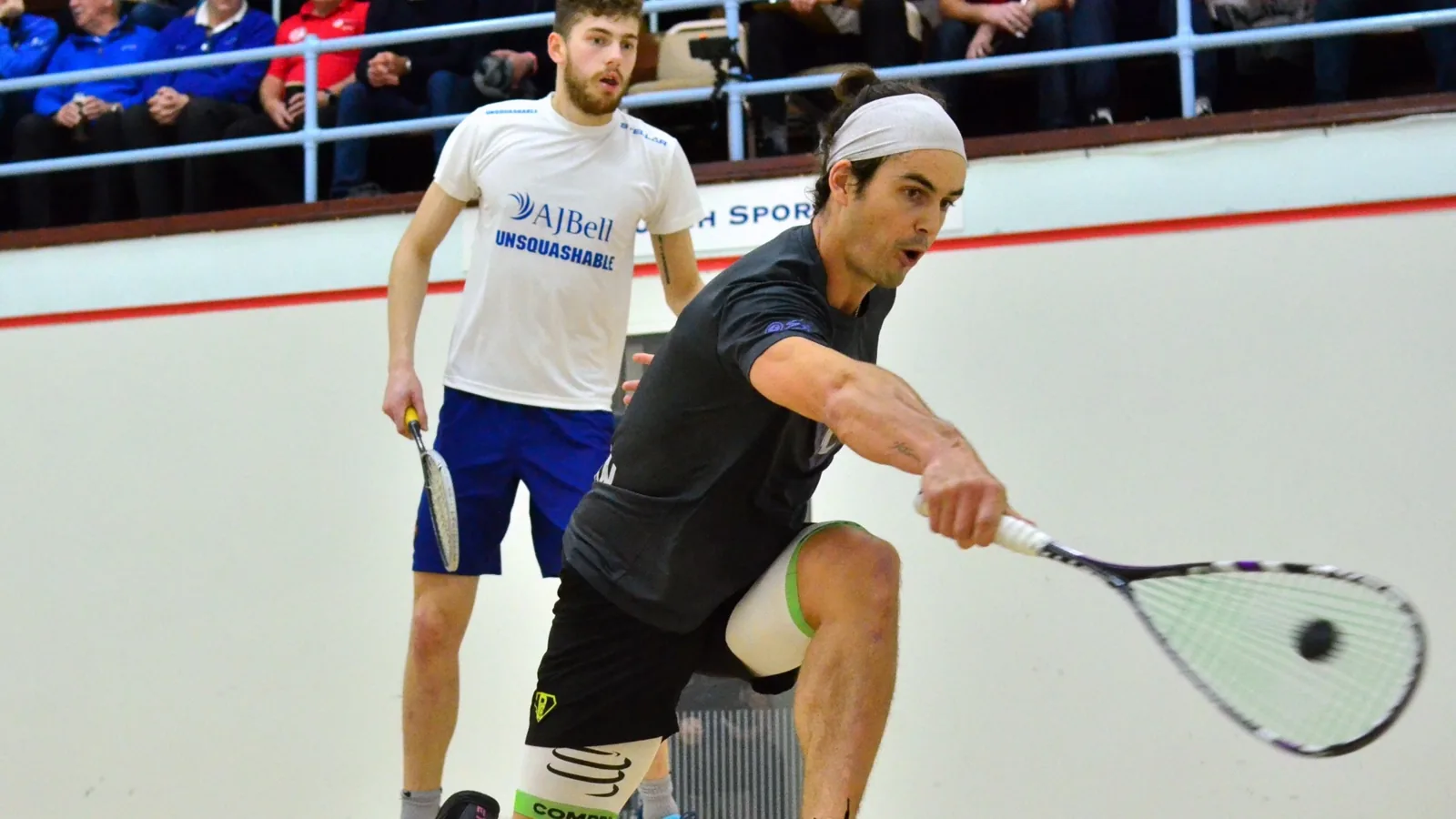
Let the racket finish up and out towards the front wall, about head height. Keep the follow-through short. On the backhand side your racket swings towards the middle of the court, which is often where your opponent is standing, so a big finish is a safety problem. Under the rules, a swing judged excessive counts against you when lets and strokes are decided.
Then push off the front foot and move back towards the middle. Our guide to the T position explains where to go and why.
Backhand in the back corner
The back backhand corner is where most club players lose rallies. The ball is close to the side wall and the back wall, and there is little room to swing.
- Do not run into the corner. Stay a little further from the back wall than feels natural, so the ball comes out to you.
- Shorten the swing. A three-quarter swing with good timing is enough to get the ball to length.
- Play straight. A straight drive back down the wall is the safe reply. Cross-courts from the back corner often end up in the middle.
- Use the boast when you are stuck. If the ball has got past you, a back-wall or side-wall boast keeps the rally going.
Shadow it first. Stand side-on in your living room or on court, turn, take the racket up and swing slowly without a ball, ten times. Then add a ball. The shoulder turn is easier to feel without the pressure of hitting.
Common backhand mistakes
- Leading with the elbow too far. The elbow points at the ball and the racket trails behind, so the face is late and the ball goes cross-court. Lead with the elbow briefly, then let the forearm come through.
- Opening the shoulders early. Turning to face the front wall before contact. Keep the chest to the side wall.
- Too close to the ball. The commonest backhand fault. Give yourself space.
- Racket head down. Starting the swing from waist height leaves no time to prepare. Get it up early.
- Flicking the wrist. It feels powerful but kills accuracy and can strain the forearm. If you have pain on the outside of the elbow, read tennis elbow and squash.
How to practise it
Straight backhand drives on your own are the best practice there is. Stand just behind the service box on the backhand side, feed the ball to yourself and hit it back down the wall. Aim for the ball to land behind the service box. See solo squash drills for more.
A coach can fix a backhand fault in one session that might take you months to find. Several clubs and university centres in our directory run coaching or club nights.
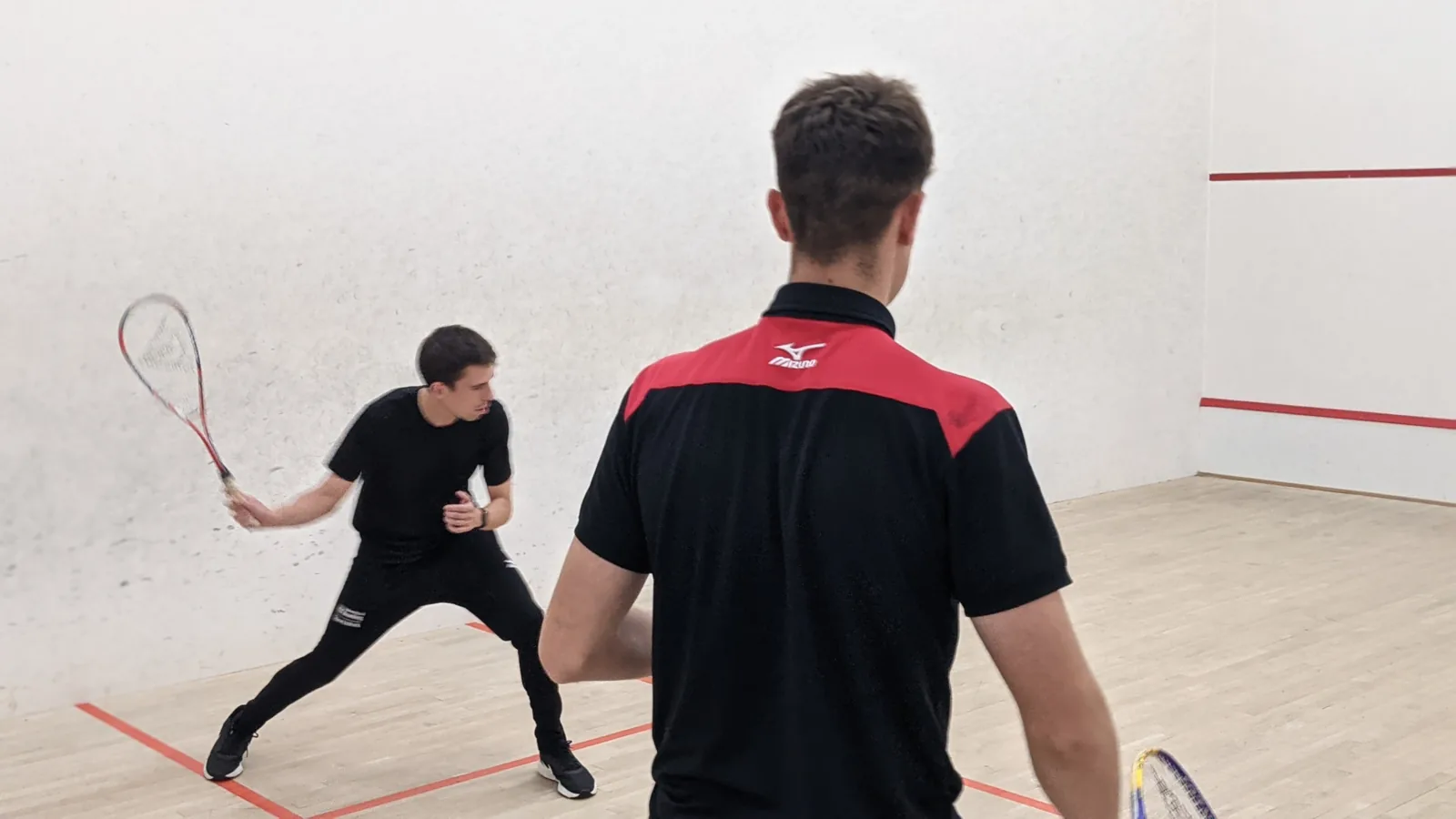
University of Reading SportsPark
Reading · Two glass-back courts
UniRec, University of Waikato
Hamilton · Glass-back court
Abbeydale Squash & Fitness Club
Sheffield · Six courts, coaching
Cities with the most squash coaching in our directory:
For the other side, read our squash forehand guide.
FAQ
Do you change grip for a squash backhand?
No. Squash players use one handshake grip for both forehand and backhand. Rallies are too fast to change it.
Is the backhand harder than the forehand in squash?
For many beginners at first, mainly because of the shoulder turn. Plenty of club players later find their backhand more reliable than their forehand, because the swing is naturally compact.
Should I use a two-handed backhand in squash?
Almost all coaches teach a one-handed backhand. A two-handed swing reduces reach, which matters in a game where you often stretch for the ball.
Which foot goes forward on a backhand?
For a right-hander, usually the right foot, so the body stays side-on. Under pressure in the back corner you may hit off the left foot, which is fine.