Squash with glasses or contact lenses
 By the Find My Squash Court team·
Updated ·
6 min read
If you need glasses to see clearly, squash raises an awkward question. You need to see a small, fast ball, but ordinary glasses are not built to take a hit from it. There are four good solutions, and one common habit you should drop.
The short answer
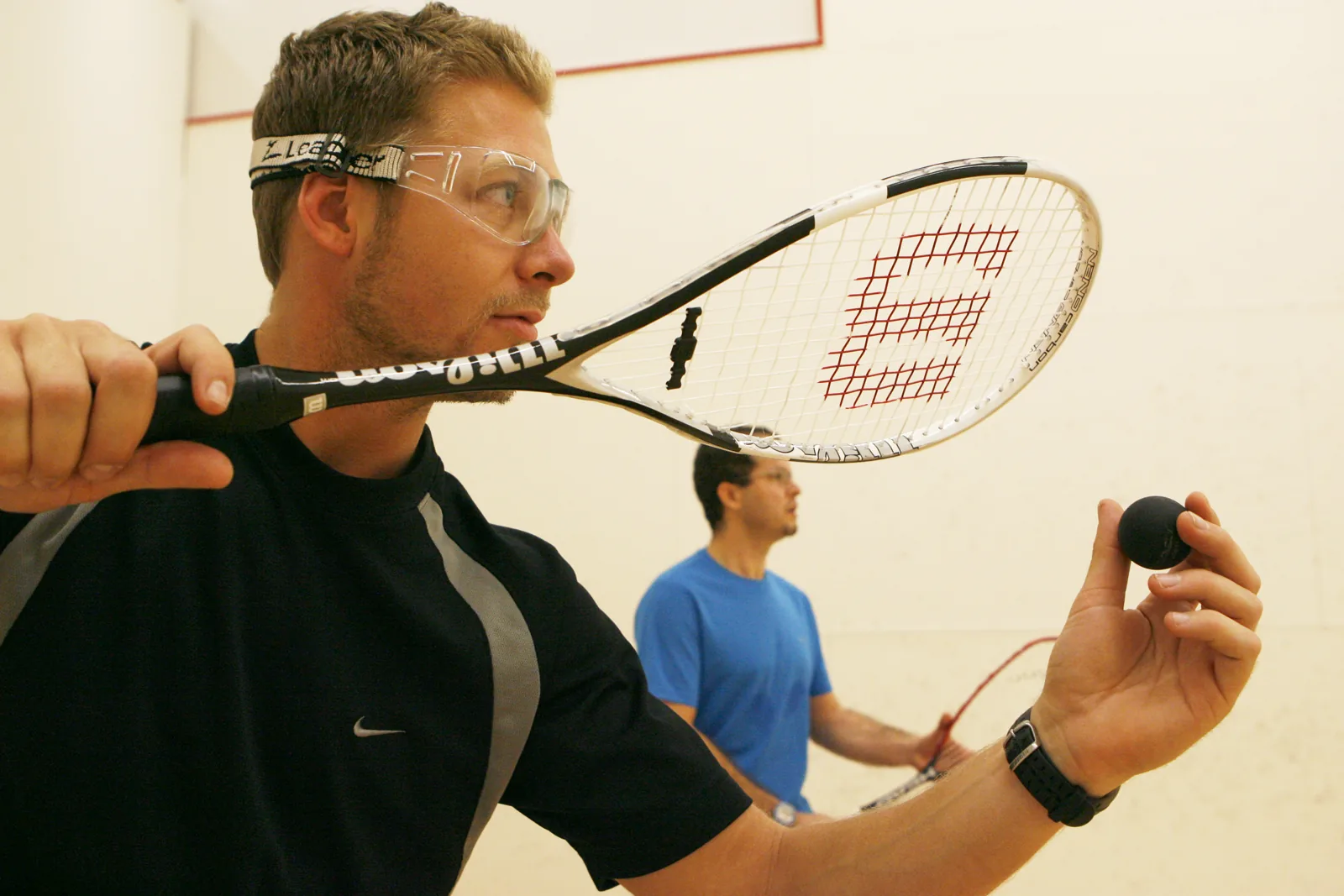
Do not play squash in ordinary glasses. They are not designed for squash impacts, and research on racket sport eye injuries found that prescription lenses can make an injury worse. The safe options are contact lenses with certified squash goggles over them, goggles with a prescription insert, goggles made with prescription lenses, or certified goggles large enough to wear over your glasses. Contacts plus goggles is the most popular choice. Make sure whatever you choose is certified to a squash standard such as EN ISO 18527-2 or ASTM F3164.
Why ordinary glasses are a bad idea
England Squash puts it plainly: standard prescription glasses are not designed for squash. There are three problems.
- The lenses can break. Everyday lenses are not tested against a squash ball hitting them at speed. A broken lens next to the eye is worse than no glasses at all.
- The frame can be driven into the face. Thin metal or plastic frames can bend or snap into the eye or eyebrow.
- They leave gaps. Ordinary glasses do not cover the sides of the eye, and they slip down your nose when you lunge.
A 2024 systematic review of eye injuries in racket sports found that prescription lenses, contact lenses and industrial safety glasses made some injuries more severe. The same review found that only eyewear meeting updated ASTM or similar standards was associated with no eye injuries.
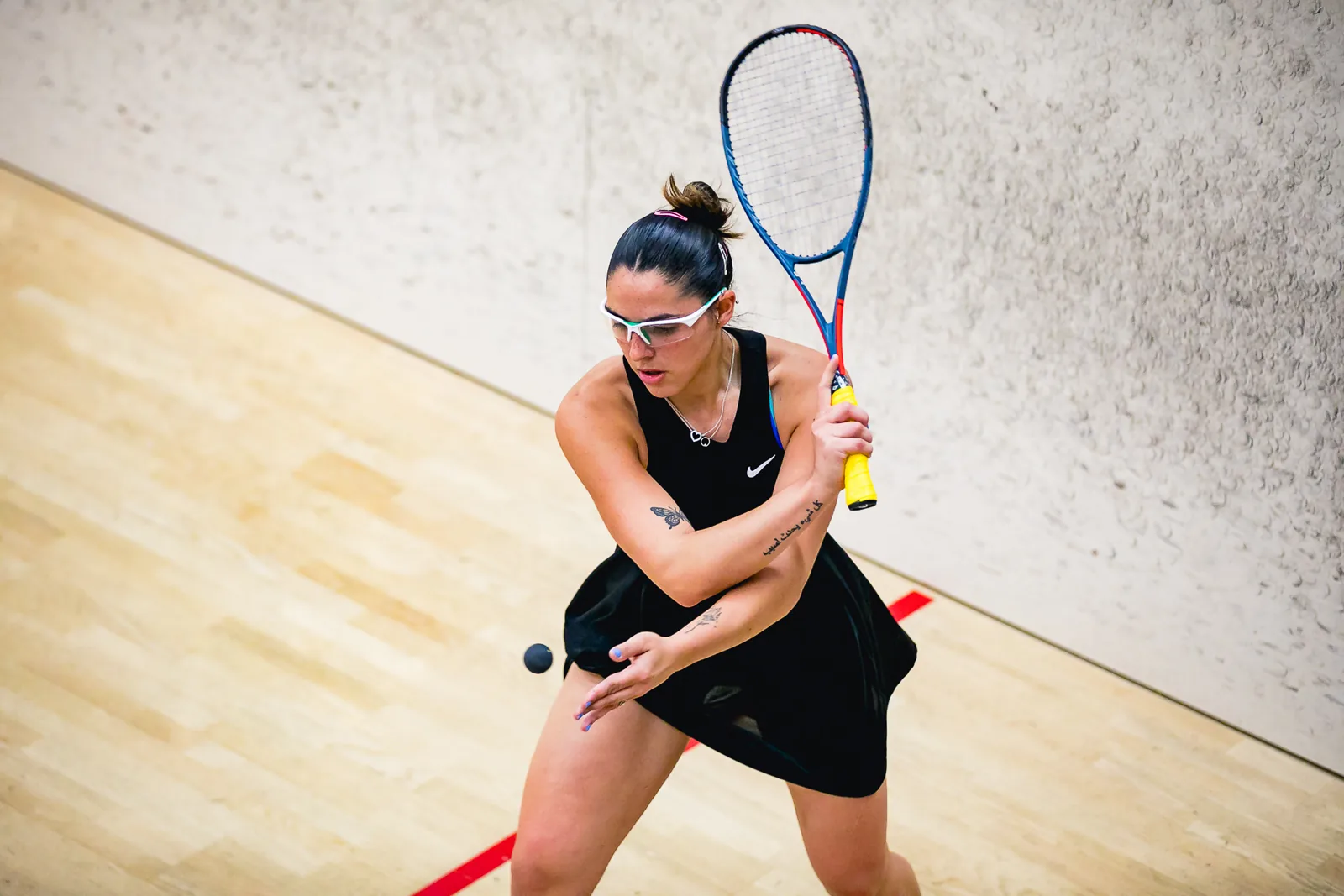
Your four options
1. Contact lenses with squash goggles
The most common solution. You get your normal, full field of vision from the lenses, and the goggles protect the eye. Daily disposable soft lenses are the easiest for sport: you put in a fresh pair and throw them away after the game. The contacts give you clear vision; the goggles give you protection. Contacts alone do not protect you.
2. Goggles with a prescription insert
Some squash goggles have a clip-in frame behind the main lens, which an optician glazes with your prescription. The outer lens takes the impact. This works well if you cannot wear contacts, and you can update the insert when your prescription changes without buying new goggles.
3. Prescription squash goggles
Some sports eyewear frames can be made with prescription polycarbonate lenses directly. They are neat and light, but cost more, and the whole pair needs new lenses when your eyes change. Check that the finished goggles, with your lenses fitted, are certified for squash.
4. Goggles over your glasses
Larger certified goggles designed to fit over glasses. They are the cheapest way to start and suit occasional players, but they are bulkier, warmer and more prone to fogging. Your glasses must fit inside without the frames pressing against the goggles.
Which option suits you
| Option | Good for | Drawbacks |
|---|---|---|
| Contacts and goggles | Regular players who already wear or can wear contacts | Ongoing cost of lenses; not everyone gets on with contacts |
| Prescription insert | People who cannot wear contacts; changing prescriptions | Extra lens surface to fog or smear |
| Prescription goggles | Committed players who want the neatest fit | Highest cost; replace lenses when your eyes change |
| Goggles over glasses | Beginners and occasional players | Bulky, fogs more, can feel loose |
An optician who deals with sports eyewear can tell you which works for your prescription. Strong prescriptions and astigmatism can limit the choice of insert and goggle frames.
Playing in contact lenses
Many players with glasses switch to contacts for sport and find squash easier: no frames at the edge of your vision, no steaming up, and no slipping. A few things to know:
- Get them fitted properly by an optometrist, especially if you have never worn contacts. Ask for lenses suited to sport.
- Many players prefer soft lenses for fast sports. Ask your optometrist which type suits your eyes.
- Keep spare lenses in your bag in case one falls out or gets dust under it.
- Take care with water. Follow your optician's advice on showering or swimming in contact lenses after the game.
- Still wear goggles. A contact lens offers no impact protection.
Juniors who wear glasses. Under 19s must wear eye protection in England Squash and World Squash junior competitions. England Squash says players who wear glasses need either squash eye protection over their glasses or prescription squash eye protection.
Practical tips
- Try before you buy. Take your glasses to the shop if you plan to wear goggles over them.
- Fight the fog. Put your eyewear on before you warm up, choose anti-fog lenses, and wear a headband to keep sweat away from the frames.
- Check the certification on the frame or packaging: ISO 18527-2, BS EN 18527-2 or ASTM F3164. See do you need squash goggles for more on standards.
- Mind your peripheral vision. Bulky frames can hide a ball coming off the side wall. Give yourself a few games to adjust.
- Pack a soft cloth and a case. Scratched lenses make the ball harder to pick up. See what to pack in a squash bag.
New to the game? Our guide to what to wear for squash covers the rest of your kit.
FAQ
Can you play squash with glasses on?
It is not safe to play in ordinary glasses. They are not designed for squash impacts and can break or be pushed into the face. Wear certified squash goggles over your glasses, or use prescription squash eyewear or contact lenses with goggles.
Are prescription squash goggles worth it?
For regular players who cannot or do not want to wear contacts, yes. They are lighter and fit better than goggles worn over glasses. Check they are certified for squash with your lenses fitted.
Is it safe to play squash in contact lenses?
Contacts are fine for seeing the ball, but they do not protect your eyes. Wear certified squash goggles over them.
Can I play squash without glasses if my eyesight is only slightly off?
Some players with mild short-sightedness do. If the ball looks blurred at the front wall, you will react late, which raises the risk of being hit. Ask your optician whether you should correct your vision for sport.