How to choose a squash racket
 By the Find My Squash Court team·
Updated ·
6 min read
Walk into a racket shop and every squash racket looks much the same: long, thin and very light. The differences are small on paper but you feel them on court. This guide explains the few things that matter, in the order that matters, so you can pick one with confidence.
The short answer
Choose a squash racket by weight, balance, head shape and grip, in that order. Most adult rackets weigh about 110 to 150 g. Beginners usually do best with around 130 to 150 g, an even or slightly head-heavy balance and a closed-throat (teardrop) head, which gives a bigger sweet spot and more power. Experienced players often go lighter and more head-light for speed and control. Make sure the grip fits your hand, and try before you buy if you can. Expensive frames do not make beginners play better.
What matters, in order
- Weight and balance. How heavy the racket is, and where that weight sits.
- Head shape. Closed throat or open throat.
- Grip. Size, shape and how it feels in your hand.
- Strings. Type and tension. Easy to change later.
- Brand, colour, price. Least important.
All rackets used in competition must meet the World Squash specifications: no longer than 686 mm, no wider than 215 mm, a strung area of no more than 500 square centimetres and a maximum weight of 255 g. Strings can be gut, nylon or a substitute, but not metal, and the bumper strip round the head must be white, colourless or unpigmented so it does not mark the walls. Any racket sold as a squash racket by a mainstream brand meets these rules.
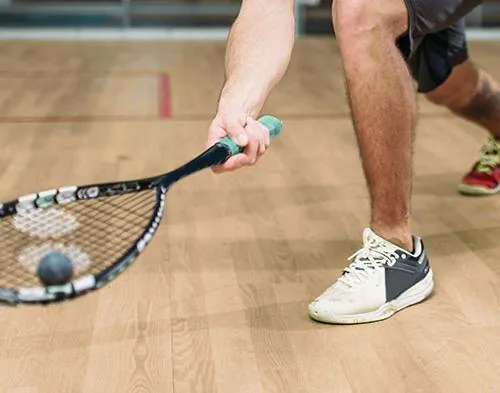
Weight and balance
Squash rackets are light, usually somewhere between 110 and 150 g. A few grams makes a real difference.
| Weight | Feel | Suits |
|---|---|---|
| Light, about 110 to 125 g | Fast, manoeuvrable, less stable on mishits | Experienced players with a full swing |
| Medium, about 125 to 145 g | Balance of power and speed | Most club players |
| Heavier, about 145 g and up | Solid, forgiving, slower to prepare | Beginners and players coming from tennis |
Balance is where the weight sits along the racket. A head-heavy racket puts more mass behind the ball, which helps you hit deep with a short swing. A head-light racket is quicker in the hand, which helps volleys and fast exchanges at the front. An even balance sits between.
Balance changes how heavy a racket feels more than the scales do. Our guide to squash racket weight and balance goes into this in detail.
Head shape
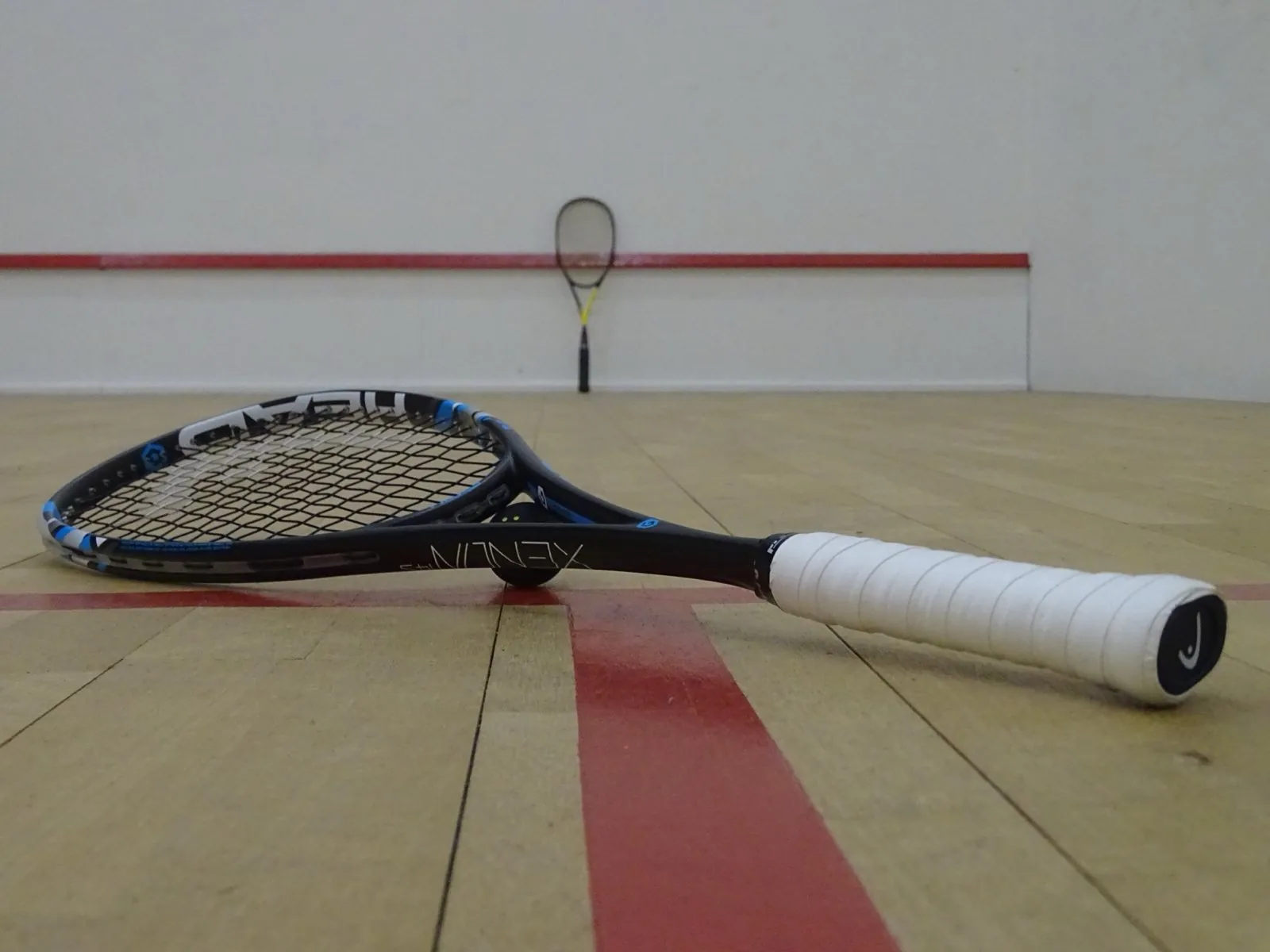
Closed throat (teardrop). The strings run all the way down into the shaft, with no bridge across the throat. This makes the strings longer and the sweet spot larger, which means more power and more forgiveness when you do not hit the centre. Most rackets sold today are this shape, and it suits most players.
Open throat (traditional). A bridge closes the bottom of the head, giving a smaller, rounder string bed. Many players find it gives more control and feel for touch shots, at the cost of a smaller sweet spot. It suits players who make their own pace and value precision.
Coming from tennis or badminton? A squash racket is far lighter than a tennis racket and a little heavier than a badminton racket. Tennis players often like a slightly heavier, head-heavy squash racket at first. Badminton players often prefer something lighter.
Grip size and feel
Squash rackets mostly come with one standard grip size, much thinner than a tennis grip. You adjust it yourself:
- Too thin: you squeeze harder to stop the racket turning, which tires your forearm and can contribute to elbow pain. Add an overgrip or a replacement grip to build it up.
- Too thick: the racket feels clumsy and your wrist has less freedom. Choose a thinner replacement grip.
- Material: tacky grips suit dry hands; towelling or perforated grips suit sweaty hands.
Grips wear out quickly, and a fresh one changes how a racket feels. See how to regrip a squash racket and how to hold a squash racket.
Strings
Most rackets come pre-strung with a basic synthetic string. That is fine for beginners. As you improve, a thinner string and a restring at a tension that suits you can give more feel and grip on the ball. Lower tension gives more power and a softer feel; higher tension gives more control. Our guide to squash strings covers gauges, tensions and how often to restring.
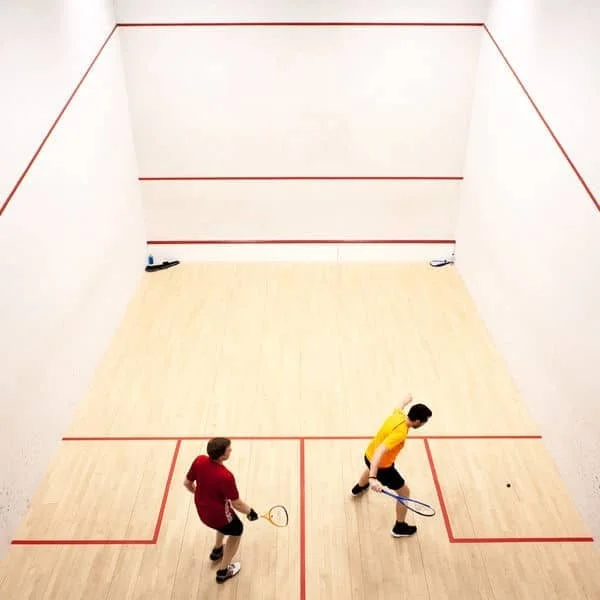
UWE Bristol Centre for Sport
Bristol · Racket hire
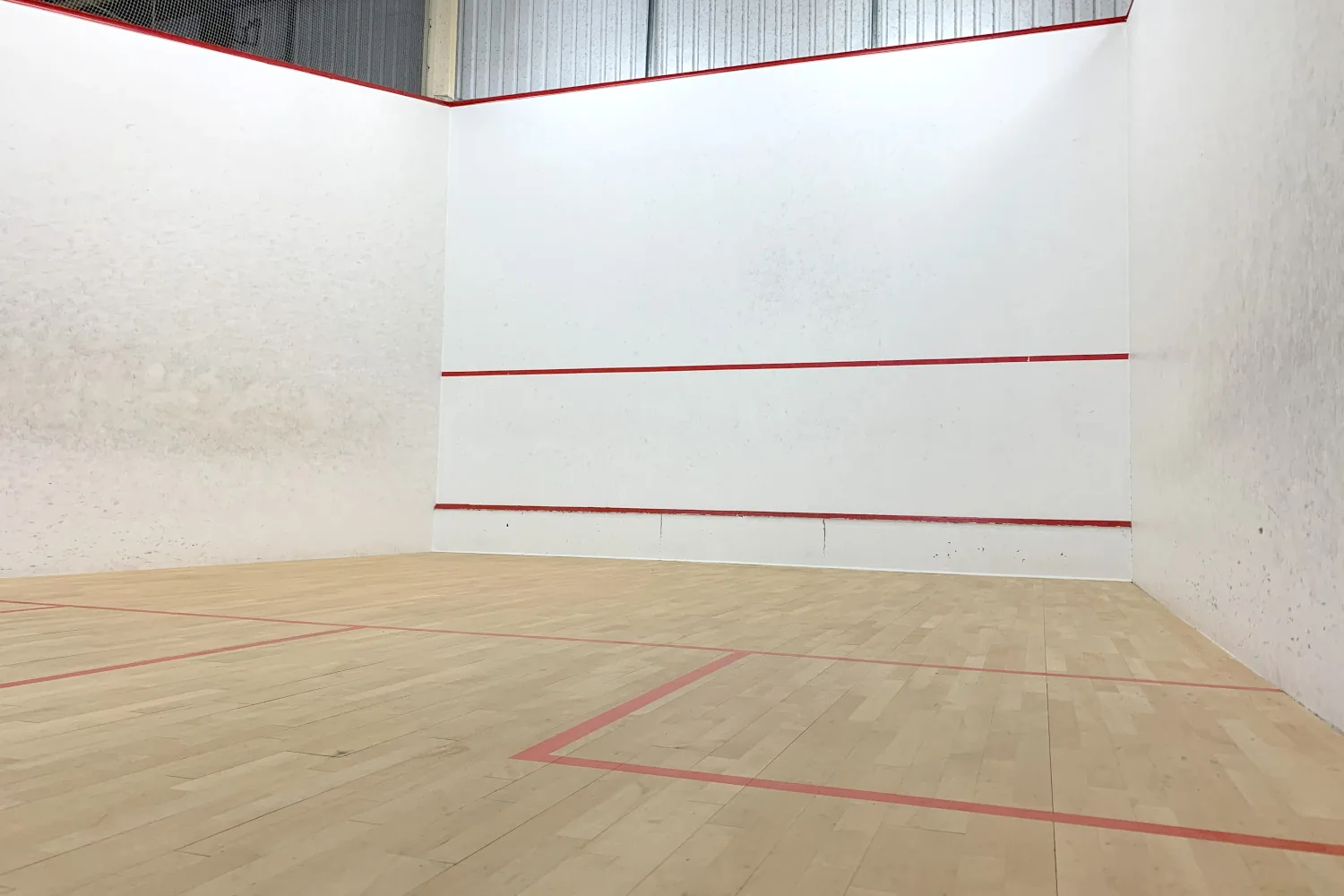
SU Gym and Sports Centre (University of Plymouth Students' Union)
Plymouth · Pay as you go
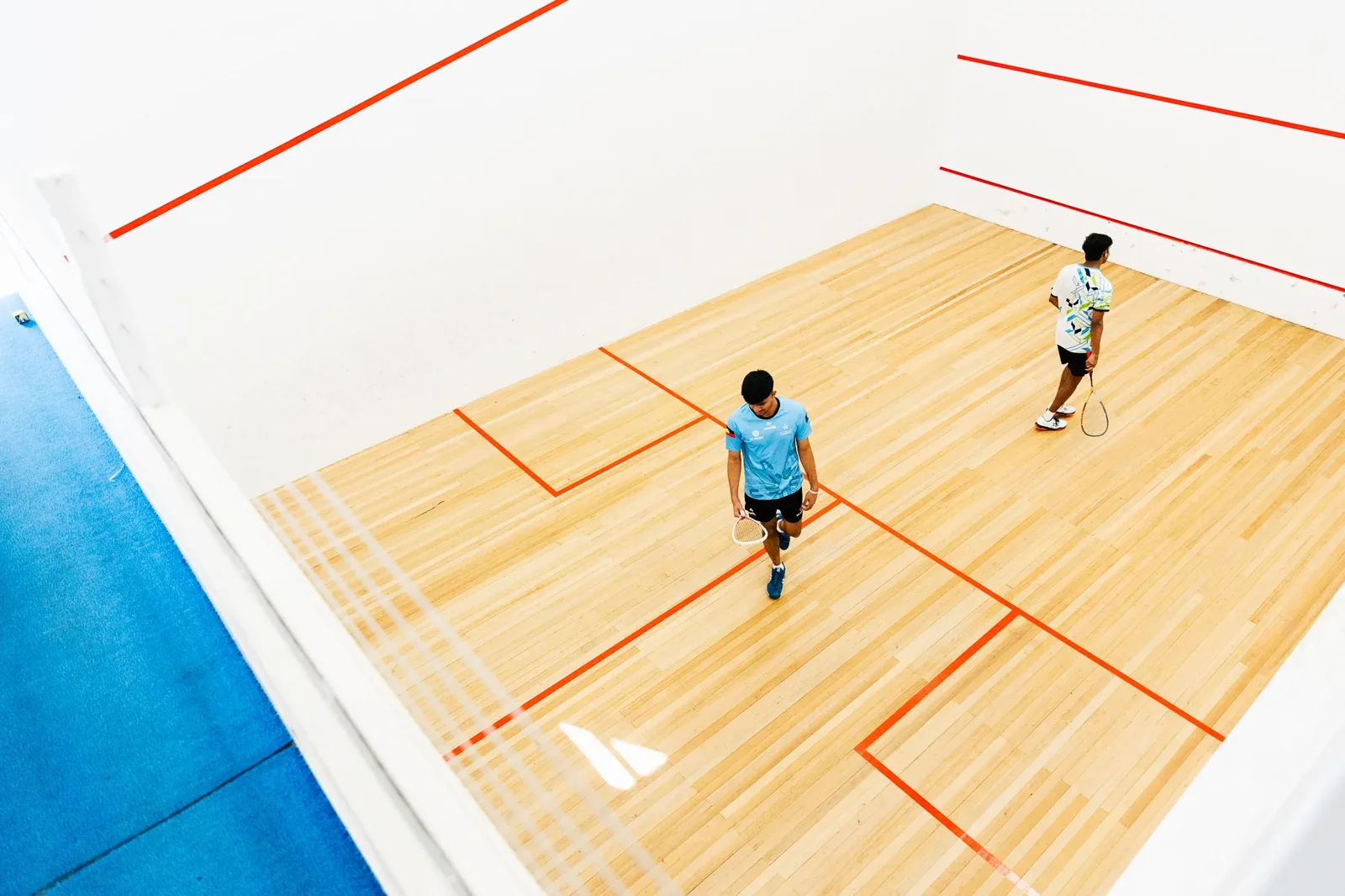
UCFitX, University of Canberra
Canberra · Three courts
Recommendations by level
- Complete beginner: borrow or hire a racket for your first few sessions. Many leisure centres and clubs hire rackets for a few pounds. Then buy a mid-priced, closed-throat racket at about 130 to 150 g with an even or slightly head-heavy balance.
- Improving club player: try a few rackets in the 120 to 140 g range. Many players move towards a lighter or more even balance as their swing gets faster and cleaner.
- Experienced player: choose on feel. Head-light rackets for a volleying, attacking game; slightly heavier or open-throat rackets for control.
- Children: use a junior racket, which is shorter and lighter. A full-size adult racket is too long and heavy for most young children. See junior squash.
- Sore elbow or older players: a lighter, more forgiving racket with a bigger sweet spot, a grip built up to the right size and slightly lower string tension. See tennis elbow from squash.
Buying tips
- Try before you buy. Ask club members to let you hit with their rackets, or use a shop or club demo scheme.
- Do not buy the most expensive racket. Top-end frames are lighter and stiffer, which suits fast, clean swings. A mid-range racket is usually better for beginners and improvers.
- Last season's model is often the same frame with new paint, at a lower price.
- Buy two the same once you play regularly. Strings break mid-match, and switching to a different racket feels strange.
- Check second-hand rackets for cracks around the head and throat, and plan to restring and regrip.
FAQ
What weight squash racket should a beginner use?
Around 130 to 150 g with an even or slightly head-heavy balance. The extra mass helps the ball reach the back of the court while your swing is still developing.
Is a teardrop or traditional squash racket better?
For most players, a teardrop (closed-throat) racket, because of its larger sweet spot and extra power. Traditional open-throat rackets suit players who want more control and make their own pace.
Does an expensive squash racket make you play better?
Not for most club players. Top-end rackets are lighter and stiffer, which suits fast, clean swings. Lessons and practice make far more difference than the price of the frame.
How long does a squash racket last?
A good frame can last several years with regular play if you avoid hitting the walls and floor. Strings and grips need replacing far more often.