Squash benefits: what the research says
 By the Find My Squash Court team·
Updated ·
5 min read
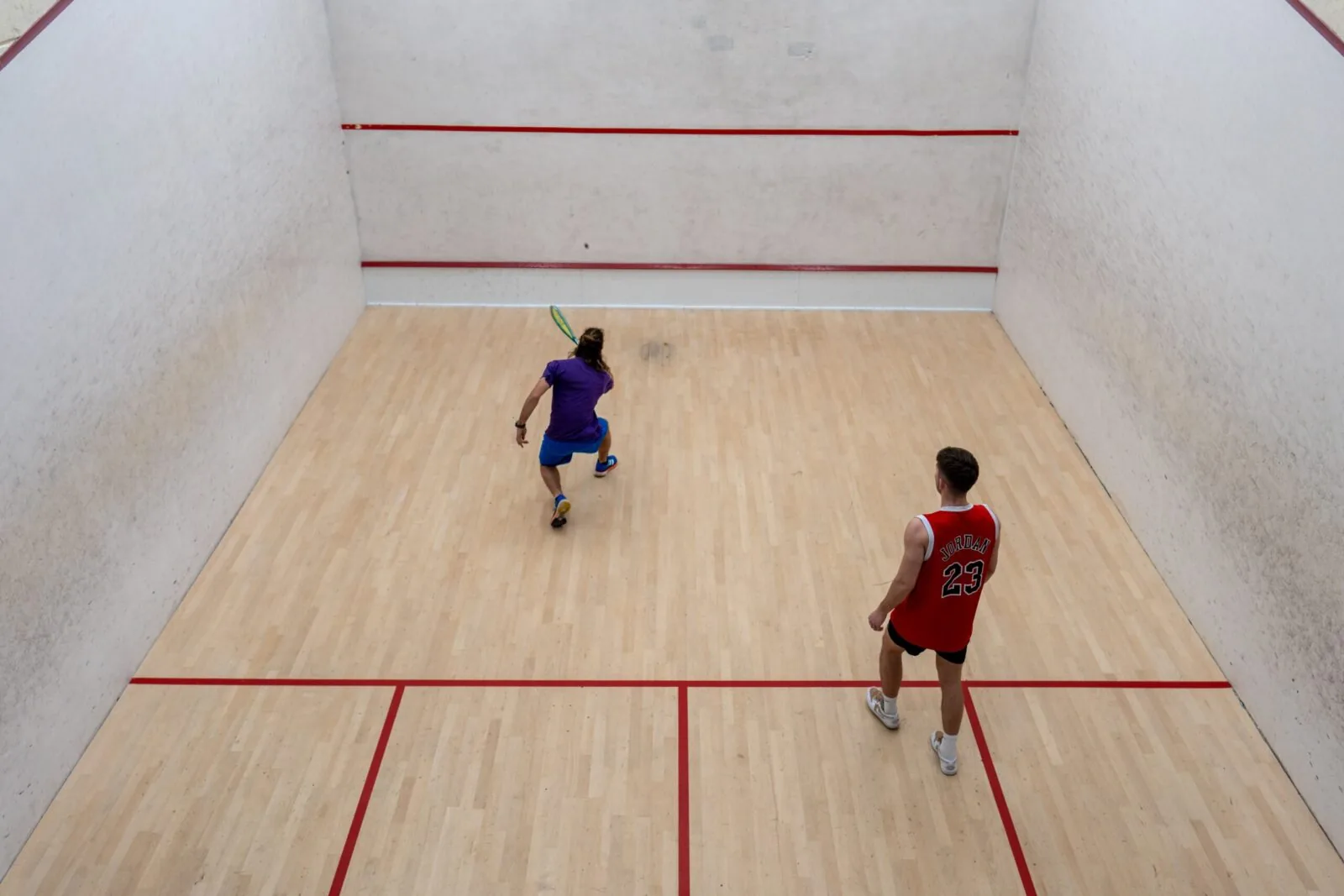
Squash has a reputation as one of the toughest racket sports. This guide sets out what the research actually shows about its health benefits, and where the evidence is thinner than people claim.
The short answer
Squash is vigorous exercise, so it counts double towards weekly activity targets. In a large British study, adults who played racket sports, squash included, had a lower risk of dying during follow-up than people who did not, both overall and from heart disease and stroke. Studies of racket players also show stronger bones in the playing arm, especially in people who started young. Squash builds fitness, speed and agility, and it is social. The evidence is observational, so it shows links rather than proof that squash alone causes the benefit.
It counts as vigorous exercise
The NHS asks adults to do at least 150 minutes of moderate activity or 75 minutes of vigorous activity a week, plus strength exercises on at least two days. Squash sits firmly in the vigorous group. The Compendium of Physical Activities, the standard reference for the energy cost of activities, gives general squash a MET value of 7.3 and hard competitive squash 12.0. Anything from about 6 METs up is usually classed as vigorous.
So two 40 minute games a week goes a long way towards the vigorous target, even allowing for breaks between rallies and games. You can read the full NHS physical activity guidelines for the detail by age.
Racket sports and a longer life
The most cited study is Oja and colleagues, published in the British Journal of Sports Medicine in 2017. It pooled health survey data on 80,306 adults in England and Scotland, with an average age of 52, and followed them for around nine years.
Compared with people who did not take part, those who played racket sports (squash, tennis and badminton were grouped together) had a 47% lower risk of death from any cause during the study, after the researchers adjusted for other differences between the groups. Their risk of death from heart disease and stroke was 56% lower. Swimming and aerobics were also linked to lower risk, and cycling to lower all-cause risk, while running and football showed no clear link in this group.
Two points matter when you read those figures. They are for racket sports as a whole, not squash alone. And the study observed people rather than assigning them a sport, so the players may differ from non-players in ways the researchers could not measure.
Heart and fitness
Squash works your heart and lungs hard. Rallies are short bursts of running, lunging and turning, with brief pauses in between, which is similar to interval training. Regular players build aerobic fitness and the ability to recover quickly between efforts.
That intensity is the reason for the benefits, and also a reason to build up gently if you are new or returning. Any hard exercise carries some risk for people with heart disease, whether or not it has been diagnosed. If you have chest pain, breathlessness out of proportion to the effort, dizziness or a known heart condition, see a doctor before you start. Our guide to squash and heart risk covers this in detail.
Build up over a few weeks. Start with relaxed rallies and short games, warm up properly and take breaks between games. Our squash warm-up guide has a ten minute routine.
Stronger bones
Bone responds to impact and load. Racket sports put repeated, high loads through the playing arm, which makes them a useful natural test: researchers compare the playing arm with the other arm in the same person.
A five year study in the Journal of Bone and Mineral Research (Kontulainen and colleagues, 2001) followed female tennis and squash players and a control group. Players who started at or before their first period had about 22% more bone mineral content in the upper arm of their playing side than in the other arm. Those who started later had about 10% more, and the non-playing controls about 3.5%. The players kept most of that gain even after they trained less.
The lesson is that racket sports load bone, and that starting young gives the biggest effect. The jumping, lunging and quick stops of squash also load the legs and hips, though most research has looked at the arm.
Agility, focus and company
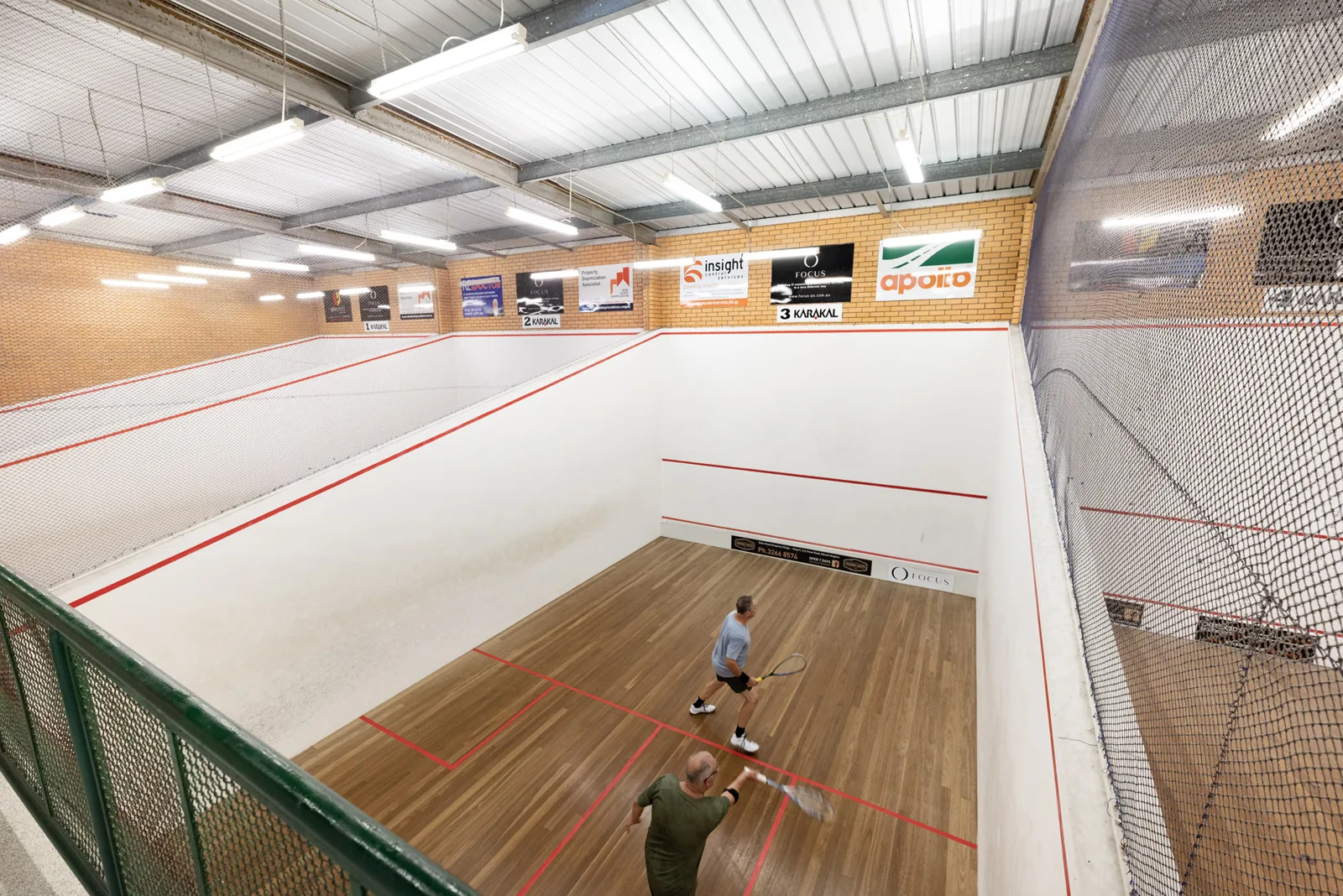
Squash trains things a treadmill does not. You change direction constantly, react to a fast ball, and read where your opponent is about to hit. Players build balance, footwork and hand speed, and these carry over into everyday movement.
It is also a social game. Most club players join box leagues, team nights and club evenings, which keep them playing for years. That habit may be one of the biggest benefits of all, since regular activity that you enjoy is the kind you keep doing. Our guide to squash box leagues explains the most common way in.
What the research does not show
- Squash-only data is scarce. Large studies group squash with tennis and badminton. There are few long-term studies of squash players alone.
- It does not replace strength training. Squash loads the legs and playing arm, but the NHS still advises strength exercises for all major muscle groups on two days a week.
- Injury is part of the picture. Fast turns and a hard ball bring a risk of sprains, muscle strains and eye injuries. Eye protection is a simple fix for the last. See common squash injuries.
For the plain question of whether squash is worth your time as exercise, our guide on whether squash is good exercise gives a short answer.
FAQ
Does squash help you live longer?
A large British study found people who played racket sports had a lower risk of death over about nine years than people who did not. It shows a link, not proof, and grouped squash with tennis and badminton.
Is squash good for your heart?
Regular vigorous exercise like squash improves heart and lung fitness. People with heart symptoms or a known heart condition should get medical advice before playing.
Does squash build muscle?
It works the legs, core and playing arm, but it is mainly cardiovascular exercise. Add strength training to build muscle across the whole body.
How often should you play squash for health benefits?
Two 40 minute games a week puts you close to the NHS target of 75 minutes of vigorous activity, alongside strength work on two days.