Squash etiquette for new players
 By the Find My Squash Court team·
Updated ·
5 min read
Squash has a short list of unwritten rules, and club players notice quickly when you break them. Most are about safety in a small box, fairness when there is no referee, and not wasting anyone's court time.
The short answer
Good squash etiquette means arriving on time and leaving the court promptly when your slot ends, waiting for a rally to finish before opening the door, wearing non-marking shoes and goggles, and sharing the warm-up fairly. During play, call your own double bounces and balls that hit the tin, ask for a let rather than hitting through your opponent, and never play a shot that could hit them. Call the score clearly before each serve and shake hands at the end.
Before you go on court
- Be on time. Most courts are booked in 40 or 45-minute slots. Five minutes late is an eighth of your partner's game.
- Wear non-marking indoor shoes. Black rubber soles leave marks on a sprung wooden floor, and many venues will turn you away. See squash shoes.
- Bring goggles. They are compulsory in junior and doubles events, and sensible for everyone.
- Bring a ball. Agree in advance who brings one, and which kind. A beginner who brings a double-yellow-dot ball to a first game will spend most of it picking the ball up off the floor.
- Keep bags and bottles outside. The rules do not allow objects inside the court, and a water bottle in the corner is a trip hazard. Leave them by the door or in the gallery.
The court door
The door is the part of squash etiquette that catches new players out. It is in the back wall, often with a small window or a glass panel, and opening it at the wrong moment can hurt someone.
- When your slot starts and the court is still in use, wait outside where the players can see you, or knock once between rallies.
- Never open the door during a rally. A player running to the back corner can collide with it.
- When it is your turn to leave, finish the rally you are playing, pick up your ball and go. Do not start "one more game".
- Close the door firmly behind you. A door left ajar can swing open during play.
The warm-up
In a match, players get four minutes to warm up the ball together, swapping sides halfway. In social games the time is looser, but the principle is the same: share the ball. Hit a few to yourself, then send it across so your opponent can do the same. Keeping the ball for long spells is bad manners, and in refereed matches it counts as an unfair warm-up under the conduct rules.
Warm the ball up properly before you start scoring. A cold ball barely bounces. Why you warm up a squash ball explains why.
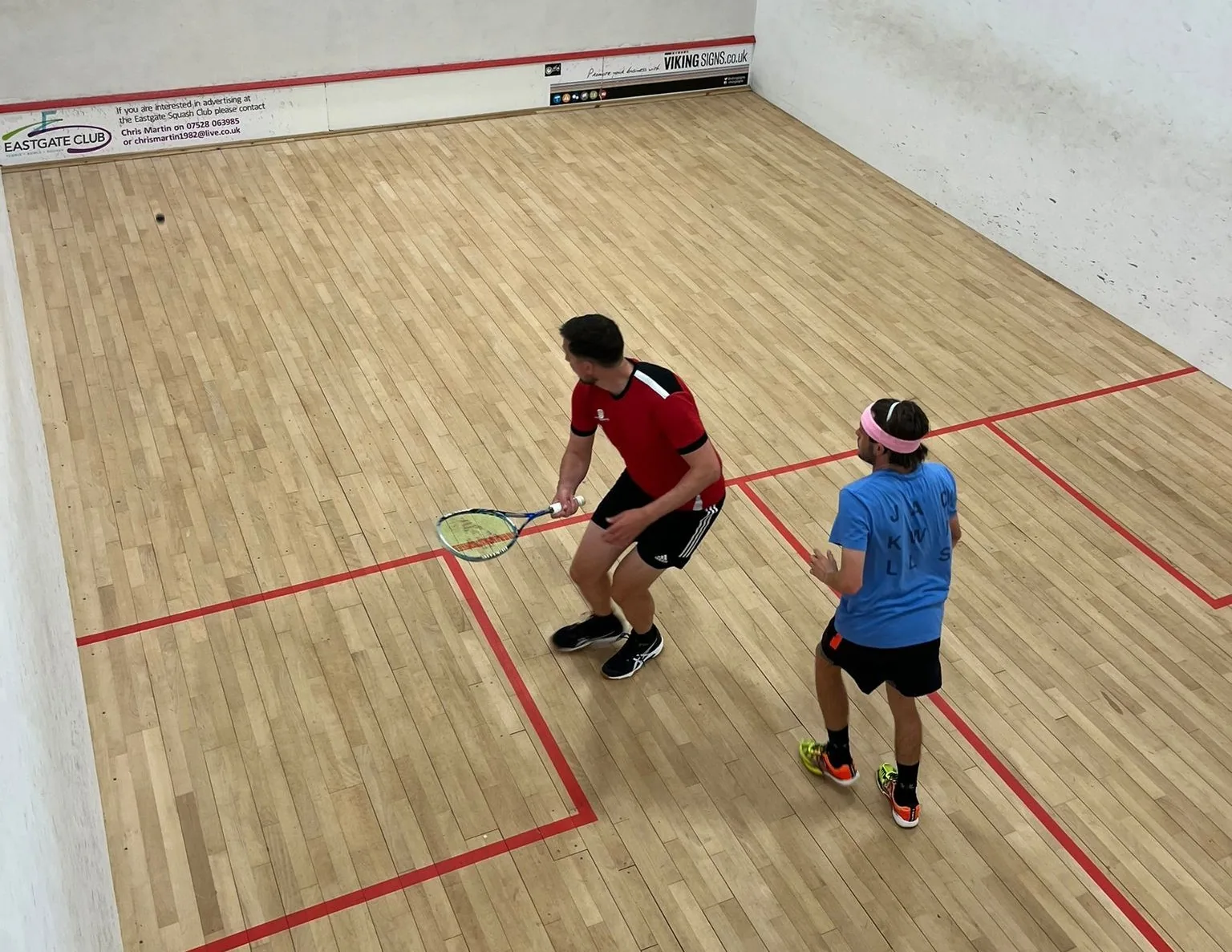
Eastgate Club
Lincoln · Clubhouse bar
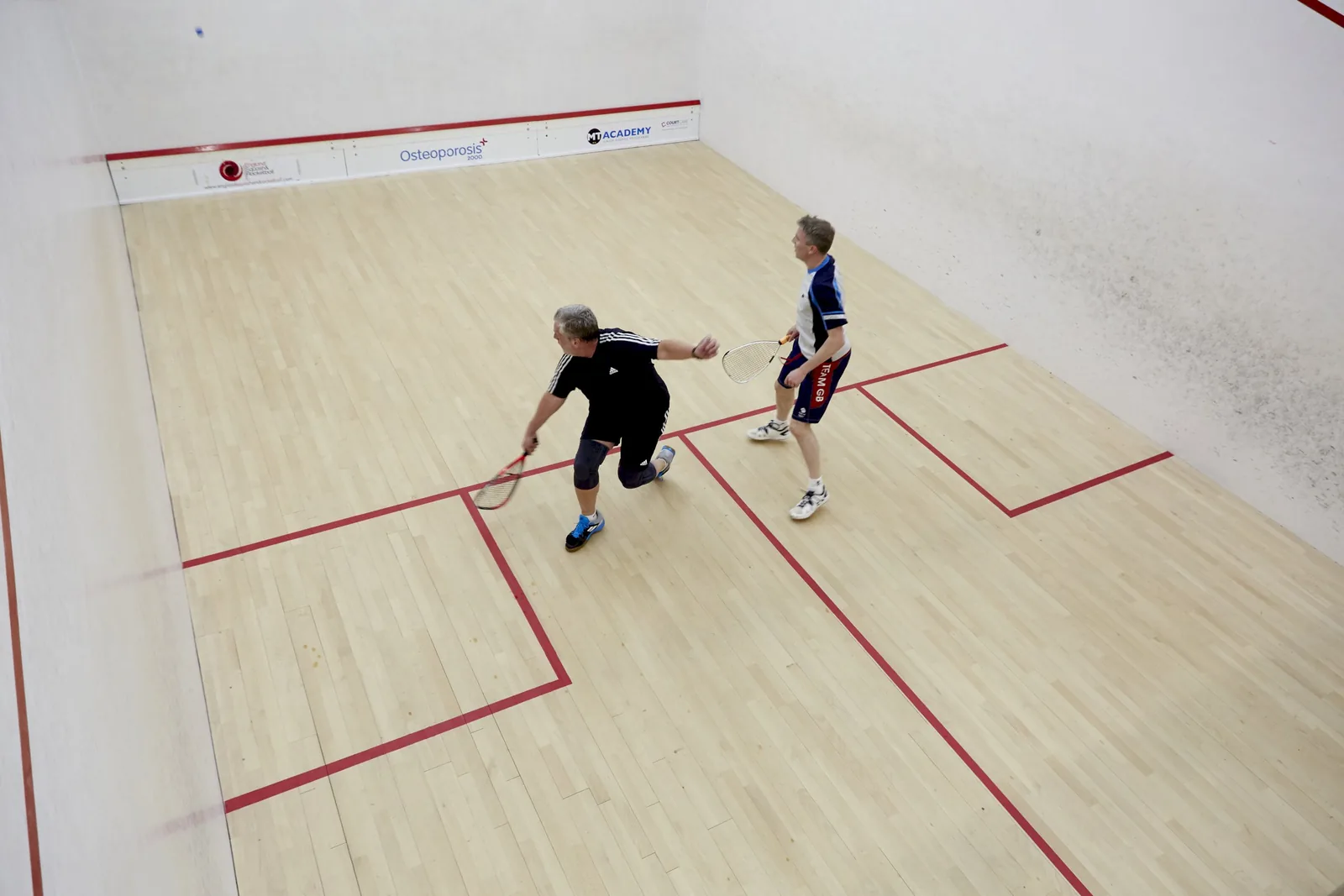
Abbeydale Squash & Fitness Club
Sheffield · All-glass court

Henderson Squash Club
Auckland · Glass-backed courts
During play
Most club squash has no referee, so the players run the game themselves. That only works if both are honest.
- Call your own faults. If you hit the ball after its second bounce, or it touched you, the rally is over. Say "not up" or just "two bounces" and give your opponent the point. The same goes for a shot you know hit the tin.
- Call the score before each serve. The server says it, server's score first. If you disagree, sort it out now, not three points later. See squash scoring.
- Give the benefit of the doubt. If you are not sure whether your opponent's ball was down, the rally usually goes to them, or you play a let.
- Keep your swing compact. A big follow-through near your opponent is dangerous, and in refereed squash an excessive swing counts against you.
- Do not distract. Shouting during an opponent's shot, stamping, or talking to someone in the gallery mid-rally all count against you.
Lets and safety
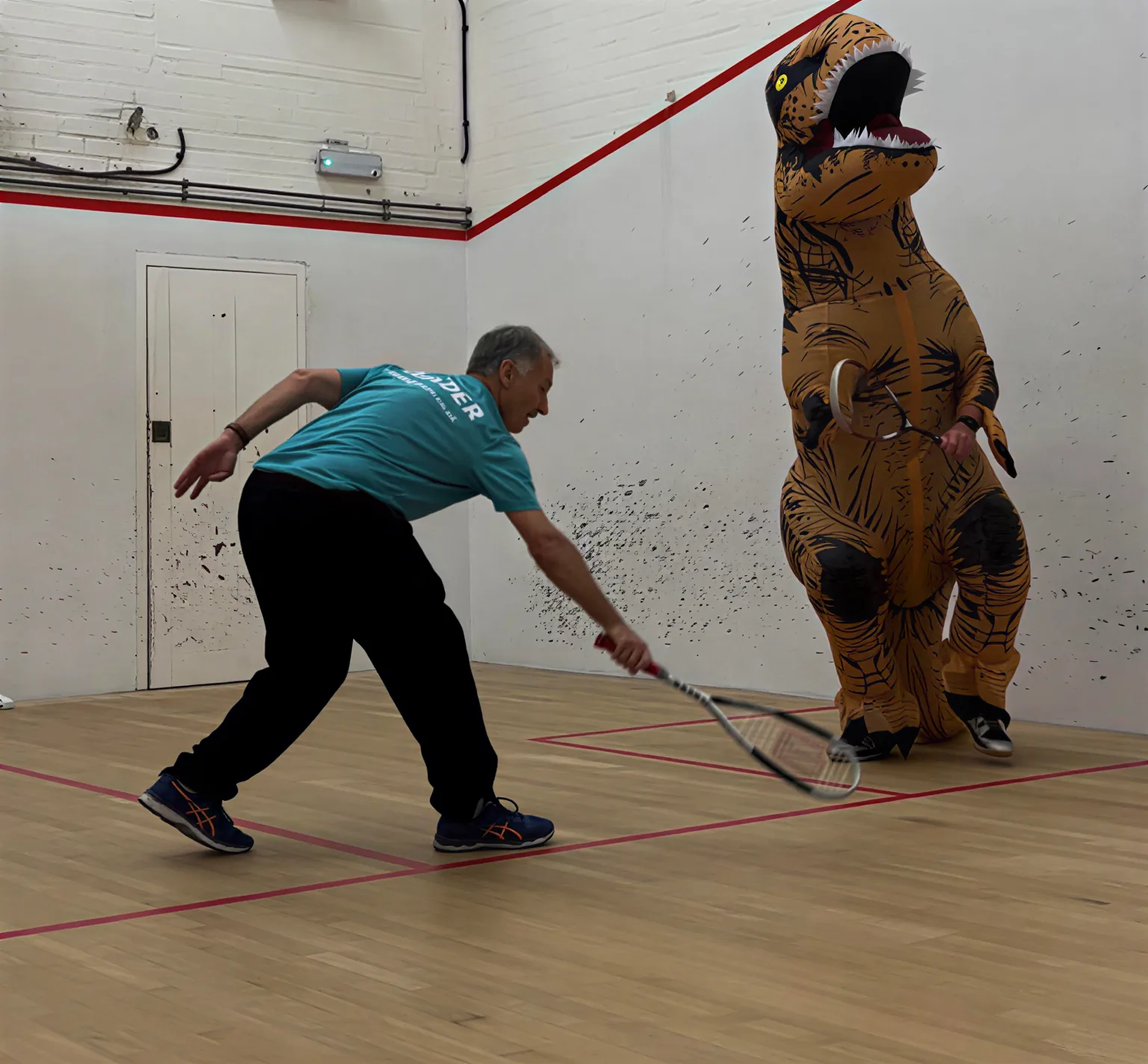
If your opponent is in the way of your shot, stop and say "let, please". In a friendly game, you then agree between you whether to replay the rally. The safe habit is to stop whenever you think you might hit them with the ball or racket. A replayed point costs nothing, and an eye injury costs a great deal.
Equally, after you hit the ball, move out of your opponent's way so they can see the ball, reach it and swing freely. Blocking them on purpose is the fastest way to stop getting games. Our guide to let or stroke explains how referees decide.
Wet patches. If you fall or leave sweat on the floor, stop after the rally and wipe it with a towel. Playing on a wet patch is how ankles get twisted.
After the game
- Shake hands or tap rackets and thank your opponent, whatever the result.
- Take everything with you: ball, towel, bottle, the grip tape you peeled off.
- If you are in a box league, enter the result promptly. See squash box leagues.
- If someone has been waiting, wish them a good game on the way out. It costs nothing and you will be playing them one day.
Most clubs are friendly to newcomers who make an honest effort with all this. If you are unsure about a local custom, such as who books the next court or how club nights rotate, ask at the bar or the front desk. Our guide to your first squash game covers the practical side.
FAQ
Can I go into a squash court while people are playing?
No. Wait until the rally ends and the players see you, then knock or open the door. Opening it mid-rally can injure a player near the back wall.
Should I call my own double bounce?
Yes. In games without a referee, players are expected to call their own double bounces, carries and balls that touched them.
Is it rude to ask for a let?
No. Asking for a let when your opponent is in the way is part of the game and much better than hitting the ball into them.
Can I leave my water bottle in the court?
No. The rules do not allow objects in the court, and a bottle in the corner can trip someone. Leave it by the door outside.