Squash ratings: how your level is measured
 By the Find My Squash Court team·
Updated ·
5 min read
A squash rating is a number worked out from your match results that says how well you are playing right now. Clubs use it to place you in leagues, captains use it to pick teams, and you can use it to see whether you are improving.
The short answer
Most squash ratings are calculated from match results, taking account of who you played and how close the score was. In England, Scotland, Australia and New Zealand the official system is SquashLevels: every result from a connected box league, team league or tournament updates your level. New Zealand still shows grades such as A1 or C2, now set from SquashLevels. Canada uses Club Locker ratings, on a scale from about 1.5 up to around 7 for top professionals. To get a rating, play in a league or tournament that records results.
SquashLevels
SquashLevels was created in 2008 by Richard Bickers, a software developer who played in the Avon county leagues in south-west England. It has since become the main rating system in squash. It powers England Squash's official senior rankings, Squash Australia's ratings and Squash New Zealand's grading, and Scottish Squash has partnered with it too. In July 2025, World Squash adopted it for its World Junior Ratings.
How the number works
Your level is a single number. Higher is better, and the scale is wide: SquashLevels says a beginner can have a level under 50, while the best professionals are in the tens of thousands. The numbers are relative. What matters is how your level compares with your opponent's, because the system uses that gap to predict how a match between you should go.
After each match, the system compares the actual result with what it expected from the two levels. Do better than expected, for example by beating a stronger player, and your level rises. Do worse, and it falls.
What counts
SquashLevels connects to results systems around the world, including club box leagues, inter-club leagues and tournaments. England Squash's national ratings include every player flagged as English who has logged results in the previous six months. Not every club box league is connected, so ask your league organiser.

Grades in New Zealand
New Zealand has long used letter-and-number grades, from A grades at the top downwards through B, C, D and beyond. Until the end of 2023, players won and lost grading points in each competitive match. From the start of 2024, Squash New Zealand switched to SquashLevels. The grades stayed, but each grade now covers a band of SquashLevels, and you move between grades as your level changes. Grading lists and match history are kept in MySquash.
Grades matter in practice: interclub and tournament divisions are usually set by grade, so your grade decides which competitions you enter.
Club Locker in Canada
Squash Canada uses Club Locker, the platform also used by US Squash. Club Locker gives each player a decimal rating calculated from match results and the ratings of the opponents you have played. The scale starts at about 1.5 and reaches around 7 for top professionals, with most club players in the middle. Results from tournaments, leagues, ladders and boxes run in Club Locker feed in automatically. Squash Canada's national rankings list players in order of their Club Locker rating, and only members of a provincial or territorial association appear in them.
Ratings are not comparable across systems. A SquashLevels number and a Club Locker rating use different scales, so you cannot convert one into the other. Compare your rating only with players on the same system.
How to get a rating
- Join a club league that records results. Box leagues are the easiest route. See box leagues and ladders explained.
- Play in a team league or tournament. County, district, pennant and interclub results are almost always recorded. See joining a squash league.
- Ask for a starting level. SquashLevels lets a player with an established level record a "level generator" match against a newcomer. The newcomer gets a provisional level, marked (P), and the established player's level is not affected.
- Create a free account on SquashLevels, or on Club Locker in Canada, to see your history and matches.
Your first few results move your level a lot. It settles as you play more, so give it a dozen matches before you read much into it.
Using your rating
- Finding even games. Look for opponents with a level close to yours. Matches between players far apart are rarely fun for either side.
- League placement. Clubs use levels to seed new players into the right box.
- Team selection. Captains use levels to set the playing order, from first string down.
- Tracking progress. Your level graph shows whether coaching or more matches are paying off. Expect dips when you are tired, injured or returning from a break.
A rating measures results, not technique. Two players with the same level can play very differently. If you want to understand the score lines that feed it, see squash scoring.
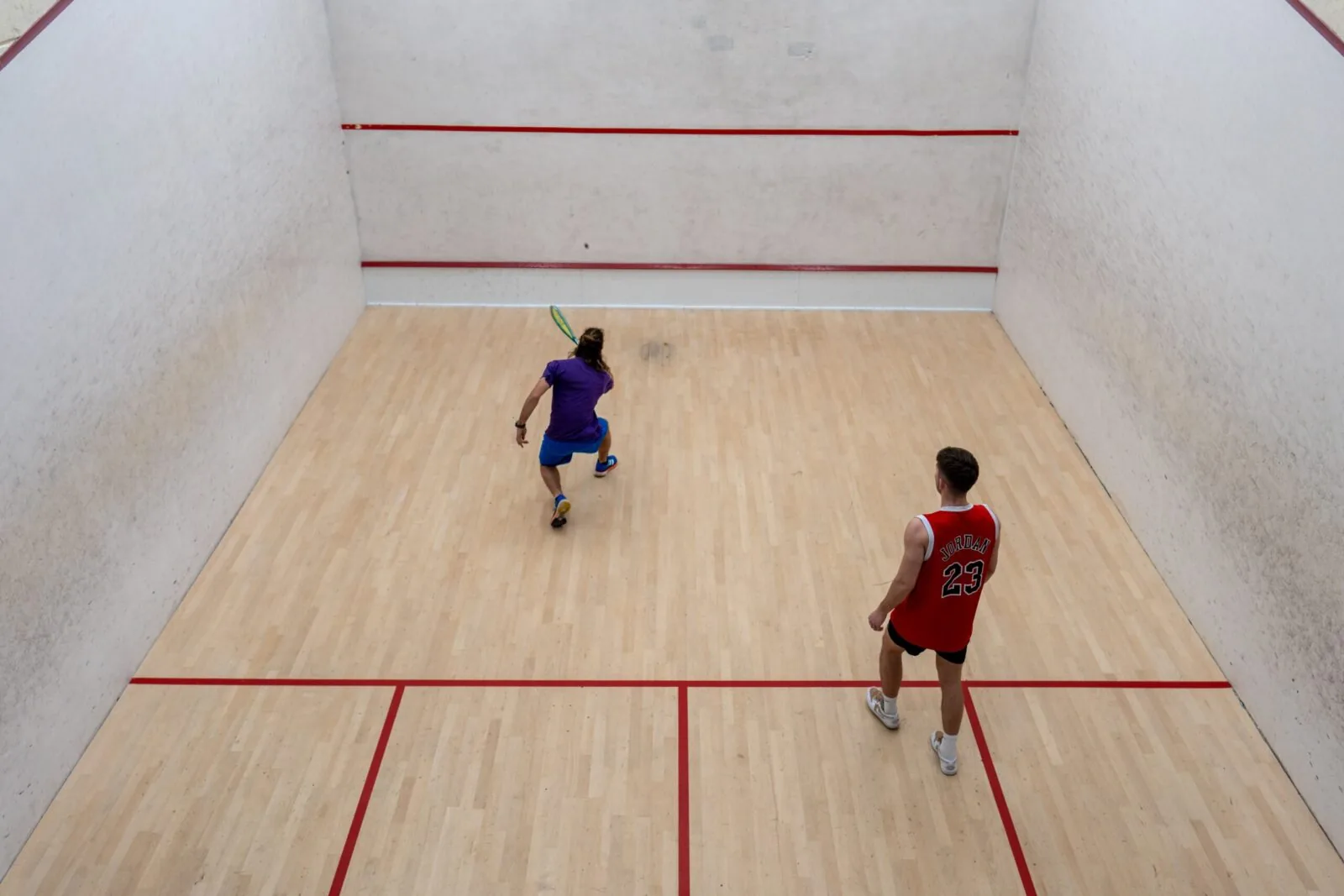
Oriam
Edinburgh · Eight heated courts
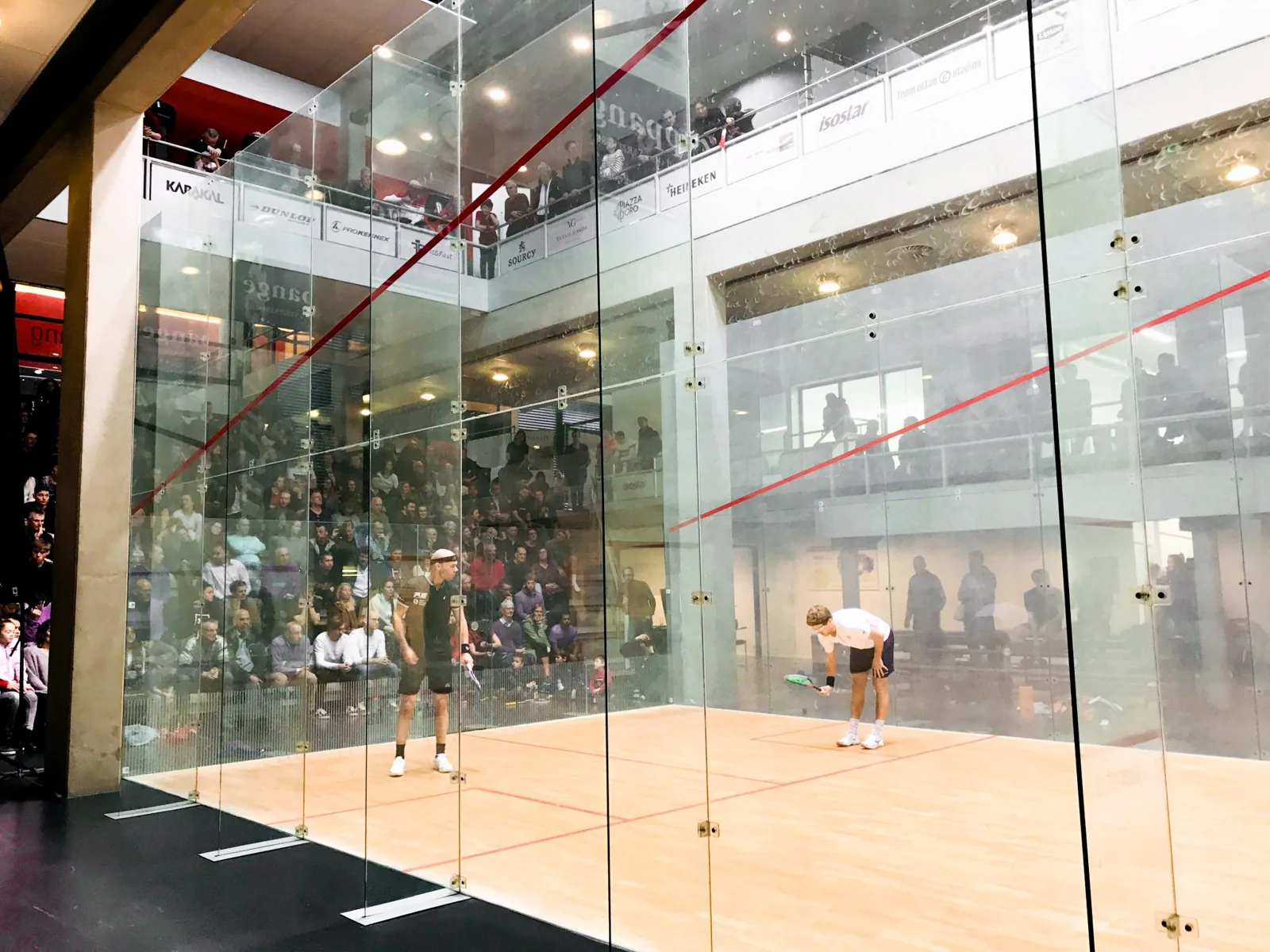
Frans Otten Stadion
Amsterdam · 21 courts

Hallamshire Tennis & Squash Club
Sheffield · Nine courts
FAQ
What is SquashLevels?
SquashLevels is a rating system that calculates a player's level from match results. It powers the official ratings in England, Australia and New Zealand and is used by Scottish Squash and World Squash.
What is a good SquashLevels rating?
It depends on where you play, because levels are relative. Beginners can be under 50 and top professionals in the tens of thousands. Compare yourself with players at your club rather than a fixed number.
Do friendly matches count towards my rating?
On SquashLevels, results count when they come through a connected league, box or tournament, or are recorded as a level generator match. Club Locker in Canada counts friendly matches entered in the system.
How do I get a squash rating without playing competitions?
Ask a player with an established SquashLevels level to record a level generator match against you. That gives you a provisional level to start from.