What age can children start squash?
 By the Find My Squash Court team·
Updated ·
5 min read
Children can start squash far younger than most parents think, as long as the racket, ball and court are scaled down. What changes with age is the kit and the format, not whether they can play.
The short answer
Most children can start squash at around five, in mini squash sessions with short rackets and big, soft balls. From about eight they can use junior rackets and bouncier beginner balls on a full court. Somewhere between ten and twelve, depending on size and skill, most move to full-size rackets and the standard ball. There is no minimum age in the rules. Goggles matter at every age, and a coach can tell you which stage fits your child better than a birthday can.
Age by age
There is no fixed age in the World Squash rules or in most club rules. These are the typical ages coaches work with.
| Age | What fits | Equipment |
|---|---|---|
| 3 to 4 | Playing with a parent: hitting a big ball against a wall, catching, running games | Plastic or mini racket, sponge or foam ball |
| 5 to 7 | Mini squash sessions with games on part of the court | Mini racket, large low-bounce ball |
| 8 to 10 | Junior group coaching on the full court, simple rallies and scoring | Junior racket, bouncier beginner ball |
| 10 to 12 | Full games, first junior matches and box leagues | Full-size or long junior racket, progressing to standard balls |
| 13 and up | The full adult game, squads and tournaments | Adult racket and ball |
The bands overlap on purpose. A tall nine-year-old with good hand-eye co-ordination may play full games, while a small eleven-year-old may still be better off with a bigger ball. Our guide to mini squash explains the first stage.
Signs your child is ready
Age is a rough guide. These are better signs that a child will enjoy a first session:
- They can catch a medium-sized ball thrown from a few metres away.
- They can follow a simple instruction from an adult who is not their parent, such as "hit it to the red line".
- They will keep goggles on for 45 minutes without constant fiddling.
- They are happy in a group without you on the court.
- They like ball games already: tennis in the garden, swingball, football against a wall.
If your child ticks most of these, a mini or starter session will go well. If not, wait six months or start with a parent and child hit on a quiet court.
Try a parent and child hit first. Book an off-peak court for 40 minutes, borrow a junior racket and use a big bouncy ball. Stand close to the front wall and count how many hits you can make together. It tells you quickly whether your child likes the game.
Kit for each age
The single most useful change for young players is a bigger, slower ball. The standard double-yellow-dot ball barely bounces until it is warm and hit hard, which a child cannot do. Larger beginner balls bounce higher and hang in the air longer, so children get time to reach them. Squash ball dots explains the range.
Rackets matter almost as much. An adult racket can be up to 686 mm long under World Squash rules, which is far too long for a young child. Junior rackets come in shorter lengths and weigh less. A good fit lets the child hold the racket out at arm's length for a few seconds without the head drooping.
Goggles are needed from the first session. Protective eyewear is compulsory in all junior events sanctioned by the World Squash Federation, and clubs expect it in junior coaching too. See squash goggles for what to buy.
Some children switch between squash and Squash 57 (formerly called racketball), which uses a bigger, bouncier 57 mm ball and a racket with a larger head. It is easier for younger players and uses the same court. Racketball covers the differences.
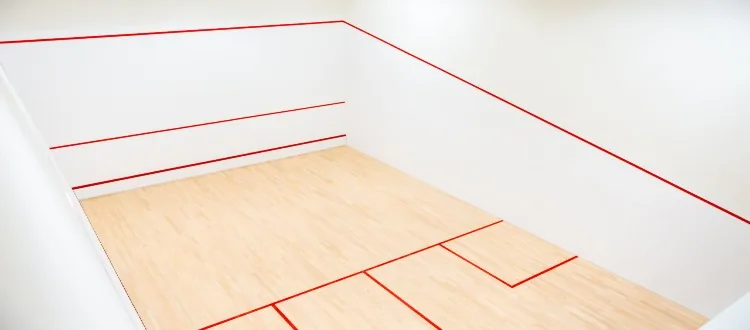
Britannia Leisure Centre
London · Junior lessons
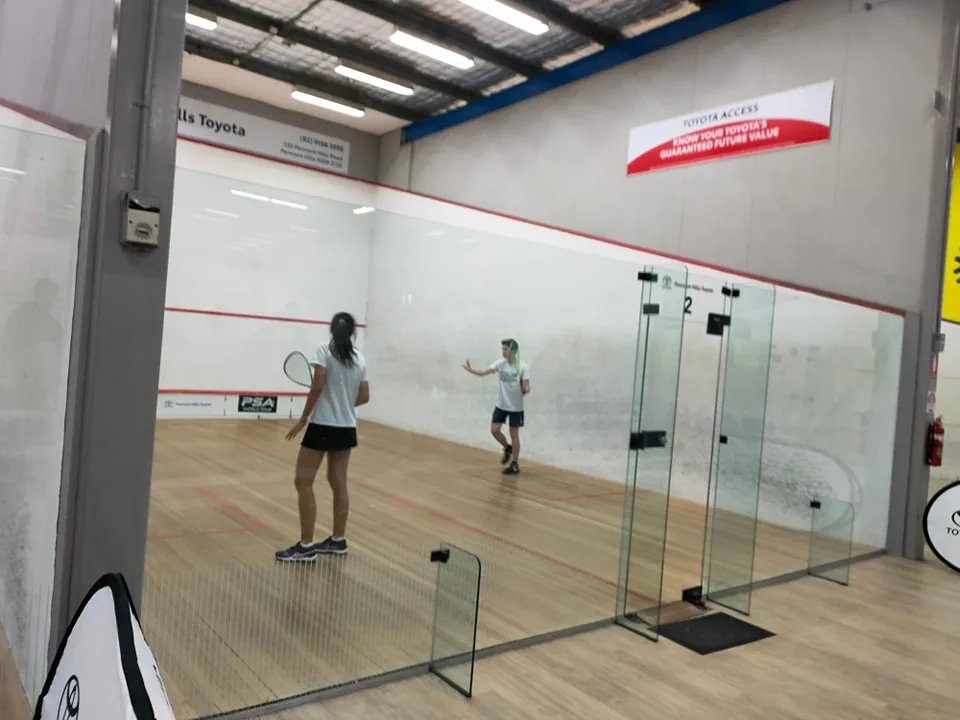
Thornleigh Squash & Fitness
Sydney · Junior programmes
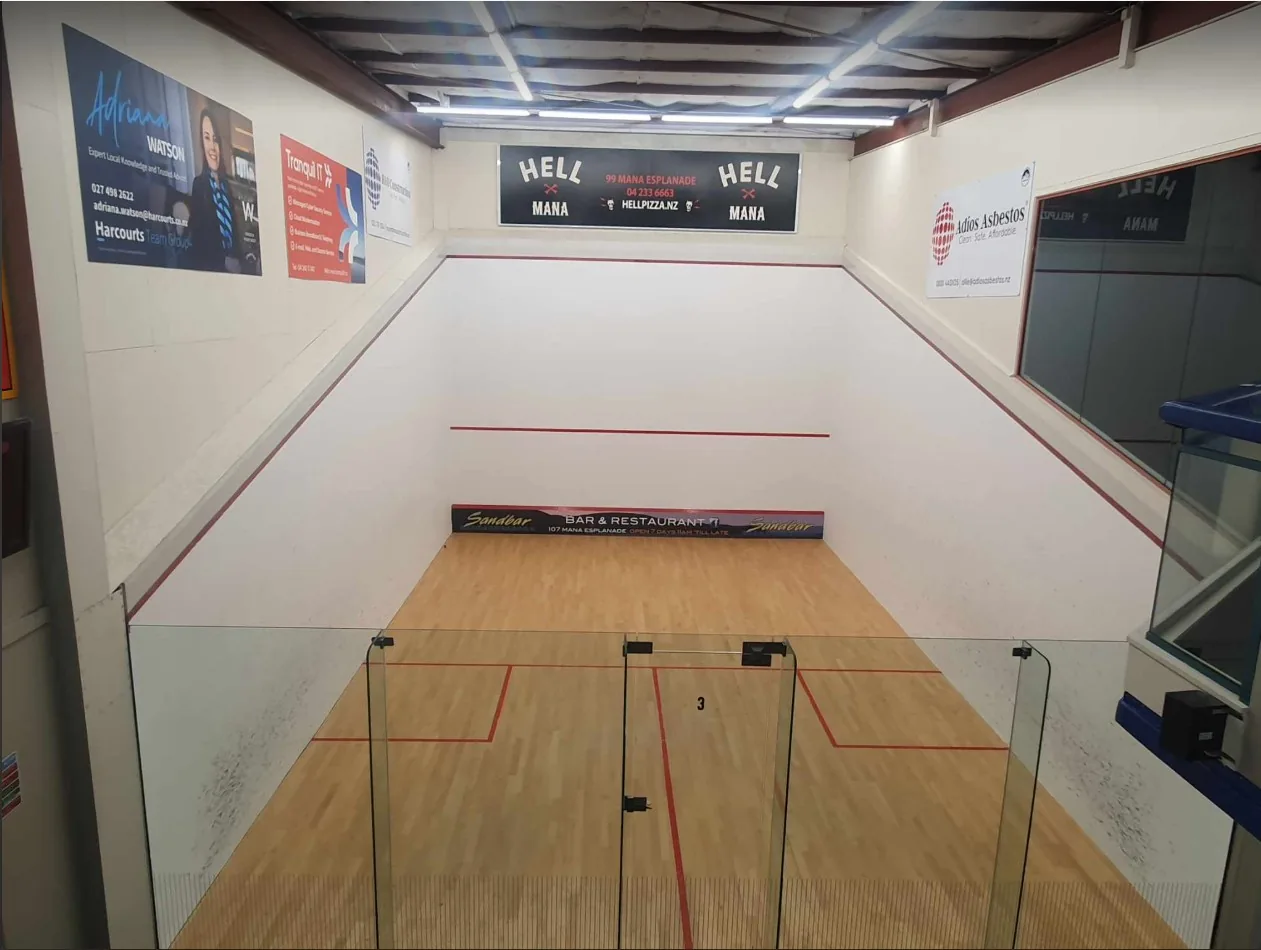
Mana Squash Club
Wellington · Junior club nights
Starting as a teenager
It is never too late for a child to start. Teenagers often pick up squash faster than younger children because they are stronger and can already read a ball. Many club players started at 13 or 14 after trying tennis or badminton.
A teenager starting from scratch should still join a beginner group, not a squad of players their own age who have played for years. Most improve quickly enough to move up within a term or two. If there is no teenage beginner group nearby, adult beginner sessions are a good alternative from about 15. See squash for beginners.
Where children can start
There are three common routes:
- Club junior sessions. Members' clubs run weekly coaching, often on a Saturday morning or after school. You usually need a junior membership after a few trial sessions.
- Leisure centre courses. Council and trust-run centres sell junior courses of six to ten weeks with no membership needed. In England, many run the national Squash Stars starter course.
- School and holiday camps. Some schools with courts, and some clubs during school holidays, run short camps that are a cheap way to try the game.
Our guide to junior squash covers costs and how to pick a good programme. Cities with the most venues offering squash coaching in our directory:
FAQ
Is there a minimum age for squash?
No. The World Squash rules set no minimum age. Clubs usually take children into coached sessions from about five, and some run parent and toddler sessions with soft balls.
Can a 4-year-old play squash?
A 4-year-old can play with a parent using a mini racket and a sponge ball, close to the front wall. Most coached group sessions start at five or six.
When should my child move to a full-size racket?
Usually between ten and twelve, when they can swing a full-size racket without dropping the head or swinging from the shoulder. Ask the coach before buying.
Is 15 too old to start squash?
No. Teenagers often learn squash quickly. Start in a beginner group, junior or adult, rather than a squad of experienced players.