Mini squash for young children
 By the Find My Squash Court team·
Updated ·
5 min read
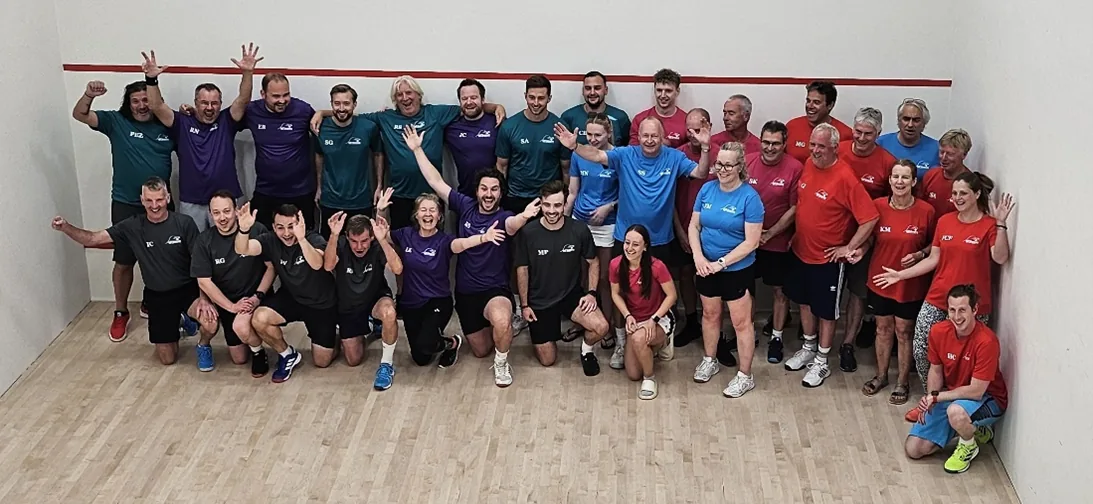
Mini squash is squash scaled down for young children: shorter rackets, bigger and slower balls, and games played on part of the court. It is how most clubs introduce five to eight-year-olds to the sport.
The short answer
Mini squash is a version of squash for young children, usually aged about five to eight. Players use short, light rackets and large soft or low-compression balls that bounce higher and travel slower than a standard squash ball. Coaches often split the court into smaller areas so several children can play at once, and sessions are built around games and targets rather than full matches. It teaches hand-eye co-ordination, movement and the basic strokes before children move on to junior rackets and the full court.
How mini squash differs from squash
The full game is hard for small children for simple physical reasons. The standard ball is small, fast and barely bounces unless it is warm. An adult racket can be up to 686 mm long, which on a five-year-old is almost shoulder height. The court is 9.75 m long, too far for a short rally. Mini squash changes all three.
| Mini squash | Full squash | |
|---|---|---|
| Racket | Short and light, often with a bigger head for its length | Up to 686 mm long |
| Ball | Large foam, sponge or low-compression ball with a high, slow bounce | 40 mm ball that needs warming up |
| Playing area | Often part of the court, divided with cones or tape | Whole court |
| Format | Games, targets, co-operative rallies | Matches of point-a-rally to 11 |
| Players per court | Often four to eight children | Two (four in doubles) |
The rules are simplified too. Children often get two bounces at first, serve from anywhere sensible, and count successful hits together rather than score against each other. Coaches bring in the real rules a step at a time.
What a mini squash session looks like
Sessions are short, usually 45 minutes, because young children tire and lose focus quickly. A typical plan:
- Warm-up games (10 minutes). Tag, catching games and running between lines. These build the footwork squash needs without anyone holding a racket.
- Racket and ball skills (10 minutes). Bouncing the ball on the strings, balancing it, hitting it up in the air and catching it.
- Hitting the wall (15 minutes). Forehands and backhands against the front wall from close range, aiming at targets or above a line.
- A game to finish (10 minutes). Co-operative rallies with a partner, or a simple competition such as who can hit the target most often.
Expect noise and laughter. A good mini squash coach keeps every child hitting a ball most of the time, with very little standing in line.
Goggles from day one. Even with soft balls, children swing rackets close to each other. Clubs expect protective eyewear in junior sessions, and it is compulsory in junior events sanctioned by the World Squash Federation. Starting the habit early saves arguments later.
Mini squash kit
Clubs and leisure centres provide rackets and balls for mini squash sessions, so you do not need to buy anything before the first one. If your child keeps going, these are worth having:
- Goggles that fit a small face. See squash goggles.
- A mini or short junior racket. Ask the coach which length. Too long is the common mistake.
- A few large beginner balls for practice. They last for months.
- Non-marking indoor trainers. Gum or white soles, with good grip.
Some coaches use the bigger 57 mm ball from Squash 57 (formerly racketball) as a step between mini squash balls and the standard squash ball. Our guide to squash ball dots explains how the beginner balls differ from the double yellow dot.
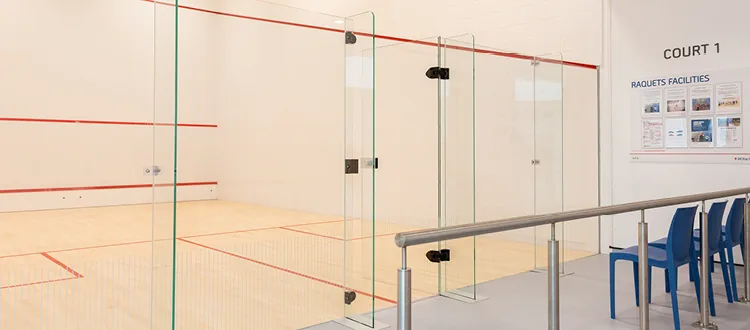
Abraham Moss Leisure Centre
Manchester · Junior lessons
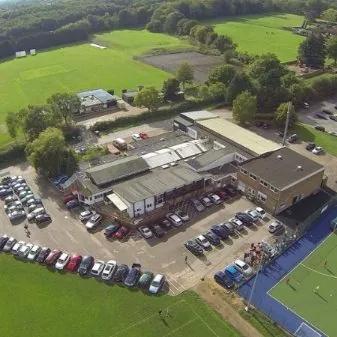
Trojans Club
Southampton · Junior sessions
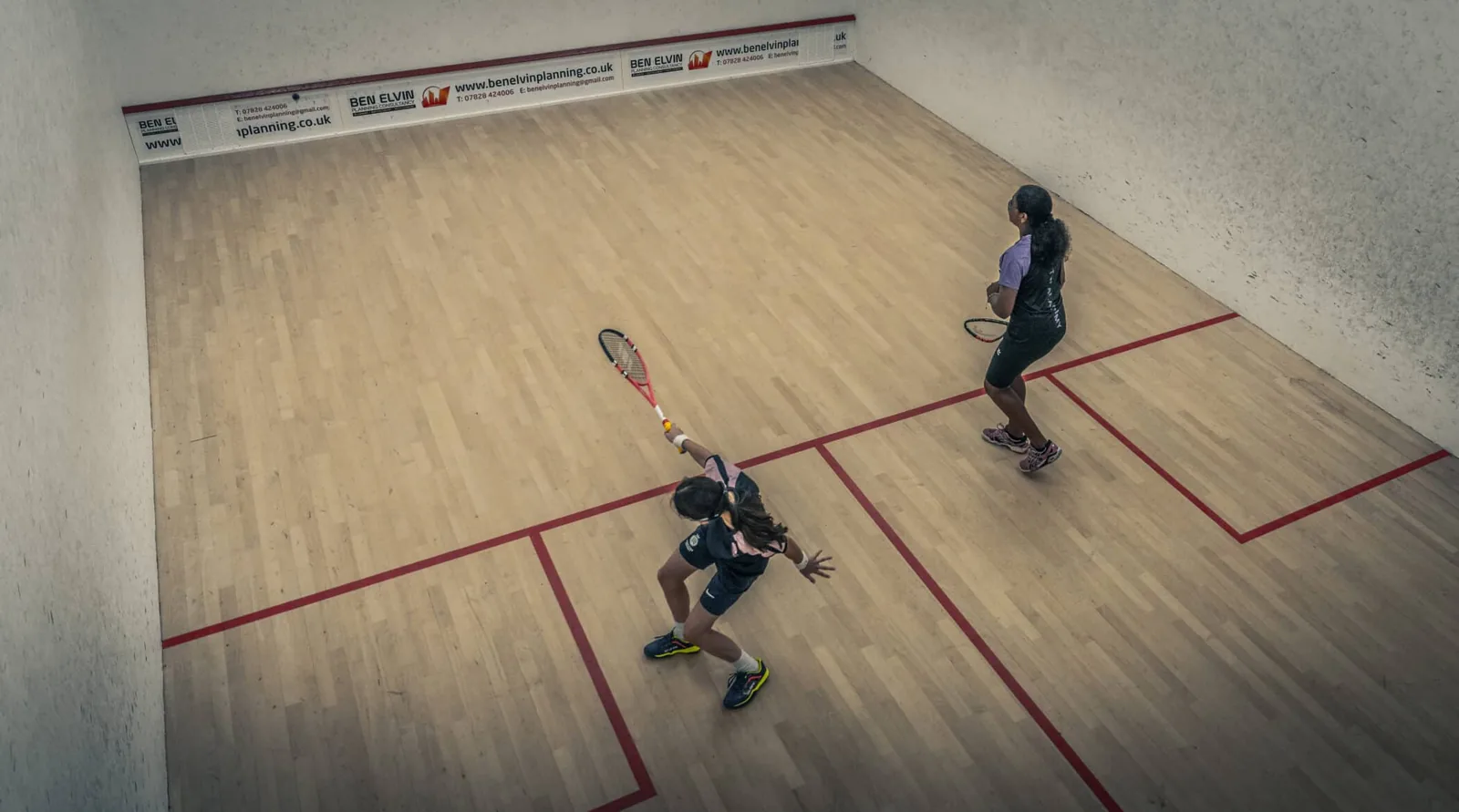
Ipswich Sports Club
Ipswich · Mini squash coaching
Playing mini squash with your child
You can run your own mini squash session on any booked court. Off-peak courts are cheap at most leisure centres, and many lend rackets. A few games that work well:
- Catch and hit. Your child drops the ball, lets it bounce, and hits it to the front wall. You catch it and roll it back.
- Count the rally. Stand side by side near the front wall and hit alternately. Beat your best score.
- Target practice. Stick a sheet of paper on the front wall with removable tape and score a point for each hit.
- Line runner. Call out a line colour or wall and your child runs to touch it and back. Good for the warm-up.
Keep it short. Twenty minutes of hitting is plenty for a five-year-old. Stop while they still want more.
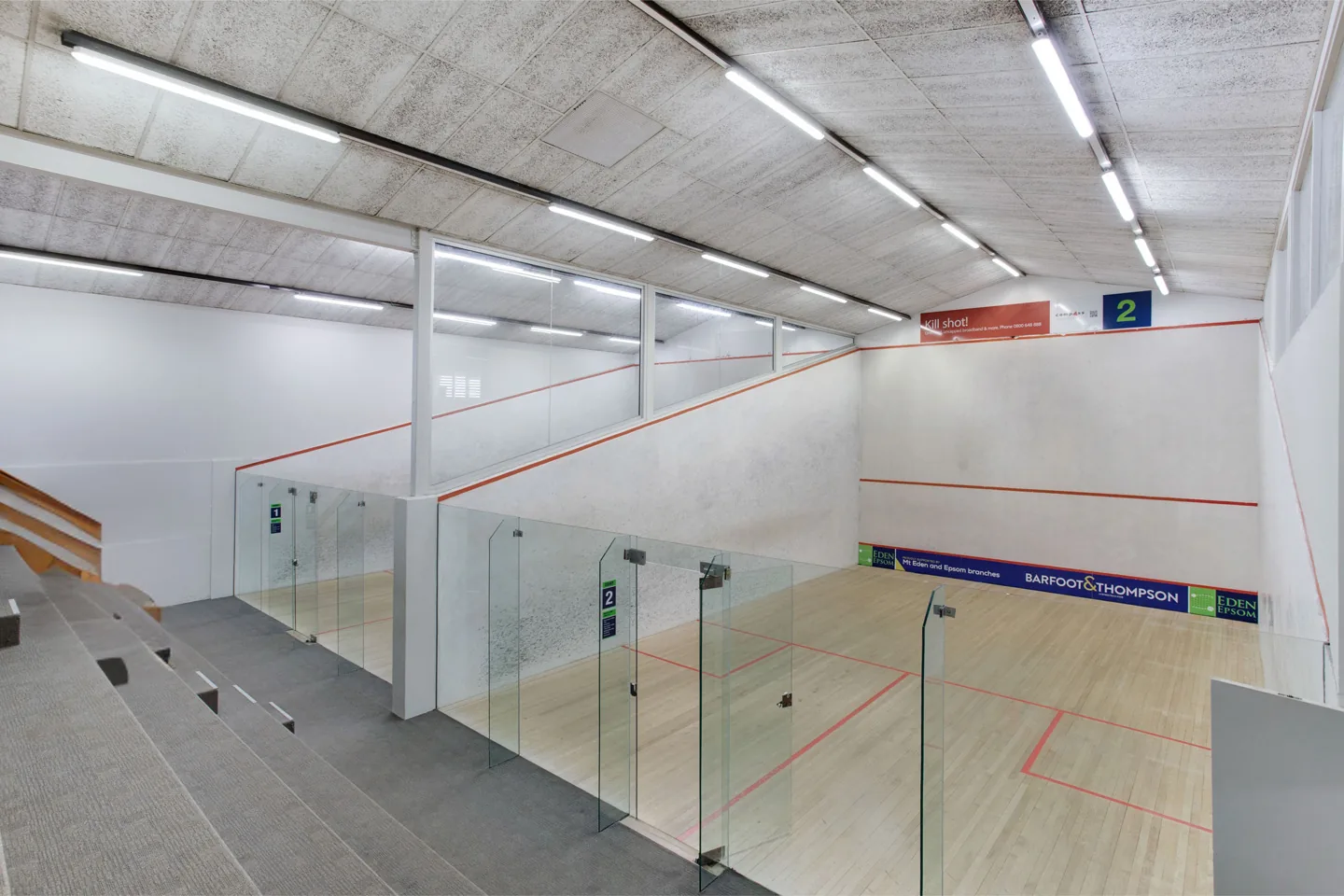
Moving on from mini squash
Children usually leave mini squash between about seven and nine, when they can rally a few shots on the full court with a bigger ball. The next step is a junior group with junior rackets and bouncier beginner balls, followed by the standard ball and full rules around ten to twelve. Our guides to junior squash and what age kids can play squash cover those stages.
In England, Squash Stars courses at clubs and leisure centres are a common first step for primary-school children. Elsewhere, ask your nearest club whether it runs mini or starter sessions. Cities with the most venues offering squash coaching in our directory:
FAQ
What age is mini squash for?
Usually about five to eight. Some clubs take four-year-olds in parent and child sessions, and older beginners sometimes start with mini kit for a few weeks.
Is mini squash played on a normal court?
Yes. It uses a standard squash court, often divided into smaller areas with cones or tape so several children can play at once.
What ball is used in mini squash?
A large foam, sponge or low-compression ball that bounces higher and moves slower than a standard squash ball, so young children have time to reach it.
Does my child need goggles for mini squash?
Yes. Clubs expect protective eyewear in junior sessions, even with soft balls, because children swing rackets close to each other.